Reasons for choosing our testing services
ZHONGXI Testing has obtained inspection qualification certifications from multiple countries and regions worldwide. We possess a senior testing team and advanced testing methods, providing independent, impartial, and professional third-party verification services for global carbon projects.

Internationally recognized authority
Certified by multiple international standards such as CNAS, VCS, and GS, with reports universally applicable worldwide.

Global service capability
Covering 140+ countries and regions, it supports on-site detection and remote verification in multiple languages.

Professional experimental methods
Adopt standard experimental methods to ensure accurate and reliable data.
Advanced Vinyl Pyrrolidone Testing Services: Comprehensive Characterization for Pharmaceutical, Cosmetic, and Industrial Applications
Vinyl pyrrolidone, systematically designated as N-vinyl-2-pyrrolidone (NVP), is a heterocyclic unsaturated lactam that serves as the principal monomer for the production of polyvinylpyrrolidone (PVP) and its copolymers, including crospovidone, copovidone (VP/VA copolymer), and polyvinylpolypyrrolidone. The vinyl pyrrolidone scaffold combines a polymerizable vinyl group with a polar, proton-accepting amide moiety, conferring exceptional reactivity and versatile solubility characteristics that underpin its widespread use in pharmaceutical excipients, cosmetic formulations, adhesives, coatings, membranes, and electronic materials. Because residual NVP monomer is classified as a probable human carcinogen (IARC Group 2B) and a respiratory and dermal sensitizer, its quantification in polymers, formulations, and workplace environments is subject to stringent regulatory limits. Furthermore, the reactivity of the vinyl group renders NVP susceptible to spontaneous polymerization, oxidation, and hydrolysis, generating impurities such as 2-pyrrolidone, N-methyl-2-pyrrolidone, and oligomeric species. Comprehensive analytical characterization is therefore indispensable for quality control, regulatory compliance, safety assessment, and product development.
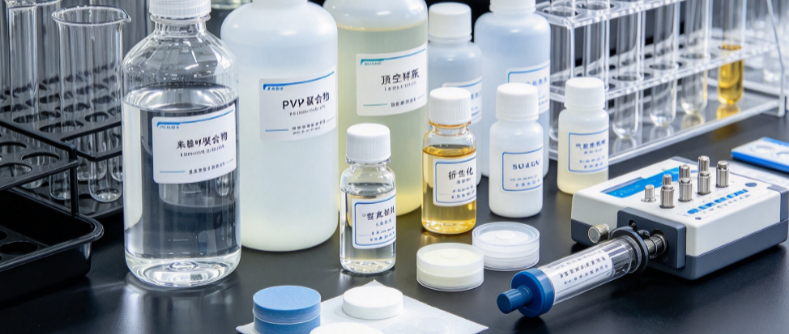
Why Clients Commission Vinyl Pyrrolidone Testing
Clients seek vinyl pyrrolidone testing for several distinct yet interconnected purposes. Pharmaceutical excipient qualification and regulatory submission require quantification of residual NVP monomer in PVP, crospovidone, and copovidone to meet USP, European Pharmacopoeia (Ph. Eur.), and ICH Q3C specifications, since residual monomer limits are typically set at parts-per-million (ppm) levels or below. Cosmetic and personal care product compliance demands verification that residual NVP content satisfies EU Cosmetics Regulation, FDA, and ASEAN requirements, given the sensitization potential of the monomer. Industrial hygiene and workplace safety monitoring requires quantification of airborne NVP vapor in manufacturing facilities to ensure compliance with OSHA, NIOSH, and ACGIH exposure limits. Polymer and copolymer development relies on residual monomer determination to optimize polymerization conversion, control molecular weight, and ensure product consistency. Stability assessment requires monitoring of NVP degradation products, including 2-pyrrolidone, N-methyl-2-pyrrolidone, and oligomeric impurities, which may form during storage or processing. Food contact material qualification demands verification that NVP-based polymers used in packaging meet FDA and EU 10/2011 migration limits. Environmental monitoring requires quantification of NVP in wastewater and industrial emissions, given its high water solubility and potential for aquatic toxicity. Finally, failure investigation and root cause analysis in cases of batch rejection, sensitization events, or product discoloration relies on detailed impurity characterization.
Our Vinyl Pyrrolidone Testing Capabilities: From Residual Monomer to Impurity Profiling
We provide comprehensive testing services for vinyl pyrrolidone, its polymers, and related derivatives, spanning monomer quantification, impurity profiling, polymer characterization, and environmental monitoring. Our analytical portfolio includes, but is not limited to:
Residual NVP monomer quantification — including headspace gas chromatography with flame ionization detection (HS-GC-FID), headspace gas chromatography-mass spectrometry (HS-GC-MS), purge-and-trap GC-MS, solid-phase microextraction (SPME) coupled with GC-MS, and liquid chromatography-tandem mass spectrometry (LC-MS/MS) for polar matrices. We achieve detection limits extending to parts-per-billion (ppb) levels, enabling compliance with the most stringent pharmacopeial and regulatory limits.
Related impurity profiling — including quantification of 2-pyrrolidone, N-methyl-2-pyrrolidone (NMP), N-ethyl-2-pyrrolidone (NEP), N-vinyl-2-pyrrolidone dimer and oligomers, and hydrolysis products by GC-MS, LC-MS/MS, and high-resolution accurate mass spectrometry (HRAM-MS). We identify and quantify unknown impurities at ppm to ppb levels.
Polymer characterization — including molecular weight and molecular weight distribution by high-performance size-exclusion chromatography coupled with multi-angle light scattering (HPSEC-MALS), intrinsic viscosity determination, K-value determination per pharmacopeial methods, residual monomer and oligomer profiling, and copolymer composition analysis by NMR.
Structural confirmation and identification — including nuclear magnetic resonance (NMR) spectroscopy (¹H, ¹³C, 2D COSY, HSQC, HMBC) for monomer and polymer structural assignment, Fourier-transform infrared (FT-IR) spectroscopy for functional group confirmation, Raman spectroscopy, and mass spectrometry (ESI-MS, MALDI-TOF MS) for molecular weight and structural confirmation.
Workplace air monitoring — including active sampling with solid sorbent tubes (charcoal, silica gel) followed by solvent desorption and GC-FID or GC-MS analysis, passive diffusive sampling, and real-time monitoring by photoionization detection (PID) or portable GC, with results expressed against OSHA permissible exposure limits (PEL), NIOSH recommended exposure limits (REL), and ACGIH threshold limit values (TLV).
Environmental and wastewater monitoring — including NVP quantification in industrial wastewater, surface water, and groundwater by solid-phase extraction (SPE) followed by LC-MS/MS or GC-MS, with detection limits extending to nanogram-per-liter (ng/L) levels.
Food contact material migration testing — including NVP migration quantification from food packaging and food contact articles per FDA and EU 10/2011 requirements, employing food simulant exposure followed by LC-MS/MS or GC-MS analysis.
Physicochemical property determination — including pH determination, viscosity and rheological profiling, moisture content by Karl Fischer titration, residue on ignition, heavy metals by ICP-MS per ICH Q3D, and particle size and morphology characterization.
Stability and forced degradation studies — including accelerated and long-term stability testing per ICH Q1A, forced degradation under oxidative, hydrolytic, thermal, and photolytic conditions, and degradation product identification by LC-MS/MS and NMR.
Our laboratories employ HS-GC-FID and HS-GC-MS systems, purge-and-trap concentrators, SPME fibers and autosamplers, LC-MS/MS and HRAM-MS platforms, HPSEC-MALS systems, NMR spectrometers (400–800 MHz), FT-IR and Raman spectrometers, MALDI-TOF MS, ICP-MS and ICP-OES, rheometers and viscometers, and stability chambers. These platforms enable residual NVP quantification at ppb levels, impurity identification at ppm to ppb levels, molecular weight determination with accuracy within 5% of true value, and correlation of residual monomer content with product performance and safety.
Methodological Depth and Analytical Rigor
Our testing protocols are anchored in ISO/IEC 17025-accredited quality management systems and align with USP, Ph. Eur., ICH Q3C, ICH Q3D, ICH Q1A, OSHA, NIOSH, and FDA requirements where applicable. We perform rigorous method validation evaluating specificity, linearity, accuracy, precision, range, detection limit, quantitation limit, and robustness for each analytical procedure.
Our residual monomer quantification workflows utilize certified reference standards (e.g., NVP, 2-pyrrolidone, NMP) and include blank and spiked recovery controls in every run. For headspace GC analysis, we optimize equilibration temperature and time and employ matrix-matched calibration to account for matrix effects. For LC-MS/MS analysis, we utilize stable isotope-labeled internal standards where available to achieve absolute quantification with recovery rates of 80–120% and relative standard deviations (RSDs) below 10%. For polymer characterization, we calibrate with narrow-dispersity pullulan or polyethylene oxide standards and validate with MALS absolute molecular weight determination. For workplace air monitoring, we adhere strictly to NIOSH and OSHA sampling and analytical methods, including sampling pump calibration, sorbent tube lot verification, and desorption efficiency determination.
For research and product development applications, we offer custom method development, polymerization reaction monitoring, impurity isolation and identification, forced degradation and stability studies, migration modeling for food contact materials, and correlation of residual monomer content with product performance and safety. Our mass spectrometry-based approaches enable oligomer profiling, unknown impurity identification, and degradation pathway elucidation.
Our Competitive Advantages in Vinyl Pyrrolidone Testing
1. Ultra-Low Residual Monomer Quantification: Our HS-GC-MS and LC-MS/MS platforms achieve detection limits at ppb levels, enabling compliance with the most stringent pharmacopeial and regulatory limits for residual NVP monomer.
2. Comprehensive Impurity Profiling: We identify and quantify 2-pyrrolidone, NMP, NEP, NVP oligomers, and hydrolysis products at ppm to ppb levels, supporting stability assessment and regulatory submissions.
3. Polymer and Copolymer Characterization: Beyond residual monomer, we provide molecular weight determination, K-value determination, copolymer composition analysis, and oligomer profiling, enabling comprehensive polymer quality assessment.
4. Workplace Air Monitoring Expertise: Our NIOSH- and OSHA-compliant air sampling and analytical methods enable accurate quantification of airborne NVP vapor, supporting industrial hygiene and worker safety compliance.
5. Environmental and Wastewater Monitoring: Our SPE-LC-MS/MS and SPE-GC-MS platforms achieve detection limits at ng/L levels, supporting environmental risk assessment and discharge compliance.
6. Food Contact Material Migration Testing: We perform NVP migration testing per FDA and EU 10/2011 requirements, supporting food packaging qualification and regulatory submissions.
7. Complex Matrix Expertise: We have validated methods for challenging matrices including PVP powders, crospovidone, copovidone, cosmetic creams, adhesives, coatings, food packaging, wastewater, and workplace air, where conventional approaches frequently fail due to matrix interference or low analyte levels.
8. Expert Interpretive Support: Our team includes analytical chemists, polymer scientists, and toxicologists who provide not only analytical data but also contextual interpretation, regulatory guidance, and safety assessment support.
9. Rapid Turnaround and Scalability: Standard turnaround is 5–10 business days for routine characterization and 10–15 business days for comprehensive impurity and stability packages, with expedited options available. Automated platforms ensure consistent high-volume capacity without compromising analytical quality.
10. Custom Research and Method Development: For clients with novel polymers, specialized applications, or unique research objectives, we offer bespoke method development, validation, and technology transfer services, including reaction monitoring, impurity isolation, and migration modeling.
Applications Across Pharmaceutical, Cosmetic, and Industrial Settings
Our vinyl pyrrolidone testing services support a diverse range of clients, including pharmaceutical manufacturers, excipient suppliers, cosmetic and personal care formulators, adhesive and coating producers, food packaging manufacturers, industrial hygiene consultancies, environmental monitoring agencies, academic investigators, and regulatory agencies. Whether for residual monomer quantification, impurity profiling, polymer characterization, workplace air monitoring, environmental monitoring, migration testing, or stability assessment, we deliver data that is analytically rigorous, regulatory-compliant, and directly actionable for quality assurance, safety assessment, and product development.
Conclusion
Vinyl pyrrolidone serves as the essential monomer for PVP and related polymers whose applications span pharmaceuticals, cosmetics, food packaging, and industrial materials. Because residual NVP monomer is classified as a probable human carcinogen and sensitizer, its accurate quantification at trace levels is critical for product safety and regulatory compliance. Reliable characterization depends not only on analytical sensitivity but also on orthogonal methodology, impurity profiling, and matrix-specific validation. With our ultra-low detection limits, comprehensive impurity profiling, workplace and environmental monitoring capabilities, and deep polymer science domain knowledge, we empower clients to ensure product safety, achieve regulatory compliance, optimize polymerization processes, and troubleshoot performance issues with confidence. For vinyl pyrrolidone testing that meets the highest standards of precision and regulatory acceptance, our laboratory is your trusted partner.