Reasons for choosing our testing services
ZHONGXI Testing has obtained inspection qualification certifications from multiple countries and regions worldwide. We possess a senior testing team and advanced testing methods, providing independent, impartial, and professional third-party verification services for global carbon projects.

Internationally recognized authority
Certified by multiple international standards such as CNAS, VCS, and GS, with reports universally applicable worldwide.

Global service capability
Covering 140+ countries and regions, it supports on-site detection and remote verification in multiple languages.

Professional experimental methods
Adopt standard experimental methods to ensure accurate and reliable data.
Comprehensive Performance and Safety Testing of Solid Formaldehyde Elimination Materials: Advanced Analytical Services for Indoor Air Quality and Industrial Emission Control
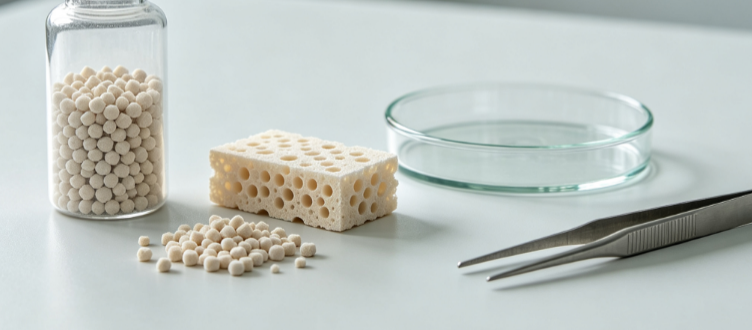
Solid formaldehyde elimination materials – encompassing chemical adsorbents (amine-impregnated activated carbons, hydrazide-functionalized resins), reactive scrubbing granules (potassium permanganate/alumina composites, sulfite-based pellets), photocatalytic oxidation media (modified TiO₂), and room-temperature catalyst formulations (noble metal/metal oxide systems) – are increasingly deployed in indoor air purifiers, HVAC systems, automotive cabins, and industrial off-gas treatment units. The efficacy of these materials depends not only on their initial formaldehyde removal capacity but also on the interplay of chemisorption kinetics, reactive site density, humidity and temperature sensitivity, by-product formation (e.g., formic acid, methanol), and long-term stability under real-world operating conditions. Consequently, a robust, multi-dimensional analytical evaluation is indispensable for product development, quality assurance, regulatory compliance (e.g., ISO 16000, GB/T 18801), and competitive benchmarking. Our ISO/IEC 17025-accredited laboratory offers a dedicated, mechanistic-driven testing service for solid formaldehyde elimination materials, integrating dynamic challenge testing, advanced surface analysis, reaction product profiling, and accelerated aging studies to deliver a complete performance and safety portrait – far beyond simple static chamber measurements.
Why Comprehensive Testing Is Essential for Solid Formaldehyde Eliminators
Clients seeking our testing services typically aim to: (i) quantify the formaldehyde removal efficiency and clean air delivery rate (CADR) under realistic airflow and humidity conditions, (ii) determine the service life and breakthrough behavior at different inlet concentrations and face velocities, (iii) identify and quantify potentially hazardous by-products (e.g., methanol, formic acid, or volatile amines) that may off-gas during operation, (iv) assess the impact of temperature, relative humidity, and coexisting volatile organic compounds (VOCs) on performance, (v) compare different material formulations for optimal cost-effectiveness, or (vi) generate defensible data for product certifications (e.g., CARB, EPA, or Blue Angel) and marketing claims. Standard static desiccator tests are insufficient because solid-phase elimination involves coupled mass transfer and surface reaction, with pronounced boundary-layer effects and competitive adsorption phenomena. Our integrated platform combines dynamic flow-through testing, high-resolution gas-phase and condensed-phase analysis, and advanced spectroscopic characterization to provide a complete performance lifecycle model – from fresh material to end-of-life breakthrough.
Our Comprehensive Analytical Framework for Solid Formaldehyde Eliminators
1. Dynamic Breakthrough and Capacity Testing Under Simulated Use Conditions
We operate a fully automated custom-built flow system that conforms to ISO 16000-23 and ASTM D6670 standards. The test chamber (1 m³ or custom size) is maintained at controlled temperature (15–40 °C), relative humidity (20–90% RH), and air exchange rate (0.5–5 h⁻¹). Formaldehyde is generated by a precision permeation tube or gas cylinder, and the influent concentration is maintained at 0.1–10 ppm (or higher for industrial applications). The solid eliminator (as a packed bed, panel, or filter sheet) is installed in a sample holder with defined face velocity (0.05–1.5 m/s). Downstream formaldehyde is monitored in real time by an FTIR spectrometer with a 10 m gas cell and by an online DNPH-HPLC system for cross-validation, achieving a detection limit of 0.5 ppb and a temporal resolution of 1 second. We generate high-resolution breakthrough curves and derive the breakthrough capacity (at 5%, 10%, and 50% penetration), the initial elimination efficiency, and the clean air delivery rate (CADR) per unit mass or volume of material. We also perform multi-cycle tests (with regeneration steps if applicable) to evaluate the long-term endurance and the reversible vs. irreversible uptake fractions.
2. Comprehensive By-Product Identification and Off-Gassing Assessment
Chemical reaction-based formaldehyde eliminators may release secondary pollutants such as formic acid, methanol, methyl formate, or volatile amines (from amine-based sorbents). We conduct real-time downstream gas analysis using a proton-transfer-reaction mass spectrometer (PTR-MS) and a GC-MS with thermal desorption to identify and quantify volatile organic compounds (VOCs) and carbonyls at ppb levels. For condensed-phase products, we extract the used material and analyze the extract by high-performance liquid chromatography (HPLC) with UV and MS detection, focusing on formic acid, formaldehyde oligomers, and potential cyanohydrins or other toxic adducts. We also perform ion chromatography (IC) to detect inorganic anions (formate, sulfate, nitrate) that may leach from the material. This comprehensive by-product screening ensures that the "solution" does not create new indoor air quality problems, and we provide a safety risk assessment based on occupational exposure limits and European Chemical Agency (ECHA) criteria.
3. Active Species Quantification and Surface Chemistry Profiling
For adsorbent-type materials (activated carbon with amine or hydrazine impregnation), we quantify the total amine/hydrazide content via elemental analysis (CHN) and a colorimetric assay (e.g., ninhydrin or 2,4-dinitrophenylhydrazine reaction) with a precision of ±0.02 mmol/g. For oxidative types (KMnO₄/Al₂O₃), we determine the active oxygen content by redox titration (iodometric and cerimetric methods). For catalytic systems (Pt/TiO₂, MnO₂), we measure the surface dispersion of active metals by CO/H₂ chemisorption and confirm the oxidation state by X-ray photoelectron spectroscopy (XPS). In all cases, we perform Fourier-transform infrared spectroscopy (FTIR) with in situ DRIFTS to monitor the consumption of reactive groups (e.g., NH₂, C=O, O–O) during formaldehyde exposure, and we use solid-state ¹³C NMR to identify covalently bound formaldehyde species (e.g., methylol, methylene bridges) on the spent material. These data directly link the initial chemical inventory to the performance and degradation pathways.
4. Textural and Morphological Evolution During Use
Formaldehyde uptake can alter the pore structure – for example, by pore-filling, surface coating, or salt formation. We characterize the material before and after exposure using N₂ physisorption (BET surface area, total pore volume, pore size distribution by NLDFT) and mercury intrusion porosimetry (for macroporosity). Changes in particle morphology and surface roughness are examined by scanning electron microscopy (SEM) with energy-dispersive X-ray spectroscopy (EDS) for elemental mapping. We also use helium ion microscopy (HIM) for high-resolution imaging of delicate coatings. These data help to differentiate between deactivation due to pore blockage vs. chemical exhaustion, guiding regeneration or replacement strategies.
5. Environmental Robustness: Humidity, Temperature, and Interfering Gases
Real indoor air contains water vapor, CO₂, and various VOCs that can compete for active sites or modify reaction pathways. We systematically evaluate the formaldehyde elimination performance under a matrix of relative humidity (20–90%), temperature (15–40 °C), and co-existing compounds (ethanol, toluene, acetaldehyde, NO₂, SO₂) at typical indoor concentrations. We employ a full factorial design and derive a response surface model that predicts the elimination efficiency under any combination of variables – a powerful tool for application-specific optimization. We also measure the adsorption selectivity coefficient for formaldehyde over the interferents, using a multi-component breakthrough system with simultaneous detection by PTR-MS, to quantify the robustness of the material in complex environments.
6. Regeneration and Reusability Assessment
For regenerable materials (e.g., thermally desorbable adsorbents or photocatalysts), we perform accelerated cycling tests with 10 to 100 cycles, each including a loading step (formaldehyde exposure) and a regeneration step (heating, UV irradiation, or purge with clean air). We monitor the decline in breakthrough capacity and efficiency with cycle number, and we characterize the material at critical intervals (after 1, 10, 50 cycles) by FTIR, BET, and XPS to identify irreversible changes (e.g., sintering, poisoning, or loss of surface groups). From these data, we calculate the deactivation rate constant and the total useful lifetime (e.g., equivalent months of continuous operation at 8 h/day). This information is critical for assessing the total cost of ownership and for designing maintenance protocols.
7. Leaching and Particulate Emission Testing
For solid materials that may be handled or installed in air streams, we evaluate the potential release of particulate matter or leachable chemical species. We perform filtration efficiency tests to determine if the material itself emits particles (using an optical particle counter and gravimetric filter sampling). For liquid contact (e.g., condensate), we conduct a leachate test according to EPA Method 1311 (TCLP) and analyze the extract for formaldehyde, heavy metals, and total organic carbon (TOC). We also perform a pH and conductivity check on the leachate to detect acidic or ionic by-products. These safety parameters are essential for product safety data sheets (SDS) and for compliance with indoor air quality standards.
8. Long-Term Storage and Aging Stability
Materials may degrade during warehouse storage before installation. We conduct accelerated storage tests at elevated temperature (40, 50, 60 °C) and controlled humidity for periods up to 6 months, monitoring the active content, surface area, and mechanical integrity at regular intervals. We also simulate exposure to ambient ozone (common in urban air) to assess oxidative degradation of amine or hydrazide groups. The resulting shelf-life prediction is based on Arrhenius modeling and provides a practical expiration date for quality control purposes.
Our Unrivaled Advantages in Solid Formaldehyde Eliminator Testing
1. Integrated Chemical, Physical, and Toxicological Platform: We uniquely combine dynamic flow testing, real-time gas monitoring, advanced surface spectroscopy (XPS, FTIR, NMR), by-product screening (PTR-MS, HPLC-MS), and leachate analysis in a single coordinated workflow. This enables us to correlate, for example, the loss of amine sites (from XPS) with the appearance of formamide by-products (HPLC-MS) and the decline in breakthrough capacity – providing a complete failure mode analysis rather than isolated measurements. Such integrated data are essential for root-cause troubleshooting and material redesign.
2. Expertise in Complex and Reactive Materials: Solid formaldehyde eliminators often contain hygroscopic, volatile, or thermally sensitive components. We operate glovebox-assisted sample handling and use low-temperature grinding to ensure representative subsampling without altering the chemistry. Our protocols have been validated on over 80 commercial and prototype materials, achieving inter-laboratory reproducibility within 3% RSD for key parameters (capacity, efficiency).
3. Predictive Modeling and Customized Reporting: Beyond experimental data, we develop empirical models (e.g., Yoon–Nelson, Thomas, or modified Langmuir) for breakthrough prediction, and we use artificial neural networks to forecast performance under user-specified conditions (e.g., seasonal variations in temperature and humidity). We provide a customized design guide that recommends the optimal material quantity, face velocity, and replacement schedule for your specific application – a service that transforms lab data into actionable engineering decisions.
4. Regulatory-Grade Quality and Full Traceability: Our laboratory is accredited under ISO/IEC 17025:2017 for formaldehyde measurement (chromatographic and spectroscopic), flow system calibration, and particle counting. We use NIST-traceable formaldehyde permeation tubes and certified gas standards. All uncertainties are reported with expanded uncertainties (k=2) typically <4% for efficiency and <5% for capacity, making our data defensible for product claims, patent submissions, and regulatory audits.
5. Collaborative and Strategic Partnership: Each project is led by a senior air quality scientist with expertise in gas-phase reaction kinetics and adsorption technology. We provide interim progress reviews and a final interpretative report that includes comparative benchmarking against competitor products (blind testing available), by-product risk matrices, and cost-performance analysis. We also offer co-authorship support for academic publications and draft the methods section in compliance with journals like Indoor Air and Building and Environment, accelerating your scientific and commercial impact.
Deliverables That Empower Product Development and Market Entry
Our final comprehensive report includes: (a) detailed breakthrough curves and derived performance metrics (initial efficiency, capacity at specified penetration, CADR); (b) by-product identification and quantified emission rates (μg/h); (c) pre- and post-test surface chemistry (XPS, FTIR, NMR) and textural analysis (BET, SEM); (d) response-surface models for humidity, temperature, and interference effects; (e) regeneration cycle data and lifetime projections; (f) leachate and particulate emission test results; (g) storage stability and shelf-life assessment; (h) a competitive benchmarking section against reference materials from our proprietary database (including leading commercial brands); and (i) a product application guide with recommended operating conditions and safety precautions. All raw data (flow logs, chromatograms, spectra, thermal records) are delivered in open, machine-readable formats (CDF, .csv, .mzML, JCAMP-DX) for independent auditing.
For clients with active R&D pipelines, we offer ongoing quality surveillance programs – including periodic batch testing, rapid failure analysis, and on-site training for your QA team. Our secure client portal provides 24/7 access to project status, interim results, and scientific consultation.
Conclusion: Precision Testing for Effective and Safe Formaldehyde Elimination
Solid formaldehyde elimination materials are critical for protecting human health in enclosed spaces, but their efficacy and safety must be rigorously verified under realistic, dynamic conditions. Our testing service is designed to provide a complete performance and safety profile – integrating dynamic challenge testing, advanced chemical analysis, and predictive modeling to deliver insights that directly inform product optimization, quality control, and regulatory compliance. By choosing our laboratory, you gain access to a platform where scientific rigor meets practical application, ensuring that your formaldehyde elimination solution is not only high-performing but also safe, durable, and cost-effective. Contact our technical team today to design a customized testing protocol – we are committed to helping you bring trusted, validated air purification products to the market.