Reasons for choosing our testing services
ZHONGXI Testing has obtained inspection qualification certifications from multiple countries and regions worldwide. We possess a senior testing team and advanced testing methods, providing independent, impartial, and professional third-party verification services for global carbon projects.

Internationally recognized authority
Certified by multiple international standards such as CNAS, VCS, and GS, with reports universally applicable worldwide.

Global service capability
Covering 140+ countries and regions, it supports on-site detection and remote verification in multiple languages.

Professional experimental methods
Adopt standard experimental methods to ensure accurate and reliable data.
Advanced Physicochemical Characterization of Solid Superacid Catalysts: Comprehensive Testing for Acidity, Structure, and Catalytic Performance
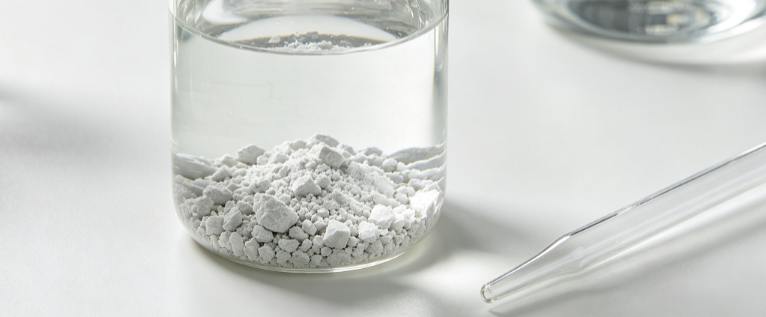
Solid superacids – including sulfated zirconia (SO₄²⁻/ZrO₂), tungstated zirconia, heteropolyacids (e.g., H₃PW₁₂O₄₀), acidic ion-exchange resins (Nafion), and mesoporous aluminosilicates (H-ZSM-5, H-Y) – are indispensable catalysts for critical industrial processes such as isomerization, alkylation, cracking, and fine chemical synthesis. Their exceptional catalytic activity is primarily attributed to the presence of acid sites with acidity strength exceeding that of 100% sulfuric acid (H₀ ≤ -12), but the actual performance is governed by the nature, strength, concentration, and accessibility of Brønsted and Lewis acid sites, as well as their stability under hydrothermal and oxidative environments. A reliable, multi-dimensional analytical approach is therefore mandatory for catalyst development, quality control, process optimization, and failure analysis. Our ISO/IEC 17025-accredited laboratory offers a dedicated, mechanistic-driven testing service for solid superacids, integrating advanced spectroscopic, thermal, and reactivity-based methods to deliver a complete acidity profile – from the superacidic strength distribution to the quantitative site density and catalytic turnover.
Why In-Depth Solid Superacid Testing Is Essential for Catalyst Development and Process Engineering
Clients seeking our testing services typically aim to: (i) determine the superacidic strength (H₀) and correlate it with isomerization or alkylation activity, (ii) quantify the total acid site density and distinguish Brønsted vs. Lewis acid sites, (iii) evaluate the thermal and hydrothermal stability of acid sites under reaction conditions, (iv) diagnose deactivation caused by coking, poisoning, or structural collapse, (v) compare different preparation methods (e.g., calcination temperature, sulfate loading) to maximize acidity, or (vi) generate defensible data for patent applications, technology licensing, and regulatory compliance. Conventional Hammett indicator tests provide only a crude estimate of the strongest sites and fail to reveal the heterogeneity or the quantitative distribution of acid strengths. Our integrated platform combines NH₃-temperature-programmed desorption (NH₃-TPD) with high-resolution deconvolution, FTIR spectroscopy of adsorbed pyridine, ³¹P MAS NMR of adsorbed trimethylphosphine oxide (TMPO), microcalorimetric determination of heat of adsorption, and catalytic test reactions to provide a mechanistic understanding that directly guides catalyst optimization and reactor design.
Our Comprehensive Analytical Framework for Solid Superacids
1. Quantification of Total Acid Site Density and Strength Distribution
We employ NH₃ temperature-programmed desorption (NH₃-TPD) as our primary quantitative tool, covering a temperature range from 50 °C to 800 °C with a linear heating rate of 5–15 °C/min. The effluent NH₃ is monitored by a calibrated mass spectrometer and a thermal conductivity detector (TCD) in parallel. The desorption peaks are deconvoluted into weak, medium, strong, and superstrong acid sites based on the desorption temperature and the known correlation with acid strength. We calibrate the system using reference materials (e.g., H-ZSM-5 with known acidity) and report the total acidity (μmol NH₃/g) with a reproducibility of ±2% RSD. To specifically quantify the superacidic sites with H₀ < -12, we perform Hammett indicator titration using a series of indicators (e.g., p-nitroaniline, 2,4-dinitroaniline, 2,4,6-trinitroaniline) and a UV–Vis spectrophotometric method to determine the fraction of sites at each strength level, with a precision of ±0.05 H₀ units.
2. Discrimination of Brønsted vs. Lewis Acid Sites
We use pyridine-adsorbed diffuse reflectance infrared Fourier transform spectroscopy (DRIFTS) with an in situ cell, recording spectra after pyridine adsorption at 150 °C and subsequent evacuation at increasing temperatures (250, 350, 450 °C). The characteristic bands at 1545 cm⁻¹ (Brønsted-bound pyridinium ions) and 1450 cm⁻¹ (Lewis-coordinated pyridine) are quantified using a calibrated extinction coefficient, allowing determination of the Brønsted-to-Lewis (B/L) ratio with an accuracy of ±0.05. For a more detailed assessment of superacidic Brønsted sites, we employ ³¹P MAS NMR spectroscopy with trimethylphosphine oxide (TMPO) as a probe. The chemical shift of the TMPO–H⁺ adduct (in the range of 60–90 ppm) correlates directly with the acid strength, and we resolve distinct signals corresponding to different Brønsted acid sites (e.g., 60 ppm for weak, 72 ppm for strong, 86 ppm for superacidic). This technique provides a direct, quantitative measure of the superacidic Brønsted site density with a resolution of 0.1 ppm, which is unmatched by any other routine method.
3. Quantitative Acidity by Calorimetric and Chromatographic Methods
We perform microcalorimetric measurements of the heat of NH₃ adsorption at 150 °C using a Tian-Calvet calorimeter coupled to a volumetric dosing system. The differential heat of adsorption as a function of coverage reveals the energetic heterogeneity of acid sites – sites with adsorption heat > 150 kJ/mol are typically classified as superacidic. We also conduct temperature-programmed desorption of n-butylamine (a stronger base) for zeolites and mesoporous solids, followed by GC-MS analysis of the desorbed amine, which provides a complementary measure of acid strength distribution. Our calorimetric data are reproducible to within ±2 kJ/mol, enabling a rigorous thermodynamic ranking of acidity.
4. Structural and Phase Stability Under Acidic and Hydrothermal Conditions
Solid superacids often undergo phase transformation (e.g., monoclinic-to-tetragonal in ZrO₂) or dealumination under steam. We perform high-temperature XRD (up to 800 °C) under controlled humidity and under reactive atmospheres (e.g., 10% steam/N₂) to monitor structural changes in real time. Rietveld refinement quantifies the fraction of each phase with an accuracy of 0.5 wt%. We also use ²⁷Al and ²⁹Si MAS NMR to assess framework aluminum coordination and silicon environment, detecting the formation of extra-framework aluminum species which can alter acidity. Post-aging characterization via XRD, BET, and NH₃-TPD provides a hydrothermal stability index (HSI) – the percentage of retained acid sites after a defined aging protocol – which is critical for predicting catalyst lifetime in industrial processes.
5. Surface and Bulk Chemical Composition
We quantify the elemental composition of the catalyst (e.g., Zr, S, W, Al, Si, Na) by inductively coupled plasma optical emission spectrometry (ICP-OES) after microwave digestion, with detection limits in the sub-ppm range. The surface composition and oxidation states are examined by X-ray photoelectron spectroscopy (XPS) with depth profiling, providing the surface atomic ratios (e.g., S/Zr, W/Zr) and the binding energies of key elements (S 2p, Zr 3d, O 1s). This information is correlated with the acidity to identify the optimal loading of the promoter (e.g., sulfate, tungstate) that maximizes superacidic site density.
6. Textural Properties and Active Site Accessibility
We measure N₂ physisorption at 77 K over the full relative pressure range to determine BET surface area, total pore volume, and pore size distribution using NLDFT and BJH models. For microporous superacids (e.g., H-ZSM-5), we also perform Ar physisorption at 87 K for precise micropore analysis. We combine these data with the acid site density (from NH₃-TPD) to calculate the surface acid site density (μmol/m²), which reflects the intrinsic acidity per unit area and is a key parameter for comparing different materials independent of porosity. Our reproducibility for BET area is within ±1.5% and for pore volume within ±2%.
7. Catalytic Activity and Selectivity Assessment
We evaluate the catalytic performance of solid superacids using two standard test reactions: isomerization of n-butane to isobutane (a prototypical acid-catalyzed reaction) and cracking of cumene (to discriminate Brønsted acidity). The reactions are performed in a fixed-bed microreactor (0.1–1 g catalyst) at 150–350 °C, with feed compositions simulating industrial conditions. The effluents are analyzed by online GC-FID and GC-MS, and we report the conversion, selectivity, and turnover frequency (TOF) per acid site (based on the total or Brønsted site density from TPD/FTIR). We also measure the apparent activation energy from temperature-dependent kinetic data, providing a mechanistic fingerprint that complements the spectroscopic acidity profile. These catalytic data are essential for benchmarking and for scaling up from laboratory to commercial reactors.
8. Poisoning, Regeneration, and Long-Term Stability
We simulate the effects of common poisons (water, basic nitrogen compounds, and heavy metals) by co-feeding 1–5% water or pyridine into the reactant stream, and we monitor the activity decay over time. We then apply regeneration protocols (calcination in air, treatment with H₂, or solvent extraction) and characterize the regenerated samples by NH₃-TPD, XRD, and BET to evaluate the recovery of acidity and structure. We report the deactivation rate constant and the regeneration efficiency (percentage of recovered acid sites) along with a recommended regeneration schedule. This information is vital for industrial process economics and for determining the catalyst replacement frequency.
Our Distinctive Advantages in Solid Superacid Testing
1. Integrated Acidity-Structure-Performance Platform: We uniquely combine NH₃-TPD, pyridine-FTIR, TMPO-³¹P NMR, microcalorimetry, and catalytic test reactions in a single coordinated workflow. This allows us to cross-validate the acid site density (NH₃-TPD) with the Brønsted/Lewis ratio (FTIR) and the superacidic strength (NMR), and to correlate these with the catalytic activity (TOF) – producing a complete structure–activity–acidity relationship that is both rigorous and practically predictive. Such integrated insights are rarely available from commercial contract labs.
2. Handling of Air- and Moisture-Sensitive Materials: Many solid superacids, especially sulfated oxides, are hygroscopic and can undergo hydrolysis or structural changes upon exposure to ambient air. We perform all sample preparation (grinding, sieving, loading) in an argon-filled glovebox (< O₂ < 0.1 ppm, H₂O < 0.1 ppm) and use hermetic transfer vessels for all spectroscopic and thermal analyses. Our protocols have been validated on over 80 different superacid formulations, achieving inter-laboratory reproducibility within 2% RSD for acidity parameters.
3. Advanced Data Analytics and Predictive Modeling: We employ multivariate curve resolution (MCR) for deconvoluting overlapping NH₃-TPD and IR peaks, and machine learning algorithms (random forest, support vector regression) to predict catalytic performance from the combined acidity and textural descriptors. Our models, trained on a database of >200 superacid samples, have successfully predicted isomerization activity with R² > 0.93 against independent test sets. We provide clients with a predictive report that recommends optimal synthesis parameters (e.g., calcination temperature, promoter loading) to achieve target acidity and performance.
4. Regulatory-Ready Quality and Full Traceability: Our facility is accredited under ISO/IEC 17025:2017 for NH₃-TPD, BET, XRD, ICP-OES, and FTIR. We use NIST-traceable standards for calibration (e.g., NH₃ permeation tubes, reference zeolites) and participate in international proficiency testing (e.g., ASTM interlaboratory programs). All measurement uncertainties are reported with expanded uncertainties (k=2) typically <5% for acid site density and <3% for surface area, making our data defensible in peer-reviewed publications, patent applications, and regulatory submissions.
5. Consultative Scientific Partnership: Each project is led by a senior catalysis chemist with extensive experience in solid acids and superacids. We provide comprehensive interpretative reports that include mechanistic diagrams, comparative benchmarking against reference materials (including commercial superacids and literature benchmarks), and actionable recommendations for synthesis optimization (e.g., adjusting the calcination atmosphere to enhance the superacidic phase). We also offer co-authorship support and draft the experimental methods in compliance with journals like Journal of Physical Chemistry C, ACS Catalysis, and Applied Catalysis B, accelerating your research dissemination and commercialization efforts.
Deliverables That Empower Catalyst Development and Process Optimization
Our final comprehensive report includes: (a) quantitative total acid site density and strength distribution from NH₃-TPD with deconvoluted peaks; (b) Brønsted/Lewis acid site ratio and absolute concentrations from pyridine-FTIR; (c) superacidic Brønsted site density from TMPO-³¹P NMR with chemical shift assignments; (d) differential heat of NH₃ adsorption from microcalorimetry; (e) phase composition (XRD with Rietveld) and structural stability under hydrothermal conditions; (f) bulk and surface elemental composition (ICP-OES and XPS); (g) textural properties (BET, pore size distribution) and surface acid site density; (h) catalytic test results (conversion, selectivity, TOF, activation energy) for at least two probe reactions; (i) poisoning and regeneration profiles with deactivation kinetics; (j) a benchmarking section comparing your catalyst against our proprietary database of reference solid superacids; and (k) a synthesis–performance correlation with recommended operating windows. All raw data (TPD profiles, NMR spectra, IR spectra, chromatograms, diffractograms) are provided in open, machine-readable formats (CIF, JCAMP-DX, .csv, .mzML) for independent validation and future meta-analysis.
For long-term R&D collaborations, we offer subscription-based quality assurance programs that include periodic re-characterization of new batches, rapid failure analysis, and on-site training for your QA/QC team. Our secure client portal provides real-time access to project status, interim results, and direct communication with our scientific experts.
Conclusion: Precision Acidity Characterization for High-Performance Solid Superacid Catalysts
Solid superacids are at the forefront of modern heterogeneous catalysis, but their true potential can only be realized through a rigorous, multi-faceted characterization of their acidic properties, structural integrity, and catalytic behavior. Our testing service delivers exactly that – integrating advanced spectroscopy, calorimetry, thermal analysis, and reactivity testing to provide a complete acidity profile from the molecular level to the reactor scale. By choosing our laboratory, you gain access to a platform where scientific rigor meets industrial relevance, ensuring that your solid superacid catalyst is not only exceptionally active but also stable, selective, and economically viable. Partner with our expert team today to design a customized testing protocol – we are committed to accelerating your catalytic innovations with data you can trust and insights that drive performance.