Reasons for choosing our testing services
ZHONGXI Testing has obtained inspection qualification certifications from multiple countries and regions worldwide. We possess a senior testing team and advanced testing methods, providing independent, impartial, and professional third-party verification services for global carbon projects.

Internationally recognized authority
Certified by multiple international standards such as CNAS, VCS, and GS, with reports universally applicable worldwide.

Global service capability
Covering 140+ countries and regions, it supports on-site detection and remote verification in multiple languages.

Professional experimental methods
Adopt standard experimental methods to ensure accurate and reliable data.
Comprehensive Performance and Stability Testing of Solid Desulfurization Materials: Advanced Analytical Services for Gas Purification and Emission Control
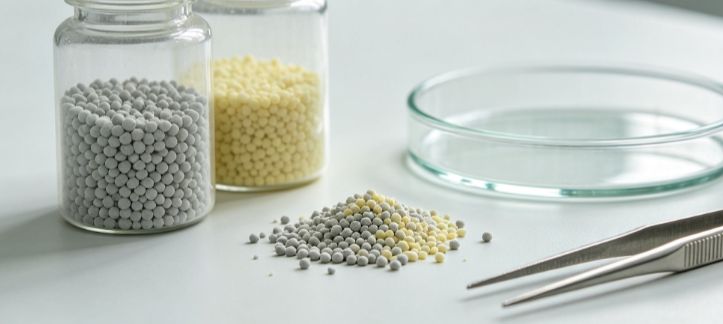
Solid desulfurization sorbents – including metal oxide-based (ZnO, Fe₂O₃, CuO, MnO₂), mixed-metal oxide (Zn–Fe, Zn–Cu, Ce–Zr), supported copper or zinc on alumina or silica, as well as regenerable adsorbents (e.g., amine-grafted materials for H₂S removal) – are critical for the purification of natural gas, biogas, syngas, and flue gas, as well as for protecting downstream catalysts in refining and chemical processes. The effective removal of hydrogen sulfide (H₂S), carbonyl sulfide (COS), and mercaptans depends not only on the sulfur capacity but also on the sulfidation kinetics, the accessibility of active metal sites, the stability of the oxide phase under reducing or oxidizing conditions, and the regenerability without significant structural degradation. Therefore, a rigorous, multi-parametric analytical evaluation is indispensable for sorbent development, quality control, troubleshooting of field failures, and process optimization. Our ISO/IEC 17025-accredited laboratory offers a dedicated, mechanistic-driven testing service for solid desulfurization materials, integrating dynamic breakthrough testing, advanced spectroscopic and thermal analysis, and post-use characterization to deliver a complete performance and lifecycle profile – far beyond simple static sulfur capacity tests.
Why Comprehensive Testing Is Critical for Solid Desulfurization Sorbents
Clients seeking our testing services typically aim to: (i) quantify the H₂S breakthrough capacity and the total sulfur uptake under realistic gas compositions (including CO₂, H₂O, CO, H₂, and trace impurities), (ii) determine the sulfidation reaction kinetics and the effective diffusivity of H₂S within the porous structure, (iii) evaluate the selectivity for H₂S over other acidic gases (e.g., CO₂, SO₂), (iv) assess the mechanical strength, attrition resistance, and thermal stability of the sorbent pellets, (v) diagnose deactivation due to carbon deposition, sulfate formation, or sintering, (vi) optimize regeneration conditions (temperature, gas composition) to maximize cyclic life, or (vii) generate defensible data for product certification, patent claims, and environmental compliance. Standard static tests (e.g., H₂S capacity measured in a fixed-volume system) are insufficient because real-world desulfurization involves complex mass transfer, chemical reaction, and heat effects that strongly influence the breakthrough behavior. Our integrated platform combines dynamic fixed-bed breakthrough experiments, real-time gas monitoring, advanced spectroscopy (XRD, XPS, Raman, TGA-MS), and post-mortem analysis to provide a holistic understanding of the sorbent's performance, stability, and failure modes.
Our Comprehensive Analytical Framework for Solid Desulfurization Sorbents
1. Dynamic Breakthrough and Capacity Testing Under Simulated Process Conditions
We operate a fully automated custom-built breakthrough system capable of handling gas mixtures containing H₂S (5–5000 ppm), CO₂ (0–50%), H₂ (0–30%), CO (0–20%), CH₄ (0–90%), and H₂O (0–30% RH) at pressures up to 30 bar and temperatures ranging from 25 °C to 450 °C. The sorbent (powder, granules, or extrudates) is packed in a quartz or stainless steel reactor (inner diameter 0.5–3 cm) with a programmable temperature controller. Inlet and outlet H₂S concentrations are monitored continuously by a pulsed fluorescence H₂S analyzer (detection limit: 5 ppb) and cross-validated by a gas chromatograph with a sulfur-specific detector (GC-SCD). We generate high-resolution breakthrough curves and derive: (i) the breakthrough capacity (at 5% and 10% of inlet concentration), (ii) the total sulfur capacity (until complete saturation), (iii) the utilization efficiency of the active metal (e.g., % of ZnO converted to ZnS), and (iv) the reaction rate constant and effective diffusion coefficient by fitting the breakthrough data to the Yoon–Nelson, Thomas, or the volume-reaction model. Our system is also equipped with a humidifier and a dew-point meter to precisely control water vapor content, which critically affects the sulfidation reaction and the formation of sulfate species.
2. Real-Time Gas-Phase and Condensed-Phase Speciation
Beyond H₂S, we monitor the formation of by-products such as SO₂ (from oxidation), COS (from reaction with CO), and volatile organic sulfur compounds (e.g., thiols) using a proton-transfer-reaction mass spectrometer (PTR-MS) and a GC-MS with a thermal desorption unit. For condensed-phase analysis, we perform online Raman spectroscopy through a sapphire window on the reactor to follow the transformation of metal oxides to sulfides in real time, identifying intermediate phases (e.g., oxysulfides, polysulfides). After the breakthrough experiment, the spent sorbent is analyzed by X-ray diffraction (XRD) to identify the crystalline sulfide phases (e.g., ZnS, FeS, Cu₂S) and any remaining oxide or sulfate phases, with quantification via Rietveld refinement (detection limit: 0.5 wt%). This multi-technique speciation is essential for understanding the reaction pathways and for identifying deactivation mechanisms.
3. Active Metal Content, Dispersion, and Reduction Behavior
We quantify the total metal content (e.g., Zn, Fe, Cu, Mn, Ce) by inductively coupled plasma optical emission spectrometry (ICP-OES) after microwave digestion, and we determine the active metal dispersion by H₂ or CO pulse chemisorption (for reduced metals). The reducibility of oxide precursors is evaluated by temperature-programmed reduction (H₂-TPR) up to 900 °C, identifying the reduction temperatures and the number of reducible species. The surface oxidation state of the active metal and the presence of promoters (e.g., Ce, Zr) are examined by X-ray photoelectron spectroscopy (XPS) with depth profiling, providing the surface composition (atomic ratios) and the binding energy shifts indicative of the chemical environment. These data correlate with the sulfidation performance and help to optimize the activation pre-treatment.
4. Textural Properties and Pore Accessibility
We characterize the sorbent before and after sulfidation/regeneration using N₂ physisorption at 77 K (BET surface area, total pore volume, pore size distribution via NLDFT and BJH) and mercury intrusion porosimetry (for macroporosity and particle crushing strength). We also determine the particle size distribution by laser diffraction and the true density by helium pycnometry. The loss of porosity due to sulfur deposition or sintering is quantified, and we calculate the pore utilization factor – the ratio of the actual sulfur uptake to the theoretical uptake based on the available pore volume – which is a critical measure of the effectiveness of the internal active sites. Our reproducibility for BET area is within ±1.5% and for pore volume within ±2%.
5. Mechanical Strength and Attrition Resistance
For industrial-scale applications, mechanical integrity is paramount. We perform side-crushing strength (SCS) tests on individual extrudates or pellets, and attrition resistance tests according to ASTM D5757 (for fluidized bed materials) and ASTM D6175 (for fixed-bed extrudates). We also conduct compaction tests to evaluate the bulk density and the compressibility under packing pressure. These mechanical properties are correlated with the thermal and chemical stability, and we provide a mechanical durability index that predicts the sorbent's lifetime in commercial reactors.
6. Thermal Stability and Sulfation/Sulfidation Regeneration Cycles
We perform Thermogravimetric Analysis (TGA) coupled with differential scanning calorimetry (DSC) under air, N₂, and H₂S-containing atmospheres, from 30 °C to 1000 °C, to identify the temperature limits of the oxide phase, the onset of sulfate formation (for oxidative regeneration), and the decomposition of metal sulfides. We then conduct cyclic sulfidation–regeneration tests using a temperature-swing (e.g., sulfidation at 300 °C, regeneration in diluted O₂ at 500 °C) for up to 30 cycles. After each set of cycles, we characterize the sorbent by XRD, BET, and XPS to monitor the phase evolution, loss of surface area, and any sintering or irreversible sulfur accumulation (e.g., as stable sulfates). From these data, we derive a deactivation rate constant and a lifetime prediction under the given operating conditions, providing a clear economic assessment for the client.
7. Poisoning Resistance and Tolerance to Trace Impurities
Real feed gases often contain trace contaminants such as HCl, NH₃, COS, and heavy metals (e.g., arsenic, mercury) that can poison the sorbent. We simulate these conditions by spiking the feed with 1–50 ppm of these impurities and monitoring the breakthrough performance. We characterize the spent sorbent by SEM-EDS to locate the poison and by XPS to identify the chemical form of the poison. We report the tolerance limit (the maximum impurity concentration that causes <10% capacity loss) and the poisoning factor (the ratio of deactivation to the impurity concentration), which are essential for process design and for selecting appropriate pre-treatment steps.
8. Regeneration Gas Composition Optimization
We systematically evaluate the effect of regeneration gas composition (O₂ concentration in N₂, presence of SO₂, H₂O) and temperature on the complete removal of deposited sulfur (as SO₂ or H₂S) and on the recovery of the active oxide phase. We monitor the off-gas by PTR-MS to detect any residual sulfur compounds and by TGA to quantify the mass loss. We provide a recommended regeneration protocol that balances the efficiency of sulfur removal, the minimization of sulfate formation, and the preservation of mechanical integrity, thereby maximizing the number of feasible cycles.
Our Distinctive Advantages in Solid Desulfurization Sorbent Testing
1. Integrated Dynamic and Molecular-Level Platform: We uniquely combine high-pressure/high-temperature breakthrough testing, real-time PTR-MS and Raman speciation, ex-situ XRD/XPS, and TGA cycling in a single coordinated workflow. This allows us to correlate the breakthrough curve (macro-level) with the phase transformation kinetics (micro-level) and the chemical state of the active sites (atomic-level), providing a complete mechanism–performance linkage that is indispensable for diagnosing underperformance and for engineering next-generation sorbents.
2. Handling of Sulfur-Sensitive and Reactive Materials: Sulfur compounds can adsorb onto instrument surfaces and cause memory effects. We use sulfinert®-coated flow lines and low-dead-volume valves for all sulfur-containing experiments. Our sample handling is performed in a glovebox with controlled O₂ and H₂O to prevent oxidation of reduced sulfides or hydrolysis of hygroscopic oxides. Our protocols have been validated on over 100 commercial and prototype desulfurization materials, achieving inter-laboratory reproducibility within 3% RSD for breakthrough capacities.
3. Predictive Modeling and Process Scale-Up Support: We develop empirical and semi-empirical models (e.g., the shrinking-core model, the volume-reaction model) to predict the performance at larger scales, incorporating the effects of gas velocity, particle size, and temperature. We also use machine learning to identify the key material descriptors (e.g., surface area, metal oxide crystallite size, pore volume) that most influence the sulfur capacity, and we provide a descriptor-based optimization for your synthesis parameters. These predictive tools have been validated against pilot-scale data with mean absolute errors < 8%.
4. Regulatory-Ready Quality and Full Traceability: Our facility is accredited under ISO/IEC 17025:2017 for key parameters (H₂S concentration measurement, BET, XRD, ICP-OES). We use NIST-traceable H₂S gas standards and certified reference materials for sulfur content. All uncertainties are reported with expanded uncertainties (k=2) typically <5% for capacity and <3% for surface area, making our data defensible in quality claims, patent filings, and environmental permit applications.
5. Collaborative and Transparent Partnership: Each project is led by a senior chemical engineer with deep expertise in gas purification and heterogeneous reactions. We provide interim progress reviews and a final interpretative report that includes graphical breakthrough curves, phase evolution diagrams, comparative benchmarking against up to five reference sorbents from our proprietary database, and actionable recommendations for process optimization (e.g., optimal particle size, flow rate, regeneration temperature). We also offer co-authorship support and draft the methods sections for journals like Energy & Fuels and Industrial & Engineering Chemistry Research, accelerating your publication and commercialization timeline.
Deliverables That Empower Sorbent Development and Process Engineering
Our final comprehensive report includes: (a) dynamic breakthrough curves with derived capacities (breakthrough, saturation, utilization efficiency); (b) real-time speciation data (PTR-MS, Raman) and phase identification via XRD (Rietveld) for fresh, spent, and regenerated samples; (c) quantitative metal content, dispersion, and reducibility (ICP, chemisorption, H₂-TPR); (d) textural properties (BET, pore size, particle size) and their evolution; (e) mechanical strength and attrition resistance indices; (f) cyclic stability profiles with deactivation rates; (g) poisoning tolerance limits and poisoning factors; (h) optimized regeneration protocol; (i) a benchmarking section comparing your sorbent against reference materials from our database; and (j) a process design summary with recommended operating windows and scale-up parameters. All raw data (breakthrough logs, GC chromatograms, XRD patterns, TGA curves, etc.) are supplied in open, machine-readable formats (CIF, JCAMP-DX, .csv, .mzML) for independent verification and future analysis.
For clients with ongoing production, we offer subscription-based quality surveillance programs – including periodic batch testing, rapid failure diagnostics, and on-site training for your quality assurance team. Our secure client portal provides 24/7 access to project data and direct communication with our scientific staff.
Conclusion: Precision Testing for Reliable and Cost-Effective Desulfurization
Solid desulfurization sorbents are essential for enabling clean energy and chemical production, but their economic and environmental performance hinges on a deep, multi-scale understanding of their reactivity, stability, and regenerability. Our testing service provides that understanding – integrating dynamic breakthrough, advanced spectroscopy, thermal analysis, mechanical testing, and predictive modeling to deliver a complete performance and lifecycle assessment. By choosing our laboratory, you gain access to a platform where scientific rigor meets industrial practicality, ensuring that your desulfurization material achieves the highest sulfur removal efficiency with minimal operating costs. Contact our technical team today to design a customized testing protocol – we are committed to helping you optimize your gas purification solutions with reliable, actionable analytical data.