Reasons for choosing our testing services
ZHONGXI Testing has obtained inspection qualification certifications from multiple countries and regions worldwide. We possess a senior testing team and advanced testing methods, providing independent, impartial, and professional third-party verification services for global carbon projects.

Internationally recognized authority
Certified by multiple international standards such as CNAS, VCS, and GS, with reports universally applicable worldwide.

Global service capability
Covering 140+ countries and regions, it supports on-site detection and remote verification in multiple languages.

Professional experimental methods
Adopt standard experimental methods to ensure accurate and reliable data.
Comprehensive Performance and Quality Assessment of Activated Coke: Advanced Analytical Services for Gas Purification and Adsorption Applications
Activated coke – a carbonaceous adsorbent produced by the pyrolysis and partial activation of coal, lignite, or petroleum coke – is widely employed in flue gas desulfurization (FGD), denitrification (DeNOx), mercury removal, and volatile organic compound (VOC) capture. Its unique combination of microporosity, mesoporosity, and surface chemistry enables superior performance in fixed-bed or moving-bed gas treatment systems. However, the efficacy of activated coke is governed by a delicate interplay of specific surface area, pore size distribution, mechanical strength, sulfur capacity, ignition temperature, and resistance to attrition and moisture. Reliable, multi-parameter testing is therefore essential for quality assurance, process optimization, procurement specification, and troubleshooting of field failures. Our ISO/IEC 17025-accredited laboratory offers a dedicated, in-depth testing service tailored specifically for activated coke, integrating advanced physical, chemical, thermal, and mechanical methods to deliver a complete performance profile – far beyond simple iodine number or hardness measurements.
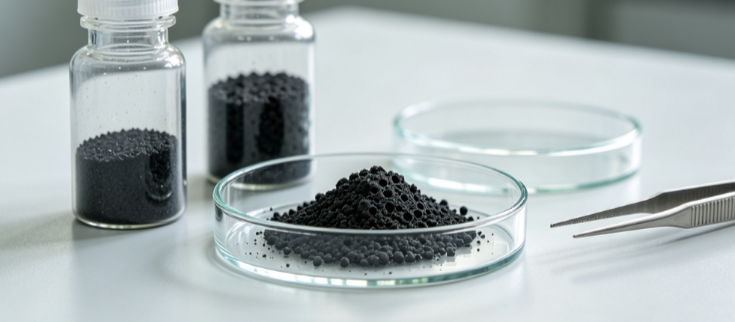
Why Comprehensive Activated Coke Testing Is Critical for Industrial Gas Cleaning Applications
Clients seeking our testing services typically aim to: (i) verify the adsorptive capacity and kinetic performance for targeted pollutants (SO₂, NOₓ, Hg, VOCs), (ii) determine the mechanical strength and attrition resistance to ensure reliable operation in moving-bed reactors, (iii) measure the ignition temperature and thermal stability to guarantee safe handling and regeneration, (iv) evaluate the moisture content and pore structure that affect gas diffusion and adsorption kinetics, (v) assess the chemical composition, including ash content and trace elements, which influence catalyst poisoning or pollutant conversion, and (vi) generate robust data for product certification, supplier qualification, and compliance with environmental regulations. Standard tests such as single-point BET or simple crush strength are insufficient because real-world performance depends on the combined effects of pore architecture, surface functional groups, and mechanical integrity under cyclic thermal and chemical stress. Our integrated platform combines N₂/CO₂ physisorption, mercury porosimetry, BET surface area, iodine and methylene blue numbers, sulfur capacity (breakthrough and saturation), mechanical compressive and attrition tests (ASTM D5757), ignition temperature measurement (ASTM D3466), Thermogravimetric Analysis (TGA) for moisture and volatile content, elemental analysis (C/H/N/S/O), ash composition by X-ray fluorescence (XRF), scanning electron microscopy (SEM) for morphology, and particle size analysis – providing a holistic functional fingerprint.
Our Comprehensive Analytical Framework for Activated Coke
1. Pore Structure, Specific Surface Area, and Adsorption Capacity
We determine the specific surface area (BET) and micropore volume by N₂ physisorption at 77 K over a wide relative pressure range (10⁻⁶–0.995). For ultramicropores (d < 0.7 nm), we perform CO₂ adsorption at 273 K with Dubinin–Radushkevich (DR) analysis. The pore size distribution is derived using NLDFT, QSDFT, and BJH models, with a reproducibility of ±1.5% for surface area and ±2% for pore volume. The iodine number (ASTM D4607) is measured as a rapid indicator of the microporosity, while the methylene blue adsorption (ASTM D4607) assesses the mesopore content. For applications requiring the overall adsorption capacity, we perform batch and dynamic adsorption tests using standard pollutants (e.g., SO₂ or toluene) under controlled temperature and humidity, yielding the breakthrough capacity and the saturation loading (mg/g).
2. Mechanical Strength, Attrition Resistance, and Bulk Density
We measure the compressive strength of individual cylindrical pellets or briquettes using a universal testing machine with a precision of ±0.1 kN. The attrition resistance is determined following ASTM D5757 (for fluidized bed) or ASTM D4058 (for granular materials), reporting the attrition index and the fines generation percentage. The bulk density (loose and tapped) and particle density (by mercury displacement or He pycnometry) are measured to predict the reactor loading and the pressure drop. These mechanical properties are critical for selecting activated coke for moving-bed systems where abrasion and dust formation can cause operational issues.
3. Sulfur Capacity and Desulfurization Performance
We evaluate the breakthrough sulfur capacity using a custom-built fixed-bed reactor with a simulated flue gas mixture (SO₂, O₂, H₂O, N₂). The effluent SO₂ concentration is monitored online by a UV fluorescence analyzer (LOD: 0.1 ppm). From the breakthrough curve, we derive the dynamic adsorption capacity (mg SO₂/g coke) and the utilization efficiency of the active sites. We also conduct regeneration experiments by thermal swing or chemical washing to assess the recyclability and the loss of capacity after multiple cycles. These data are essential for design engineers to estimate the required reactor volume and the replacement frequency.
4. Thermal Stability and Ignition Temperature
We measure the ignition temperature according to ASTM D3466, using a thermogravimetric analyzer (TGA) under a controlled air flow. The sample is heated at a defined rate, and the temperature at which a sudden exothermic reaction (mass loss increase) occurs is recorded. We also perform TGA-DSC from 25 °C to 900 °C in air and in nitrogen to quantify the moisture content, volatile matter, fixed carbon, and ash. The devolatilization onset temperature and the combustion reactivity are reported, which are vital for safe handling during storage, transport, and regeneration processes where self-heating risks must be mitigated.
5. Chemical Composition and Ash Analysis
We determine the proximate analysis (moisture, volatile matter, fixed carbon, ash) by thermogravimetric methods (ASTM D3172-3175). The ultimate analysis (C, H, N, S) is performed by combustion analysis (LECO), and the oxygen content is calculated by difference. The ash composition – including oxides of Si, Al, Fe, Ca, Mg, Na, K, and Ti – is quantified by X-ray fluorescence (XRF) after fusion. The presence of trace elements (Hg, As, Pb, Se) is determined by ICP-MS after acid digestion, with detection limits in the ppb range. These data are crucial for assessing the potential for catalyst poisoning (e.g., by arsenic) or for evaluating the environmental impact of spent coke disposal.
6. Moisture, Dust, and Particle Size Distribution
We measure the moisture content by Karl Fischer titration or by oven drying (ASTM D3173) with a precision of ±0.05%. The dust content (fines passing a specified sieve) is determined by sieving analysis. The particle size distribution (for granular or crushed coke) is measured by mechanical sieving (ASTM D2862) and by laser diffraction for finer particles, reporting D10, D50, D90, and the uniformity coefficient. These parameters affect the gas flow distribution, pressure drop, and the potential for dust carryover downstream.
7. Surface Chemistry and Functional Group Analysis
We perform infrared spectroscopy (FTIR) with a diffuse reflectance (DRIFTS) accessory to identify oxygen-containing functional groups (carboxyl, phenolic, lactone, carbonyl) that contribute to adsorption of polar pollutants. The X-ray photoelectron spectroscopy (XPS) is used to quantify the surface oxygen and carbon bonding states (C–C, C–O, C=O, O–C=O), providing an insight into the surface reactivity. We also measure the pH of the aqueous extract (ASTM D3838) to indicate the presence of acidic or basic surface species, which can influence the adsorption of acidic gases like SO₂.
8. Mercury and VOC Removal Capacity (Specialized Tests)
For applications in mercury and VOC control, we offer targeted dynamic adsorption tests with a mercury vapor generator (cold vapor atomic fluorescence) or with a standard VOC mixture (e.g., toluene, benzene) analyzed by on-line GC-FID. The breakthrough capacity and the total adsorption capacity are reported, along with the adsorption rate constant from fitting to the Yoon–Nelson or Thomas models. These specialized tests differentiate activated coke grades for specific contaminant challenges.
Our Distinctive Advantages in Activated Coke Testing
1. Fully Integrated Physical–Chemical–Mechanical Platform: We uniquely combine porosity analysis (BET, CO₂, Hg porosimetry), mechanical testing (crush strength, attrition), thermal analysis (TGA-DSC, ignition temperature), and performance assays (SO₂, Hg, VOC breakthrough) in a single coordinated workflow. This allows us to cross-correlate the pore structure with the mechanical integrity and the adsorption capacity, providing a complete material fitness-for-purpose evaluation that is essential for process design and troubleshooting. Such integration is rarely found in standard activated carbon testing laboratories.
2. Expertise in Moving-Bed and Reactor-Scale Simulation: Our custom-built breakthrough rigs can simulate actual industrial operating conditions – including temperature, gas velocity, humidity, and multiple contaminant mixtures – to produce data that directly scales to full-sized reactors. We provide dynamic bed modeling outputs (mass transfer zone, utilization factor) that are invaluable for engineering scale-up and for optimizing the bed replacement schedules.
3. Handling of Hard, Abrasive, and Dusty Materials: Activated coke is often harder and more abrasive than standard activated carbon, which can complicate sample preparation. We use specialized grinding, splitting, and sieving equipment with minimal fines generation, ensuring representative samples for all tests. Our procedures have been validated on numerous coal-based and petroleum-based activated cokes with inter-laboratory reproducibility within 2–3% RSD for key metrics such as surface area, sulfur capacity, and crush strength.
4. Regulatory-Grade Quality and Full Traceability: Our facility is accredited under ISO/IEC 17025:2017 for all relevant test methods (BET, iodine number, mechanical strength, ignition temperature, and elemental analysis). We use NIST-traceable standards and certified reference materials (e.g., activated carbon standard for iodine). All measurement uncertainties are reported with expanded uncertainties (k=2) typically <3% for adsorption capacities and <5% for mechanical properties, ensuring the data are defensible in procurement contracts, regulatory submissions, and technical specifications.
5. Expert Consultation and Application Support: Each project is overseen by a senior adsorption engineer with experience in flue gas treatment and carbon materials. We provide interpretative reports that include not only the measured values but also a comparative performance analysis against reference grades and a risk assessment for potential operational issues (e.g., attrition loss, ignition risk, or poisoning). We also offer co-authorship support for technical publications and assist in drafting standard operating procedures (SOPs) for your quality control lab.
Report Deliverables and Client Empowerment
Our final comprehensive report includes: (a) full textural properties – BET, micropore volume, mesopore volume, and pore size distribution; (b) iodine number, methylene blue value, and CO₂ adsorption capacity; (c) breakthrough and saturation capacities for SO₂ (and optionally Hg/VOCs) with kinetic parameters; (d) compressive strength, attrition index, and bulk/tapped density; (e) ignition temperature and TGA-DSC thermograms; (f) proximate and ultimate analysis with ash composition (XRF); (g) moisture and dust content; (h) surface chemical characterization (FTIR, XPS, pH); (i) a benchmarking summary comparing your activated coke with industry standards and competitor products; and (j) a reactor performance forecast that estimates the bed lifetime and the replacement frequency under your specified operating conditions. All raw data (physisorption isotherms, breakthrough logs, chromatograms, spectra, and images) are supplied in open, machine-readable formats (CIF, JCAMP-DX, .csv, .tiff) for independent analysis and integration into your quality management system.
We also offer subscription-based quality assurance programs for regular incoming inspection or for monitoring the performance of in-service coke samples. Our secure client portal provides 24/7 access to project data and direct communication with our technical experts.
Conclusion: Precision Characterization for Reliable Activated Coke Performance
Activated coke is a critical consumable in modern gas cleaning systems, and its performance and reliability depend on a thorough understanding of its physical, chemical, thermal, and mechanical properties. Our testing service provides exactly that – a multi-technique, application-oriented evaluation that delivers actionable data for procurement, quality control, and process engineering. By choosing our laboratory, you gain access to a platform where scientific rigor meets industrial practicality, ensuring that your activated coke consistently meets the demands of your emission control systems. Partner with our expert team today to design a customized testing protocol – we are committed to advancing your environmental compliance with reliable, precise, and insightful analytical results.