Reasons for choosing our testing services
ZHONGXI Testing has obtained inspection qualification certifications from multiple countries and regions worldwide. We possess a senior testing team and advanced testing methods, providing independent, impartial, and professional third-party verification services for global carbon projects.

Internationally recognized authority
Certified by multiple international standards such as CNAS, VCS, and GS, with reports universally applicable worldwide.

Global service capability
Covering 140+ countries and regions, it supports on-site detection and remote verification in multiple languages.

Professional experimental methods
Adopt standard experimental methods to ensure accurate and reliable data.
Comprehensive Performance and Safety Testing of Solid Decolorizing Agents: Advanced Analytical Services for Industrial Adsorbents and Purification Materials
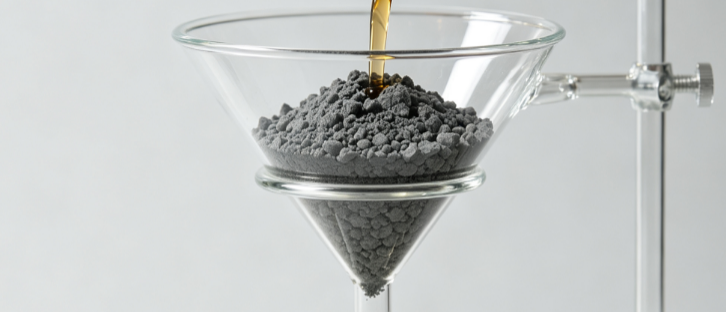
Solid decolorizing agents – including activated carbons, clays (bentonite, attapulgite), silica gels, synthetic adsorbent resins, and composite materials – are widely employed in the refining of edible oils, sugar solutions, chemical intermediates, and pharmaceutical streams to remove color bodies, residual pigments, polycyclic aromatic hydrocarbons (PAHs), and other undesirable impurities. The efficacy of these agents is governed by a complex interplay of specific surface area, pore architecture, particle size distribution, surface chemistry, moisture content, and the presence of acid-soluble or leachable species. A rigorous, multi-parametric analytical evaluation is therefore indispensable for quality control, process optimization, supplier qualification, and troubleshooting of discoloration or filtration issues. Our ISO/IEC 17025-accredited laboratory offers a dedicated, high-depth testing service tailored specifically for solid decolorizing agents, integrating advanced physical, chemical, and performance-based methods to deliver a complete functional profile – far beyond simple iodine number or methylene blue adsorption.
Why Comprehensive Characterization of Decolorizing Agents Is Essential for Industrial Quality and Process Efficiency
Clients seeking our testing services typically aim to: (i) quantify the adsorptive capacity for target colorants and simulate real-world decolorization efficiency, (ii) determine the specific surface area and pore size distribution to assess the accessibility of active sites, (iii) measure the particle size and mechanical strength to predict filterability and attrition losses, (iv) evaluate the moisture content, pH, and acid-soluble residue to ensure chemical compatibility with the process stream, (v) screen for leachable heavy metals or organic contaminants that may contaminate the product, (vi) compare different grades or suppliers for optimal cost-performance, and (vii) generate robust data for product certification, regulatory compliance, and process scale-up. Single-parameter tests such as simple decolorization tests (e.g., caramel index) are insufficient because the real-world performance depends on the interplay of pore structure, surface functionality, and particle handling properties, all of which require a combination of complementary techniques. Our integrated platform combines N₂ physisorption (BET surface area, BJH/NLDFT pore size distribution), mercury porosimetry, laser diffraction particle sizing, gravimetric moisture analysis (Karl Fischer and loss on drying), pH measurement, acid-soluble residue determination, specific decolorization tests (e.g., caramel, β-carotene, or methylene blue), extraction and analysis of leachables by ICP-MS and GC-MS, mechanical strength (crush and attrition) testing, and Thermogravimetric Analysis (TGA) for volatile content – providing a complete performance and safety profile.
Our Comprehensive Analytical Framework for Solid Decolorizing Agents
1. Textural Properties: Surface Area, Pore Volume, and Pore Size Distribution
We perform N₂ physisorption at 77 K over a relative pressure range of 10⁻⁶–0.995 to determine the BET-specific surface area (with a precision of ±1.5%), total pore volume, and micropore volume (via the t-plot, αs-plot, or NLDFT methods). The pore size distribution is derived using NLDFT, QSDFT, BJH, and the Horvath–Kawazoe model, depending on the pore size regime. For macroporosity and interparticle voids, we use mercury intrusion porosimetry (up to 600 MPa) to obtain pore throat distributions and bulk density. These textural parameters directly correlate with the adsorption kinetics and the capacity for colorants of varying molecular sizes.
2. Particle Size, Morphology, and Mechanical Stability
We measure the particle size distribution by laser diffraction (dry or wet dispersion) from 0.1 to 3500 µm, reporting D10, D50, D90, and the span. The morphology and surface texture are examined by field-emission scanning electron microscopy (FE-SEM) with energy-dispersive X-ray spectroscopy (EDS) for elemental mapping. For granular or extruded agents, we evaluate the crushing strength (individual particle) and attrition resistance (ASTM D5757 or D4058), reporting the attrition index and the fines generation. These mechanical properties are critical for predicting the filter cake behavior, pressure drop, and dusting during handling.
3. Decolorization Performance: Standard and Customized Adsorption Tests
We perform standard decolorization tests using model colorants such as caramel (ASTM D1209), β-carotene, or methylene blue. For each test, we determine the adsorption capacity (mg/g) from the Langmuir or Freundlich isotherm, and the kinetic rate constant from pseudo-first-order or pseudo-second-order models. For customer-specific applications, we can design custom decolorization tests using your actual process liquor or a synthetic analog, measuring the color reduction (via UV-Vis spectrophotometry or colorimetry) as a function of adsorbent dosage and contact time. We also evaluate the selectivity of the adsorbent towards color bodies vs. valuable components (e.g., sugar loss in the decolorization of sugar solutions).
4. Moisture, Volatile Matter, and Loss on Drying
We determine the moisture content by Karl Fischer coulometric titration (with a detection limit of 0.01%) and by loss on drying at 105 °C (ASTM D2867) for routine screening. The total volatile matter is measured by Thermogravimetric Analysis (TGA) from 25 °C to 600 °C under nitrogen, quantifying the loss of adsorbed water, organic volatiles, and decomposition products. These data are essential for calculating the dry-basis adsorption capacity and for ensuring the agent does not introduce unwanted moisture into the product stream.
5. pH, Acid-Soluble Residue, and Extractable Substances
We measure the pH of the aqueous extract (1:10 suspension in deionized water, ASTM D3838) to assess the acidity or alkalinity of the agent, which can affect the stability of the product or cause corrosion. The acid-soluble residue (e.g., silica, alumina, or metal oxides) is determined by digesting the sample with dilute HCl and weighing the insoluble matter (gravimetric) and analyzing the soluble fraction by ICP-OES. For organic leachables, we perform solvent extraction with dichloromethane or hexane, followed by GC-MS analysis to detect any PAHs, plasticizers, or other contaminants that could migrate into the process fluid. This is particularly critical for food-grade and pharmaceutical applications.
6. Trace Metal and Elemental Impurity Profiling
We screen for over 40 trace elements (including As, Pb, Cd, Hg, Fe, Cu, Zn, Mn, Ni, Cr, etc.) using inductively coupled plasma mass spectrometry (ICP-MS) after microwave-assisted digestion, achieving detection limits in the sub-ppb range. The results are compared against relevant food-contact or pharmaceutical regulations (e.g., USP <231>, EP 2.4.8, or FDA guidelines) to ensure the adsorbent is safe for its intended application.
7. Thermal Stability and Regeneration Behavior
We conduct Thermogravimetric Analysis (TGA) coupled with differential scanning calorimetry (DSC) and evolved gas MS from 25 °C to 800 °C to evaluate the thermal stability of the adsorbent and to determine the maximum permissible regeneration temperature. For spent adsorbents, we also evaluate the regenerability by thermal or chemical treatment, measuring the recovery of the adsorption capacity after multiple cycles. This data is critical for determining the economic viability of the agent in continuous processes.
8. Wettability and Surface Energy (Optional)
For specialized applications (e.g., hydrophobic media), we measure the water contact angle on compressed pellets and determine the surface energy components by inverse gas chromatography (IGC) at infinite dilution. These surface characteristics influence the adsorption of non-polar colorants and the compatibility with organic solvents.
Our Distinctive Advantages in Solid Decolorizing Agent Testing
1. Fully Integrated Performance and Safety Platform: We uniquely combine textural analysis (BET, porosimetry), decolorization performance testing (standard and custom), mechanical strength, and safety testing (leachables, heavy metals, pH) in a single workflow. This integration allows us to correlate, for example, the pore size distribution with the decolorization efficiency for a specific colorant, or the acid-soluble residue with the tendency to leach undesirable substances. Such a comprehensive approach provides a complete fitness-for-use evaluation that is rarely available from standard testing services.
2. Expertise in a Wide Range of Adsorbent Materials: We have extensive experience with activated carbons (coal-based, coconut shell, wood), clays (acid-activated, bleaching earth), synthetic silicas, polymeric adsorbents (e.g., styrene-divinylbenzene resins), and composites. We have developed customized sample preparation protocols to accommodate the different physical forms – powders, granules, pellets, and extrudates – ensuring representative sampling and accurate results. Our inter-laboratory reproducibility for key parameters (BET, decolorization capacity, moisture) is within 2–3% RSD, validated on over 200 commercial products.
3. Advanced Performance Simulation and Process Design Support: We can simulate dynamic adsorption conditions using a continuous flow system (fixed-bed column) to measure the breakthrough curve and the capacity at breakthrough (e.g., 5% or 10% of influent concentration). We also provide process optimization recommendations regarding the optimal contact time, dosage, temperature, and agitation speed, based on the kinetic and equilibrium data. This goes beyond simple batch testing and offers actionable insights for plant-scale implementation.
4. Regulatory-Grade Quality and Full Traceability: Our facility is accredited under ISO/IEC 17025:2017 for all relevant test methods (BET, particle size, moisture, pH, and elemental analysis). We use NIST-traceable reference materials and certified standards (e.g., caramel, β-carotene, and colorimetric standards). All measurement uncertainties are reported with expanded uncertainties (k=2) typically <2% for surface area, <3% for decolorization capacity, and <5% for trace metal levels, ensuring the data are defensible in quality audits, regulatory submissions, and product liability cases.
5. Expert Consultation and Application-Specific Guidance: Each project is led by a senior adsorbent specialist with industrial experience in food, chemical, and pharmaceutical purification. We provide interpretative reports that not only present the data but also offer comparative benchmarking against competitive products, identify potential performance bottlenecks (e.g., pore blockage, competition from non-color bodies), and recommend the most cost-effective adsorbent grade for your specific application. We also offer co-authorship support for research publications and assist in drafting material specifications.
Report Deliverables and Client Empowerment
Our final comprehensive report includes: (a) detailed textural properties – BET surface area, total pore volume, micropore volume, pore size distribution (NLDFT/BJH), and mercury porosimetry data; (b) particle size distribution (D10, D50, D90, span) with SEM images and EDS maps; (c) decolorization performance – adsorption capacity and kinetics for standard colorants (caramel, methylene blue, β-carotene) and/or custom test with your process liquor; (d) moisture content (Karl Fischer and LOD), volatile matter (TGA), and pH of aqueous extract; (e) acid-soluble residue and extractable organics by GC-MS; (f) trace metal profile (ICP-MS) with compliance assessment; (g) mechanical strength and attrition resistance data; (h) thermal stability and regeneration efficiency (if requested); (i) a benchmarking summary comparing your agent with industry references and competitor products; (j) a process optimization guide with recommended dosage, contact time, and regeneration parameters; and (k) a safety compliance summary for food-grade or pharmaceutical applications. All raw data (physisorption isotherms, breakthrough logs, chromatograms, spectra, thermograms, and images) are supplied in open, machine-readable formats (CIF, JCAMP-DX, .csv, .tiff, .mzML) for independent verification and integration into your quality management system.
We also offer subscription-based quality surveillance programs for regular incoming inspection, with trend analysis and statistical process control (SPC) charts. Our secure client portal provides 24/7 access to project data and direct communication with our technical experts.
Conclusion: Precision Characterization for Reliable and Efficient Decolorization
Solid decolorizing agents are critical to producing high-purity products in diverse industries, and their performance and safety depend on a thorough understanding of their physical, chemical, and functional properties. Our testing service provides exactly that – integrating state-of-the-art surface analysis, performance testing, safety screening, and process simulation with expert interpretation. By choosing our laboratory, you gain a trusted partner that ensures your adsorbent consistently meets the demands of your purification process, complies with regulatory standards, and delivers cost-effective results. Partner with our expert team today to design a customized testing protocol – we are committed to advancing your quality and innovation with unmatched analytical depth and scientific rigor.