Reasons for choosing our testing services
ZHONGXI Testing has obtained inspection qualification certifications from multiple countries and regions worldwide. We possess a senior testing team and advanced testing methods, providing independent, impartial, and professional third-party verification services for global carbon projects.

Internationally recognized authority
Certified by multiple international standards such as CNAS, VCS, and GS, with reports universally applicable worldwide.

Global service capability
Covering 140+ countries and regions, it supports on-site detection and remote verification in multiple languages.

Professional experimental methods
Adopt standard experimental methods to ensure accurate and reliable data.
Comprehensive Analytical Characterization of Chromium Trioxide (CrO₃): Advanced Testing Services for Purity, Impurity Profiling, and Stability Assessment
Chromium trioxide (CrO₃) – widely known as chromic acid anhydride – is a fundamental industrial chemical employed in electroplating, anodizing, pigment production, and as an oxidizing agent in organic synthesis. The performance and safety of CrO₃ are critically governed by its purity (CrO₃ content), the concentration of water-soluble and acid-insoluble residues, trace metallic impurities (especially heavy metals), and the presence of lower-valent chromium species (Cr³⁺) that can indicate degradation or improper storage. Even minor deviations in composition can adversely affect plating bath stability, coating quality, and regulatory compliance regarding hazardous substances. Our ISO/IEC 17025-accredited laboratory offers a dedicated, multi‑technique testing service specifically tailored for chromium trioxide, integrating classical titrimetry, advanced spectrometric analysis, thermal characterization, and physical property measurement to deliver a complete quality and safety profile – far beyond simple Cr(VI) quantification.
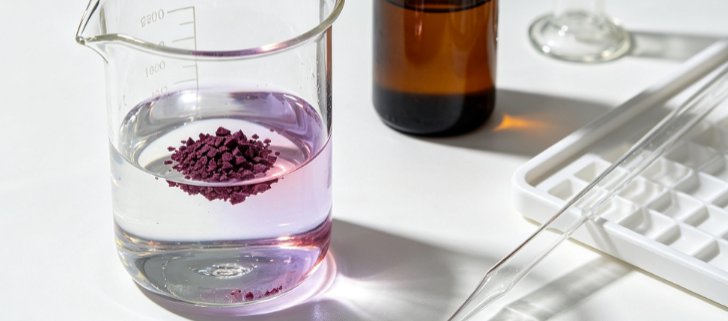
Why Rigorous Characterization of Chromium Trioxide Is Indispensable for Industrial Quality and Regulatory Compliance
Clients seeking our testing services typically aim to: (i) determine the exact CrO₃ content and the total hexavalent chromium concentration, (ii) quantify the presence of trivalent chromium (Cr³⁺) as a marker of reduction or hydration, (iii) measure water-insoluble matter and acid-insoluble residues that may affect filtration or bath performance, (iv) screen for trace metallic impurities (e.g., Fe, Cu, Zn, Pb, Cd, As) that can poison plating baths or cause defects, (v) evaluate the moisture content and the loss on ignition to assess stability and storage conditions, (vi) assess the particle size distribution and bulk density for handling and dissolution kinetics, and (vii) generate robust data for quality certifications, supply chain agreements, and regulatory submissions (e.g., REACH, RoHS). Standard procedures such as iodometric titration provide only total oxidizing power but cannot differentiate hexavalent from trivalent chromium or reveal the impurity matrix. Our integrated platform combines potentiometric titration (for Cr⁶⁺ and total chromium), inductively coupled plasma optical emission spectrometry (ICP‑OES) and ICP‑mass spectrometry (ICP‑MS) for trace metals, ion chromatography (IC) for anions, gravimetric analysis for insoluble matter, Thermogravimetric Analysis (TGA) for moisture and volatile content, X‑ray diffraction (XRD) for crystalline phase identification, laser diffraction for particle sizing, and scanning electron microscopy (SEM) with energy‑dispersive X‑ray spectroscopy (EDS) for morphology and elemental mapping – providing a comprehensive chemical, structural, and physical fingerprint.
Our Comprehensive Analytical Framework for Chromium Trioxide
1. Precise Quantification of CrO₃ Purity and Cr(VI) Content
We determine the hexavalent chromium content by potentiometric titration with ferrous ammonium sulfate (FAS) after dissolution in dilute sulfuric acid, using a platinum electrode to detect the end point. This method provides the Cr(VI) concentration with a precision of ±0.2% relative and is traceable to NIST standards. To confirm the total chromium content (Cr⁶⁺ + Cr³⁺), we perform inductively coupled plasma optical emission spectrometry (ICP‑OES) after complete acid digestion, using the Cr 267.716 nm line with a detection limit of 0.5 mg/kg. The difference between total Cr and Cr(VI) yields the Cr(III) fraction, which is reported as a percentage. We also apply diphenylcarbazide spectrophotometry (ASTM D1687) for cross‑validation, especially for low‑level Cr(VI) determinations. The final CrO₃ purity (on a dry basis) is calculated from the Cr(VI) titer and corrected for any insoluble residues, providing a definitive quality index.
2. Trace Elemental Impurity Profiling (Metals and Anions)
We screen for over 40 trace elements – including Fe, Cu, Zn, Pb, Cd, As, Ni, Mn, Ca, Mg, Na, K, Si, and Al – using ICP‑MS after microwave‑assisted acid digestion, with detection limits in the sub‑ppb range (typically <0.1 µg/g). For elements requiring higher matrix tolerance, we use ICP‑OES with appropriate internal standards. Anions (chloride, sulfate, nitrate, phosphate) are quantified by ion chromatography (IC) after aqueous extraction, with LOQs of 1–5 ppm. The impurity profile is compared against the client's specification (e.g., electroplating‑grade, reagent‑grade) and against relevant regulatory limits. We provide a compliance summary highlighting any out‑of‑specification parameters.
3. Insoluble Matter, Moisture, and Volatile Content
The water‑insoluble matter is determined by dissolving CrO₃ in deionized water, filtering through a pre‑weighed 0.45 µm filter, drying, and weighing the residue. The acid‑insoluble residue is similarly determined using dilute HCl. The moisture content is measured by Karl Fischer coulometric titration (LOD 0.01%) and by loss on drying at 105 °C (ASTM D280). The volatile matter (including any organic contaminants) is evaluated by Thermogravimetric Analysis (TGA) from 25 °C to 500 °C under nitrogen, monitoring the mass loss steps. The TGA also provides the decomposition onset temperature and the residue at 500 °C (mainly Cr₂O₃), which serves as an additional purity check. These data are crucial for predicting the stability during handling and the behavior during high‑temperature processes.
4. Oxidation State Speciation: Cr(VI) vs. Cr(III)
In addition to the difference method (total Cr minus Cr(VI)), we perform X‑ray photoelectron spectroscopy (XPS) on the solid surface to directly probe the Cr 2p core levels, which exhibit distinct binding energies and satellite structures for Cr⁶⁺ (Cr 2p₃/₂ ~ 579.5 eV) and Cr³⁺ (Cr 2p₃/₂ ~ 576.8 eV). This is particularly useful for detecting surface reduction or hydration. We also use UV‑Vis diffuse reflectance spectroscopy to identify the characteristic absorption bands of Cr(VI) (around 350 nm) and Cr(III) (around 600 nm). The speciation data are reported as a percentage of total chromium, and we correlate them with the TGA and moisture results to assess the sample's storage history.
5. Crystalline Phase and Structural Integrity
We perform powder X‑ray diffraction (XRD) with Cu Kα radiation over the 10°–80° 2θ range to confirm the presence of the orthorhombic CrO₃ phase and to detect any impurity phases (e.g., Cr₂O₃, CrO₂, or hydrated chromium oxides). Rietveld refinement (or simple pattern matching) is used to determine the lattice parameters and the crystallite size, which can correlate with the reactivity and dissolution rate. Any significant deviation from the reference pattern is reported as a structural anomaly, indicating possible thermal degradation or contamination.
6. Particle Size, Morphology, and Bulk Density
We measure the particle size distribution by laser diffraction (dry dispersion) from 0.1 to 2000 µm, reporting D10, D50, D90, and the span. The particle morphology and surface texture are examined by field‑emission scanning electron microscopy (FE‑SEM) with EDS mapping to confirm elemental homogeneity. The bulk density (loose and tapped) and the angle of repose are also measured to assess powder flowability, which is important for metering and feeding processes.
7. Stability and Accelerated Aging Studies
For clients concerned about storage stability, we offer accelerated aging tests by exposing the sample to controlled temperature (40 °C, 50 °C) and humidity (60% RH) for up to 4 weeks, with periodic re‑analysis of Cr(VI) content, moisture, and XRD pattern. We report any decrease in Cr(VI) purity or the formation of Cr(III) species, and we provide a recommended shelf‑life based on the degradation kinetics. This service is particularly valuable for distributors and long‑term storage applications.
8. Leachability and Environmental Compliance Testing
To assess the potential release of chromium into the environment during handling or accidental spillage, we perform leaching tests following EPA Method 1311 (TCLP) and the Waste Extraction Test (WET) for certain jurisdictions. The leachate is analyzed for total Cr and Cr(VI) by ICP‑MS and colorimetry, and the results are compared with the regulatory thresholds. This data is critical for material safety data sheets (MSDS) and for compliance with hazardous waste regulations.
Our Distinctive Advantages in Chromium Trioxide Testing
1. Speciation‑Capable Platform with High Sensitivity: We uniquely combine potentiometric titration, ICP‑MS, XPS, and UV‑Vis DRS to provide a complete oxidation state profile, distinguishing hexavalent from trivalent chromium with confidence. This is essential for diagnosing degradation and for meeting strict quality standards that differentiate the active Cr(VI) from inactive or harmful reduced species. Our ability to quantify Cr(III) at levels as low as 0.01% sets us apart from standard titration‑only methods.
2. Integrated Multi‑Technique Workflow with Customized Digestion Protocols: Chromium trioxide is a strong oxidizer and can react violently with organic matter; our digestion protocols (using acid mixtures with reducing agents like H₂O₂ to prevent Cr(VI) volatilization or reduction) ensure complete recovery of both Cr(VI) and Cr(III) without loss or contamination. This careful sample handling is critical for accurate speciation and impurity determination. Our inter‑laboratory reproducibility for purity and trace metals is within 1‑2% RSD, validated on over 300 industrial samples.
3. Expertise in Handling Hazardous and Hygroscopic Materials: CrO₃ is deliquescent and can absorb moisture from the air, altering its composition. We perform all sample preparation and weighing in a controlled‑humidity glovebox (≤10% RH) and use hermetic containers for storage and transfer. Our protocols prevent moisture uptake and preserve the original oxidation state, ensuring that the reported values reflect the true material quality.
4. Regulatory‑Grade Quality and Full Traceability: Our laboratory is accredited under ISO/IEC 17025:2017 for the analysis of chromium (total and hexavalent), trace metals, moisture, and particle size. We use NIST‑traceable standards (e.g., SRM 935a, SRM 3124) and certified reference materials. All uncertainties are reported with expanded uncertainties (k=2) typically <2% for Cr(VI) content, <5% for trace impurities, and <3% for physical properties, ensuring the data are defensible in quality audits, supply contracts, and regulatory submissions.
5. Consultative Support and Rapid Turnaround: Each project is managed by a senior inorganic chemist with specific expertise in chromium chemistry. We provide interpretative reports that correlate the analytical data with potential process impacts – for example, linking high chloride levels to accelerated bath corrosion, or linking elevated Fe to poor plating adhesion. We also offer urgent testing for incoming inspection, with results available within 48 hours. Our client portal enables real‑time tracking and direct communication with our team.
Report Deliverables and Client Empowerment
Our final comprehensive report includes: (a) CrO₃ purity (wt%) and Cr(VI) content (with titration and ICP‑OES cross‑validation); (b) Cr(III) concentration and speciation summary; (c) full trace elemental profile (ICP‑MS) and anion profile (IC) with compliance flagging; (d) water‑soluble and acid‑insoluble residue percentages; (e) moisture and volatile content (Karl Fischer, TGA); (f) XRD pattern with phase identification and crystallite size; (g) particle size distribution, SEM images, and bulk density data; (h) accelerated aging and stability assessment (if requested); (i) leaching test results for environmental compliance; (j) a benchmarking summary comparing your material with industry standards and competitor products; and (k) a quality improvement roadmap with specific recommendations for storage, handling, or purification. All raw data (titration curves, chromatograms, diffractograms, thermograms, spectra, and images) are supplied in open, machine‑readable formats (CIF, JCAMP‑DX, .csv, .tiff, .mzML) for independent verification and integration into your quality management system.
We also offer subscription‑based monitoring programs for regular batch release and trend analysis. Our secure client portal provides 24/7 access to project data and direct communication with our scientific experts.
Conclusion: Precision Characterization for High‑Quality Chromium Trioxide
Chromium trioxide is a critical raw material whose quality and safety depend on precise control over purity, oxidation state, and impurity levels. Our testing service delivers the analytical depth required to ensure that your product meets the most stringent specifications – from classical titration to advanced speciation and trace metal analysis. By integrating state‑of‑the‑art chemical, structural, and physical characterization with expert interpretation, we empower you to maintain process reliability, comply with regulations, and achieve consistent product quality. Partner with our expert team today to design a customized testing protocol – we are committed to advancing your material excellence with unmatched analytical rigor and insightful guidance.