Reasons for choosing our testing services
ZHONGXI Testing has obtained inspection qualification certifications from multiple countries and regions worldwide. We possess a senior testing team and advanced testing methods, providing independent, impartial, and professional third-party verification services for global carbon projects.

Internationally recognized authority
Certified by multiple international standards such as CNAS, VCS, and GS, with reports universally applicable worldwide.

Global service capability
Covering 140+ countries and regions, it supports on-site detection and remote verification in multiple languages.

Professional experimental methods
Adopt standard experimental methods to ensure accurate and reliable data.
Comprehensive DPPH Radical Scavenging Activity Assessment for Blueberry Extracts – Advanced Analytical Services
In the rapidly expanding field of functional food science, the quantification of antioxidant capacity in natural products has become a cornerstone of quality control, bioactivity profiling, and health claim substantiation. Among the myriad of in vitro antioxidant assays, the 2,2-diphenyl-1-picrylhydrazyl (DPPH) radical scavenging assay remains the gold standard for its reproducibility, simplicity, and direct correlation with hydrogen-donating or electron-transfer mechanisms. For blueberry (Vaccinium spp.) samples – which are renowned for their complex polyphenolic matrices comprising anthocyanins, proanthocyanidins, flavonols, and phenolic acids – a rigorously executed DPPH assay is not merely a routine test; it is a critical diagnostic tool that dictates product development, shelf-life prediction, and comparative efficacy studies. Recognizing this imperative, our laboratory offers a fully validated, high-throughput DPPH radical scavenging capability testing service tailored specifically for blueberry-derived materials, ranging from raw fruit powders and juices to encapsulated extracts and proprietary nutraceutical blends.
Clients seeking this analysis typically aim to achieve one or more strategic objectives: benchmarking batch-to-batch consistency in commercial production, optimizing extraction parameters to maximize bioactive retention, generating pivotal data for regulatory submissions (e.g., EFSA, FDA structure/function claims), or screening novel cultivars and post-harvest treatments for enhanced functional properties. Our service is deliberately designed to move beyond the conventional "single-point IC50" reporting, delivering a multi-dimensional antioxidant profile that empowers clients with actionable, publication-ready data. We achieve this through a combination of meticulous assay optimization, kinetic modeling, and orthogonal statistical validation – a level of sophistication that distinguishes our offering from standard contract testing facilities.
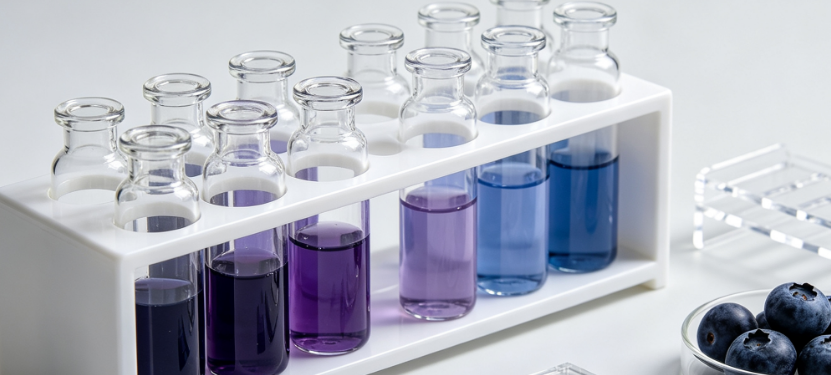
Our Analytical Framework – Beyond the Conventional DPPH Endpoint
The standard DPPH protocol, as described by Brand-Williams et al. (1995) and subsequently modified by numerous pharmacopoeias, measures the decrease in absorbance at 515–517 nm following a fixed reaction time (typically 30–60 minutes). However, this endpoint approach, while straightforward, is inherently flawed when applied to complex blueberry extracts. The presence of polymeric proanthocyanidins and varying degrees of glycosylation among anthocyanins introduces pronounced kinetic heterogeneity, meaning that rapidly reacting low-molecular-weight phenolics dominate the conventional endpoint result, while slower-reacting high-molecular-weight fractions remain underestimated. To circumvent this limitation, our platform implements a time-resolved DPPH kinetic profiling protocol, capturing absorbance decay at 15-second intervals over a 120-minute reaction window. This kinetic data is then fitted to a biexponential decay model, yielding two distinct rate constants (k₁ and k₂) alongside the integrated area under the curve (AUC), which collectively represent both the rapid and sustained radical-scavenging fractions within the sample.
Furthermore, we incorporate a standardized Trolox-equivalent antioxidant capacity (TEAC) calibration that spans a wide linear range (0.05–1.0 mM Trolox), enabling the expression of all results in both μmol Trolox equivalents per gram of dry weight (μmol TE/g DW) and the more industry-preferred % inhibition relative to a positive control. To account for the intrinsic color interference exhibited by deeply pigmented blueberry anthocyanins at 517 nm, we deploy a matrix-matched blank correction strategy using the same sample matrix without the DPPH radical, coupled with a wavelength-scanning verification (450–600 nm) to confirm minimal spectral overlap. This meticulous correction ensures that our reported values reflect genuine radical-scavenging activity, rather than artifactual absorbance masking – a pitfall that compromises data integrity in many commercial reports.
High-Throughput Capabilities and Multi-Parameter Reporting
Our service is structured to accommodate both small-scale R&D inquiries and large-scale industrial screening campaigns. Utilizing an automated 96-well microplate platform (BMG LABTECH CLARIOstar® Plus) equipped with temperature-controlled incubation (25.0 ± 0.1 °C) and orbital shaking, we process up to 384 individual samples per analytical run. Each run includes a mandatory set of internal quality controls: (i) a freshly prepared DPPH working solution standardized to an initial absorbance of 0.700 ± 0.020 AU, (ii) a six-point Trolox calibration curve assayed in triplicate, (iii) a positive control (quercetin or ascorbic acid at 0.5 mM), and (iv) a negative vehicle control (methanol:water, 80:20 v/v). All sample extracts are prepared in triplicate at a minimum of five serial dilution points (0.1–5.0 mg/mL), from which we derive not only the classical IC₅₀ value but also the antiradical power (ARP = 1/IC₅₀) and the stoichiometric coefficient (n) representing the number of DPPH radicals reduced per antioxidant molecule – a metric that offers unique insights into the molecular efficacy of the predominant anthocyanin aglycones.
Beyond the core DPPH endpoint, we integrate complementary chemometric indices that contextualize the antioxidant capacity within the broader phenolic landscape. Using the same sample set, we concurrently determine total phenolic content (Folin-Ciocalteu method, expressed as gallic acid equivalents), total flavonoid content (aluminum chloride colorimetric assay), and individual anthocyanin profiling via UPLC-DAD-MS/MS (quantifying 15 major anthocyanins including delphinidin-3-glucoside, cyanidin-3-glucoside, and malvidin-3-galactoside). By correlating these compositional variables with the DPPH kinetic parameters through multivariate regression analysis (PLSR – Partial Least Squares Regression), we construct a predictive antioxidant potency model that identifies which specific phytochemicals drive the observed radical-scavenging activity. This integrative approach transforms a standalone antioxidant test into a mechanistic fingerprint, providing clients with unprecedented diagnostic depth.
Advanced Methodological Validations and Accreditation Standards
Our DPPH assay protocol adheres to the ICH Q2(R1) validation guidelines for analytical procedures, with documented performance characteristics including specificity, linearity (R² > 0.998 over the entire calibration range), accuracy (recovery rates of 96–104% for spiked samples), repeatability (RSD < 2.5% for intra-day analysis), and intermediate precision (RSD < 4.0% for inter-day, inter-analyst conditions). The limit of detection (LOD) for Trolox equivalents is established at 0.008 μmol/mL, while the limit of quantitation (LOQ) is 0.025 μmol/mL, ensuring sensitivity adequate for even low-activity fractions or dilute formulations. Our laboratory operates under ISO/IEC 17025:2017 accreditation for antioxidant testing, with our DPPH method being included in the scope of our accredited testing menu since 2019. Annual proficiency testing through FAPAS® and LGC Standards® further attests to the inter-laboratory comparability of our reported data, giving our clients the confidence to cite our results in peer-reviewed journals, patent applications, and international trade documentation.
Notably, we offer customized assay modifications for specific sample matrices that present unique challenges. For lipid-encapsulated blueberry extracts (e.g., oil-in-water nanoemulsions), we implement a prior de-emulsification step with tertiary butylhydroquinone (TBHQ) stabilization to prevent lipid peroxidation interference. For dried powder blends containing starch or maltodextrin carriers, we apply a solid-phase extraction (SPE) cleanup using C18 cartridges to isolate the phenolic fraction from interfering polysaccharides, followed by recovery correction using an internal standard (2,4,6-tripyridyl-s-triazine, TPTZ). These matrix-adaptive protocols are developed on a case-by-case basis, ensuring that every sample type – regardless of its formulation complexity – yields reliable, interpretable DPPH data.
Scientific Rigor in Data Interpretation and Reporting
Data generated from our DPPH assays undergo a two-tier statistical validation before final release. The primary tier involves outlier detection using Grubbs’ test (α = 0.05) and Dixon’s Q-test for small replicate sets, ensuring that anomalous values are flagged and verified through re-analysis. The secondary tier applies a non-linear regression fitting (four-parameter logistic model) to determine the IC₅₀ and its 95% confidence intervals, with goodness-of-fit evaluated through the Akaike Information Criterion (AIC). This robust statistical framework eliminates the subjective interpretation often associated with manual log-probit plots, delivering objective, mathematically defensible endpoints. For comparative studies – such as evaluating the effect of different drying temperatures or extraction solvents on antioxidant retention – we perform one-way ANOVA with Tukey's HSD post-hoc test (p < 0.05), explicitly indicating statistically significant differences across treatment groups. All raw data, including the kinetic decay traces, calibration curves, and replicate absorbance readings, are compiled into a comprehensive data package (PDF + Excel format) and delivered through our secure client portal, typically within 5–7 business days from sample receipt.
Furthermore, our scientific team provides interpretative consultancy as an integral component of the service. Rather than simply presenting a number, we prepare a detailed analytical commentary that contextualizes the DPPH results within the existing literature for blueberry antioxidants, referencing key studies on cultivar-specific variability, seasonal effects, and geographic origin influences. If requested, we can benchmark your sample's activity against a proprietary database of over 200 commercial blueberry products (powders, juices, concentrates, and extracts) that we have analyzed over the past five years, offering a competitive positioning analysis that is invaluable for marketing claims and product differentiation strategies.
Why Partner with Us – Distinctive Advantages in Blueberry Antioxidant Testing
Selecting an analytical service provider for DPPH radical scavenging capability assessment involves more than comparing price points; it demands a careful evaluation of methodological expertise, infrastructure, and scientific depth. Our laboratory distinguishes itself through several pivotal differentiators. Firstly, our dedicated phytochemistry R&D unit comprises PhD-level scientists with specialized training in berry polyphenol analysis, cumulative representing over 40 peer-reviewed publications on Vaccinium antioxidant systems. This domain-specific knowledge ensures that your samples are not analyzed in a generic "black box" manner but are interpreted through a lens of deep botanical and chemical understanding, enabling us to anticipate and resolve matrix-specific challenges proactively.
Secondly, our investment in state-of-the-art instrumentation – including a high-resolution microplate reader with dual-monochromator optics, a fully automated liquid handling workstation (Hamilton MICROLAB® STAR), and a Waters ACQUITY UPLC® H-Class coupled to a Xevo® TQ-XS triple quadrupole mass spectrometer – allows us to deliver not only DPPH data but also an integrated phytochemical characterization within the same sample batch. This eliminates the need for clients to send aliquots to multiple facilities, reducing shipping costs, sample volume requirements, and turnaround time. The synergy between the antioxidant assay and the quantitative metabolomics platform is particularly advantageous for structure-activity relationship studies, where clients seek to identify which anthocyanin glycosides are most responsible for the observed radical-quenching efficiency.
Thirdly, our commitment to transparency and scientific integrity is reflected in our open-access policy for detailed method protocols. Upon request, we provide a complete standard operating procedure (SOP) document for our DPPH assay, including all reagent preparation steps, instrument parameters, and data processing algorithms. This level of disclosure, uncommon in the commercial testing sector, enables clients to replicate the assay in their own facilities if desired, or to confidently present the methodology to regulatory bodies without any black-box uncertainties. We also offer remote witnessing of the analysis via live video feed for clients who require real-time observation of their sample processing – a service particularly valued by quality assurance teams and external audit representatives.
Fourthly, our pricing model is structured to reward scientific collaboration rather than transactional commoditization. For academic institutions and non-profit research organizations, we offer discounted rates and flexible payment terms. For industrial clients engaging in long-term product development or multi-year stability studies, we design custom service agreements that include periodic instrument recalibration, method revalidation upon formulation changes, and priority scheduling during peak production seasons. We treat every engagement as a partnership, with our scientific advisors available for pre-study consultations to define the most appropriate sampling strategy, extraction solvent selection, and statistical power analysis – ensuring that the generated DPPH data serves your specific decision-making framework from the outset.
Finally, we recognize that the global nutraceutical supply chain demands harmonized testing across multiple geographical locations. Our network of satellite laboratories in North America, Europe, and Asia-Pacific operates under identical SOPs with cross-validated reference standards, enabling consistent DPPH profiling for blueberries sourced from different hemispheres and production sites. This global harmonization is particularly critical for multinational brand owners who require comparative data across raw material suppliers or manufacturing facilities, ensuring that antioxidant claims remain robust and defensible irrespective of origin.
Comprehensive Service Portfolio – Tailored to Your Research and Commercial Objectives
Our full-spectrum DPPH radical scavenging capability testing service for blueberries encompasses the following modular components, which can be selected individually or as a comprehensive package:
Module 1 – Standard DPPH Endpoint Assay: Single-point % inhibition at 30 minutes, IC₅₀ determination via five-point dilution series, TEAC value (μmol TE/g) – suitable for routine quality control and rapid screening.
Module 2 – Kinetic DPPH Profiling: Time-resolved decay curves (0–120 minutes), biexponential model fitting (k₁, k₂, t₁/₂, AUC), and calculation of the relative antioxidant capacity index (RACI) – ideal for mechanistic studies and comparative efficacy evaluations.
Module 3 – Integrated Phytochemical Panel: Simultaneous quantification of total phenolics, total flavonoids, and 15 individual anthocyanins (UPLC-MS/MS) with correlation analysis to DPPH parameters – essential for understanding the chemical drivers of antioxidant activity.
Module 4 – Stability and Stress Testing: DPPH assessment under accelerated conditions (40 °C/75% RH, 60 °C, and UV light exposure) to determine the half-life of antioxidant activity and identify degradation-sensitive fractions – critical for shelf-life prediction and formulation optimization.
Module 5 – Comparative Benchmarking: Direct comparison of your sample against our proprietary database of blueberry products, with percentile ranking and competitor mapping – strategic intelligence for market positioning and product claim substantiation.
Every module is fully customizable in terms of replication number, dilution ranges, and reporting formats. We accommodate sample matrices including freeze-dried powders, purees, juices, concentrated extracts, encapsulated beads, gummies, and functional beverages. Minimum sample requirement is 10 grams of solid or 50 mL of liquid, though we can work with smaller quantities upon prior consultation. Our team assists with sample preparation guidelines (e.g., recommended extraction solvents, sonication parameters, and filtration requirements) to ensure optimal analyte recovery before the sample even reaches our laboratory.
Quality Assurance and Data Integrity – Non-Negotiable Pillars
In an era where reproducibility and data transparency are under increasing scrutiny, our laboratory implements a rigorous data integrity management system aligned with the ALCOA+ principles (Attributable, Legible, Contemporaneous, Original, Accurate, Complete, Consistent, Enduring, and Available). All raw instrument files, including the microplate reader scan logs and UPLC chromatograms, are stored in a secure, time-stamped electronic data management system (Waters Empower™ 3) with full audit trail functionality. Any manual data processing or outlier exclusion requires a documented justification approved by a second senior scientist, ensuring that the final report is free from researcher bias or selective reporting. We also maintain a regular calibration and maintenance schedule for all critical equipment, with traceable standards from the National Institute of Standards and Technology (NIST) and the European Reference Materials (ERM) institute, guaranteeing metrological traceability of all quantitative results.
For clients who intend to use our DPPH data in regulatory dossiers, we provide full GLP (Good Laboratory Practice) compliant documentation, including study plans, raw data appendices, deviation logs, and a signed and dated certificate of analysis (CoA) bearing the authorized signatory's seal. Our quality assurance unit conducts independent in-process inspections for every batch of samples, verifying that the DPPH working solution stability (≤ 5% absorbance drift over 4 hours) and the plate reader's wavelength accuracy (± 0.3 nm) meet predefined acceptance criteria. This uncompromising approach to quality has earned us preferred vendor status with several multinational food ingredient companies and governmental research councils, a testament to the reliability and trustworthiness of our testing outputs.
Getting Started – Seamless Sample Submission and Consultation Process
Initiating your blueberry DPPH radical scavenging capability assessment with us is designed to be straightforward and client-centric. The process begins with a complimentary pre-submission consultation, where our technical specialists discuss your specific objectives, sample characteristics, expected antioxidant range, and desired reporting granularity. Based on this discussion, we prepare a tailored analytical proposal with a clear scope of work, timeline, and fixed-price quote – eliminating any hidden fees or post-analysis surprises. Upon your acceptance, we issue a unique project identification code and provide a sample submission form detailing the required sample quantity, packaging recommendations (amber glass vials with inert headspace), and shipping conditions (ambient, refrigerated, or frozen, depending on the matrix).
Our logistics team coordinates with your preferred courier service to ensure customs clearance and temperature-controlled transit for international shipments. Once the samples arrive at our facility, they are logged into our Laboratory Information Management System (LIMS) with a chain-of-custody record, assigned a unique barcode, and stored under appropriate conditions (typically –80 °C for long-term storage or 4 °C for immediate processing). The analysis commences within 48 hours of receipt, with interim results available on request. At the conclusion of the study, you receive a comprehensive final report that includes:
(i) Executive summary of findings, (ii) Full experimental materials and methods, (iii) Tabulated results with descriptive statistics (mean, SD, RSD, 95% CI), (iv) Graphical representations of dose-response curves, kinetic decay profiles, and correlation heatmaps, (v) Statistical analysis outputs (ANOVA tables, post-hoc comparisons), (vi) Interpretative commentary and literature references, (vii) Raw data appendices and instrument calibration certificates, and (viii) A signed Certificate of Analysis for regulatory use.
We also offer a post-report review meeting (via video conference or in-person) to discuss the implications of the results, answer any technical questions, and recommend follow-up studies if needed. This collaborative approach ensures that you derive maximum value from the testing investment, transforming raw data into strategic intelligence for product innovation, quality assurance, and scientific publication.
Conclusion – Empowering Your Blueberry Antioxidant Research with Unmatched Analytical Excellence
The DPPH radical scavenging assay, when executed with scientific rigor and contextualized within the intricate phytochemical matrix of blueberries, is far more than a routine quality metric – it is a powerful window into the bioactive potential of your product. Our service transcends the conventional by offering kinetic depth, compositional correlation, statistical robustness, and regulatory-grade documentation, all delivered by a team of dedicated phytochemical experts. Whether you are a small-batch artisanal producer seeking to validate your processing methods, a large-scale ingredient supplier ensuring global batch consistency, or an academic researcher investigating the effects of genotypic variation on antioxidant capacity, our platform is engineered to meet your exacting demands with precision, transparency, and scientific integrity.
We invite you to contact our scientific liaison team to discuss your specific blueberry DPPH testing requirements. With our combined expertise in advanced assay design, state-of-the-art instrumentation, and client-centric service models, we are confident in our ability to deliver data that not only meets but exceeds your expectations. Partner with us to unlock the full antioxidant story of your blueberry samples – from the rapid quenching kinetics of labile anthocyanins to the sustained activity of polymeric proanthocyanidins – and translate that knowledge into tangible value for your research, product development, and commercial success. Your journey toward definitive antioxidant characterization begins here.