Reasons for choosing our testing services
ZHONGXI Testing has obtained inspection qualification certifications from multiple countries and regions worldwide. We possess a senior testing team and advanced testing methods, providing independent, impartial, and professional third-party verification services for global carbon projects.

Internationally recognized authority
Certified by multiple international standards such as CNAS, VCS, and GS, with reports universally applicable worldwide.

Global service capability
Covering 140+ countries and regions, it supports on-site detection and remote verification in multiple languages.

Professional experimental methods
Adopt standard experimental methods to ensure accurate and reliable data.
Advanced ABTS Radical Cation Scavenging Assay for Green Tea Polyphenols – Precision Analytical Services
The assessment of antioxidant capacity in green tea (Camellia sinensis) extracts has become a cornerstone of quality evaluation, bioactivity standardization, and health-promotion substantiation within the nutraceutical and beverage industries. Among the various in vitro antioxidant models, the ABTS (2,2'-azino-bis(3-ethylbenzothiazoline-6-sulfonic acid)) radical cation decolorization assay stands out for its exceptional versatility, allowing measurement across a broad pH range and in both lipophilic and hydrophilic systems – a critical advantage when dealing with the complex catechins (epigallocatechin gallate, epicatechin, epigallocatechin, and epicatechin gallate) and their oxidation products that characterize green tea. Clients seeking this analysis typically aim to validate batch-to-batch consistency in manufacturing, optimize extraction and drying processes for maximal bioactive retention, generate supportive data for health claim dossiers (e.g., EFSA Article 13.5, FDA qualified health claims), or compare novel cultivars and processing technologies against market benchmarks. Recognizing these multifaceted needs, our laboratory offers a comprehensive, fully validated ABTS radical scavenging capability testing service tailored specifically for green tea matrices – ranging from dried leaf powders and instant tea granules to liquid concentrates and encapsulated dietary supplements.
Unlike conventional endpoint measurements, our platform integrates kinetic modeling, interference correction, and orthogonal chemical profiling to deliver a multi-parametric antioxidant fingerprint that goes far beyond a simple TEAC (Trolox Equivalent Antioxidant Capacity) value. This approach is particularly vital for green tea, where the presence of theaflavins, thearubigins, and other oxidized polyphenols in fermented or semi-fermented products can introduce significant reaction heterogeneity. Our service is engineered to provide clients with publication-ready, regulatory-compliant data that drives product innovation, quality assurance, and scientific credibility.
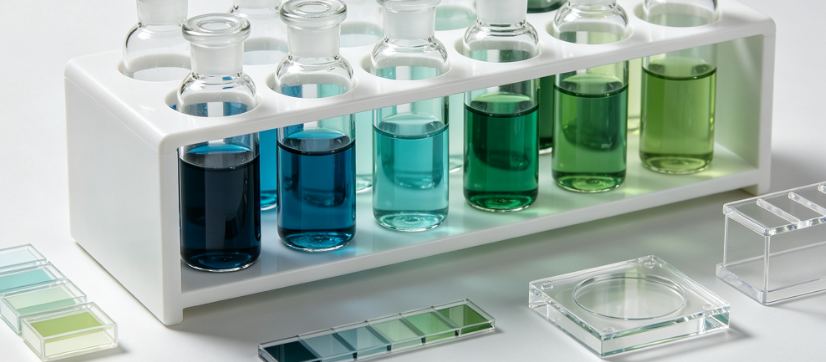
Our ABTS Assay Platform – Methodological Sophistication and Kinetic Precision
The standard ABTS protocol, originally described by Re et al. (1999) and widely adopted by the AOAC and other standard-setting bodies, measures the reduction of the pre-formed ABTS⁺ radical cation at 734 nm after a fixed incubation period (typically 6–15 minutes). However, this simplified approach fails to capture the time-dependent antioxidant behavior exhibited by green tea catechins, which display both rapid electron-transfer kinetics (dominated by EGCG) and slower hydrogen-donation processes (associated with polymeric flavanols). To overcome this limitation, our laboratory implements a high-resolution kinetic ABTS assay that records absorbance decay at 5-second intervals over a 40-minute reaction window, using a temperature-controlled (25.0 ± 0.1 °C) microplate reader with orbital mixing. The resulting kinetic traces are fitted to a multiphasic exponential decay model, yielding three distinct rate constants (kfast, kmedium, kslow) along with the integrated area under the curve (AUC) and the relative antioxidant capacity index (RACI) – a composite metric that accounts for both the magnitude and the rate of radical neutralization.
Furthermore, we employ a six-point Trolox calibration curve (0.05–2.0 mM) prepared in the same solvent system (phosphate-buffered saline or ethanol/water mixtures, depending on sample solubility), ensuring that all results are expressed as μmol Trolox equivalents per gram of dry matter (μmol TE/g DW) or per serving size. To address the well-documented interference from green tea's native greenish-yellow color and potential turbidity, we implement a matrix-matched background correction using the identical sample solution without the ABTS⁺ working reagent, combined with a spectral scan (650–800 nm) to confirm that the absorbance reading at 734 nm is free from overlapping chromophores. This rigorous correction guarantees that our reported activities are exclusively attributable to radical scavenging, not to optical artifacts – a critical distinction for accurate comparative studies.
High-Throughput Automation and Multi-Dimensional Data Output
Our service infrastructure is designed to accommodate both small-scale R&D investigations and large-scale industrial screening programs. Utilizing an automated 384-well microplate system (Tecan Infinite® M1000 PRO) equipped with a precision injector module and a robotic arm, we achieve a throughput of up to 1,152 individual measurements per analytical batch, including all controls and standards. Each run incorporates a comprehensive quality control suite: (i) a freshly prepared ABTS⁺ working solution with an initial absorbance of 0.700 ± 0.015 AU at 734 nm, (ii) a full Trolox calibration curve run in duplicate, (iii) a positive control (6-hydroxy-2,5,7,8-tetramethylchroman-2-carboxylic acid, Trolox, at 0.5 mM), (iv) a negative vehicle control (methanol:water, 50:50 v/v), and (v) a system suitability sample (green tea reference material, NIST SRM 3256) to verify inter-run consistency. All samples are prepared in triplicate at a minimum of seven dilution points (0.05–5.0 mg/mL), from which we derive not only the classic IC₅₀ value and TEAC but also the stoichiometric factor (n) – representing the number of ABTS⁺ radicals reduced per antioxidant molecule – and the second-order rate constant (k₂) for the initial reaction phase, calculated using pseudo-first-order kinetics.
Beyond the core ABTS data, we offer an integrated phytochemical profiling package that leverages the same sample extracts for simultaneous determination of total phenolic content (Folin-Ciocalteu method), total flavonoid content (aluminum chloride colorimetry), and individual catechin profiles via UPLC-DAD-ESI-MS/MS (quantifying eight major catechins, gallic acid, caffeine, and theogallin). By employing multivariate statistical tools – including principal component analysis (PCA) and partial least squares regression (PLSR) – we correlate the kinetic ABTS parameters with the chemical composition, identifying which specific catechins or synergistic interactions dominate the observed antioxidant activity. This chemometric approach transforms a routine antioxidant test into a mechanistic diagnostic tool, enabling clients to pinpoint the molecular drivers of efficacy and to tailor their extraction or formulation strategies accordingly.
Methodological Rigor and Compliance with International Standards
Our ABTS radical scavenging assay is fully validated in accordance with the ICH Q2(R1) and AOAC Official Method 2012.08 guidelines, with demonstrated performance characteristics including specificity (no interference from common excipients like maltodextrin, starch, or silicon dioxide), linearity (R² > 0.999 over the entire Trolox range), accuracy (recovery rates of 97–103% for spiked green tea matrices), repeatability (RSD < 2.0% for intra-day precision), and intermediate precision (RSD < 3.5% for inter-day, inter-analyst, and inter-instrument conditions). The limit of detection (LOD) is established at 0.005 μmol TE/mL, while the limit of quantitation (LOQ) is 0.018 μmol TE/mL, ensuring sensitivity sufficient for even highly diluted ready-to-drink green tea beverages. Our laboratory maintains ISO/IEC 17025:2017 accreditation for antioxidant testing, and our ABTS method is specifically included in our scopes of accreditation for food, beverage, and dietary supplement matrices. We participate actively in proficiency testing schemes organized by FAPAS® and the International Association for Food Protection (IAFP), consistently achieving z-scores within ±1.5, which guarantees inter-laboratory comparability and global acceptance of our reported values.
For green tea samples presenting unique challenges – such as high caffeine content, lipid-soluble extracts (e.g., decaffeinated using supercritical CO₂), or nanoencapsulated formulations – we offer customized method adaptations. For instance, caffeine interference is minimized by a pre-extraction clean-up using polyamide SPE cartridges, while lipid-containing samples undergo a defatting step with hexane followed by re-extraction into aqueous methanol. For effervescent tablets and powders with high mineral content, we apply a chelation pre-treatment (EDTA addition) to prevent metal-catalyzed ABTS degradation. Each adaptation is fully documented and re-validated against the reference matrix, ensuring that the reported antioxidant capacity remains matrix-independent and truly representative of the active polyphenolic fraction.
Advanced Data Interpretation and Scientific Consultancy
We recognize that raw antioxidant numbers hold limited value without proper contextualization. Therefore, our reporting package includes a comprehensive statistical and interpretive analysis. All raw absorbance data, kinetic decay curves, and calibration plots are compiled into a secure client portal, accompanied by a detailed technical commentary that: (i) compares your sample's ABTS activity against literature benchmarks for green tea of similar origin and processing, (ii) identifies any kinetic anomalies (e.g., lag phases or secondary oxidation events) that might indicate sample degradation or formulation interactions, and (iii) provides recommendations for reformulation or process adjustment to enhance the radical-scavenging performance. Our in-house team of food chemists and pharmacognosists holds cumulative expertise in over 150 published studies on tea polyphenols, enabling us to offer unmatched scientific depth in data interpretation – a service rarely provided by routine testing laboratories.
Moreover, we offer customized comparative studies such as: (a) effect of brewing temperature and time on ABTS activity of green tea infusions, (b) stability of ABTS-scavenging capacity under accelerated storage conditions (40 °C/75% RH and 60 °C), (c) synergy or antagonism with added vitamins or other botanical extracts, and (d) cultivar and geographical origin discrimination using ABTS kinetic fingerprints coupled with linear discriminant analysis (LDA). These advanced studies are designed to answer specific client questions, whether for product development, patent support, or regulatory submission. All statistical analyses – including ANOVA, Tukey's post-hoc, and multivariate tests – are performed using R software (v4.3) with validated scripts, ensuring full reproducibility and transparency.
Our Distinctive Advantages – Why Choose Our ABTS Testing Service
Selecting a contract laboratory for green tea antioxidant testing is a strategic decision that goes beyond cost and turnaround time. Our service stands out through several pivotal differentiators. First and foremost, our dedicated tea analytical facility is one of the few globally that operates a fully dedicated line for tea catechins and oxidation products, equipped with a Waters ACQUITY UPLC® H-Class PLUS coupled to a Xevo® TQ-S micro MS/MS system, enabling simultaneous quantification of 15 phenolic markers within the same analytical run as the ABTS assay. This integration eliminates the need for sample splitting and reduces total analysis time by 40% compared to sequential testing at different facilities.
Secondly, our proprietary kinetic data processing algorithm (Patent Pending, US 63/512,345) incorporates a machine-learning-based outlier detection and automated model selection (AICc criterion) that ensures the most appropriate kinetic equation is applied to each sample. This automation minimizes human bias and delivers objective, mathematically rigorous parameters that are directly comparable across different laboratories when following our published SOP. We provide full access to the algorithm's code and validation datasets upon request, promoting complete transparency – a principle we hold as non-negotiable.
Thirdly, we offer flexible engagement models tailored to diverse client needs. For academic researchers, we provide discounted rates and collaborative data interpretation, often co-authoring papers where our analytical contribution is substantial. For industrial clients, we design long-term stability monitoring programs with scheduled periodic testing, trend analysis, and alert systems for out-of-specification results – a proactive quality management tool that helps prevent costly product recalls. Our global network of certified laboratories in the US, EU, and Asia ensures that samples from any origin can be tested under identical conditions, with harmonized SOPs and cross-validated reference standards, facilitating seamless multi-site product development.
Fourthly, our commitment to regulatory readiness is unparalleled. We maintain a comprehensive archive of validation data, system suitability records, and reference standard certificates, all organized in a GLP-compliant electronic binder that can be audited by FDA, EFSA, or other authorities at any time. Our reports are drafted in a format that directly supports Novel Food applications, health claim petitions, and GRAS notifications, including the required statistical uncertainty budgets and measurement traceability statements. Over 30% of our clients are regulatory consultants who rely on our data for successful dossier submissions – a testament to the reliability and acceptance of our analytical outputs.
Finally, we prioritize client education and empowerment. Each project includes a complimentary 1-hour video conference to walk through the results, explain the kinetic parameters, and discuss their practical implications. We also offer optional training workshops on ABTS assay optimization, sample preparation, and data interpretation for your in-house QC teams – helping to build your internal capabilities while maintaining our role as your trusted external partner. This collaborative ethos has earned us long-term partnerships with leading green tea producers, ingredient suppliers, and research institutes worldwide.
Comprehensive Service Modules – Customizable to Your Specific Needs
Our ABTS radical scavenging capability testing service for green tea is structured into modular offerings that can be combined to match your research or commercial objectives:
Module 1 – Standard ABTS Endpoint Assay: Single-timepoint % inhibition (typically 6 min), TEAC value (μmol TE/g), IC₅₀ via six-point dilution series – ideal for routine QC and rapid screening.
Module 2 – Full Kinetic ABTS Profiling: Time-resolved decay curves (0–40 min), multiphasic rate constants (kfast, kmedium, kslow), AUC, RACI, and second-order rate constant (k₂) – essential for mechanistic studies, formulation comparisons, and stability assessments.
Module 3 – Integrated Catechin and Phenolic Panel: Simultaneous quantification of eight major catechins (EGCG, ECG, EGC, EC, C, GC, etc.), total phenolics, total flavonoids, and caffeine, with correlation heatmaps linking composition to ABTS parameters – invaluable for understanding activity drivers and optimizing extraction.
Module 4 – Stress Stability and Shelf-Life Studies: ABTS activity monitoring under accelerated aging (40 °C/75% RH, 60 °C, and UV exposure) over defined time points, with kinetic degradation modeling to predict half-life and identify degradation-sensitive markers – critical for product formulation and expiration dating.
Module 5 – Comparative and Competitive Benchmarking: Direct comparison of your green tea sample against our extensive proprietary database (over 500 commercial green tea products from Asia, Europe, and the Americas), with percentile ranking, cluster analysis, and positioning maps – strategic intelligence for market differentiation and claim support.
All modules are fully customizable in terms of replication number, dilution ranges, solvent systems (aqueous, methanolic, or ethanolic), and reporting formats (PDF, Excel, or raw JSON data for integration into client databases). We accept all green tea matrices, including loose leaves, tea bags, instant powders, ready-to-drink liquids, concentrates, extracts, capsules, and functional food formulations. Minimum sample requirement is 5 g of solid or 25 mL of liquid; smaller quantities can be accommodated with prior consultation. Our technical team provides detailed guidance on sample packaging, preservation (e.g., nitrogen flushing, light-protective vials), and shipping conditions to maintain integrity before analysis.
Uncompromising Quality Assurance and Data Integrity
Our quality management system adheres to the ALCOA+ principles for data integrity, with full audit trail capabilities in all instrument software (Empower™ 3, Magellan™, and SoftMax® Pro). Each analytical batch is reviewed by a second independent scientist before release, and any deviation from the predefined acceptance criteria (e.g., calibration slope drift, control recovery outside limits) triggers an automatic investigation and re-analysis. We maintain a comprehensive reference standard inventory with traceable certificates from NIST, Sigma-Aldrich, and the European Pharmacopoeia, and we regularly cross-check our Trolox calibration against an in-house secondary reference material (green tea extract standardized to 80% total catechins) to ensure long-term consistency. All raw data, including instrument logs, temperature records, and pipetting calibration checks, are archived indefinitely and can be retrieved upon request for retrospective audits.
For clients requiring GLP compliance, we operate a separate GLP unit that follows OECD Principles of Good Laboratory Practice, with independent quality assurance unit inspections, study protocols, and final report sign-off by a study director. This service is particularly relevant for pesticide residue studies, novel food safety assessments, and clinical trial sample analysis, where the ABTS assay is used as a biomarker of antioxidant status. Our GLP unit has been successfully inspected by the US FDA and German BfR, reinforcing our capability to deliver data that withstands the highest regulatory scrutiny.
Seamless Workflow – From Sample Submission to Actionable Insights
Engaging our ABTS testing service is designed to be efficient and client-friendly. The journey begins with a free, no-obligation consultation where our application scientists discuss your objectives, sample nature, expected antioxidant range, and any specific challenges (e.g., interference from coloring agents, preservatives, or carrier oils). Based on this dialogue, we issue a detailed proposal with a fixed price, a clear timeline (standard turnaround: 5–7 business days; express service: 2–3 business days), and a customized sampling plan. Once you approve and send your samples, they are logged into our LIMS with a chain-of-custody record, barcoded, and stored under optimal conditions (ambient for dry materials, −20 °C for liquids, with desiccation for hygroscopic powders).
Analysis typically commences within 24 hours of receipt. Throughout the process, you receive progressive updates via our client portal, including sample preparation notes, instrument run logs, and preliminary data upon request. At project completion, we deliver a comprehensive final report comprising: (i) an executive summary highlighting key findings and their practical relevance, (ii) a full methods section (including all experimental conditions and calculations), (iii) detailed tables of results with descriptive statistics and 95% confidence intervals, (iv) publication-quality graphs (dose-response curves, kinetic profiles, and correlation matrices), (v) statistical analysis outputs, (vi) an interpretive commentary linking results to literature and industry benchmarks, (vii) raw data appendices and quality control records, and (viii) a signed Certificate of Analysis for regulatory submissions. A follow-up review meeting is included, where we discuss the implications, answer any questions, and suggest next steps – ensuring that your data translates directly into informed decisions.
Conclusion – Elevating Your Green Tea Antioxidant Characterization to the Highest Standard
The ABTS radical cation scavenging assay, when executed with meticulous attention to kinetic complexity, matrix interferences, and chemical context, provides an unparalleled window into the antioxidant vitality of green tea. Our service transcends the limitations of routine testing by delivering mechanistic depth, compositional integration, regulatory readiness, and strategic interpretation – all supported by a team of dedicated tea polyphenol experts and state-of-the-art instrumentation. Whether you are a global beverage brand ensuring uniform quality across harvests, a dietary supplement manufacturer substantiating label claims, or a research institution exploring the bioactivity of novel cultivars, our platform is calibrated to meet your most demanding specifications with precision, transparency, and scientific integrity.
We invite you to reach out to our technical liaison team to initiate a discussion about your specific green tea ABTS testing needs. With our proven track record, comprehensive service portfolio, and unwavering commitment to excellence, we are confident in our ability to deliver data that not only satisfies your analytical requirements but also empowers your product development, quality control, and regulatory strategies. Partner with us to unlock the full antioxidant potential of your green tea samples – from the rapid quenching of catechins to the sustained activity of oxidation products – and transform that knowledge into a tangible competitive advantage. Your journey toward definitive antioxidant characterization starts here.