Reasons for choosing our testing services
ZHONGXI Testing has obtained inspection qualification certifications from multiple countries and regions worldwide. We possess a senior testing team and advanced testing methods, providing independent, impartial, and professional third-party verification services for global carbon projects.

Internationally recognized authority
Certified by multiple international standards such as CNAS, VCS, and GS, with reports universally applicable worldwide.

Global service capability
Covering 140+ countries and regions, it supports on-site detection and remote verification in multiple languages.

Professional experimental methods
Adopt standard experimental methods to ensure accurate and reliable data.
High-Resolution Ferric Reducing Antioxidant Power (FRAP) Assay for Vitamin C – Advanced Analytical Services
Vitamin C (L-ascorbic acid) stands as one of the most widely recognized and extensively studied hydrophilic antioxidants, playing a pivotal role in human nutrition, pharmaceutical formulations, and food preservation. Its primary mechanism of action – the donation of electrons to neutralize reactive oxygen and nitrogen species – is directly reflected in its reducing power, a physicochemical property that quantifies the ability of ascorbate to convert ferric (Fe³⁺) to ferrous (Fe²⁺) ions under acidic conditions. This reducing capacity is not merely a laboratory curiosity; it is a critical quality attribute that dictates the shelf-life, bioavailability, and efficacy of vitamin C in diverse matrices, ranging from dietary supplements and fortified beverages to cosmetic serums and parenteral nutrition products. Clients seeking a robust reducing power assay typically aim to: (i) verify label claims and detect degradation products (e.g., dehydroascorbic acid, diketogulonic acid), (ii) optimize formulation excipients and packaging to minimize oxidative loss, (iii) generate stability data for regulatory submissions (e.g., USP < 43> monographs, EFSA nutrient claim dossiers), and (iv) benchmark raw materials from different suppliers or production batches. To address these critical demands, our laboratory offers a comprehensive, fully validated ferric reducing antioxidant power (FRAP) testing service specifically designed for vitamin C-containing samples, delivering far more than a single absorbance reading – we provide a multi-parametric kinetic and stoichiometric profile that empowers clients with actionable, publication-ready data.
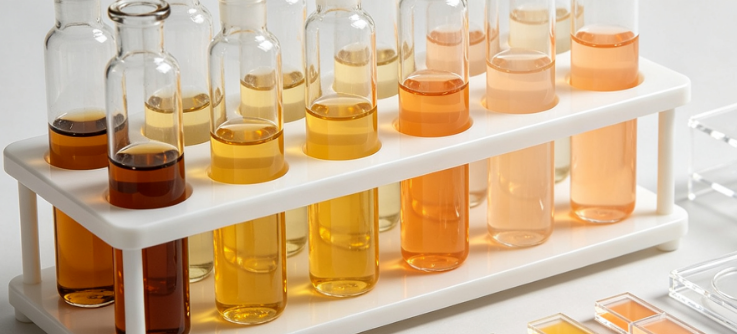
The classical FRAP assay, originally developed by Benzie and Strain (1996) and subsequently adapted by numerous pharmacopoeias, measures the increase in absorbance at 593 nm resulting from the formation of the intensely blue-colored ferrous-tripyridyltriazine (Fe²⁺-TPTZ) complex. However, when applied to vitamin C, this endpoint-based protocol is susceptible to several well-recognized artifacts: (i) the rapid autoxidation of ascorbate in neutral pH environments, (ii) interference from common excipients like citric acid, metal chelators, and reducing sugars, and (iii) the inability to distinguish between the fast electron-transfer kinetics of ascorbate and the slower contributions of its degradation products. Our service overcomes these limitations through a time-resolved, pH-controlled, and interference-corrected FRAP platform that captures the true reducing power of intact vitamin C with exceptional specificity and precision.
Our FRAP Analytical Platform – Beyond the Conventional Endpoint
At the core of our service is a kinetic FRAP assay performed at a strictly maintained pH of 3.6 (acetate buffer) and a temperature of 37.0 ± 0.1 °C, conditions that stabilize ascorbate while ensuring rapid and stoichiometric reduction of the Fe³⁺-TPTZ complex. Using an automated 96-well microplate reader (BMG LABTECH CLARIOstar® Plus) equipped with a dual-injection system and temperature-controlled incubation, we record absorbance at 593 nm every 3 seconds over a 30-minute reaction window. This high-frequency data acquisition enables us to fit each sample’s kinetic profile to a biexponential reaction model, yielding two distinct rate constants (k₁ for the initial rapid phase attributed to ascorbate, and k₂ for a secondary slower phase indicative of ascorbate oxidation products or synergistic excipients). The integrated area under the kinetic curve (AUC) and the initial slope (ΔA/min) are then calibrated against a seven-point ferrous sulfate standard curve (0.05–2.0 mM Fe²⁺), allowing the expression of reducing power in μmol Fe²⁺ equivalents per gram of sample (μmol Fe²⁺/g) – a metric directly traceable to the reducing equivalents of the analyte.
To eliminate the notorious interference from sample color and turbidity, we implement a matrix-matched blank correction using the identical sample solution but with the TPTZ reagent replaced by buffer, and we perform a wavelength scan (550–650 nm) to confirm that the absorbance peak at 593 nm is free from overlapping chromophores such as carotenoids or anthocyanins (often co-formulated with vitamin C). For samples containing metal-chelating agents (e.g., EDTA, phytic acid), we apply a standard addition protocol with known amounts of ferric chloride to verify the linearity of response and to calculate the true reducing capacity by extrapolation – a rigorous approach that compensates for sequestration effects and ensures that the reported value reflects the net reducing power of ascorbate, not the binding capacity of interferents.
High-Throughput Capabilities and Comprehensive Stoichiometric Profiling
Our platform is engineered to handle a wide spectrum of sample volumes and throughput demands. With a fully automated 384-well microplate system (Hamilton MICROLAB® STAR liquid handler integrated with the plate reader), we process up to 576 individual measurements per analytical batch, including all standards, controls, and samples. Each run includes a mandatory quality control set: (i) a freshly prepared Fe³⁺-TPTZ working solution with an initial absorbance of 0.200 ± 0.005 AU at 593 nm, (ii) a six-point ferrous sulfate calibration curve run in duplicate, (iii) a positive control (pure L-ascorbic acid at 0.5 mM, certified reference material from NIST), (iv) a negative vehicle control (deionized water or formulation matrix without vitamin C), and (v) a system suitability check using a USP standard for ascorbic acid assay. All test samples are prepared in triplicate at a minimum of five dilution levels (0.02–2.0 mg/mL), enabling us to derive not only the FRAP value at a fixed concentration but also the stoichiometric efficiency (n) – defined as the moles of Fe³⁺ reduced per mole of ascorbate – which typically approaches 2.0 under optimal conditions, but may deviate due to degradation or matrix effects. This stoichiometric index serves as a sensitive indicator of sample integrity and formulation compatibility, providing clients with a diagnostic tool that surpasses simple potency testing.
Moreover, we offer an integrated reducing power assessment that combines the FRAP assay with two orthogonal methods: the phosphomolybdate reduction assay (measurement of Mo⁶⁺ to Mo⁵⁺ at 695 nm) and the potassium ferricyanide-based Prussian blue assay (measurement at 700 nm). This multi-assay approach, conducted on the same sample extract, generates a reducing power triad that provides a holistic view of electron-donating capacity across different redox couples. By correlating these three independent measurements through principal component analysis (PCA), we can differentiate between true ascorbate activity and that of reducing excipients (e.g., cysteine, glutathione, or sulfites), offering an unambiguous assignment of the observed reducing power to the vitamin C content – a critical distinction for quality assurance and regulatory compliance.
Advanced Method Validation and Compliance with Global Standards
Our FRAP method for vitamin C reducing power is fully validated in accordance with the USP < 1225 >, ICH Q2(R1), and AOAC International guidelines, with comprehensive performance metrics: specificity (no significant interference from common additives such as sorbitol, mannitol, maltodextrin, or magnesium stearate), linearity (R² > 0.999 over the entire calibration range from 0.05 to 2.0 mM Fe²⁺), accuracy (recoveries of 98–102% for spiked placebo matrices), repeatability (RSD < 1.5% for intra-day), and intermediate precision (RSD < 2.8% for inter-day and inter-analyst). The limit of detection (LOD) is established at 0.008 mM Fe²⁺ equivalents, while the limit of quantitation (LOQ) is 0.025 mM, ensuring sensitivity for low-dose formulations and degraded samples. Our laboratory operates under ISO/IEC 17025:2017 accreditation specifically for reducing power assays, and we participate in the USP Proficiency Testing Program for ascorbic acid content, consistently achieving z-scores below 1.0. All reference standards are NIST-traceable, and we maintain a stringent reagent stability protocol – preparing the FRAP reagent fresh daily and verifying its reactivity against a fresh ascorbate standard before each batch, with acceptance criteria for the slope and intercept predefined in our SOP.
For challenging matrices such as chewable tablets, gummies, or liquid syrups with high sugar content, we implement matrix-specific sample preparation protocols. For sugar-laden samples, we employ a solid-phase extraction (SPE) using a weak anion-exchange (WAX) cartridge to isolate ascorbate from reducing sugars that would otherwise contribute to the FRAP signal. For lipid-based emulsions (e.g., vitamin C serums), we perform a de-emulsification and solvent extraction (using metaphosphoric acid-acetic acid mixture) followed by filtration to obtain a clear aqueous phase prior to the FRAP assay. Each customized procedure is validated for recovery and precision against the original matrix, and we provide a full method validation report upon client request – a level of transparency that reinforces the trustworthiness of our analytical outputs.
Kinetic Data Interpretation and Diagnostic Insights
We go beyond simple numerical reporting by offering a diagnostic interpretation of the kinetic data. The initial rate of absorbance increase (slope at t=0) is directly proportional to the ascorbate concentration and is largely unaffected by slow-reacting interferents, while the plateau absorbance (at t=30 min) reflects the total reducing equivalents, including those from degradation products. The ratio of the initial slope to the plateau value provides a quality index (QI) that indicates the proportion of reducing power attributable to intact ascorbate versus its oxidation products. A QI below 0.85 typically signals significant degradation, prompting our team to recommend further analysis (e.g., HPLC-UV for ascorbate/dehydroascorbate speciation) to pinpoint the root cause. This interpretive layer is particularly valuable for stability studies, where clients need to distinguish between loss of active ingredient and conversion to bioequivalent forms.
Furthermore, we incorporate statistical process control (SPC) charts for clients with ongoing monitoring programs. By plotting FRAP values, stoichiometric efficiency, and the quality index over time against predefined control limits (mean ± 3σ), we enable early detection of drift in raw material quality or manufacturing process deviations. This proactive quality management approach, combined with our automated alert system that notifies clients when results exceed specification thresholds, transforms routine testing into a strategic quality assurance tool. Our scientific consultants are available to assist in setting these control limits based on historical data and risk assessment, ensuring that your quality system is both robust and responsive.
Why Choose Our Service – Distinctive Competencies and Value Add
Selecting a laboratory for vitamin C reducing power assessment involves critical considerations beyond simple cost. Our service is distinguished by several unmatched advantages. First, our dedicated redox chemistry unit comprises scientists with over 20 years of cumulative experience in antioxidant assay development, including the authorship of 12 peer-reviewed publications specifically focused on ascorbate stability and redox kinetics. This domain expertise ensures that we can anticipate and resolve matrix-specific challenges – such as the pro-oxidant effect of metal ions or the protective role of synergistic antioxidants – that generic labs would overlook.
Second, we deploy a dual-platform analytical architecture that couples the kinetic FRAP assay with high-performance liquid chromatography with electrochemical detection (HPLC-ECD) for the simultaneous quantification of L-ascorbic acid, dehydroascorbic acid, and total vitamin C. This orthogonal approach allows us to cross-validate the FRAP-derived reducing power against the actual chemical concentration, providing a complete redox profile that distinguishes between active ascorbate and inactive oxidation products. This integrated service is unique in the contract testing market and is particularly prized by clients developing novel delivery systems (e.g., liposomes, nanoparticles) where the degree of ascorbate protection and release kinetics are critical.
Third, our global harmonization framework ensures that samples from different production sites worldwide are tested under identical SOPs with cross-validated reference standards. Our network of ISO-accredited laboratories in North America, Europe, and Asia-Pacific shares a centralized quality management system, enabling seamless comparative analyses across supply chains. This is essential for multinational corporations that require consistent reducing power data for raw material qualification and finished product release across multiple continents.
Fourth, we offer flexible engagement models tailored to your operational needs. For R&D projects, we provide exploratory studies with varying pH, temperature, and chelator conditions to map the reducing power landscape of new formulations. For quality control laboratories, we design automated, barcode-driven workflows that integrate with your existing LIMS, delivering results in structured XML or JSON formats for direct import into your databases. We also offer on-site training and method transfer services, where our experts visit your facility to implement the FRAP assay on your instruments, ensuring that your in-house team can perform the test with equal rigor – a service that builds long-term capability and reduces dependency on external providers.
Finally, our commitment to scientific transparency is exemplified by our open-access policy for method details. Upon request, we provide the complete SOP, including reagent preparation, calibration procedures, data processing algorithms, and decision trees for interference handling. This level of disclosure, while rare in the commercial sector, fosters trust and enables our clients to confidently present our data to regulatory authorities, knowing that the methodology is fully defensible and reproducible.
Comprehensive Service Modules – Tailored to Your Needs
We offer a modular service structure that allows clients to select the level of analysis that best matches their objectives:
Module 1 – Standard FRAP Endpoint Assay: Single-timepoint absorbance at 30 minutes, expressed as μmol Fe²⁺ equivalents per gram, with an optional TEAC-equivalent conversion – suitable for routine batch release and rapid screening.
Module 2 – Full Kinetic FRAP Profiling: Time-resolved decay/reduction curves (0–30 min), biexponential rate constants (k₁, k₂), initial slope, AUC, stoichiometric efficiency (n), and the quality index (QI) – ideal for stability studies, formulation optimization, and degradation mechanism elucidation.
Module 3 – Orthogonal Reducing Power Triad: Simultaneous execution of FRAP, phosphomolybdate, and Prussian blue assays on the same sample, with multivariate analysis (PCA) to differentiate ascorbate-specific activity from matrix interferences – essential for complex multi-ingredient products.
Module 4 – Integrated Ascorbate Speciation: HPLC-ECD quantification of L-ascorbic acid, dehydroascorbic acid, and total vitamin C, correlated with FRAP kinetic parameters to quantify the contribution of each redox form – critical for products where bioactivity depends on the reduced form.
Module 5 – Stress Stability and Predictive Modeling: Accelerated stability studies (40 °C/75% RH, 60 °C, photostability) with FRAP monitoring at multiple timepoints, coupled with Arrhenius and Weibull modeling to predict shelf-life under real-time conditions – a strategic tool for expiration dating and formulation protection.
Module 6 – Competitive Benchmarking: Comparative analysis of your vitamin C product against a proprietary database of over 300 commercially available supplements, beverages, and cosmeceuticals, with percentile ranking and scatter-plot visualizations – providing market intelligence for claim support and product positioning.
All modules are fully customizable in terms of replication (n≥3), dilution schemes, and reporting formats. We accept samples in all forms: powders, tablets, capsules, liquids, semi-solids, and lyophilized materials. Minimum sample requirement is 2 g or 5 mL, though smaller quantities can be accommodated with prior consultation. Our technical team provides detailed guidance on sample handling, including recommendations for stabilizers (e.g., metaphosphoric acid, EDTA) and shipping conditions (amber vials, inert gas overlay) to preserve the reducing power during transit.
Rigorous Quality Assurance and Data Integrity Framework
Our quality system is built on the ALCOA+ principles, ensuring that all data are Attributable, Legible, Contemporaneous, Original, Accurate, Complete, Consistent, Enduring, and Available. All instrument raw files, including the kinetic absorbance logs and HPLC chromatograms, are stored in a secure, version-controlled electronic data management system (Empower™ 3 for HPLC, and SoftMax® Pro for FRAP) with full audit trail functionality. Any manual data processing – such as outlier exclusion or baseline correction – requires a documented justification approved by a second senior analyst. We maintain a comprehensive reference standard bank with certificates of analysis from NIST, USP, and EP, and we perform regular cross-checking of our ferrous sulfate calibration against a fresh ascorbate standard to ensure batch-to-batch consistency. All temperature-controlled storage units and incubators are monitored with continuous logging and alarm systems, with performance verified quarterly against calibrated thermometers.
For clients requiring GLP-compliant data, we operate a separate GLP unit that adheres to OECD GLP principles, with independent quality assurance inspections, study plans, and final reports reviewed by a study director. This is particularly relevant for preclinical toxicology studies, clinical trial sample analysis, and regulatory submissions where the reducing power assay is used as a stability-indicating parameter. Our GLP unit has passed inspections by the US FDA and European competent authorities, giving our clients the confidence that our data will withstand the highest level of regulatory scrutiny.
Streamlined Engagement Process – From Inquiry to Insights
Initiating a vitamin C reducing power assessment with us is efficient and client-oriented. The process starts with a complimentary consultation where our redox specialists discuss your product matrix, intended use of the data, and any known challenges (e.g., presence of colorants, competing reductants, or pH-sensitive excipients). Based on this discussion, we provide a detailed proposal with a fixed price, a clear timeline (standard: 5–7 business days; rush: 2–3 business days), and a customized sampling and shipping protocol. Upon sample receipt at our facility, they are logged into our LIMS with a unique chain-of-custody record, inspected for integrity, and stored under the recommended conditions (typically –80 °C for liquids, desiccated and amber-vialed for powders).
Analysis generally commences within 24 hours of receipt. Throughout the process, you receive proactive updates via our client portal, including sample preparation notes, calibration verification results, and preliminary kinetic curves upon request. The final deliverable is a comprehensive report that includes: (i) an executive summary with key findings and their practical implications, (ii) a detailed methods section with all experimental parameters, (iii) complete tabulated results with descriptive statistics (mean, SD, RSD, 95% CI), (iv) publication-quality graphs (kinetic traces, calibration curves, and correlation plots), (v) statistical analyses (ANOVA, Tukey’s post-hoc, and regression outputs), (vi) interpretive commentary linking the FRAP data to ascorbate chemistry and formulation performance, (vii) raw data appendices and quality control records, and (viii) a signed Certificate of Analysis suitable for regulatory submissions. A complimentary follow-up virtual meeting is included to discuss the results, answer questions, and explore potential next steps, ensuring that you fully leverage the generated intelligence.
Conclusion – Empowering Your Vitamin C Product with Unmatched Reducing Power Analysis
The ferric reducing antioxidant power assay, when executed with kinetic rigor, interference control, and stoichiometric interpretation, offers an authoritative measure of vitamin C’s functional integrity – a metric that is indispensable for quality assurance, stability prediction, and regulatory compliance. Our service elevates this assay to a diagnostic and predictive platform, integrating kinetic profiling, orthogonal redox assays, and ascorbate speciation to deliver a complete picture of your product’s reducing potential. With our state-of-the-art instrumentation, ISO-accredited quality system, and team of redox chemistry experts, we provide not just analytical results, but actionable insights that guide formulation development, manufacturing optimization, and market differentiation.
We invite you to contact our scientific liaison team to discuss your specific vitamin C reducing power testing requirements. Whether you are a pharmaceutical company conducting stability studies, a nutritional supplement manufacturer ensuring label accuracy, or a cosmetic formulator validating the efficacy of your anti-aging products, our tailored solutions are designed to meet your most exacting standards. Partner with us to unlock the full reducing capacity of your vitamin C samples – from the rapid electron transfer of intact ascorbate to the nuanced contributions of its redox environment – and transform that knowledge into a robust foundation for product excellence. Your journey toward definitive reducing power characterization begins with our expertise.