Reasons for choosing our testing services
ZHONGXI Testing has obtained inspection qualification certifications from multiple countries and regions worldwide. We possess a senior testing team and advanced testing methods, providing independent, impartial, and professional third-party verification services for global carbon projects.

Internationally recognized authority
Certified by multiple international standards such as CNAS, VCS, and GS, with reports universally applicable worldwide.

Global service capability
Covering 140+ countries and regions, it supports on-site detection and remote verification in multiple languages.

Professional experimental methods
Adopt standard experimental methods to ensure accurate and reliable data.
Advanced Thiolated Cyclodextrin Derivative Testing Services: Comprehensive Characterization for Pharmaceutical, Biomedical, and Functional Material Applications
Thiolated cyclodextrin derivatives represent a specialized class of functionalized macrocyclic oligosaccharides in which thiol (–SH) or sulfhydryl-bearing pendant groups are covalently anchored to the cyclodextrin scaffold, either through direct substitution at the primary or secondary hydroxyl positions or via linker-mediated conjugation. The parent cyclodextrins (alpha, beta, and gamma) possess a characteristic toroidal architecture with a hydrophilic exterior and a hydrophobic cavity, enabling host-guest inclusion complexation. Introduction of thiol functionality confers additional capabilities, including mucoadhesion through disulfide bond formation with cysteine-rich glycoproteins, enhanced permeation across mucosal barriers, redox-responsive drug release, enzyme inhibition through thiol-disulfide exchange, and metal ion chelation. These attributes have driven growing interest in thiolated cyclodextrins as mucoadhesive drug delivery excipients, stimuli-responsive nanocarriers, hydrogel crosslinkers, biosensor interfaces, and chelating agents. Because the extent and specificity of thiolation, linker chemistry, and residual reactant content critically govern functional performance and biocompatibility, comprehensive analytical characterization is indispensable for quality control, regulatory compliance, and product development.
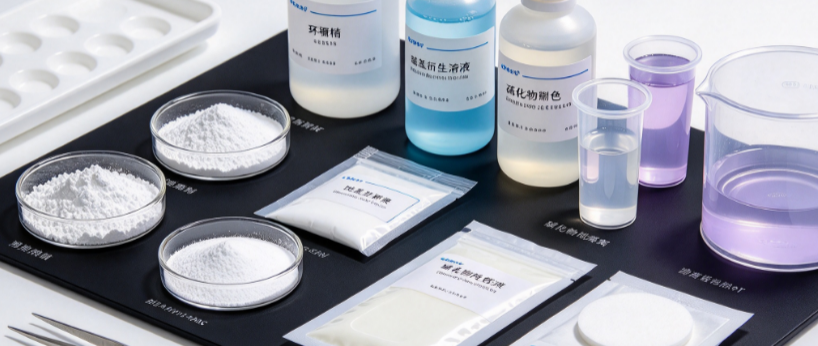
Why Clients Commission Thiolated Cyclodextrin Derivative Testing
Clients seek thiolated cyclodextrin derivative testing for several distinct yet interconnected purposes. Pharmaceutical excipient qualification and regulatory submission require verification of degree of thiolation, residual free thiol content, disulfide content, and unreacted linker or reagent residues to support excipient monographs and Investigational New Drug (IND) filings. Batch-to-batch consistency monitoring demands precise determination of thiol substitution degree, since small variations in thiol content can disproportionately affect mucoadhesion, crosslinking density, and release kinetics. Formulation development and optimization for mucoadhesive tablets, nanoparticles, hydrogels, and in situ gelling systems relies on characterization of thiol content, disulfide formation kinetics, and inclusion complexation capacity to predict performance. Stability assessment is particularly critical for thiolated derivatives, as thiols are prone to oxidation to disulfides and sulfonic acids, disulfide exchange, and thiol-ene side reactions, all of which alter functional properties over time. Biocompatibility and toxicological evaluation requires quantification of residual reagents (e.g., thiourea, mercaptoacetic acid, dithiothreitol) and characterization of covalent adducts. Research applications spanning supramolecular chemistry, host-guest complexation, and stimuli-responsive materials utilize thiolated cyclodextrin characterization for mechanistic investigation and structure-property correlation. Finally, failure investigation and root cause analysis in cases of batch rejection or performance variability relies on detailed structural and impurity characterization.
Our Thiolated Cyclodextrin Derivative Testing Capabilities: From Structural Elucidation to Functional Property Determination
We provide comprehensive testing services for thiolated cyclodextrins and related thiol-functionalized oligosaccharide derivatives, spanning chemical identification, structural characterization, purity assessment, and functional property determination. Our analytical portfolio includes, but is not limited to:
Degree of thiolation and thiol content determination — including Ellman's reagent (DTNB) colorimetric assay, 2,2'-dipyridyl disulfide (2-PDS) assay, iodometric titration, NMR spectroscopy with quantitative integration of thiol-adjacent protons, and Raman spectroscopy for direct S–H detection. We determine total thiol content, free thiol content, and oxidized disulfide content, enabling calculation of degree of thiolation (DS-SH) and disulfide crosslinking degree.
Structural confirmation and substitution site determination — including nuclear magnetic resonance (NMR) spectroscopy (1H, 13C, 2D COSY, HSQC, HMBC) for complete structural assignment and verification of thiol conjugation, heteronuclear multiple bond correlation (HMBC) for linker attachment site determination (C-2, C-3, or C-6 position), nuclear Overhauser effect (NOE) experiments for spatial proximity analysis, and mass spectrometry for molecular weight confirmation.
Molecular weight and molecular weight distribution — including matrix-assisted laser desorption/ionization time-of-flight mass spectrometry (MALDI-TOF MS), electrospray ionization mass spectrometry (ESI-MS), high-resolution accurate mass (HRAM) determination for molecular formula confirmation, and high-performance size-exclusion chromatography coupled with multi-angle light scattering (HPSEC-MALS) for absolute molecular weight determination of polymeric or aggregated species.
Chromatographic purity and impurity profiling — including high-performance liquid chromatography (HPLC) with UV/DAD detection, ultra-high-performance liquid chromatography (UHPLC), liquid chromatography-tandem mass spectrometry (LC-MS/MS), and capillary electrophoresis (CE) for separation of thiolated derivatives from unmodified cyclodextrin, oxidized disulfides, and degradation products. We quantify residual thiourea, mercaptoacetic acid, dithiothreitol, and other thiolating reagents at levels extending to parts-per-million (ppm) or parts-per-billion (ppb).
Disulfide and oxidation state profiling — including disulfide content determination by reduction with dithiothreitol followed by Ellman's assay, speciation analysis of thiol, disulfide, and sulfonic acid oxidation states, and kinetic monitoring of thiol oxidation under various storage conditions.
Inclusion complexation characterization — including phase solubility studies, isothermal titration calorimetry (ITC) for binding constant determination, nuclear magnetic resonance (NMR) titration for guest-host interaction mapping, fluorescence spectroscopy for binding constant and stoichiometry determination, and molecular modeling for complex geometry prediction.
Physicochemical property determination — including melting point and differential scanning calorimetry (DSC), Thermogravimetric Analysis (TGA), solubility profiling, particle size and morphology characterization, and zeta potential determination.
Functional performance testing — including mucoadhesion assessment by tensile testing or flow-through methods, disulfide crosslinking kinetics, redox-responsive release profiling, hydrogel formation and rheological characterization, and permeation enhancement assessment across mucosal models.
Elemental and residual reagent analysis — including CHNS elemental analysis, sulfur content determination by combustion ion chromatography or ICP-OES, and residual solvent profiling by headspace GC-MS.
Our laboratories employ NMR spectrometers (400–600 MHz), MALDI-TOF MS and ESI-MS platforms, HPLC/UHPLC systems, LC-MS/MS and HRAM-MS platforms, GC-MS and headspace GC-MS, ICP-MS and ICP-OES, DSC/TGA, ITC, UV-Vis and fluorescence spectrophotometers, and Raman spectrometers. These platforms enable degree of thiolation determination with precision below 1% relative standard deviation, impurity identification at ppm to ppb levels, and correlation of structural attributes with functional performance.
Methodological Depth and Analytical Rigor
Our testing protocols are anchored in ISO/IEC 17025-accredited quality management systems and align with ICH Q6A, ICH Q3C, and pharmacopeial general chapters where applicable. We perform rigorous method validation evaluating specificity, linearity, accuracy, precision, range, detection limit, quantitation limit, and robustness for each analytical procedure.
Our thiol quantification workflows utilize certified reference standards (e.g., L-cysteine, glutathione) for calibration and include blank and spiked recovery controls in every run. For Ellman's assay, we account for disulfide interference by performing parallel reduction and non-reduction measurements, enabling accurate speciation of free thiol, disulfide, and total thiol content. For NMR analysis, we employ quantitative 1H NMR with internal standards for degree of substitution determination and 2D correlation spectroscopy for complete structural assignment. For mass spectrometry, we utilize MALDI-TOF MS with appropriate matrices for intact derivative characterization and HRAM-MS for elemental composition confirmation. For impurity profiling, we develop chromatographic methods capable of baseline resolution of thiolated derivatives, unmodified cyclodextrin, oxidized disulfides, and residual reagents.
For research and formulation development applications, we offer custom method development, reaction monitoring by LC-MS, impurity isolation and identification, structure-property relationship (SPR) investigations, forced degradation and stability studies, and correlation of material attributes with drug product performance. Our mass spectrometry-based approaches enable linker cleavage product identification, oxidation product characterization, and metabolite identification following biological exposure.
Our Competitive Advantages in Thiolated Cyclodextrin Derivative Testing
1. Comprehensive Thiol Speciation Analysis: We determine free thiol, disulfide, and total thiol content in a single sample, enabling accurate calculation of degree of thiolation and oxidation state distribution — a critical differentiator from laboratories that report only total thiol.
2. Substitution Site and Linker Attachment Determination: Beyond bulk thiol content, we provide NMR-based determination of substitution site (C-2, C-3, or C-6) and linker attachment chemistry confirmation, enabling differentiation of materials with identical thiol content but different functional performance.
3. Disulfide and Oxidation State Profiling: Our speciation methods quantify disulfide content and sulfonic acid degradation products, supporting stability assessment and shelf-life determination — a critical need for oxidation-prone thiolated derivatives.
4. Inclusion Complexation Characterization: We combine phase solubility, ITC, NMR titration, and fluorescence spectroscopy to characterize host-guest binding constants, stoichiometry, and complex geometry, enabling correlation of thiolation degree with complexation capacity.
5. Residual Reagent and Impurity Profiling: Our LC-MS/MS, GC-MS, and ICP-MS platforms identify and quantify residual thiourea, mercaptoacetic acid, dithiothreitol, and other thiolating reagents at ppm to ppb levels, supporting biocompatibility and regulatory submissions.
6. Functional Performance Testing: We provide mucoadhesion assessment, disulfide crosslinking kinetics, redox-responsive release profiling, and hydrogel rheological characterization, enabling direct correlation of structural attributes with functional performance.
7. Complex Derivative Expertise: We have validated methods for challenging derivatives including thiolated alpha-, beta-, and gamma-cyclodextrins, thiolated hydroxypropyl cyclodextrins, thiolated methyl cyclodextrins, and thiolated cyclodextrin polymers.
8. Expert Interpretive Support: Our team includes carbohydrate chemists, pharmaceutical scientists, and analytical chemists who provide not only analytical data but also contextual interpretation, structure-property insights, and guidance on regulatory submissions and formulation optimization.
9. Rapid Turnaround and Scalability: Standard turnaround is 5–10 business days for routine characterization and 10–15 business days for comprehensive structural and impurity packages, with expedited options available. Automated platforms ensure consistent high-volume capacity without compromising analytical quality.
10. Custom Research and Method Development: For clients with novel derivatives, specialized applications, or unique research objectives, we offer bespoke method development, validation, and technology transfer services, including reaction monitoring, impurity isolation, and SPR investigations.
Applications Across Pharmaceutical, Biomedical, and Material Settings
Our thiolated cyclodextrin derivative testing services support a diverse range of clients, including pharmaceutical and biotechnology companies, excipient suppliers, contract manufacturing organizations, drug delivery research groups, biomedical device developers, academic investigators, and regulatory agencies. Whether for structural confirmation, degree of thiolation determination, impurity profiling, stability assessment, inclusion complexation characterization, functional performance evaluation, or process development support, we deliver data that is analytically rigorous, structurally contextualized, and directly actionable for quality assurance, regulatory submissions, and product development.
Conclusion
Thiolated cyclodextrin derivatives represent a structurally sophisticated class of functionalized macrocyclic oligosaccharides whose performance in mucoadhesion, stimuli-responsive release, and crosslinking applications is exquisitely sensitive to thiol content, substitution site, linker chemistry, and oxidation state. Reliable characterization depends not only on analytical sensitivity but also on orthogonal methodology, thiol speciation, and structure-property correlation. With our comprehensive NMR, mass spectrometry, thiol speciation, and inclusion complexation platforms, and deep carbohydrate and thiol chemistry domain knowledge, we empower clients to ensure batch consistency, substantiate regulatory submissions, optimize formulations, and troubleshoot performance issues with confidence. For thiolated cyclodextrin derivative testing that meets the highest standards of precision and regulatory acceptance, our laboratory is your trusted partner.