Reasons for choosing our testing services
ZHONGXI Testing has obtained inspection qualification certifications from multiple countries and regions worldwide. We possess a senior testing team and advanced testing methods, providing independent, impartial, and professional third-party verification services for global carbon projects.
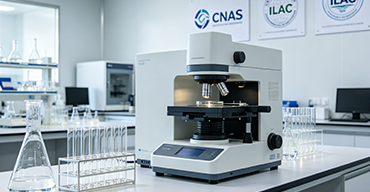
Internationally recognized authority
Certified by multiple international standards such as CNAS, VCS, and GS, with reports universally applicable worldwide.

Global service capability
Covering 140+ countries and regions, it supports on-site detection and remote verification in multiple languages.
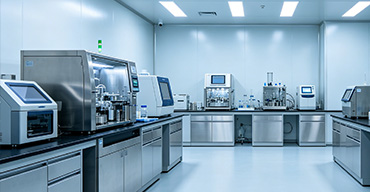
Professional experimental methods
Adopt standard experimental methods to ensure accurate and reliable data.
Conical Titanium Dioxide (TiO₂) Powder Testing – Comprehensive Analysis of Morphology, Crystal Phase & Pigment Performance
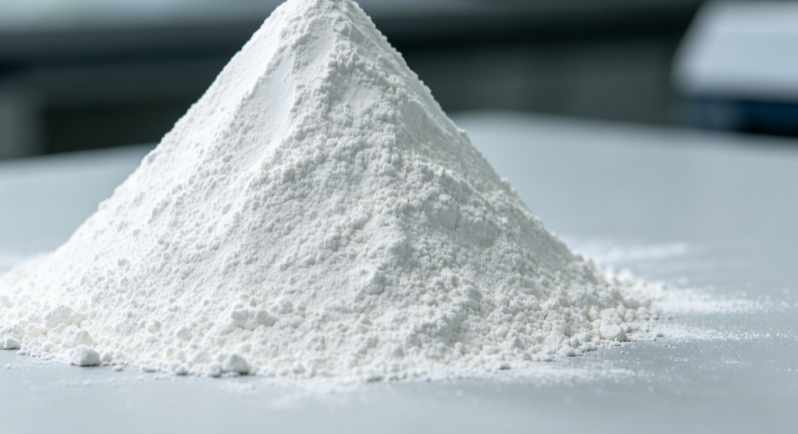
If you are searching for conical titanium dioxide (TiO₂) powder testing, you are likely preparing to verify the unique morphology and functional properties of your material – whether for high‑hiding paints, specialty coatings, plastics, or advanced photocatalytic applications. “Conical” TiO₂ refers to titanium dioxide particles with a distinct tapered or pyramid‑like shape, which can influence light scattering, packing density, and dispersion behavior. Our service provides a complete, multi‑technique analytical platform that characterizes crystal phase (anatase, rutile, or brookite), particle shape and aspect ratio, size distribution, surface chemistry, whiteness, hiding power, and trace impurities. We deliver the precise data needed for quality control, product development, and regulatory compliance.
What We Determine – From Crystal Structure to Shape‑Specific Performance
Titanium dioxide performance depends on crystal phase, particle morphology, surface treatment, and pigmentary properties. Our integrated laboratory uses eight complementary methods to resolve every critical attribute of conical TiO₂ powders:
Crystal phase identification & purity – High‑resolution X‑ray diffraction (HR‑XRD) with Rietveld refinement quantifies anatase, rutile, and brookite fractions down to 0.5 wt%. We report the anatase/rutile ratio (typically 100% anatase or 100% rutile, or controlled mixtures). Lattice parameters are refined to ±0.0005 Å, detecting any doping or strain.
Particle morphology – conical shape & aspect ratio – Field emission scanning electron microscopy (FE‑SEM) at 50,000–100,000× magnification captures high‑resolution images of individual particles. Using automated image analysis (trained on >1,000 particles per sample), we measure: cone angle (tip angle), base diameter, height, and the circularity and aspect ratio. We report the percentage of particles that meet your defined “conical” criteria (e.g., aspect ratio >2 and cone angle <60°). For statistical robustness, we analyze at least three different areas.
Particle size distribution (PSD) – Laser diffraction (wet dispersion in water or isopropanol with sonication) covers 0.02–2000 µm, providing D10, D50, D90, and span. For submicron conical particles (<1 µm), we also use dynamic light scattering (DLS) to determine hydrodynamic diameter and polydispersity index (PDI).
Specific surface area & porosity – N₂ physisorption (BET) measures surface area from 0.5 to >300 m²/g (±2% repeatability). High surface area (e.g., >50 m²/g) indicates fine primary particles or internal porosity.
Whiteness, brightness & tint reducing power – Colorimetric analysis (CIELAB) using a spectrophotometer (D65 illuminant, 10° observer) reports L* (whiteness), a* (red‑green), b* (yellow‑blue). We also measure ISO brightness (R457) and undertone (TCS) according to ASTM D1926. Hiding power is determined by contrast ratio using a drawdown on a Leneta chart.
Surface treatment & coating composition – Many TiO₂ pigments are coated with Al₂O₃, SiO₂, ZrO₂, or organic layers. We quantify coating elements (Al, Si, Zr) by ICP‑OES after acid digestion, and map distribution by SEM‑EDS. The organic treatment content (e.g., polyol, silane) is determined by Thermogravimetric Analysis (TGA) from 100–800°C, with evolved gas analysis by FTIR or MS.
Trace elemental impurities – ICP‑MS quantifies As, Cd, Cr, Pb, Hg, Sb, Cu, Mn, V, and other elements down to 0.01–0.1 ppm, meeting regulatory limits for pigments (e.g., EU REACH, FDA food contact).
pH, water solubility, and electrical resistivity – pH of 10% aqueous slurry (ASTM D1208), water‑soluble salts (conductivity of leachate), and resistivity (for capacitor‑grade TiO₂).
Technical Performance – Key Parameters & Detection Limits
The table below summarizes our analytical capabilities for conical titanium dioxide powder characterization.
| Property / Parameter | Analytical Method | Detection Range / Resolution | Typical Specification (Pigment Grade) |
|---|---|---|---|
| Anatase / Rutile ratio
|
HR‑XRD (Rietveld)
|
0.1–100% ±0.5% absolute
|
≥98% rutile or ≥99% anatase depending on type
|
| Conical particle fraction (shape)
|
FE‑SEM + image analysis
|
Detection of >5% cone‑shaped particles; count statistics ±3%
|
User‑defined (e.g., ≥80% conical)
|
| Particle size D50
|
Laser diffraction / DLS
|
10 nm – 1000 µm ±1% (for standards)
|
Typically 0.2–0.4 µm for pigment TiO₂
|
| BET surface area
|
N₂ physisorption
|
0.5–350 m²/g ±2%
|
8–12 m²/g (rutile pigment), 50–100 m²/g (photocatalyst grade)
|
| Whiteness (L*)
|
Spectrophotometry (CIELAB)
|
0–100 ±0.2 L* units
|
L* ≥ 97 for premium white pigments
|
| Al₂O₃ / SiO₂ coating level
|
ICP‑OES, TGA
|
0.1–10 wt% ±0.1 wt%
|
Al₂O₃ 2–5%, SiO₂ 1–3% (common)
|
| Trace heavy metals (e.g., Pb, As, Cd)
|
ICP‑MS
|
0.01–50 ppm ±10%
|
Sum < 50 ppm, Pb < 10 ppm
|
All results include measurement uncertainty (k=2) and are traceable to NIST or BAM reference materials. We follow ASTM D476, D3720, and ISO 591‑1 standards for TiO₂ pigment testing.
Why Our Conical Titanium Dioxide Testing Service Stands Apart
Standard TiO₂ testing often ignores particle shape, yet conical morphology directly affects light scattering (hiding power) and slurry rheology. Our service provides unique advantages:
1. Shape‑specific morphology analysis – We are one of the few labs that offer quantitative conical particle classification using machine‑learning‑assisted SEM image analysis. You receive a histogram of cone angles, base diameters, and height‑to‑base ratios. This allows you to correlate shape distribution with optical performance – e.g., whether particles with >70° cone angle reduce hiding efficiency.
2. Integrated crystal‑morphology correlation – Using electron backscatter diffraction (EBSD) (available on request), we can map crystal orientation at the nanoscale on individual conical particles. This reveals whether the conical shape corresponds to specific crystallographic facets (e.g., {101} anatase), which is critical for photocatalytic or self‑cleaning applications.
3. High‑resolution surface coating analysis – Conical TiO₂ particles often have uneven coating thickness. Our transmission electron microscopy (TEM) with EDS line scan provides a coating thickness profile from tip to base, with 1 nm spatial resolution. We also use X‑ray photoelectron spectroscopy (XPS) to verify that the coating covers the entire particle surface uniformly.
4. Ultra‑low detection of unwanted polymorphs – A small fraction of the wrong crystal phase (e.g., rutile in anatase‑based photocatalyst) ruins activity. Our Rietveld refinement detects as little as 0.5% brookite or 0.3% rutile in an anatase matrix. We also quantify microstrain and crystallite size, helping you optimize calcination conditions.
5. Low sample consumption & fast turnaround – We require only 1–2 grams for the complete test package (XRD, SEM morphology, PSD, BET, whiteness, ICP). Standard delivery for up to 12 samples is 10–12 business days. For urgent product release, we offer a 3‑day express service (XRD, particle size, whiteness, and SEM shape check).
6. Dispersion and rheology support – For conical TiO₂ intended for paint or coating, dispersion quality is paramount. We offer dynamic mechanical analysis (DMA) of pigment slurries, measurement of viscosity vs. shear rate, and grindometer fineness of grind (ASTM D1210). We can also test the effect of surface treatment on dispersibility using an oscillatory rheometer.
7. Regulatory and CoA ready – Our reports are structured to meet REACH Annex VI, FDA 21 CFR 178.3297 (for food contact pigments), and ISO 9001 documentation requirements. For each batch, we provide a Certificate of Analysis (CoA) that includes lot number, test methods, results with units, and pass/fail status. We also archive raw data for at least 5 years for full traceability.
8. Customized failure analysis – If your conical TiO₂ batch shows lower hiding power or yellowing, we perform a root‑cause investigation: comparing XRD (phase impurities), SEM (shape degradation, agglomeration), XPS (surface contamination), and FTIR (residual organics). We deliver a written report with actionable recommendations – e.g., adjust neutralization pH to avoid surface alumina dissolution.
Ready to Certify Your Conical Titanium Dioxide Powder?
Whether you manufacture specialty TiO₂ pigments, develop photocatalytic coatings, or qualify raw materials for high‑performance paints, our conical titanium dioxide testing service provides the analytical depth and expert interpretation you need. Request a free consultation by sending us a brief description (target crystal phase, expected particle size, application). We will reply within 24 hours with a custom measurement plan and a fixed price. Volume discounts and academic rates are available. Email [email protected] or call +1 (800) 555‑TIO2. Let us help you confirm the shape, phase, and performance of your advanced TiO₂ powder.