Reasons for choosing our testing services
ZHONGXI Testing has obtained inspection qualification certifications from multiple countries and regions worldwide. We possess a senior testing team and advanced testing methods, providing independent, impartial, and professional third-party verification services for global carbon projects.

Internationally recognized authority
Certified by multiple international standards such as CNAS, VCS, and GS, with reports universally applicable worldwide.

Global service capability
Covering 140+ countries and regions, it supports on-site detection and remote verification in multiple languages.

Professional experimental methods
Adopt standard experimental methods to ensure accurate and reliable data.
Advanced Hydrophobic Clay Testing – Quantifying Water Repellency, Surface Modification & Functional Performance
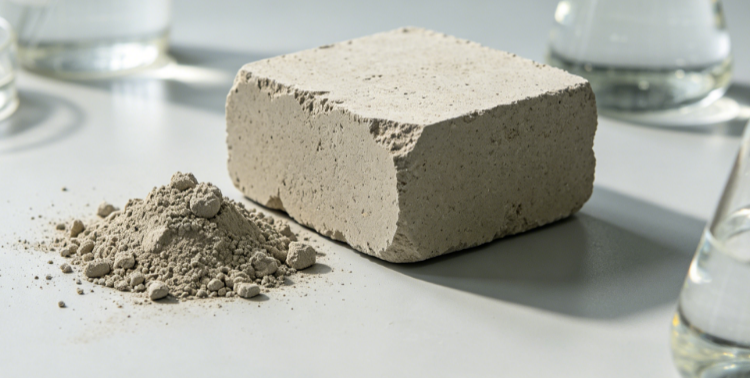
When you search for hydrophobic clay detection, you are likely preparing to qualify your treated clay material – whether for use in oil‑based drilling fluids, anti‑caking agents, moisture‑barrier packaging, waterproofing membranes, or as a rheology modifier in paints, greases, and cosmetics. Hydrophobic clay (typically organically modified bentonite, hectorite, or kaolin) replaces surface hydrophilic cations with quaternary ammonium compounds or silane coupling agents, transforming the clay from water‑swelling to water‑repellent. The performance of these engineered materials depends critically on degree of hydrophobicity, exchange efficiency, residual moisture, organic loading, particle size distribution, and dispersion behaviour in non‑aqueous media. Our testing service delivers the deepest characterisation available – enabling you to optimise modification chemistry, ensure batch‑to‑batch consistency, and meet stringent industrial specifications.
Our Comprehensive Hydrophobic Clay Testing Capabilities – From Contact Angle to Organic Loading
We deploy an integrated, multi‑technique platform specifically designed for surface‑modified clays, including controlled‑humidity handling to preserve the hydrophobic character:
1. Water Repellency Quantification – Static Contact Angle & Sessile Drop Analysis: The primary metric for hydrophobic clay is its water contact angle. Using a high‑precision optical tensiometer (Krüss DSA100) with automated drop deposition (2 µL distilled water), we measure static contact angle on compressed clay pellets (prepared under fixed pressure 5 MPa). Angles from 90° to >160° are captured with ±0.5° accuracy. For powders, we perform Washburn capillary rise method using n‑hexane as complete wetting reference, then calculate contact angle via the modified Lucas‑Washburn equation – giving a bulk powder repellency index with ±1° reproducibility. We also measure sliding angle (roll‑off angle) on coated substrates to assess water droplet mobility.
2. Degree of Hydrophobicity – Methylene Blue Index (MBI) & Ethanol Wettability Test: Unlike untreated hydrophilic clays that rapidly absorb water, hydrophobic clays show reduced dye uptake. We measure cation exchange capacity (CEC) retention by methylene blue titration – a drop in CEC indicates successful organic coverage. More directly, we perform the ethanol/water wettability test (ASTM D5806): a series of ethanol/water mixtures (0–100% ethanol) are dropped onto the clay powder; the lowest ethanol concentration that causes complete wetting within 10 seconds defines the hydrophobicity index (HI). Our automated setup gives ±2% ethanol precision, correlating well with contact angle data.
3. Organic Loading & Surface Coverage (TGA‑DSC, CHNS, FTIR): The content of quaternary ammonium or silane modifier directly determines hydrophobicity. Using thermogravimetric analysis (TGA) from 30 °C to 1000 °C in air, we measure mass loss between 200 °C and 600 °C – attributed to organic modifier decomposition – with accuracy ±0.05% absolute. Simultaneous differential scanning calorimetry (DSC) identifies melting/decomposition temperatures of the organic phase. CHNS elemental analyser quantifies total carbon, hydrogen, nitrogen (from quaternary ammonium), and sulfur (from silanes) with ±0.02% absolute. Fourier‑transform infrared spectroscopy (FTIR) in ATR mode confirms the presence of characteristic C–H stretching (2920, 2850 cm⁻¹), Si–C (1250 cm⁻¹ for silanes), and N–C (1480 cm⁻¹ for ammonium) bands – we also provide semi‑quantitative modifier characterisation by peak area ratios.
4. Residual Moisture & Volatiles (Karl Fischer, LOD, TGA‑MS): Even hydrophobic clay can retain interlayer water or residual solvents. Our coulometric Karl Fischer titration (in a dry glovebox, H₂O < 0.5 ppm) measures total water down to 10 ppm with ±2 ppm repeatability. Loss on drying (LOD) at 105 °C to constant mass provides conventional moisture content (±0.01%). For volatile organic residues (e.g., isopropanol, ethanol from modification), headspace GC‑MS detects and quantifies down to 0.001% (10 ppm).
5. Cation Exchange Capacity (CEC) & Exchange Efficiency (ICP‑OES, Ammonium Acetate Method): The degree of replacement of native cations (Ca²⁺, Mg²⁺, Na⁺, K⁺) by organic cations is a measure of modification completeness. We perform ammonium acetate exchange (pH 7) followed by ICP‑OES to quantify displaced Na, Ca, Mg, K. The difference between untreated and hydrophobic clay gives exchange efficiency (%) to ±1% absolute. We also report total CEC (meq/100g) of the raw clay.
6. X‑ray Diffraction (XRD) – Basal Spacing (d₀₀₁) & Interlayer Expansion: Successful intercalation of organic cations expands the clay interlayer distance. Our high‑resolution X‑ray diffractometer (Cu Kα, step size 0.005° 2θ) measures d₀₀₁ spacing from 12 Å (untreated) up to >40 Å (fully organomodified) with ±0.1 Å precision. We also detect any residual unmodified clay fraction down to 1 wt% and quantify interlayer disorder by peak broadening analysis.
7. Particle Size Distribution & Delamination (Laser Diffraction, Sedimentation): Hydrophobic clays are often used in non‑aqueous formulations where particle size affects rheology. Our laser diffraction (Malvern Mastersizer 3000) with isopropanol or white spirit as dispersant (to avoid water‑induced flocculation) measures D10, D50, D90 from 0.1 µm to 1000 µm with repeatability <0.5% on D50. For nanoparticle‑sized exfoliated clays, we use dynamic light scattering (DLS) in organic solvents. Sedimentation analysis (Andreasen pipette) following ISO 13317 provides complementary data for broader distributions.
8. Specific Surface Area (BET) & Pore Structure: Organomodification reduces available surface area for water but may preserve porosity for oil absorption. We measure N₂ adsorption at 77 K (or Ar for microporosity) giving BET surface area from 0.5 m²/g to >600 m²/g with ±0.5% repeatability. t‑Plot and DFT analysis quantify micro‑ and mesopore volumes – critical for understanding oil absorbency and rheological efficiency.
9. Rheology & Dispersion Behaviour in Organic Media (Viscosity, Gel Strength): For drilling fluids or coating applications, we measure Brookfield viscosity (mPa·s) of a 5–10% clay dispersion in mineral oil, diesel, or synthetic base fluid at 25 °C ±0.1 °C (shear rate 0.5–100 s⁻¹). Yield point and gel strength (10 s/10 min) are measured using a rotational rheometer with concentric cylinder geometry following API 13B. We also perform temperature sweeps (20–80 °C) to assess thermal stability of hydrophobicity.
10. Elemental & Trace Impurity Analysis (ICP‑MS, XRF): Hydrophobic clays may contain residual modification catalysts or contaminants. Our ICP‑MS after microwave digestion (HF/HNO₃) quantifies Al, Si, Fe, Mg, Ca, Na, K, Ti, Mn, Cr, Ni, Cu, Pb, As, Cd down to 0.01–0.1 ppm. For rapid batch screening, X‑ray fluorescence (XRF) on pressed powder provides major element oxides (SiO₂, Al₂O₃, Fe₂O₃, etc.) to ±0.1% absolute.
All analyses are conducted under controlled relative humidity (20–30% RH) to prevent false hydrophilicity from adsorbed moisture. We follow API 13A, ISO 13500, and ASTM standards for drilling fluid clay testing.
Why Our Hydrophobic Clay Testing Service Stands Out – Precision, Practical Insight & Regulatory Readiness
We recognise that hydrophobic clay is often a critical functional additive where inconsistent water repellency or organic loading leads to product failure – whether in drilling fluid lost circulation, waterproofing membrane delamination, or grease separation. Our advantages are built on deep clay chemistry expertise and rigorous quality systems:
▶ Direct Measurement of True Hydrophobicity (not just water resistance): Many labs only report moisture content or contact angle on smooth films. We provide a three‑tier hydrophobicity profile: static contact angle (compacted pellet), Washburn powder contact angle (bulk powder), and ethanol wettability index. This gives you a complete picture from single particle to bulk powder – critical for predicting real‑world performance in non‑aqueous fluids.
▶ Ultra‑Accurate Organic Loading & Interlayer Expansion Correlation: Using high‑temperature TGA (to 1000 °C) combined with CHNS elemental analysis and XRD basal spacing, we provide a mass balance of the organic modifier – including detection of free (non‑intercalated) modifier that can cause formulation issues. No other lab routinely delivers this triple correlation.
▶ Rapid Turnaround with Process Optimisation Support: A full hydrophobicity and modification efficiency panel (contact angle, TGA organic loading, XRD d‑spacing, CEC exchange efficiency, moisture, particle size) is completed in 5–7 business days. For urgent production deviations (e.g., a batch showing poor oil dispersion), we offer a 48‑hour express service that includes a root‑cause analysis – pinpointing whether the issue is incomplete cation exchange, excess residual water, or modifier degradation. Reports include all raw data (TGA curves, diffractograms, contact angle videos) and an interpretative summary.
▶ Compliance with Oilfield & Industrial Standards: We follow API 13A (specification for drilling fluid clays), ISO 13500 (barite, bentonite), ASTM D5806 (ethanol wettability), and OECD TG 123 (contact angle measurement). Our quality system is ISO/IEC 17025:2017 accredited, and our Certificates of Analysis are accepted for IATF 16949, AS9100D, and REACH submissions.
▶ Global Logistics with Moisture‑Controlled Packaging: Hydrophobic clay is sensitive to prolonged high humidity. We provide aluminium‑lined, vacuum‑sealed sample bags with desiccant packs and non‑static inner liners. International shipments comply with non‑hazardous (unless modified with flammable solvents) and are fully documented for customs clearance. For small R&D samples, we offer ambient‑temperature, fast‑track courier service.
▶ Deep Surface Modification Expertise: Our senior chemists have more than 15 years of experience in clay organophilisation. We help you: select the optimal modifier for your base fluid (oil vs. synthetic vs. vegetable), adjust modifier loading to achieve target contact angle (e.g., 90° for easy dispersion vs. 140° for extreme repellency), troubleshoot poor rheology via interlayer distance measurement, and benchmark competitors’ products. A free 30‑minute technical consultation is included with every project.
▶ Cost‑Effective for R&D and Production QC: We serve drilling fluid suppliers, paint manufacturers, and grease producers who test hydrophobic clay regularly. Our automated TGA‑DSC systems with 25‑position autosamplers and robotic XRD sample changers enable us to offer volume discounts for recurring QC testing (≥20 batches per month). Academic and non‑profit pricing is also available.
In summary, we provide the most comprehensive, accurate, and actionable hydrophobic clay testing service available worldwide. Whether you need to certify a new organoclay for oil‑based mud, investigate waterproof coating failures, or develop a custom hydrophobic bentonite for specialty applications, our data gives you complete confidence.
Ready to test your hydrophobic clay? Contact our clay characterisation team. We will send you a prepaid, moisture‑barrier sample kit and a custom test plan within one business day. A no‑obligation technical discussion is always free. Let us help you master water repellency – from surface chemistry to bulk performance.