Reasons for choosing our testing services
ZHONGXI Testing has obtained inspection qualification certifications from multiple countries and regions worldwide. We possess a senior testing team and advanced testing methods, providing independent, impartial, and professional third-party verification services for global carbon projects.

Internationally recognized authority
Certified by multiple international standards such as CNAS, VCS, and GS, with reports universally applicable worldwide.

Global service capability
Covering 140+ countries and regions, it supports on-site detection and remote verification in multiple languages.

Professional experimental methods
Adopt standard experimental methods to ensure accurate and reliable data.
High-Precision Calcium Nitrate Granule Analysis – Ensuring Quality, Safety & Performance for Agricultural & Industrial Applications
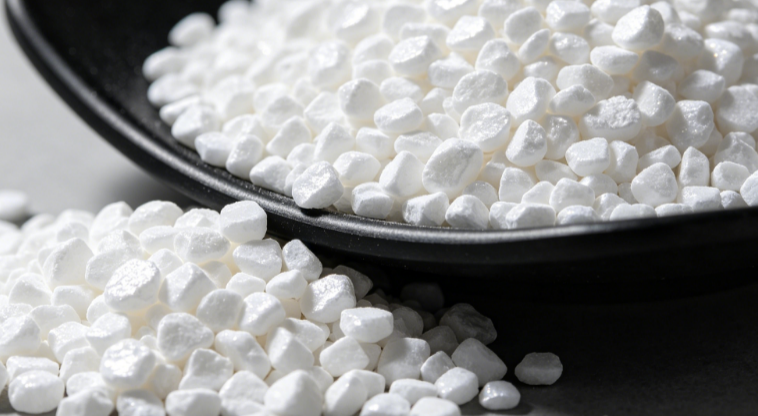
When you search for calcium nitrate granule detection, you are likely preparing to qualify your calcium nitrate material – whether as a water‑soluble fertiliser (15.5‑0‑0 + 19% Ca), a concrete setting accelerator, a flue gas desulfurisation additive, a refrigeration brine component, or a wastewater treatment chemical. Calcium nitrate granules (Ca(NO₃)₂, typically tetrahydrate Ca(NO₃)₂·4H₂O or anhydrous) demand rigorous quality control because their performance – nutrient release, dissolution rate, concrete setting time, and corrosion behaviour – depends critically on purity, nitrate‑nitrogen content, calcium content, moisture level, particle size distribution, heavy metal impurities, and insoluble residue. Our testing service delivers the deepest, most actionable characterisation available, helping you meet fertiliser regulations (e.g., EU 2003/2003, AS 4454), concrete admixture standards (ASTM C494), and environmental safety criteria.
Our Comprehensive Calcium Nitrate Granule Testing Capabilities – From Nutrient Assay to Trace Contaminants
We deploy a multi‑technique platform optimised for hygroscopic and oxidising nitrate salts, with strict moisture control and safety protocols:
1. Main Component Assay – Nitrate Nitrogen & Total Calcium (Volumetric & IC): The core value of calcium nitrate is its nitrate‑N and calcium content. We determine nitrate‑nitrogen (N‑NO₃) by two orthogonal methods: potentiometric titration with a nitrate ion‑selective electrode (accuracy ±0.05% N), and ion chromatography (IC) with suppressed conductivity (detection limit 0.01% N). For calcium, we perform complexometric EDTA titration with calcon indicator (accuracy ±0.1% Ca) and confirm by ICP‑OES. We report purity as Ca(NO₃)₂·4H₂O or anhydrous basis ±0.1% absolute.
2. Moisture Content & Loss on Drying (LOD) – Karl Fischer & Gravimetric: Calcium nitrate tetrahydrate contains four waters of crystallisation (~30.5% H₂O), but excess free moisture causes caking. Our coulometric Karl Fischer titration (in a dry glovebox, H₂O < 0.5 ppm) measures total water (crystal + free) to ±0.02%. Loss on drying at 200 °C to constant mass distinguishes free water from crystal water. For anhydrous grades, we achieve water detection down to 10 ppm – critical for explosives or propellant applications.
3. Heavy Metals & Trace Elements (ICP‑MS, ICP‑OES): Fertiliser and food‑grade calcium nitrate must meet strict limits for As, Cd, Pb, Hg, Cr, Ni, etc. Our ICP‑MS (inductively coupled plasma mass spectrometry) with collision/reaction cell and ISO‑5 cleanroom sample preparation (acid digestion with HNO₃/H₂O₂) achieves detection limits of 0.01–0.1 ppb for >40 elements. We routinely report Pb < 0.5 ppm, Cd < 0.1 ppm, As < 0.5 ppm, Hg < 0.05 ppm – well below global fertiliser thresholds. ICP‑OES is used for higher concentration screening (e.g., Al, Fe, Mg).
4. Insoluble Matter (Gravimetric): Water‑insoluble residues affect clogging in irrigation systems and concrete aesthetics. We dissolve 50 g of granules in deionised water at 40 °C, filter through a 0.45 µm membrane, dry, and weigh – achieving detection limit 0.002% w/w with ±0.0005% repeatability. The residue is further analysed by FTIR and XRD to identify silica, clay, or organic contaminants.
5. Particle Size Distribution (Laser Diffraction & Sieve Analysis): For fertiliser spreading uniformity and concrete mixing consistency, particle size is crucial. Our laser diffraction (Malvern Mastersizer 3000) with dry powder feeder (Aero S) measures D10, D50, D90 from 0.1 µm to 2 mm with repeatability < 1% on D50. Complementary rotary sieve analysis (ASTM E11) provides mass fraction retained on 2.00 mm, 1.00 mm, 0.50 mm, and 0.25 mm sieves – essential for fertiliser quality certification (e.g., 90% between 1‑4 mm).
6. pH and Acidity/Alkalinity (1% Solution): A 1% calcium nitrate solution in deionised water (20 °C) should be slightly acidic to neutral (pH 5.5–7.0). Using a calibrated glass electrode at 25.0±0.1 °C, we measure pH to ±0.02 units. For free acid (HNO₃) or free base (Ca(OH)₂), we perform potentiometric titration with 0.1 M NaOH or HCl, quantifying free acid/alkali down to 0.005%.
7. Crystal Form & Hydrate Identification (XRD & TGA): Calcium nitrate exists as tetrahydrate, trihydrate, and anhydrous forms. Our high‑resolution X‑ray diffraction (HR‑XRD) with Rietveld refinement identifies the specific hydrate phase and quantifies any mixed phases down to 0.5 wt%. Thermogravimetric analysis (TGA) coupled with differential scanning calorimetry (DSC) measures dehydration steps (endotherms at 42 °C, 110 °C, 130 °C for tetrahydrate) with ±0.1 °C accuracy and mass change to ±0.01% – confirming the correct stoichiometry.
8. Chloride, Sulfate & Other Anions (IC): High chloride can cause corrosion in concrete or toxicity in sensitive crops. Our ion chromatography (IC) with suppressed conductivity quantifies Cl⁻, SO₄²⁻, PO₄³⁻, and F⁻ down to 0.001% (10 ppm) with ±0.0002% repeatability. For ultra‑low chloride (<0.001%), we use IC‑ICP‑MS achieving 0.1 ppm detection.
9. Bulk Density, Tapped Density & Flowability (ASTM D7481): For packaging and transport, we measure loose bulk density (g/cm³) using a 250 mL cylinder, tapped density after 500 taps, and calculate Hausner ratio and Carr index (precision ±0.5%). Angle of repose (fixed funnel, 1 cm nozzle) with ±0.5° accuracy predicts hopper flow behaviour.
10. Nitrite Content (By‑Product Analysis): During production, nitrite (NO₂⁻) may form as an impurity, which is phytotoxic. We measure nitrite by IC (LOD 0.001%) and by spectrophotometric method (Griess reaction) for lower levels (LOD 0.0001%). We also offer total ammoniacal nitrogen (N‑NH₄) by Kjeldahl or IC if needed.
All handling of calcium nitrate is performed under low‑humidity conditions (RH < 30%) to prevent deliquescence. Our lab is equipped with corrosion‑resistant fume hoods for oxidising salts (Class 5.1).
Why Our Calcium Nitrate Granule Testing Service Is Trusted by Fertiliser & Construction Materials Leaders
We understand that calcium nitrate is often a high‑volume commodity where batch uniformity, regulatory compliance, and safety are non‑negotiable. Our advantages are built on deep salt chemistry expertise and rigorous quality systems:
▶ Unmatched Accuracy in Nutrient Assay & Hydrate Verification: Many labs report only total N or Ca by rapid but less precise methods. We combine potentiometric titration + IC for nitrate and EDTA + ICP‑OES for calcium – giving you an absolute mass balance of the main compound. Our TGA‑XRD correlation uniquely identifies the correct hydrate form, preventing costly mislabelling (e.g., anhydrous vs. tetrahydrate).
▶ Ultra‑Low Heavy Metal Detection for Sensitive Applications: For food‑grade or pharmaceutical‑adjacent calcium nitrate (e.g., cheese making, cold packs), our ICP‑MS with cleanroom handling achieves Pb detection of 0.02 ppm and As 0.05 ppm – more than 100× lower than typical regulatory limits. We also provide certified reference material validation (e.g., NIST 2689).
▶ Rapid Turnaround with Production‑Friendly Reporting: A standard quality panel (assay, moisture, particle size, heavy metals, insoluble matter, pH) is completed in 3–5 business days. For urgent production release or shipping disputes, we offer 24‑hour express service (results within 24 h, certificate within 48 h). Every report includes raw chromatograms, titration curves, diffractograms, and a clear pass/fail summary against your specification.
▶ Compliance with Global Fertiliser & concrete Standards: We follow EU Regulation 2019/1009 (fertiliser products), ISO 8157 (fertiliser sampling), ASTM C114 (chemical analysis of hydraulic cement), and EN 12062 (calcium nitrate for concrete). Our ISO/IEC 17025:2017 accreditation ensures your Certificates of Analysis are accepted by FAMI‑QS, GMP+, and major agricultural cooperatives worldwide.
▶ Global Logistics with Anti‑Caking & Moisture‑Barrier Packaging: Calcium nitrate is hygroscopic and can cause severe skin irritation (UN 1454, Class 5.1). We provide UN‑approved, triple‑sealed polyethylene‑aluminium bags with integral desiccant and static‑dissipative liners. Our logistics team handles all dangerous goods declarations, IATA/IMDG documentation, and temperature‑controlled routing for samples requiring cold chain (e.g., molten nitrate).
▶ Expert Consultation for Process Optimisation & Troubleshooting: Our chemists have extensive experience in nitrate salt production (neutralisation of HNO₃ with limestone or ammonia). We help you: correlate particle size distribution with fertiliser spreader pattern, identify root causes of caking (excess moisture or fine fraction), optimise drying conditions to prevent hydrate transition, and benchmark competing products. A free 30‑minute technical consultation is included with every project.
▶ Cost‑Effective for High‑Volume QC & R&D: We serve large fertiliser blenders, concrete admixture manufacturers, and speciality chemical producers. Our automated IC and ICP‑MS systems with 120‑position autosamplers allow us to offer volume discounts for recurring testing (≥ 30 batches/month). Academic and non‑profit pricing is also available.
In summary, we deliver the most complete, precise, and fast calcium nitrate granule analysis available – from nutrient assay and hydrate verification to trace toxic metals and particle sizing. Whether you need to certify a shipment of fertiliser grade, qualify a new concrete accelerator, or investigate an off‑spec batch, our data gives you actionable confidence.
Ready to test your calcium nitrate granules? Contact our inorganic salts team. We will send you a prepaid, moisture‑barrier sample kit and a custom test plan within one business day. A no‑obligation technical discussion is always free. Let us help you ensure every granule performs as intended – from field to foundation.