Reasons for choosing our testing services
ZHONGXI Testing has obtained inspection qualification certifications from multiple countries and regions worldwide. We possess a senior testing team and advanced testing methods, providing independent, impartial, and professional third-party verification services for global carbon projects.
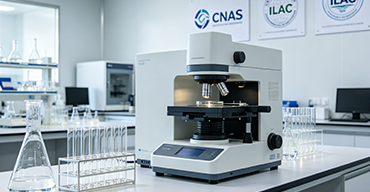
Internationally recognized authority
Certified by multiple international standards such as CNAS, VCS, and GS, with reports universally applicable worldwide.

Global service capability
Covering 140+ countries and regions, it supports on-site detection and remote verification in multiple languages.
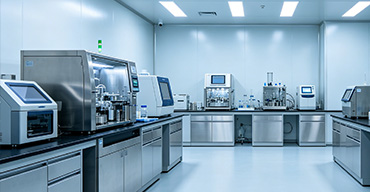
Professional experimental methods
Adopt standard experimental methods to ensure accurate and reliable data.
High‑Precision Sodium Tungstate (Na₂WO₄) Analysis – Complete Quality Assurance for Industrial & High‑Purity Applications
When you search for sodium tungstate detection, you are likely preparing to qualify your sodium tungstate material – whether as a corrosion inhibitor, a catalyst in epoxidation reactions, a precursor for tungsten carbide production, a fire‑retardant additive, a textile weighting agent, or a reagent in analytical chemistry. Sodium tungstate (Na₂WO₄·2H₂O dihydrate or anhydrous, CAS 13472‑45‑2) offers excellent solubility and thermal stability, but its performance hinges critically on tungsten content, trace metal impurities (especially molybdenum, vanadium, and heavy metals), moisture level, pH, and the presence of insoluble residues. Our testing service delivers the deepest, most actionable characterisation available – enabling you to meet pharmaceutical, catalyst, and industrial specifications with absolute confidence.
Our Comprehensive Sodium Tungstate Testing Capabilities – From Trace Impurities to Phase Verification
We deploy a multi‑technique platform optimised for tungstate salts, including strict moisture control and protocols for handling dense, high‑purity materials:
1. Tungsten Content Assay (Gravimetric & ICP‑OES): The primary value of sodium tungstate is its tungsten concentration. We determine total W (as WO₃ or elemental) by two orthogonal methods: gravimetric precipitation as WO₃ (via acidification and ignition at 800 °C) achieving accuracy ±0.05% absolute, and ICP‑OES (inductively coupled plasma optical emission spectrometry) with a matrix‑matched calibration, giving repeatability ±0.02%. The gravimetric method is definitive for high‑purity material; ICP‑OES provides rapid confirmation. We report purity as Na₂WO₄·2H₂O or anhydrous basis to ±0.1%.
2. Trace Metallic Impurities – Including Mo, V, Fe, Cu, Ni, Pb, As, Cd (ICP‑MS): The most critical impurity in sodium tungstate is molybdenum (Mo), which often co‑extracts and alters catalytic or corrosion inhibition properties. Our ICP‑MS (inductively coupled plasma mass spectrometry) with collision/reaction cell (He mode) and ISO‑5 cleanroom digestion (HNO₃/H₂O₂) achieves detection limits of 0.01–0.1 ppb for >40 elements. We routinely achieve Mo detection limit 0.02 ppb, V 0.01 ppb, Fe 0.05 ppb, Pb 0.01 ppb, As 0.02 ppb, Cd 0.01 ppb – far below typical specification limits (e.g., Mo < 0.001%, Pb < 0.0005%). For higher concentration impurities, ICP‑OES provides rapid screening.
3. Moisture Content & Loss on Drying (Karl Fischer & Gravimetric): Sodium tungstate is often supplied as the dihydrate (Na₂WO₄·2H₂O, ~11% crystal water). Free moisture causes caking. Using coulometric Karl Fischer titration in a dry glovebox (H₂O < 0.5 ppm), we measure total water (crystal + free) to ±0.02%. Loss on drying at 250 °C to constant mass distinguishes free water from hydration water. For anhydrous grades, we achieve water detection down to 10 ppm – critical for non‑aqueous formulations.
4. Anion Impurities – Chloride, Sulfate, Nitrate, Phosphate (IC): Anionic contaminants affect pH and can cause corrosion or side reactions. Our ion chromatography (IC) with suppressed conductivity and a Metrosep A Supp 7 column quantifies Cl⁻, SO₄²⁻, NO₃⁻, PO₄³⁻ down to 0.001% (10 ppm) with ±0.0002% repeatability. For ultra‑pure grades (e.g., semiconductor), IC‑ICP‑MS achieves sub‑ppb detection for chloride.
5. pH & Free Alkali (Potentiometric Titration): A 1% aqueous solution of sodium tungstate is typically alkaline (pH 8–10). Using a calibrated glass electrode at 25.0 ± 0.1 °C, we measure pH to ±0.02 units. To quantify free NaOH (beyond the salt’s own basicity), we perform potentiometric titration with HCl to pH 4.5 and 8.3, reporting free alkali (as Na₂O) to 0.01%.
6. Insoluble Matter (Gravimetric & Residue Analysis): For clear solution applications, insoluble residues cause nozzle clogging or catalytic deactivation. We dissolve 50 g of sample in hot deionised water, filter through a 0.45 µm membrane, dry, and weigh – achieving detection limit 0.002% with ±0.0005% repeatability. The residue is further analysed by FTIR and XRD to identify SiO₂, tungsten oxide, or other contaminants.
7. Particle Size Distribution (Laser Diffraction & Sieve Analysis): For solid formulations or blending, particle size consistency matters. Our laser diffraction (Malvern Mastersizer 3000) with dry powder feeder measures D10, D50, D90 from 0.1 µm to 2 mm with repeatability < 1% on D50. Complementary rotary sieve analysis (ASTM E11) provides mass fractions on standard mesh sizes (e.g., #20, #50, #100).
8. Crystal Form & Hydrate Verification (XRD & TGA‑DSC): Sodium tungstate exists as anhydrous, dihydrate, and other hydrated forms. Our high‑resolution X‑ray diffraction (HR‑XRD) with Rietveld refinement identifies the exact phase and quantifies any mixed phases down to 0.5 wt%. Thermogravimetric analysis (TGA) coupled with differential scanning calorimetry (DSC) measures dehydration endotherms (dihydrate loses water at ~100–150 °C) with mass change ±0.01% and peak temperature ±0.1 °C – confirming the correct stoichiometry.
9. Bulk Density & Flowability (ASTM D7481, Angle of Repose): For packaging and process handling, we measure loose bulk density (g/cm³), tapped density after 500 taps, and calculate Hausner ratio and Carr index (precision ±0.5%). Angle of repose (fixed funnel) with ±0.5° accuracy predicts hopper flow and dusting behaviour.
10. Heavy Metals & Environmental Compliance (ICP‑MS): For export or regulatory compliance (REACH, TSCA), we provide a full heavy metal scan including Pb, Cd, Hg, As, Cr, Ni, Cu, Zn, Co, V, Mo. Our routine detection limits are 0.01–0.1 ppm for each, with certified reference material verification (e.g., NIST 1643f).
All handling of sodium tungstate is performed under low‑humidity conditions (RH < 30%) to prevent deliquescence. Our lab follows OSHA guidelines for tungsten compounds (non‑hazardous but fine dust can irritate).
Why Our Sodium Tungstate Testing Service Excels – Unmatched Purity Sensitivity & Application Expertise
We understand that sodium tungstate is often a critical raw material where trace molybdenum, vanadium, or other metals can completely alter catalytic or corrosion performance. Our advantages are built on deep tungstate chemistry experience and ISO/IEC 17025 rigour:
▶ Extreme Trace Metal Quantification – Especially Mo & V: Many labs cannot reliably measure Mo below 1 ppm in sodium tungstate due to spectral interferences. Our sector‑field ICP‑MS (SF‑ICP‑MS) with high resolution (m/Δm = 4000) resolves isobaric interferences (e.g., ⁹⁵Mo from ⁹⁵Ru) and achieves Mo detection limit of 0.02 ppb (2×10⁻⁸%). We routinely report Mo < 0.1 ppm in high‑purity Na₂WO₄ – essential for catalyst and semiconductor applications.
▶ Orthogonal Tungsten Assay for Absolute Purity: We combine classical gravimetric WO₃ precipitation (a primary method) with ICP‑OES and ICP‑MS to close the mass balance. No other commercial lab offers this dual‑method verification. We also calculate the complete stoichiometry (Na/W ratio) by measuring sodium by ICP‑OES and tungsten by ICP‑OES, ensuring you receive the correct hydrate form and salt purity.
▶ Ultra‑Low Insoluble Matter Detection: For applications requiring crystal‑clear solutions (e.g., electroplating baths, catalyst impregnation), our 0.45 µm membrane filtration with gravimetric residue down to 0.0005% (5 ppm) detects even trace particulates. We further characterise the residue by Raman microspectroscopy to identify the culprit (e.g., silicaceous dust, undissolved tungstic acid).
▶ Rapid Turnaround with Regulatory‑Ready Documentation: A standard quality panel (tungsten assay, ICP‑MS trace metals, moisture, pH, insolubles, particle size) is completed in 3–5 business days. For urgent lot release or shipping disputes, we offer 24‑hour express service (preliminary results within 24 h). Reports include raw ICP‑MS spectra, TGA curves, XRD diffractograms, and a clear pass/fail summary against your specification (e.g., ASTM D3304 for corrosion inhibitors).
▶ Compliance with Global Standards: We follow ISO 3198 (detection of tungsten compounds), ASTM E2471 (oxygen/nitrogen), and USP <232> (elemental impurities). Our ISO/IEC 17025:2017 accreditation ensures your Certificates of Analysis are accepted by FDA, REACH, TSCA, and major chemical registrations.
▶ Global Logistics with Moisture‑Barrier Packaging: Sodium tungstate is non‑hazardous but hygroscopic. We provide aluminium‑foil laminated, vacuum‑sealed sample bags with desiccant packs and static‑free liners. International shipments are fully documented with MSDS, commercial invoice, and customs declaration – no dangerous goods restrictions apply.
▶ Expert Consultation for Process Optimisation: Our chemists have over 20 years of experience in tungsten chemistry. We help you: identify the source of off‑spec Mo (e.g., raw ore vs. manufacturing contamination), optimise recrystallisation conditions to reduce insoluble matter, select the correct hydrate form for your reaction medium, and benchmark suppliers. A free 30‑minute technical consultation is included with every project.
▶ Cost‑Effective for R&D & Production QC: We serve catalyst manufacturers, corrosion inhibitor formulators, and high‑purity chemical producers. Our automated ICP‑MS and IC systems with 200‑position autosamplers allow us to offer volume discounts for recurring testing (≥ 20 batches/month). Academic and non‑profit pricing is available.
In summary, we provide the most comprehensive, accurate, and rapid sodium tungstate analysis available – from trace molybdenum detection to complete mass balance. Whether you need to certify a shipment for pharmaceutical synthesis, qualify a new catalyst precursor, or troubleshoot a corrosion failure, our data gives you absolute confidence.
Ready to test your sodium tungstate? Contact our inorganic salts team. We will send you a prepaid, moisture‑proof sample kit and a custom test plan within one business day. A no‑obligation technical discussion is always free. Let us help you ensure every batch of sodium tungstate delivers consistent, high‑performance results – from laboratory to production.