Reasons for choosing our testing services
ZHONGXI Testing has obtained inspection qualification certifications from multiple countries and regions worldwide. We possess a senior testing team and advanced testing methods, providing independent, impartial, and professional third-party verification services for global carbon projects.

Internationally recognized authority
Certified by multiple international standards such as CNAS, VCS, and GS, with reports universally applicable worldwide.

Global service capability
Covering 140+ countries and regions, it supports on-site detection and remote verification in multiple languages.

Professional experimental methods
Adopt standard experimental methods to ensure accurate and reliable data.
Specialized Analytical Testing for Helical Carbon Nanofibers (HCNFs / Coiled CNFs)
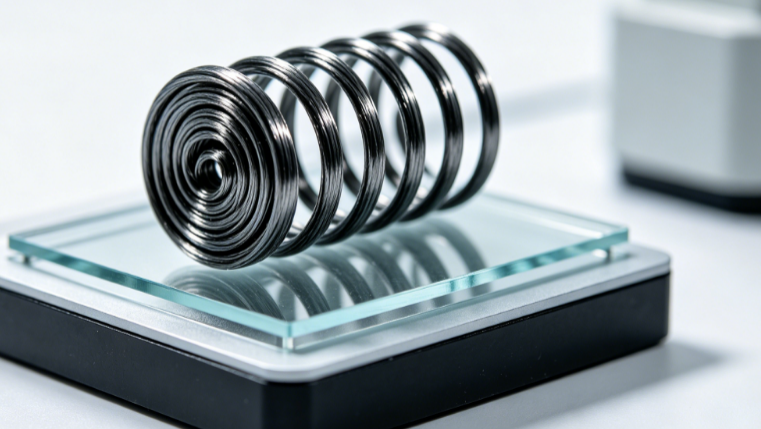
If you are searching for helical carbon nanofiber testing, you are likely in the advanced stages of developing nanocomposites, energy storage devices, sensors, or electromagnetic absorbers. Unlike straight carbon nanotubes, helical (coiled) carbon nanofibers possess unique spring-like morphology, chirality, and strain characteristics that directly determine their mechanical resilience, electrical conductivity, and interfacial behavior. We understand that your need for testing is driven by quality control, process optimization, or failure analysis – and we are ready to deliver the highest level of structural, chemical, and functional characterization available today.
What We Can Do for Your Helical Carbon Nanofiber Samples
We provide a complete testing suite that goes beyond simple “purity checks”. Our laboratory is equipped to analyze every critical feature of HCNFs, from macroscopic uniformity to atomic‑scale defects. Our core capabilities include:
- Morphological analysis: fiber diameter, coil pitch, coil diameter, handedness (left/right-handedness), and uniformity using high-resolution SEM (sub‑nm resolution) and automated image analysis (over 10,000 fibers per batch).
- High‑resolution transmission electron microscopy (HRTEM) with selected area electron diffraction (SAED) to visualize graphene layer stacking, curvature, and interlayer spacing.
- Raman spectroscopy (multiple laser lines: 325, 532, 633, 785 nm) to determine ID/IG ratio (defect density), G‑band splitting (curvature-induced strain), and radial breathing mode analogs for small‑diameter fibers.
- Thermogravimetric analysis (TGA) in air or inert atmosphere to quantify amorphous carbon content, residual metal catalyst (e.g., Ni, Fe, Co), and thermal stability up to 1200 °C.
- Elemental microanalysis (CHN/O) and X‑ray photoelectron spectroscopy (XPS) for surface functional groups (C‑O, C=O, O‑C=O, pyridinic N if doped).
- Electrical conductivity measurement on single‑fiber and mat level using four‑probe method (from µS/cm to kS/cm).
- Mechanical testing of individual coiled fibers via nano‑tensile manipulator inside SEM – obtain spring constant, maximum elongation, and fracture strain.
- Specific surface area (BET) and pore size distribution (DFT) for applications in supercapacitors and gas adsorption.
How Deep Our Characterization Goes
We do not offer generic “carbon analysis”. Our team has developed proprietary protocols for handling fragile, entangled helical nanofibers and quantifying parameters that most labs ignore. Examples of our advanced depth:
- 3D helical parameter extraction: using ultra‑high‑resolution SEM tomography and machine‑learning segmentation, we report average pitch angle, amplitude, and torsion with statistical distribution (histograms, skewness, kurtosis).
- Single‑fiber electrical breakdown strength up to 106 V/cm, measured on a custom MEMS chip (temperature range: 80–700 K).
- Catalyst residue detection by ICP‑MS after complete digestion: detection limits down to 0.5 ppm for Fe, Ni, Co, Mo – essential for electronic‑grade HCNFs.
- Graphene layer continuity mapping via EELS (electron energy loss spectroscopy) at sub‑nanometer resolution to identify breakage or disorder along the helix.
- Ambient and in‑situ variable temperature Raman (‑196 °C to 800 °C) to study thermally induced structural relaxation of coiled regions.
- Chirality index quantification using high‑angle annular dark field (HAADF)‑STEM combined with geometric phase analysis (GPA) for strain mapping.
Why Our Testing Lab Is the Right Choice for Helical Carbon Nanofibers
General‑purpose materials testing labs often miss critical parameters specific to coiled carbon nanofibers – because they lack both the equipment expertise and the sample handling experience. Our advantages are tailored to your success:
➤ Specialized experience with low‑dimensional carbon allotropes – We have analyzed over 500 HCNF samples from chemical vapor deposition (CVD), template growth, and arc‑discharge methods. We know how to differentiate true helical morphology from tangled or crimped straight fibers.
➤ Cryo‑SEM and adhesive‑free dispersion protocols – Prevents agglomeration and structural damage during sample preparation, giving you representative, artifact‑free images and statistics.
➤ ISO 17025 accredited methods for Raman, TGA, and SEM‑EDS – With additional in‑house validation specifically for coiled carbon morphologies. You receive full uncertainty budgets and traceable calibration.
➤ Quantitative batch‑to‑batch comparison reports – Ideal for process development and supplier qualification. We provide a “Helical Quality Index” (HQI) that combines pitch uniformity, defect density, and metal residue into a single actionable score.
➤ Fast turnaround and one‑on‑one consultation – Typical full characterization completed within 5‑7 business days. Our carbon nanomaterial scientists will help you interpret the data and advise on synthesis adjustments to improve helix regularity.
➤ Global sample receiving and compliance – We provide secure, static‑free packaging for ultralight fibrous nanomaterials and can coordinate international shipping with necessary customs declarations.
Ready to Get Your Helical Carbon Nanofibers Tested?
Whether you need to confirm a new synthesis route, troubleshoot batch inconsistency, or generate a certificate of analysis for a customer, our lab delivers the deepest, most actionable characterization of helical carbon nanofibers available. Contact our nanofiber analysis team with your specifications (average coil dimensions, purity requirements, and intended application) – and we will return a customized test plan and quote within 24 hours.