Reasons for choosing our testing services
ZHONGXI Testing has obtained inspection qualification certifications from multiple countries and regions worldwide. We possess a senior testing team and advanced testing methods, providing independent, impartial, and professional third-party verification services for global carbon projects.

Internationally recognized authority
Certified by multiple international standards such as CNAS, VCS, and GS, with reports universally applicable worldwide.

Global service capability
Covering 140+ countries and regions, it supports on-site detection and remote verification in multiple languages.

Professional experimental methods
Adopt standard experimental methods to ensure accurate and reliable data.
Advanced Analytical Testing for Magnesium Oxysulfate (MOS) Whiskers
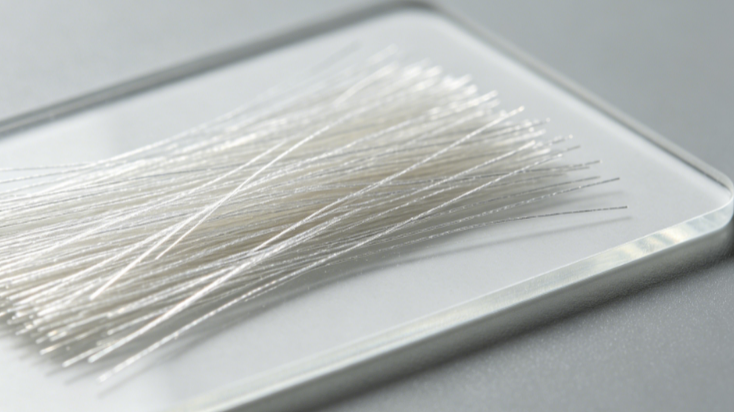
If you are searching for magnesium oxysulfate whisker testing, you are likely evaluating these high‑aspect‑ratio crystals for use as reinforcing fillers in polymers, ceramics, or friction materials. Unlike common mineral fibers, MOS whiskers (typically 5Mg(OH)₂·MgSO₄·3H₂O or similar phases) require precise control of crystal phase, morphology, and surface chemistry to achieve consistent mechanical reinforcement. We understand that your need for testing stems from quality assurance, process troubleshooting, or supplier qualification – and our laboratory provides the most comprehensive, application‑focused characterization of magnesium oxysulfate whiskers available today.
What We Can Do for Your Magnesium Oxysulfate Whisker Samples
We offer a complete analytical package specifically designed for MOS whiskers, from basic purity screening to advanced crystallographic and mechanical evaluation. Our core capabilities include:
- Phase identification & quantification via X‑ray diffraction (XRD) with Rietveld refinement – distinguishing 513, 513A, 515, and 112 phase variants, and detecting unreacted MgO, MgSO₄, or brucite.
- Whisker morphology analysis using high‑resolution SEM (field emission, <1 nm resolution) with automated image analysis – reporting average length, diameter, aspect ratio distribution, and surface smoothness across thousands of whiskers.
- Elemental composition & stoichiometry: Mg, S, O, and hydration water by ICP‑OES (Mg, S) and thermogravimetry (H₂O & SO₃ release profiles).
- Thermal stability & decomposition behavior by TGA‑DSC (room temperature to 1200 °C) in air or inert gas – critical for polymer compounding temperature windows.
- Crystal defect & surface analysis via transmission electron microscopy (TEM) with selected area electron diffraction (SAED).
- Residual free acid/basicity by pH measurement of aqueous slurry – essential for compatibility with resin matrices.
- Specific surface area (BET, N₂ adsorption) and pore volume – indicators of whisker dispersion and coating efficiency.
- Mechanical performance screening of whisker‑filled composites (tensile, flexural, impact) on demand, correlating test results with whisker quality.
How Deep Our Characterization Goes
We do not rely on generic “whisker analysis” methods. Our team has developed advanced protocols tailored to the unique challenges of magnesium oxysulfate whiskers, including moisture sensitivity, phase complexity, and tendency to form aggregates. Examples of our technical depth:
- Quantitative phase analysis by XRD-Rietveld with detection limits as low as 0.5 wt% for secondary phases. We also determine crystallite size and microstrain to evaluate crystal perfection, directly related to whisker strength.
- Single‑whisker mechanical testing via nano‑mechanical manipulator inside SEM – measure elastic modulus, bending strength, and fracture toughness of individual crystals (diameters 0.5 µm to 5 µm).
- Surface chemical mapping by XPS (X‑ray photoelectron spectroscopy) – quantify Mg, S, C, O and distinguish surface hydroxyls vs. sulfates, with depth profiling (up to 10 nm) to detect contamination or coating residues.
- In‑situ TGA‑FTIR‑MS coupling: identify exact decomposition gases (H₂O, SO₂, SO₃) and temperature windows for each phase transition – resolution <0.1 wt% mass change.
- Laser diffraction particle size analysis combined with wet dispersion optimization (avoiding whisker breakage) – provide volume‑weighted aspect ratio estimates as a QC metric.
- Whisker durability test – shear stability in high‑viscosity media (e.g., epoxy or PP melt) to predict length retention during compounding.
Why Our Lab Is the Right Partner for MOS Whisker Testing
Many general materials labs treat magnesium oxysulfate whiskers like simple inorganic powders, missing critical parameters that affect real‑world performance. Our advantages are built on deep expertise in refractory mineral fibers and crystal chemistry:
➤ Specialized sample handling for hygroscopic whiskers – MOS whiskers can absorb moisture and undergo phase changes. We perform all handling in a controlled humidity environment (RH ≤10%) and provide sealed, desiccated transport to your facility.
➤ ISO/IEC 17025:2017 accredited methods for XRD, SEM‑EDS, TGA, and ICP – with additional in‑house validation specific to oxysulfate systems. You receive full measurement uncertainty and raw data.
➤ Proprietary “Whisker Integrity Index” (WII) – combines aspect ratio uniformity, phase purity, and thermal stability into a single score for easy batch comparison and specification compliance.
➤ Rapid turnaround: 3‑5 business days for standard morphology + phase + purity package (expedited 48‑h available). We also provide remote consultation to help you interpret results and adjust synthesis or surface treatment parameters.
➤ Global sample logistics – we supply stable, static‑free packaging and can advise on customs declaration for “inorganic fiber samples” (non‑hazardous, no asbestos restrictions).
Get Your Magnesium Oxysulfate Whiskers Tested with Confidence
Whether you are developing a new flame‑retardant composite, optimizing whisker growth conditions, or qualifying a supplier batch, we deliver the most detailed, actionable characterization of MOS whiskers in the industry. Contact our inorganic fiber analysis team with your target aspect ratios, purity requirements, and intended application – we will return a custom test plan and quote within 24 hours.