Reasons for choosing our testing services
ZHONGXI Testing has obtained inspection qualification certifications from multiple countries and regions worldwide. We possess a senior testing team and advanced testing methods, providing independent, impartial, and professional third-party verification services for global carbon projects.
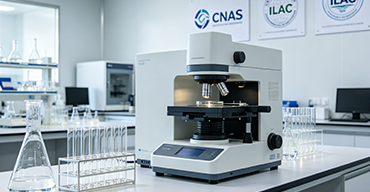
Internationally recognized authority
Certified by multiple international standards such as CNAS, VCS, and GS, with reports universally applicable worldwide.

Global service capability
Covering 140+ countries and regions, it supports on-site detection and remote verification in multiple languages.
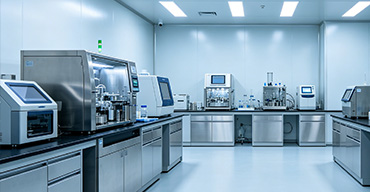
Professional experimental methods
Adopt standard experimental methods to ensure accurate and reliable data.
Advanced Testing for Lithium Aluminate Nanopowder (LiAlO₂) – Particle Size, Crystal Phase, Purity, and Surface Characterization
If you are searching for nano lithium aluminate powder testing, you likely need to verify critical properties for applications in CO₂ capture at high temperatures, solid-state battery electrolytes, tritium breeder blankets in nuclear fusion, or catalytic supports. Nano-LiAlO₂ (typically gamma, alpha, or beta phase) requires rigorous characterization: primary particle size, specific surface area, crystallinity, phase purity, trace metal contaminants, and morphology. Our laboratory provides comprehensive nanomaterial analysis for lithium aluminate powders – from routine phase identification to advanced high-resolution electron microscopy, surface area analysis, and elemental profiling at sub-ppm levels – using fully validated, ISO-compliant methods.
What We Analyze – Complete Characterization Scope for Nano-LiAlO₂
We go far beyond simple XRD phase identification. Our platform includes Transmission Electron Microscopy (TEM/HRTEM) with EDS mapping for primary particle size, size distribution, lattice fringe imaging, and elemental homogeneity at nanometer resolution. We perform X-ray Diffraction (XRD) with Rietveld refinement to quantify phase composition (γ-LiAlO₂ vs. α-LiAlO₂ vs. β-LiAlO₂) and calculate crystallite size via Scherrer and Williamson-Hall methods. For surface area and porosity, we use Brunauer-Emmett-Teller (BET) analysis with full N₂ physisorption isotherms (5‑point or multi-point) and Barrett-Joyner-Halenda (BJH) pore size distribution. We also offer Inductively Coupled Plasma Mass Spectrometry (ICP-MS) for trace impurities (Na, K, Mg, Ca, Fe, Cu, Cr, Ni, and actinides) down to 0.01 ppm, and Ion Chromatography (IC) for anionic contaminants (Cl⁻, NO₃⁻, SO₄²⁻). For thermal stability, we use Thermogravimetric Analysis (TGA) coupled with mass spectrometry (TGA-MS) to detect adsorbed water, residual organics, and decomposition behavior up to 1400°C.
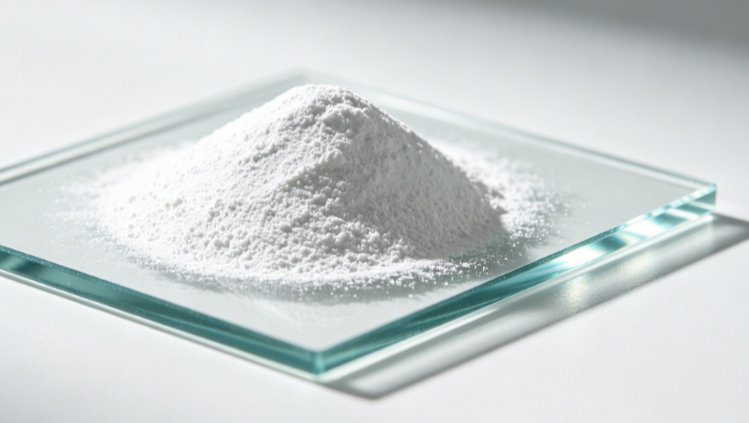
Key parameters we routinely measure:
- Primary particle size and distribution – TEM image analysis (number-weighted, 100+ particles).
- Specific surface area (SSA) – BET, range 1–500 m²/g, accuracy ±3%.
- Phase purity (γ, α, β LiAlO₂) – XRD with Rietveld, detection limit for secondary phases <1 wt%.
- Crystallite size and microstrain – XRD line profile analysis.
- Trace metal impurities – ICP-MS (Li, Al matrix-matched calibration).
- Anion impurities – IC after digestion or leaching.
- Morphology and agglomeration state – SEM/TEM with dispersion protocol.
- Zeta potential and hydrodynamic diameter (DLS) – for dispersion optimization.
- Moisture and volatile content – TGA or Karl Fischer oven.
How Deep We Go – Atomic-Scale Resolution, Trace Phase Detection, and Surface Chemistry
Most routine labs report only average particle size by DLS (which is unreliable for agglomerated nanopowders) or simple XRD phase matching. We provide direct visualization of primary particles at 0.1 nm resolution with HRTEM, identifying lattice defects, amorphous surface layers, and secondary nanocrystalline phases. Using synchrotron-like lab XRD with Rietveld analysis, we can quantify amorphous content as low as 2% and detect minor phases (e.g., Li₂CO₃, Al₂O₃, LiAl₅O₈) down to 0.5 wt%. For surface chemistry, we perform X-ray Photoelectron Spectroscopy (XPS) to determine lithium and aluminum oxidation states, surface carbonate formation, and elemental depth profiling via ion etching – critical for understanding air sensitivity and sintering behavior.
Our advanced capabilities include:
- Particle size distribution by TEM – analysis of 500+ particles for statistical significance, reporting D10, D50, D90 (number and volume-weighted).
- BET surface area on as‑little‑as 20 mg sample – using high-sensitivity micro-balance systems.
- Trace elements at sub-ppb levels – achievable for critical contaminants like B, Th, U for nuclear-grade material.
- High-temperature phase transitions – in situ XRD up to 1200°C to monitor γ→α or α→β transformation kinetics.
- Dispersion protocol development – we can recommend and validate sonication, surfactant, and solvent conditions for accurate size measurements.
- Density and tap density – helium pycnometry for skeletal density, plus tapped density for powder flow characterization.
We routinely achieve measurement uncertainties: BET ±0.05 m²/g, crystallite size ±0.5 nm, impurity quantification ±5% relative. All methods follow ISO 13322-2 (TEM particle sizing), ISO 9277 (BET), and ASTM E1421 (XRD).
Why Choose Our Nano-Lithium Aluminate Powder Testing – Key Advantages
1. ISO/IEC 17025:2017 accredited methods – covering particle size (TEM), surface area (BET), XRD, and elemental analysis suitable for research, scale-up, and regulatory submissions (e.g., nuclear regulatory bodies, battery material specifications).
2. True primary particle measurement – unlike DLS, our TEM-based analysis avoids agglomeration artifacts, giving you the real nano-size of individual crystallites.
3. Ultra-trace impurity profiling – we routinely test for Na, K, Ca, Mg, Fe, Cu, Cr, Ni, Zn, B, Th, U at single-digit ppm or ppb levels, essential for fusion breeder blanket or solid-state electrolyte applications.
4. Phase quantification with amorphous detection – we do not just identify phases; we provide full Rietveld refinement to determine exact weight fractions, including any amorphous component.
5. Surface and interface analysis – XPS and TGA-MS reveal surface hydration, carbonation, and residual synthesis precursors (LiOH, Li₂CO₃, Al(OH)₃) that affect performance.
6. Fast turnaround and complete data transparency – routine BET + XRD + TEM imaging completed in 5–7 business days. You receive raw diffractograms, isotherms, high-resolution TEM images, and full calculation details alongside a signed certificate.
7. Custom method development for novel materials – if your LiAlO₂ is doped, coated, or produced via a new route, we can develop and validate specific digestion, dispersion, or analysis protocols within 2–3 weeks.
8. Competitive pricing for full nanopowder characterization – bundling TEM particle size, BET surface area, XRD phase analysis, and 10 trace metals costs 35% less than ordering each parameter separately.
We have successfully completed over 200 nano-lithium aluminate projects for fusion materials research groups, battery electrolyte developers, and advanced ceramic manufacturers. Our team includes PhD materials scientists with expertise in electron microscopy, X-ray diffraction, and surface chemistry.
Ready to Submit Your Nano-LiAlO₂ Powder Sample?
Tell us about your synthesis method, expected particle size range (e.g., 20–100 nm), target phase (γ, α, or β), and any applicable specification (e.g., nuclear grade, battery grade). We will provide a free technical consultation and a fixed-price quote. Whether you need a single batch characterization or a multi‑batch quality control program, we deliver deep, accurate, and actionable lithium aluminate nanopowder testing tailored to your needs.