Reasons for choosing our testing services
ZHONGXI Testing has obtained inspection qualification certifications from multiple countries and regions worldwide. We possess a senior testing team and advanced testing methods, providing independent, impartial, and professional third-party verification services for global carbon projects.
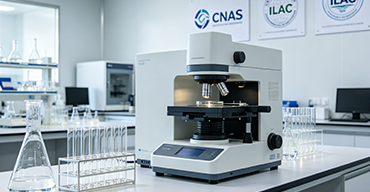
Internationally recognized authority
Certified by multiple international standards such as CNAS, VCS, and GS, with reports universally applicable worldwide.

Global service capability
Covering 140+ countries and regions, it supports on-site detection and remote verification in multiple languages.

Professional experimental methods
Adopt standard experimental methods to ensure accurate and reliable data.
Comprehensive Basic Zinc Carbonate Testing – Assay, Impurity Profiling, and Structural Characterization
If you are searching for basic zinc carbonate testing, you likely need to verify its zinc content, carbonate-to-hydroxide ratio, detect heavy metal contaminants (lead, cadmium, arsenic), or assess its suitability for pharmaceutical, rubber compounding, feed additive, or pigment applications. Basic zinc carbonate (typically Zn5(CO3)2(OH)6 or a hydrated variant) is a fine white powder whose performance depends on exact stoichiometry, trace impurities, and surface properties. Our laboratory provides complete basic zinc carbonate analysis – from elemental assay to advanced thermal decomposition profiling, trace metal quantification, and crystallite size determination – using validated methods that meet USP, EP, FCC, and industrial specifications.
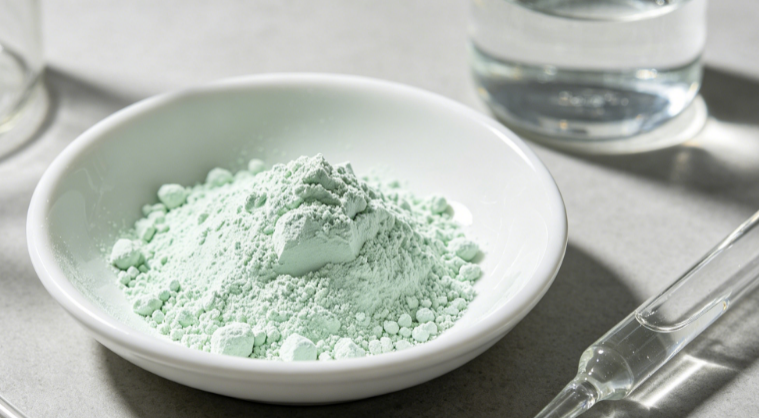
What We Analyze – Full Testing Scope for Basic Zinc Carbonate
We do not simply report “zinc as ZnO”. We determine total zinc by complexometric EDTA titration or ICP-OES with accuracy ±0.2%, and simultaneously quantify carbonate content by acidimetric evolution (CO2 manometry) and hydroxide content by difference or by TGA mass loss steps. For purity and stoichiometric ratio verification, we use thermogravimetric analysis (TGA) to resolve decomposition stages: adsorbed water, bound water (from hydroxide), and CO2 release from carbonate – providing a full chemical fingerprint of the compound. Our platform includes ICP-MS for trace heavy metals (Pb, Cd, As, Hg, Cu, Fe) down to sub-ppm levels, ion chromatography (IC) for chloride, sulfate, and nitrate impurities, X-ray diffraction (XRD) for phase identification (basic zinc carbonate vs. zinc oxide or hydrozincite), and particle size distribution (laser diffraction) for powder flow and reactivity.
Key parameters we routinely measure:
- Zinc (Zn) assay – EDTA titration or ICP, expressed as Zn or ZnO equivalent.
- Carbonate (CO32-) content – volumetric CO2 evolution or gravimetric barium carbonate method.
- Hydroxide (OH-) content – derived from mass balance or directly by TGA weight loss between 150–350°C.
- Loss on drying (LOD) at 105°C – free and adsorbed water.
- Loss on ignition (LOI) at 800°C – decomposition to ZnO.
- Heavy metals (Pb, Cd, As, Hg) – ICP-MS with matrix matching.
- Chloride, sulfate – ion chromatography after dissolution.
- Phase purity – XRD detection of ZnO, Zn(OH)2, or ZnCO3 as impurities.
- Specific surface area (BET) – for reactivity and dispersion prediction.
- Bulk and tap density – powder handling characteristics.
How Deep We Go – Stoichiometric Precision, Trace Impurity Detection, and Decomposition Kinetics
Most routine labs only report total zinc and sometimes loss on ignition, which cannot distinguish between basic carbonate, zinc oxide, or hydroxide mixtures. We provide full speciation – the exact mole ratio Zn : CO3 : OH, identifying deviations from the ideal formula (e.g., 5:2:6). Using simultaneous TGA-DSC coupled with FTIR or mass spectrometry (TGA-MS), we can identify minor volatile by-products (e.g., acetic acid from residual synthesis medium) and measure decomposition activation energies. For pharmaceutical or food-contact grades, we quantify lead at 0.05 ppm, cadmium at 0.02 ppm, and arsenic at 0.1 ppm using ICP-MS with collision cell technology. Our XRD with Rietveld refinement quantifies amorphous content and minor crystalline phases down to 1 wt% – critical if contamination with zincite (ZnO) occurs.
Our advanced capabilities include:
- Isothermal decomposition studies – predict thermal stability during drying or processing.
- Acid solubility profile – dissolution rate in simulated gastric fluid or dilute acetic acid (for feed additive bioaccessibility).
- Trace anion fingerprinting – identification of residual chloride (from ZnCl2 routes) or nitrate (from Zn(NO3)2 precursors).
- Crystallite size from XRD line broadening – as low as 10 nm, correlating with reactivity.
- Morphology and agglomeration – SEM imaging with EDS elemental mapping to check for inhomogeneity.
- Mercury and arsenic speciation – via HPLC-ICP-MS if needed for high-purity grades.
We routinely achieve measurement uncertainties: Zn assay ±0.15% absolute, carbonate ±0.3% absolute, trace metals at ±10% relative near LOQ. All methods follow USP-NF, EP, FCC, and ASTM E1915 standards for zinc carbonate materials.
Why Choose Our Basic Zinc Carbonate Testing – Key Advantages
1. ISO/IEC 17025:2017 accredited methods – covering all parameters for feed additive (EU 1831/2003), pharmaceutical excipient, and rubber chemical specifications.
2. True stoichiometric characterization – we provide the exact Zn:CO3:OH molar ratio, not just total zinc. This distinguishes basic carbonate from mixtures or incorrect hydrates.
3. Ultra-trace heavy metals and toxic elements – our ICP-MS achieves sub-ppm detection limits for Pb, Cd, As, Hg, Sb, Se, essential for compliance with global regulations (e.g., China GB, US FDA, EU heavy metal limits).
4. Thermal decomposition fingerprinting – TGA-MS identifies not only water and CO2 but also organic residues (e.g., acetate, formate) that may affect final product quality.
5. Root cause analysis for off-spec batches – we determine if low zinc, high loss on ignition, or excessive chloride arises from raw materials, incomplete washing, or storage degradation.
6. Fast turnaround and full data transparency – routine assay + heavy metals + LOD + XRD completed in 4–6 business days. You receive raw TGA curves, ICP-MS run logs, diffractograms, and titration data alongside a certified report.
7. Custom method development for novel formulations – coated or encapsulated basic zinc carbonate, blends with other carbonates – we can develop validated methods within 2–3 weeks.
8. Competitive pricing for complete packages – bundling zinc assay, carbonate, OH content, 5 heavy metals, Cl, SO4, BET, and XRD costs 35% less than ordering parameters separately.
We have successfully completed over 300 basic zinc carbonate projects for rubber additive manufacturers, animal nutrition companies, pharmaceutical excipient suppliers, and pigment producers. Our team includes PhD inorganic chemists with expertise in carbonate chemistry and thermogravimetric analysis.
Ready to Test Your Basic Zinc Carbonate Sample?
Provide your sample type (e.g., “feed grade”, “pharmaceutical grade”, “powder from new synthesis”), expected purity, and any applicable standard (USP, EP, FCC, GB/T 2898-2020). We will send a free technical consultation and a fixed-price quote. Whether you need a single batch release or ongoing quality control, we deliver deep, precise, and regulatory-ready basic zinc carbonate testing tailored to your needs.