Reasons for choosing our testing services
ZHONGXI Testing has obtained inspection qualification certifications from multiple countries and regions worldwide. We possess a senior testing team and advanced testing methods, providing independent, impartial, and professional third-party verification services for global carbon projects.

Internationally recognized authority
Certified by multiple international standards such as CNAS, VCS, and GS, with reports universally applicable worldwide.

Global service capability
Covering 140+ countries and regions, it supports on-site detection and remote verification in multiple languages.

Professional experimental methods
Adopt standard experimental methods to ensure accurate and reliable data.
Environmental Chemical Contaminant Testing Services: Water, Soil, Air, Sediment & Biota Analysis
As an independent third-party testing service provider, we offer comprehensive chemical analysis for environmental matrices – including water (surface, ground, drinking, wastewater), soil, sediment, air, dust, and biota. Environmental contaminants such as heavy metals, pesticides, volatile organic compounds (VOCs), semi‑volatile organic compounds (SVOCs), polychlorinated biphenyls (PCBs), polycyclic aromatic hydrocarbons (PAHs), per‑ and polyfluoroalkyl substances (PFAS), petroleum hydrocarbons, and emerging pollutants pose risks to ecosystems and human health. Our accredited laboratory follows international standards (ISO, EPA, ASTM, EN, WHO, China GB, EU Water Framework Directive) to deliver reliable, legally defensible data for regulatory compliance, site assessment, remediation monitoring, and environmental impact studies. This article outlines our environmental chemical testing capabilities – including scope, key test items, and standard test methods – to help consultants, industries, government agencies, and researchers protect environmental quality.
1. Our Testing Scope for Environmental Chemical Contaminants
We cover all major environmental compartments and contaminant classes:
By matrix type: Water (freshwater, seawater, drinking water, groundwater, wastewater, leachate, process water); Soil (agricultural, residential, industrial, brownfield, sediment, sludge); Air (ambient, indoor, stack emissions, dust, particulate matter – PM10, PM2.5); Biota (fish, plants, invertebrates, animal tissues); Waste (solid waste, hazardous waste, construction debris).
By contaminant class: Heavy metals (Pb, Cd, Hg, As, Cr, Cu, Ni, Zn, Co, Tl, Sb, Se); Volatile organic compounds (VOCs – benzene, toluene, ethylbenzene, xylenes, chlorinated solvents, MTBE, vinyl chloride); Semi‑volatile organic compounds (SVOCs – phenols, phthalates, nitroaromatics, anilines); Polycyclic aromatic hydrocarbons (PAHs – 16 EPA priority PAHs including benzo[a]pyrene); Polychlorinated biphenyls (PCBs – Aroclor & congener‑specific); Pesticides (organochlorines, organophosphates, carbamates, pyrethroids, triazines, neonicotinoids); Herbicides (glyphosate, 2,4‑D, atrazine, diuron); Per‑ and polyfluoroalkyl substances (PFAS – PFOS, PFOA, PFHxS, GenX, etc.); Petroleum hydrocarbons (TPH – gasoline, diesel, lubricating oil ranges; BTEX; GRO, DRO, ORO); Emerging contaminants (pharmaceuticals, personal care products, endocrine disruptors, microplastics); Inorganic anions & cations (fluoride, chloride, nitrate, nitrite, sulfate, phosphate, ammonia, cyanide); Disinfection by‑products (trihalomethanes – THMs; haloacetic acids – HAAs); Dioxins & furans (PCDD/Fs).
By project type: Regulatory compliance (EPA, NPDES, REACH, China GB); Environmental impact assessment (EIA); Brownfield / contaminated land investigation; Remediation validation; Drinking water safety (WHO, US EPA, EU); Industrial wastewater discharge monitoring; Air quality monitoring (ambient, workplace).
2. Key Test Items We Perform
Our environmental chemical testing services are organised by matrix and analyte group. We offer both target screening and non‑target discovery (by high‑resolution mass spectrometry).
2.1 Water & Wastewater Testing
Heavy metals – total and dissolved (Pb, Cd, Hg, As, Cr⁶⁺, Cu, Ni, Zn, Co, etc.).
VOCs – benzene, toluene, chlorinated solvents (PCE, TCE, 1,1,1‑TCA), MTBE, vinyl chloride.
SVOCs – phenols, phthalates, nitroaromatics.
PAHs – 16 priority compounds (naphthalene, acenaphthene, fluorene, phenanthrene, anthracene, fluoranthene, pyrene, benzo[a]anthracene, chrysene, benzo[b]fluoranthene, benzo[k]fluoranthene, benzo[a]pyrene, indeno[1,2,3‑cd]pyrene, dibenzo[a,h]anthracene, benzo[ghi]perylene).
Pesticides & herbicides – by GC‑MS / LC‑MS (e.g., atrazine, simazine, glyphosate, diuron, organophosphates).
PFAS – perfluorooctanoic acid (PFOA), perfluorooctane sulfonate (PFOS), perfluorohexane sulfonate (PFHxS), perfluorononanoic acid (PFNA), GenX (HFPO‑DA), and many others (≥40 compounds).
TPH – gasoline range (GRO), diesel range (DRO), oil range (ORO).
Anions & cations – F⁻, Cl⁻, NO₂⁻, NO₃⁻, SO₄²⁻, PO₄³⁻, NH₄⁺, Na⁺, K⁺, Ca²⁺, Mg²⁺.
Disinfection by‑products – trihalomethanes (chloroform, bromodichloromethane, dibromochloromethane, bromoform); haloacetic acids (HAAs).
Inorganic parameters – pH, conductivity, total dissolved solids (TDS), total suspended solids (TSS), turbidity, dissolved oxygen (DO), chemical oxygen demand (COD), biochemical oxygen demand (BOD), total organic carbon (TOC).
Cyanide (total & amenable), fluoride, sulfide.
2.2 Soil & Sediment Testing
Heavy metals (same as water – aqua regia or microwave digestion).
VOCs (headspace or purge & trap).
SVOCs, PAHs, PCBs, pesticides, herbicides, PFAS.
TPH (C6‑C40 by GC‑FID).
Petroleum hydrocarbons in soil – Tier 1 (GRO/DRO) and Tier 2 (fractionation).
Chlorinated pesticides (DDT, DDE, DDD, aldrin, dieldrin, endrin, heptachlor, lindane, etc.).
PCBs (Aroclor 1016, 1221, 1232, 1242, 1248, 1254, 1260, or congener‑specific).
Phenol & cresols.
Total organic carbon (TOC) & total nitrogen (TN).
pH, electrical conductivity, cation exchange capacity (CEC).
Fluoride, chloride, sulfate (water‑soluble).
2.3 Air & Stack Emission Testing
VOCs in ambient air (canister or sorbent tube) – TO‑15 / TO‑14 compounds.
BTEX (benzene, toluene, ethylbenzene, xylenes).
Aldehydes & ketones (formaldehyde, acetaldehyde) – DNPH cartridge, HPLC.
PAHs in particulate matter (PM10, PM2.5).
Heavy metals in air (dust, PM).
Sulphur dioxide (SO₂), nitrogen oxides (NOx), carbon monoxide (CO), ozone (O₃) – by real‑time analysers or passive samplers.
Ammonia (NH₃) in air.
Total suspended particulates (TSP), PM10, PM2.5 mass.
Volatile organic compounds in stack gas (Method 18, 25).
Dioxins & furans (PCDD/Fs) – high‑resolution GC‑MS.
Mercury (Hg) in stack gas (Method 30B).
Heavy metals – fish muscle, liver, invertebrate whole body.
PCBs, PAHs, organochlorine pesticides – for bioaccumulation studies.
Mercury (total & methylmercury).
PFAS – in fish, bird eggs, mammals.
Lipid content – for normalisation of lipophilic contaminants.
3. Standard Test Methods We Apply
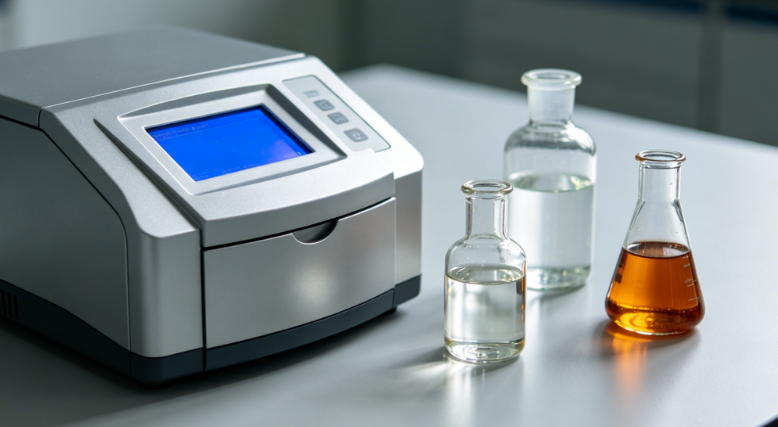
All tests are performed according to internationally recognised standards. Our laboratory is ISO/IEC 17025 accredited and equipped with GC‑MS, GC‑MS/MS, LC‑MS/MS, ICP‑MS, ICP‑OES, IC, and sample preparation systems (SPE, ASE, Soxhlet, etc.).
3.1 Water Testing Standards
Metals (ICP‑MS / ICP‑OES): EPA 200.8, 200.7; ISO 17294; ASTM D5673.
Mercury (cold vapor): EPA 245.1, 245.7; ISO 17852.
VOCs (purge & trap – GC‑MS): EPA 524.2, 524.3; ISO 15680.
SVOCs (LLE or SPE – GC‑MS): EPA 525.2, 525.3; ISO 6468.
PAHs (GC‑MS, HPLC): EPA 550, 610; ISO 28540.
PFAS (LC‑MS/MS): EPA 537.1, 533; ISO 25101.
Pesticides (GC‑MS / LC‑MS/MS): EPA 508, 507, 508.1; ISO 11369.
TPH (GC‑FID): ISO 9377‑2; EPA 8015.
Anions (IC): EPA 300.0, 300.1; ISO 10304.
Trihalomethanes (GC‑ECD or GC‑MS): EPA 524.2, 551.1.
COD (dichromate): ISO 6060; EPA 410.4.
BOD (5‑day): ISO 5815; EPA 405.1.
TOC (combustion): ISO 8245; EPA 415.1.
3.2 Soil & Sediment Testing Standards
Metals (aqua regia / microwave digestion – ICP‑MS): EPA 3051A, 3052; ISO 14869.
VOCs (headspace GC‑MS): EPA 8260C; ISO 15009.
SVOCs / PAHs / PCBs (Soxhlet, ASE – GC‑MS): EPA 8270, 3545, 8082, 8310; ISO 13877, 18287.
Pesticides (GC‑MS): EPA 8081, 8082.
TPH (GC‑FID): ISO 16703; EPA 8015.
TOC (dry combustion): ISO 10694; EPA 9060.
pH (1:2.5 water suspension): ISO 10390; EPA 9045.
CEC (ammonium acetate): ISO 23470.
3.3 Air Testing Standards
VOCs (canister – GC‑MS): EPA TO‑15, TO‑17; ISO 16000‑6.
BTEX (sorbent tube – thermal desorption GC‑MS): ISO 16017‑2; EPA TO‑17.
Aldehydes (DNPH – HPLC): EPA TO‑11A; ISO 16000‑3.
PAHs in PM (GC‑MS): EPA TO‑13A.
Metals in PM (ICP‑MS): EPA IO‑3.1, 29.
SO₂, NO₂, O₃ (passive / active sampling): ISO 6767, 6768, 6769.
Dioxins & furans (HRGC‑HRMS): EPA 23; EN 1948.
3.4 Biota Testing Standards
Metals (microwave digestion – ICP‑MS): EPA 3052; ISO 17294.
PCBs / pesticides / PAHs (GC‑MS): EPA 8082, 8081, 8270.
Total mercury (direct mercury analyser): EPA 7473.
Methylmercury (GC‑CVAFS): EPA 1630.
Lipid content (gravimetric after extraction): EPA 1668A; AOAC 922.06.
4. Why Choose Our Third‑Party Environmental Chemical Testing Services?
As an independent laboratory with no vested interest in litigation or remediation, we provide unbiased, accurate, and legally defensible data. Our advantages include:
ISO/IEC 17025 accreditation – CNAS/CMA certified, regularly participating in proficiency testing (e.g., ERA, WEPAL, AQUACHECK).
Chain of custody (COC) control – full traceability from sample collection to final report.
Low detection limits – sub‑ppb for organics; sub‑ppb to ppt for metals and PFAS via ICP‑MS and LC‑MS/MS.
Fast turnaround – standard parameter sets (metals, anions, VOCs) in 5‑7 business days; PFAS, PCBs, dioxins in 10‑15 business days.
Comprehensive reporting – includes QC data (blanks, duplicates, spikes, certified reference materials), chromatograms, and comparison to regulatory limits.
Confidentiality – full protection of client site information and project objectives.
Technical support – our chemists assist with sampling protocols, preservation requirements, and data interpretation.
Whether you need to monitor effluent discharge compliance, characterise a brownfield site, measure indoor air quality, or assess PFAS contamination in drinking water, our environmental testing experts are ready to deliver precise and actionable data.
Get Started with Your Environmental Chemical Testing Project
Contact our team with your matrix (water, soil, air, etc.), target contaminants, relevant regulation or guideline, and project timeline. We will provide a detailed quotation, sampling kit and instructions, and a testing schedule. Let us help you protect human health and the environment through reliable chemical analysis.
This article provides an overview of our environmental chemical testing capabilities. For specific test methods, sample preservation, and pricing, please request a tailored service proposal.