Reasons for choosing our testing services
ZHONGXI Testing has obtained inspection qualification certifications from multiple countries and regions worldwide. We possess a senior testing team and advanced testing methods, providing independent, impartial, and professional third-party verification services for global carbon projects.

Internationally recognized authority
Certified by multiple international standards such as CNAS, VCS, and GS, with reports universally applicable worldwide.

Global service capability
Covering 140+ countries and regions, it supports on-site detection and remote verification in multiple languages.

Professional experimental methods
Adopt standard experimental methods to ensure accurate and reliable data.
Comprehensive Characterization and Performance Evaluation of MOF-Based CO2 Adsorbents – Specialized Analytical Services
Metal–organic frameworks (MOFs) have emerged as one of the most versatile and promising classes of materials for carbon capture, offering unprecedented surface areas, tunable pore architectures, and chemically functionalisable cavities that enable high CO2 uptake, exceptional selectivity over N2 and CH4, and moderate regeneration energies. From prototypical structures such as MOF-74, HKUST-1, and UiO-66 to advanced amine-functionalised or mixed‑linker systems, MOFs are being intensively studied for post‑combustion capture, direct air capture (DAC), and pre‑combustion CO2 removal. However, the practical deployment of MOF‑based adsorbents is critically dependent on a deep, multi‑scale understanding of their crystallinity, porosity, defect chemistry, surface functionality, hydrothermal stability, and cyclic sorption performance under realistic gas mixtures and temperature/pressure swings. If you are searching for testing services for MOF‑based CO2 adsorbents, you are likely at a critical stage where rigorous, comprehensive characterisation is required to confirm successful synthesis, optimize linker/metal ratios, evaluate the impact of post‑synthetic modification, benchmark against reference materials, or diagnose performance loss after prolonged cycling. This article describes our full‑spectrum analytical and sorption testing capabilities, the scientific depth we bring, and the distinct advantages that position us as a trusted partner for academic and industrial groups working on MOF‑based carbon capture technologies.
The Scientific Necessity of Holistic MOF Adsorbent Testing
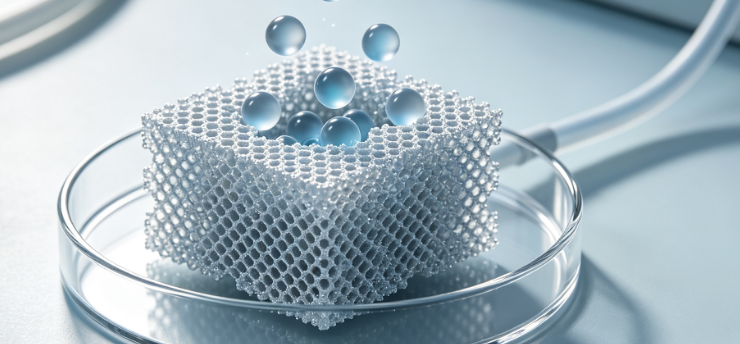
MOFs are intrinsically complex, with their CO2 adsorption performance governed by a synergy of factors: pore size and geometry, which dictate molecular sieving effects; the density and distribution of open metal sites (OMS) or amine groups, which provide strong chemisorption sites; the hydrophobicity/hydrophilicity balance, which influences water co‑adsorption; and the mechanical and chemical stability of the coordination bonds under humid, acidic, or thermal stresses. Moreover, the presence of solvent residues, unreacted linkers, or partially coordinated metal clusters can drastically alter both capacity and kinetics. A single technique—such as BET surface area measurement or powder XRD—cannot capture this complexity. Therefore, a systematic, tiered testing protocol that integrates crystallographic, textural, chemical, and dynamic performance assessments is essential. Our service is precisely designed to provide this holistic view, enabling you to correlate MOF structure with adsorption behaviour and to guide rational optimisation.
Our Comprehensive Analytical and Sorption Testing Capabilities for MOF‑Based CO2 Adsorbents
We apply a broad array of complementary techniques, each optimised to address a specific aspect of MOF adsorbents—from the atomic level to breakthrough performance under simulated flue gas conditions.
1. Crystallographic Phase Purity and Structural Integrity: High‑resolution powder X‑ray diffraction (HR‑XRD) is performed to confirm the desired MOF topology, detect any impurity phases (e.g., metal oxides, unreacted linkers), and evaluate crystallinity after solvent exchange, activation, or cycling. We use Rietveld refinement to determine precise lattice parameters and, where applicable, occupancy factors for guest molecules or defect sites. For thermally sensitive or poorly crystalline MOFs, we offer synchrotron X‑ray diffraction with high flux and low background, enabling detection of minor impurity phases (< 0.5 wt%) and tracking of structural changes under in‑situ conditions (e.g., CO2 flow, heating).
2. Textural Properties and Pore Architecture: Nitrogen physisorption at 77 K and argon physisorption at 87 K are conducted using a state‑of‑the‑art volumetric system to determine BET specific surface area, total pore volume, and pore‑size distribution via DFT and NLDFT models. For MOFs with ultramicropores (< 7 Å), we use CO2 adsorption at 273 K to derive micropore volume and distribution, which is often more reliable than N2 at 77 K due to kinetic restrictions. We also provide helium pycnometry for true skeletal density and mercury intrusion porosimetry for macroporosity assessment in pelletised or shaped forms.
3. Chemical Composition and Functional Group Speciation: Elemental analysis (CHNS/O) gives the bulk C, H, N, and S content, which is critical for verifying linker incorporation and the degree of functionalisation. X‑ray photoelectron spectroscopy (XPS) provides surface metal/ligand ratios and the chemical states of metal nodes (e.g., Zr 3d, Cu 2p, Zn 2p, Mg 1s) and hetero‑atoms (N, O, S). Fourier‑transform infrared spectroscopy (FTIR) and solid‑state nuclear magnetic resonance (SS‑NMR) are used to confirm the presence of functional groups (e.g., –NH2, –COOH, –OH) and to detect any post‑synthetic modification (PSM) products. For amine‑functionalised MOFs, we quantify amine loading via elemental analysis and Boehm titration or acid‑base back‑titration.
4. Open Metal Sites and Unsaturated Coordination: The presence of accessible open metal sites (OMS) is crucial for CO2 binding. We use temperature‑programmed desorption of CO2 (CO2‑TPD) to assess both the number and strength of basic sites, including those associated with OMS. For a direct measure of OMS density, we employ CO adsorption by DRIFTS or low‑temperature EPR (for Cu‑based MOFs) to quantify unsaturated metal centres. Additionally, we perform N2O chemisorption for Cu‑containing MOFs to determine the Cu+ species, which are relevant for CO2 binding affinity.
5. CO2 Adsorption Isotherms and Selectivity: We measure high‑pressure (up to 50 bar) and low‑pressure (vacuum to 1 bar) CO2 adsorption isotherms at multiple temperatures (e.g., 273, 298, 323, 348 K) using a gravimetric (magnetic suspension balance) or volumetric system. From these data, we derive CO2 uptake capacity (mg/g or mmol/g), isosteric heat of adsorption (Qst) via Clausius–Clapeyron analysis, and IAST selectivity for CO2/N2 and CO2/CH4 mixtures, which is essential for predicting separation performance. We also measure adsorption kinetics by recording uptake curves, yielding diffusion coefficients and mass transfer resistance.
6. Dynamic Breakthrough Performance: Our custom‑built fixed‑bed breakthrough apparatus is equipped with mass flow controllers, a humidifier, and online NDIR CO2 analysers (for dry and wet conditions). We test the MOF adsorbent under simulated flue gas (e.g., 10–15% CO2 in N2, with optional 5–10% H2O and trace SO2/NOx) at temperatures relevant to post‑combustion capture (25–100 °C). We determine dynamic capacity at breakthrough, utilisation efficiency, and mass transfer zone length. For cyclic operation, we automate temperature‑swing (TSA) or vacuum‑swing (VSA) regeneration, and we measure cyclic stability over hundreds of adsorption‑desorption cycles, reporting capacity decay per cycle and regenerability.
7. Hydrothermal and Mechanical Stability: We subject MOF samples to accelerated aging under high humidity (80–90% RH) at elevated temperatures (40–80 °C) for days to weeks, followed by re‑characterisation (XRD, BET, and CO2 uptake) to quantify structural degradation. For shaped MOF pellets or monoliths, we perform crush strength testing and attrition resistance according to relevant ASTM standards, providing mechanical integrity indices critical for industrial fixed‑bed or fluidised‑bed operation.
8. Post‑Synthetic Modification (PSM) Validation: For amine‑grafted or other chemically modified MOFs, we use FTIR, XPS, and elemental analysis to confirm the covalent attachment of functional groups. We also perform Thermogravimetric Analysis (TGA) coupled with mass spectrometry (TGA‑MS) to measure the thermal stability of the functional groups and their decomposition temperatures, which is vital for regeneration conditions.
Advanced Diagnostics – Beyond Conventional Adsorbent Testing
Our service goes far beyond routine isotherm measurements. We integrate experimental data with molecular simulations and theoretical modelling. We perform grand canonical Monte Carlo (GCMC) simulations to compute CO2 adsorption isotherms and heats of adsorption for idealised MOF structures, correlating with experimental results to validate the structural model. For understanding diffusion, we use molecular dynamics (MD) to compute self‑diffusivities and permeability. We also apply DFT calculations to determine binding energies of CO2 on different adsorption sites (OMS vs. linker functional groups). This combined experimental‑computational approach provides mechanistic insights that are often essential for high‑impact publications and for guiding rational design.
Furthermore, we offer in‑situ XRD and in‑situ FTIR under CO2 flow to monitor structural breathing, linker rotation, or the evolution of adsorbed species (carbonates, bicarbonates) as a function of pressure and temperature. For clients requiring cutting‑edge analysis, we provide operando XAS at the metal K‑edge (e.g., Zn, Cu, Zr) to monitor the local coordination environment and oxidation state changes during CO2 capture/regeneration cycles—a powerful tool for elucidating the active site under realistic conditions.
Our Distinctive Advantages in MOF‑Based CO2 Adsorbent Testing
Our laboratory has gained a strong reputation in the field of nanoporous materials, and we offer several unique strengths that make us a preferred partner:
Advantage 1 – Integrated One‑Stop Analytical Platform: We house all key instruments—XRD, XPS, SEM, TEM, BET, TGA, FTIR, NMR, multiple adsorption analysers, and breakthrough rigs—under one roof. This ensures consistent sample handling, eliminates logistics delays, and enables seamless cross‑correlation of data. We also have established access to synchrotron beamlines for advanced X‑ray scattering and spectroscopy.
Advantage 2 – Tailored Protocols for Diverse MOF Families: MOF chemistry is highly diverse—from zeolitic imidazolate frameworks (ZIFs) to carboxylate‑based and amine‑functionalised systems. We design testing conditions (activation temperature, degassing time, analysis temperature, gas composition) specifically for your MOF type, considering its sensitivity to moisture, oxygen, and thermal degradation. We do not use a generic protocol but a chemistry‑driven approach.
Advantage 3 – Unrivalled Sensitivity in Surface Chemistry and Defect Quantification: Our ability to quantify open metal sites, linker vacancies, and surface functional groups using combined XPS, CO‑DRIFTS, and EPR is rarely matched. We provide absolute site densities (per gram or per unit cell), which are essential for structure‑activity relationships.
Advantage 4 – Realistic Dynamic Testing with Impurity Resistance: We evaluate CO2 capture performance not only under ideal dry conditions but also with water vapour, SO2, and NOx—mimicking real flue gases. This is crucial for industrial viability, and few labs offer such comprehensive testing with full on‑line product analysis.
Advantage 5 – Expert Interpretation and Benchmarking: Our team includes specialists in MOF synthesis, adsorption thermodynamics, and process engineering. We deliver a detailed report that contextualises your results against literature benchmarks, discusses the implications for your specific capture scenario (e.g., pre‑combustion vs. post‑combustion vs. DAC), and provides actionable recommendations for optimisation.
Advantage 6 – Rapid Turnaround and Responsive Service: Standard projects are completed within 12–18 working days, with urgent options for time‑sensitive projects. You will be assigned a dedicated project scientist who provides weekly progress updates, shares preliminary data, and adjusts the plan based on interim findings. We also offer interim reports for long‑term cyclic tests.
Advantage 7 – Global Reach with Full Confidentiality: With sample intake hubs in North America, Europe, and Asia‑Pacific, we simplify international logistics. Our secure client portal ensures data privacy and easy access to final reports (PDF, Excel, raw data). We are happy to sign non‑disclosure agreements to protect your proprietary MOF compositions.
Who Benefits from Our Services
Our testing solutions are designed for a wide array of users: academic research groups developing novel MOF structures or post‑synthetic modifications; chemical and energy companies evaluating MOF adsorbents for pilot‑scale carbon capture units; materials suppliers who need to certify product quality and batch consistency; engineering firms designing CO2 separation processes who require reliable adsorption data for process simulation; and regulatory or certification bodies seeking independent performance verification.
Performance Benchmarks and Technical Specifications
To illustrate the precision of our measurements, we highlight typical performance indicators:
- XRD crystallinity index: ± 1% relative, with detection limit for amorphous content < 2%.
- BET surface area reproducibility: ± 0.5 m2/g for standard reference materials.
- CO2 uptake capacity (volumetric): ± 0.5% relative at 1 bar.
- Isosteric heat of adsorption (Qst): derived with standard error < 0.5 kJ/mol.
- Breakthrough capacity reproducibility: RSD ≤ 2% for identical runs.
- XPS detection limit: ~0.1 at% for surface nitrogen and metal species.
- TGA‑MS mass detection: < 10 ng for evolved gases.
- High‑pressure adsorption precision: ± 0.02 mmol/g at 30 bar.
These capabilities ensure that even subtle differences—such as a 3% loss in BET area after functionalisation or a 1% change in CO2 uptake after cycling—are reliably quantified and statistically evaluated.
How to Initiate a Testing Project
Initiating a project is straightforward. It starts with a complimentary consultation where we discuss your MOF material, its synthesis and activation history, the target application (e.g., flue gas, biogas, DAC), and your specific questions (e.g., capacity validation, stability ranking, comparison with competitors). Based on this, we propose a customised testing matrix with a clear cost breakdown and timeline. After your approval, we provide sample submission guidelines (mass, activation state, packaging). Upon receipt, we perform a preliminary quality check and then launch the full workflow. You will receive regular updates and a final comprehensive report, followed by an optional debriefing session.
Quality Assurance and Ethical Standards
Our laboratory operates under ISO 9001 and ISO 17025 accreditations. All data are recorded in electronic lab notebooks with full traceability. We follow strict safety protocols for handling organic solvents and metal salts, and we adhere to environmental regulations for waste disposal. We are committed to unbiased, transparent reporting and to the protection of your intellectual property.
Conclusion – Unlock the True CO2 Capture Potential of Your MOF with Expert Characterisation
MOFs hold immense promise for energy‑efficient carbon capture, but realising that potential requires a characterisation partner who understands the subtleties of their chemistry and can deliver reliable, actionable data. Our comprehensive testing service provides the structural, textural, chemical, and dynamic performance insights needed to validate your material, optimise its formulation, and de‑risk its scale‑up. We combine advanced analytics with deep scientific expertise to help you advance your MOF‑based adsorbent from the laboratory to the field.
We invite you to contact our specialist team to discuss your specific characterisation needs. With our proven experience in MOF and carbon capture research, we are confident we can accelerate your progress and support your sustainability goals.
Request your free initial consultation today and discover how our integrated, expert‑led testing services can elevate your MOF‑based CO2 adsorbent development.