Reasons for choosing our testing services
ZHONGXI Testing has obtained inspection qualification certifications from multiple countries and regions worldwide. We possess a senior testing team and advanced testing methods, providing independent, impartial, and professional third-party verification services for global carbon projects.

Internationally recognized authority
Certified by multiple international standards such as CNAS, VCS, and GS, with reports universally applicable worldwide.

Global service capability
Covering 140+ countries and regions, it supports on-site detection and remote verification in multiple languages.

Professional experimental methods
Adopt standard experimental methods to ensure accurate and reliable data.
Comprehensive Performance and Safety Testing of Activated Carbon Decontaminants – Advanced Analytical Services for Water, Air, and Industrial Purification
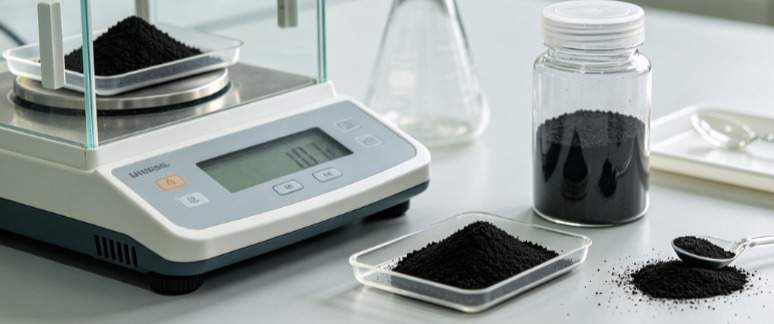
Activated carbon decontaminants – including granular activated carbon (GAC), powdered activated carbon (PAC), activated carbon cloths, and impregnated or chemically modified carbons – are essential for removing organic pollutants, heavy metals, chlorine, volatile organic compounds (VOCs), and other contaminants from water, air, and industrial streams. The efficacy of these materials is governed by a delicate interplay of specific surface area, pore architecture (micropore, mesopore, and macropore distribution), surface functional groups (oxygen-containing, nitrogen-containing, and sulfur-containing species), mechanical strength, and the presence of catalytic or impregnated active phases. Even minor variations in the raw material (coal, wood, coconut shell) or activation conditions can lead to significant differences in the decontamination efficiency, capacity, and service life. Therefore, a rigorous, multi-parametric analytical evaluation is indispensable for product development, quality assurance, process optimisation, and regulatory compliance. Our ISO/IEC 17025-accredited laboratory offers a dedicated, high-depth testing service specifically tailored for activated carbon decontaminants, integrating advanced spectroscopic, thermal, and performance-based methods to deliver a complete structural, chemical, and functional fingerprint – far beyond routine iodine number or hardness tests.
Why Comprehensive Characterisation of Activated Carbon Decontaminants Is Critical for Environmental and Industrial Applications
Clients seeking our testing services typically aim to: (i) quantify the specific surface area, total pore volume, and pore size distribution to predict the adsorption capacity and the kinetic performance for target contaminants, (ii) determine the surface functional group density – including acidic (carboxyl, phenolic, lactone) and basic sites – which govern the affinity for polar and non-polar pollutants, (iii) evaluate the dynamic adsorption capacity for real-world contaminants (e.g., VOCs, chlorine, heavy metals, and organic micropollutants) under controlled flow and concentration conditions, (iv) assess the mechanical crush strength, attrition resistance, and particle size distribution to ensure durability in fixed-bed, fluidised-bed, or powdered systems, (v) measure the thermal stability and ignition temperature to guarantee safe handling and regeneration, (vi) screen for leachable impurities (heavy metals, cyanide, PAHs, and other extractables) that may be released into the treated medium, (vii) evaluate the regeneration efficiency and the loss of capacity over multiple cycles, (viii) determine the pH of the aqueous extract, moisture content, and ash content to assess the product purity and the acid-base behaviour, and (ix) generate robust data for product certification, supplier qualification, and regulatory submissions. Standard single-parameter tests such as the iodine number or a simple methylene blue test are insufficient because the decontamination performance is governed by the synergistic interplay of pore structure, surface chemistry, and mechanical durability, all of which require a suite of complementary techniques. Our integrated platform combines N₂ and CO₂ physisorption (BET, DFT, BJH), mercury intrusion porosimetry, X‑ray photoelectron spectroscopy (XPS) for surface functional groups, Fourier‑transform infrared spectroscopy (DRIFTS) for organic functional groups, Thermogravimetric Analysis (TGA) coupled with differential scanning calorimetry (DSC) and mass spectrometry (MS), inductively coupled plasma mass spectrometry (ICP‑MS) for trace metals, ion chromatography (IC) for anions, gas chromatography‑mass spectrometry (GC‑MS) for extractable organics, dynamic breakthrough testing with online GC‑FID, UV‑Vis, or specific ion probes, mechanical crush strength and attrition testing (ASTM D4058, D5757), particle size analysis by laser diffraction, and pH, moisture, and ash determinations – providing a comprehensive, actionable, and defensible quality profile.
Our Comprehensive Analytical Framework for Activated Carbon Decontaminants
1. Textural Properties: Surface Area, Pore Volume, and Pore Architecture
We measure the BET‑specific surface area and the total pore volume by N₂ physisorption at 77 K over a relative pressure range of 10⁻⁶–0.995, with a reproducibility of ±1.5%. The pore size distribution is derived using NLDFT, QSDFT, and BJH models to characterise the micropores (<2 nm), mesopores (2–50 nm), and macropores (>50 nm). For ultramicropores (<0.7 nm), we perform CO₂ physisorption at 273 K with the Dubinin–Radushkevich (DR) method. For a complete porosity profile, we perform mercury intrusion porosimetry (up to 600 MPa) to obtain the bulk density, the pore throat distribution, and the skeletal density. We report the micropore volume, mesopore volume, external surface area, and the average pore diameter. These textural parameters are directly correlated with the adsorption capacity, the diffusion kinetics, and the pressure drop in packed beds.
2. Surface Chemistry: Functional Groups, Charge, and Basicity/Acidity
We identify and quantify the surface functional groups – including carboxyl, phenolic, lactone, carbonyl, and basic sites – using a combination of Boehm titration (for acidic and basic groups), diffuse reflectance infrared Fourier transform spectroscopy (DRIFTS) with baseline correction and peak deconvolution, and X‑ray photoelectron spectroscopy (XPS) for the C 1s, O 1s, and N 1s chemical states. The point of zero charge (pHPZC) is determined by the potentiometric mass titration method, and the zeta potential is measured as a function of pH to predict the electrostatic interactions with charged pollutants. The pH of the aqueous extract (ASTM D3838) is measured to assess the acid-base behaviour. These surface chemistry parameters are essential for understanding the adsorption mechanism (e.g., π‑π interactions, hydrogen bonding, ion‑exchange) and for predicting the performance for different contaminant types.
3. Dynamic Adsorption Performance: Breakthrough and Total Capacity
We evaluate the dynamic adsorption capacity using a custom‑built fixed‑bed or fluidised‑bed system that simulates real-world operating conditions. The system precisely controls the flow rate, temperature, pressure, and the inlet concentration of the target contaminant. Typical test compounds include: volatile organic compounds (toluene, benzene, hexane) analysed by online GC‑FID, chlorine and chloramine by colorimetric or amperometric detection, heavy metals (Pb²⁺, Cd²⁺, Cu²⁺) by ICP‑MS, and organic dyes (methylene blue, methyl orange) by UV‑Vis spectrophotometry. From the breakthrough curves, we derive the breakthrough capacity (at 5% and 10% penetration), the saturation capacity, the mass transfer zone (MTZ) length, and the utilisation efficiency of the bed. We also perform multi‑cycle tests (adsorption – regeneration – re‑adsorption) to evaluate the regenerability and the capacity decay. These dynamic data are essential for designing full‑scale decontamination systems and for predicting the service life.
4. Mechanical Integrity: Crush Strength, Attrition, and Particle Size
We measure the single‑particle crush strength using a precision universal tester (load cell accuracy: ±0.1 N) on at least 30 individual particles, reporting the mean and the distribution. The attrition resistance is evaluated by the tumble drum method (ASTM D4058) and by the fluidised bed attrition test (ASTM D5757), providing the attrition index and the fines generation percentage. The particle size distribution is determined by mechanical sieving and by laser diffraction (0.1–3500 µm), reporting D10, D50, D90, and the span. The bulk density (loose and tapped) and the angle of repose are measured to assess the flowability and the packing behaviour. These mechanical properties are critical for predicting the pressure drop, the dust generation, and the service life in fixed‑bed and moving‑bed operations.
5. Thermal Stability, Ignition Temperature, and Regeneration Behaviour
We perform simultaneous Thermogravimetric Analysis (TGA) and differential scanning calorimetry (DSC) from 25 °C to 1000 °C under inert and oxidizing atmospheres, with evolved gas analysis by mass spectrometry (MS) monitoring H₂O, CO₂, CO, and volatile organics. The TGA curve reveals the moisture content, the volatile matter, the fixed carbon, and the ash content (proximate analysis). The ignition temperature is determined by a standardised test (ASTM D3466) using a TGA method with a defined heating rate in an air flow, reporting the temperature at which the exothermic oxidation commences. We also perform thermal regeneration at controlled temperatures (e.g., 150 °C, 300 °C, 500 °C) and evaluate the recovery of the surface area and the adsorption capacity. These thermal data are essential for process safety, for the design of regeneration cycles, and for the safe disposal of spent carbon.
6. Purity and Leachability Assessment: Metals, Anions, and Organics
We screen for leachable heavy metals (Pb, Cd, As, Hg, Cr, Ni, Cu, Zn) by ICP‑MS after performing batch leaching tests in deionized water, in acidic (pH 4) and alkaline (pH 10) solutions, and following EPA Method 1311 (TCLP) or EN 12457. The leachate is also analysed for anions (chloride, sulfate, fluoride, cyanide) by ion chromatography (IC). For organic extractables (e.g., PAHs, PCBs, phenols), we perform solvent extraction (dichloromethane, hexane) followed by GC‑MS and LC‑MS analysis. The impurity profile is compared against the relevant standards for drinking‑water treatment (e.g., NSF/ANSI 61), food‑contact materials, and pharmaceutical applications. We also determine the loss on ignition (LOI) at 800 °C and the moisture content by Karl Fischer coulometric titration.
7. Water Vapour Adsorption and Humidity Control
We measure the water vapour adsorption isotherm at 25 °C and 40 °C over a full relative humidity (RH) range (0–98% RH) using a dynamic vapour sorption (DVS) system with an ultra‑microbalance. We report the monolayer capacity (from the BET analysis of water), the total water uptake at 80% RH, and the hysteresis loop area. These data are essential for predicting the performance of the decontaminant in humid air streams and for assessing the potential for self‑heating during storage.
8. Morphology, Surface Texture, and Microstructure
We examine the surface morphology and the porous structure by field‑emission scanning electron microscopy (FE‑SEM) with EDS elemental mapping, and by transmission electron microscopy (TEM) for the nanoporous architecture. The particle shape and the surface roughness are quantified by image analysis. These morphological features are correlated with the mechanical strength, the filtration efficiency, and the accessibility of the internal pore network.
Our Distinctive Advantages in Activated Carbon Decontaminant Testing
1. Fully Integrated Performance and Safety Platform: We uniquely combine dynamic breakthrough testing for real‑world contaminants, detailed textural characterisation (BET, mercury porosimetry), surface chemistry profiling (XPS, DRIFTS, Boehm), mechanical durability testing, thermal stability assessment, and comprehensive leaching/extractables screening in a single workflow. This integration enables us to correlate the pore architecture with the breakthrough curve, the surface functional groups with the contaminant selectivity, and the impurity profile with the product safety – providing a complete fitness‑for‑purpose assessment that is rarely available from standard testing services.
2. Expertise in a Wide Range of Activated Carbon Products: Our team has extensive experience with coal‑based, coconut‑shell, wood‑based, and impregnated activated carbons (e.g., silver‑impregnated, sulfur‑impregnated, potassium hydroxide‑impregnated). We have developed customised sample preparation and degassing protocols to handle the variable properties (high ash, acidity, moisture sensitivity) and to prevent the loss of impregnated active phases. Our inter‑laboratory reproducibility for key parameters (BET, breakthrough capacity, crush strength) is within 2‑3% RSD, validated on over 300 commercial activated carbon products.
3. Regulatory‑Ready Documentation and Certifiable Results: Our facility is accredited under ISO/IEC 17025:2017 for all key methods – including BET, mercury porosimetry, ICP‑MS, TGA, and dynamic adsorption testing. We use NIST‑traceable standards and certified reference materials. All measurement uncertainties are reported with expanded uncertainties (k=2) typically <2% for surface area, <3% for breakthrough capacity, and <5% for trace elements, ensuring the data are defensible in quality audits, regulatory submissions, and customer certifications.
4. Consultative Partnership and Application‑Driven Support: Each project is led by a senior carbon scientist with deep knowledge of water and air treatment technologies. We provide interpretative reports that not only present the analytical results but also offer a benchmarking summary against competitor products, a diagnostic assessment of any off‑spec properties, and actionable recommendations for activation conditions, impregnation optimisation, or process parameters. We also support co‑authorship for research publications and assist in drafting technical dossiers for product approval.
Report Deliverables and Client Empowerment
Our final comprehensive report includes: (a) BET surface area, micropore and mesopore volumes, pore size distribution (NLDFT, BJH), and mercury porosimetry data; (b) surface functional group density (Boehm titration), DRIFTS and XPS spectra, pHPZC, zeta potential, and pH of the aqueous extract; (c) dynamic breakthrough curves – breakthrough and saturation capacities, MTZ length, and utilisation efficiency – for target contaminants (VOCs, chlorine, metals, or dyes); (d) single‑particle crush strength, attrition index, and particle size distribution (D10, D50, D90); (e) thermal stability – TGA‑DSC‑MS profiles, proximate analysis, ignition temperature, and regeneration efficiency; (f) leachable metals (ICP‑MS), anions (IC), and extractable organics (GC‑MS, LC‑MS) with compliance flagging; (g) water vapour adsorption isotherm (DVS) and moisture content; (h) SEM and TEM images with EDS maps; (i) a benchmarking summary comparing your decontaminant with reference materials and competitor products; and (j) a process optimisation guide with recommended operating parameters, regeneration conditions, and application advice. All raw data (breakthrough logs, isotherms, diffractograms, spectra, thermograms, and images) are supplied in open, machine‑readable formats (CIF, JCAMP‑DX, .csv, .tiff, .mzML) for independent verification and long‑term data archiving.
We also offer subscription‑based quality surveillance programs for regular batch inspection, with trend analysis and statistical process control (SPC) charts. Our secure client portal provides 24/7 access to project data and direct communication with our technical experts.
Partner with Us for Unmatched Analytical Precision
Activated carbon decontaminants are a critical tool for protecting human health and the environment, but their performance, safety, and reliability depend on a thorough understanding of their structural, chemical, mechanical, and dynamic properties. Our testing service provides that understanding – integrating advanced textural analysis, surface chemistry profiling, dynamic performance testing, mechanical durability assessment, and comprehensive safety screening with expert interpretation. By choosing our laboratory, you gain a trusted partner that ensures your activated carbon decontaminant meets the most stringent specifications for water treatment, air purification, and industrial decontamination, enabling you to achieve consistent contaminant removal, extended service life, and full regulatory compliance. Contact our expert team today to design a customized testing protocol – we are committed to advancing your decontamination solutions with unparalleled analytical depth and scientific rigor.