Reasons for choosing our testing services
ZHONGXI Testing has obtained inspection qualification certifications from multiple countries and regions worldwide. We possess a senior testing team and advanced testing methods, providing independent, impartial, and professional third-party verification services for global carbon projects.
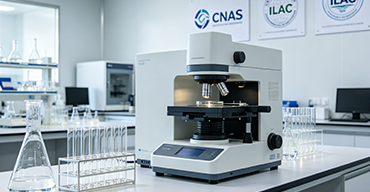
Internationally recognized authority
Certified by multiple international standards such as CNAS, VCS, and GS, with reports universally applicable worldwide.

Global service capability
Covering 140+ countries and regions, it supports on-site detection and remote verification in multiple languages.
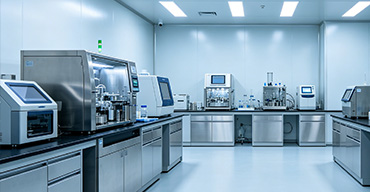
Professional experimental methods
Adopt standard experimental methods to ensure accurate and reliable data.
Comprehensive Characterization and Performance Assessment of SCR Denitration Catalysts – Specialized Testing Services
Selective catalytic reduction (SCR) is the most widely deployed technology for the abatement of nitrogen oxides (NOx) from stationary sources such as coal‑fired power plants, cement kilns, waste‑to‑energy facilities, and industrial boilers, as well as from marine and heavy‑duty diesel engines. The performance of commercial SCR denitration catalysts—predominantly based on V2O5–WO3/TiO2 (vanadia‑tungsta‑titania) or, increasingly, on Cu‑ and Fe‑exchanged zeolites (e.g., Cu‑SSZ‑13, Fe‑ZSM‑5) and Mn‑Ce mixed oxides for low‑temperature applications—is critically dependent on a multitude of interrelated parameters: the chemical state and dispersion of active redox centres, the nature and density of surface acid sites, the textural stability under thermal and hydrothermal stress, and the catalyst’s resistance to poisoning by alkali metals, alkaline earths, phosphorus, sulfur, and heavy hydrocarbons. If you are searching for SCR denitration catalyst testing, you are likely at a stage where comprehensive, multi‑scale evaluation is required to verify product quality, diagnose premature deactivation in the field, benchmark alternative formulations, optimise regeneration strategies, or comply with increasingly stringent emission regulations (e.g., IMO Tier III, China’s ultra‑low emission standards, or the EU’s Industrial Emissions Directive). This article describes our integrated analytical and performance testing platform, the scientific depth we bring, and the distinct advantages that make us a trusted partner for catalyst manufacturers, utility operators, engineering contractors, and environmental compliance bodies worldwide.
The Critical Need for Multi‑Dimensional SCR Denitration Catalyst Analysis
SCR catalysts operate in harsh environments characterised by high dust loads, temperature excursions, steam, and a cocktail of trace poisons that vary with fuel and process conditions. Deactivation is rarely attributable to a single cause; rather, it is the cumulative effect of chemical poisoning (e.g., K, Na, Ca, Mg, P, As), thermal sintering (loss of surface area and anatase‑to‑rutile transformation), mechanical erosion, and masking of active sites by fly ash or ammonium bisulfate deposition. Moreover, the intrinsic activity of fresh catalysts depends on subtle factors such as the ratio of polymeric to monomeric surface vanadyl species, the location of extra‑framework cations in zeolites, and the distribution of Brønsted vs. Lewis acid sites. Thus, a holistic testing program that integrates bulk chemical analysis, surface speciation, crystallographic integrity, porosity assessment, and dynamic reactor testing is not merely advisable—it is essential for making informed decisions on catalyst selection, operation, and lifetime management. Our service is designed to deliver exactly this integrated insight, helping you unravel complex deactivation pathways and predict residual catalyst life with confidence.
Our Comprehensive Analytical and Catalytic Testing Capabilities for SCR Denitration Catalysts
We apply a broad and complementary suite of techniques, each optimised to address specific features of SCR denitration catalysts—from powder samples to full‑scale honeycomb monoliths.
1. Elemental Composition and Poison Loading Analysis: We use X‑ray fluorescence (XRF) for rapid screening of major and minor elements, and inductively coupled plasma optical emission spectrometry (ICP‑OES) after microwave digestion for precise quantification of active components (V, W, Mo, Fe, Cu, Mn, Ce) and critical poisons (Na, K, Ca, Mg, P, S, As, Pb, Zn). For surface enrichment, we perform X‑ray photoelectron spectroscopy (XPS) to determine the surface‑to‑bulk concentration ratios of poisons and to establish the chemical state of vanadium (V5+ vs. V4+), copper (Cu+/Cu2+), and iron (Fe2+/Fe3+). We also provide depth‑resolved XPS (with Ar+ cluster sputtering) to distinguish surface‑adsorbed poisons from those incorporated into the bulk or washcoat.
2. Phase Composition and Structural Stability: High‑resolution powder X‑ray diffraction (HR‑XRD) is performed on fresh, field‑aged, and regenerated samples. Rietveld refinement quantifies the anatase/rutile ratio (for TiO2‑supported catalysts), the degree of zeolite crystallinity (for zeolite‑based systems), and the emergence of crystalline poison phases (e.g., K2SO4, CaSO4, AlPO4). For monolith samples, we use synchrotron micro‑XRD to map phase distribution across the washcoat thickness. We also employ Raman spectroscopy to detect subtle structural changes in vanadia species (e.g., loss of isolated V=O sites) and the formation of crystalline V2O5 or WO3.
3. Textural Properties and Pore System Integrity: Nitrogen physisorption at 77 K provides BET surface area, total pore volume, and pore‑size distribution (DFT model). For microporous zeolite catalysts, we add argon physisorption at 87 K and CO2 adsorption at 273 K to accurately characterise micropores. Mercury intrusion porosimetry is used for macroporosity and pore‑throat analysis of extruded or coated monoliths. We also measure skeletal density by helium pycnometry to calculate porosity and tortuosity—parameters that directly influence the effective diffusion of NOx and NH3 within the catalyst.
4. Surface Acidity and NH3 Storage Capacity: The adsorption and activation of NH3 is the first step in the SCR mechanism. We quantify total acid site density and strength distribution by NH3‑temperature‑programmed desorption (NH3‑TPD) with on‑line mass spectrometry. To distinguish Brønsted (B) and Lewis (L) acid sites, we perform pyridine‑adsorbed diffuse reflectance infrared Fourier transform spectroscopy (DRIFTS) at variable temperatures. For zeolite catalysts, we also use solid‑state 27Al MAS‑NMR to probe the coordination environment of aluminium, which directly influences Brønsted acidity.
5. Redox Properties and Oxygen Mobility: The reducibility of active metal species is key to the redox cycle of SCR. We conduct temperature‑programmed reduction with hydrogen (H2‑TPR) to quantify the reducible species and their reduction temperatures. For Ce‑containing catalysts, we measure oxygen storage capacity (OSC) via pulse injection. We also perform temperature‑programmed oxidation (TPO) to assess carbonaceous deposits and their combustion behaviour—particularly relevant for catalysts exposed to unburned hydrocarbons.
6. Catalytic Performance and Kinetic Evaluation: Our automated fixed‑bed and monolithic reactor systems are equipped with mass flow controllers, a precision humidifier, and on‑line FTIR spectrometers for continuous analysis of NO, NO2, N2O, NH3, and SO2. We test catalysts under temperature windows from 150 °C to 550 °C, with gas compositions mimicking actual flue gases (e.g., NO 200–1000 ppm, NH3 at a set molar ratio, O2 3–15%, H2O 5–20%, CO2 5–15%, and optional SO2 up to 500 ppm). We measure NOx conversion, NH3 slip, N2 selectivity, and the reaction order with respect to NO and NH3. We also determine apparent activation energies and intrinsic kinetic parameters using differential reactor data, which are essential for reactor modelling and scale‑up.
7. Accelerated Aging and Poisoning Studies: We simulate hydrothermal aging at 600–750 °C under 10% H2O in air for up to 300 hours, as well as chemical poisoning by impregnation with soluble salts of K, Na, Ca, Mg, P, or As, followed by calcination and performance retesting. We also offer pilot‑scale dust‑laden testing with synthetic fly ash to evaluate erosion and masking effects. After aging, we perform full characterisation to quantify the loss of active sites, surface area, and acidity, and we correlate these with activity decay.
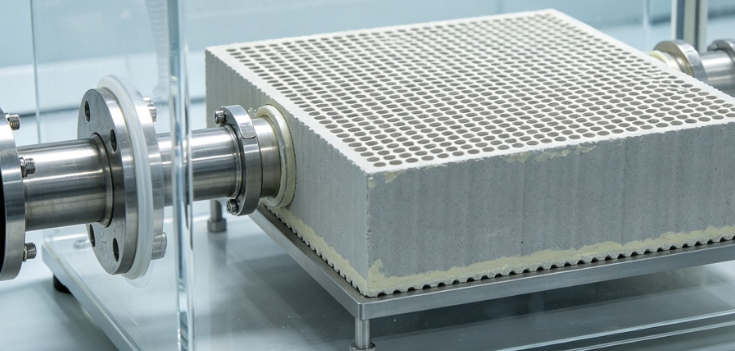
8. Monolith Washcoat and Mechanical Assessment: For honeycomb catalysts, we measure washcoat loading (by weight difference and chemical digestion), adhesion strength (ultrasonic vibration test), and geometric surface area, open frontal area, and cell density. We use optical microscopy and SEM‑EDS to inspect coating uniformity, crack formation, and plugging by fly ash. Crush strength and thermal shock resistance are also assessed for extruded monoliths.
Advanced Diagnostics – Beyond Conventional Catalyst Testing
Our service extends well beyond routine characterisation by integrating experimental findings with predictive deactivation modelling and computational chemistry. We develop site‑based kinetic models that distinguish between standard SCR, fast SCR, and NH3 oxidation, and we use transient response techniques (step and pulse perturbations) to extract adsorption/desorption rates and surface coverage dynamics. For fundamental mechanistic insight, we offer operando DRIFTS coupled with mass spectrometry to monitor reaction intermediates (e.g., adsorbed NH4+, nitrate, nitrosamide) under actual reaction conditions. We also perform electron paramagnetic resonance (EPR) for Cu‑ and Fe‑zeolites to quantify isolated metal ions and their coordination environment, which is directly linked to low‑temperature activity.
Furthermore, we leverage machine learning algorithms to correlate multi‑dimensional characterisation data (composition, acidity, texture) with performance outcomes, enabling rapid identification of key performance descriptors and guiding optimised formulation. We also provide life‑time prediction based on field‑simulated aging data, allowing you to plan catalyst replacement or regeneration intervals with greater precision.
Our Distinctive Advantages in SCR Denitration Catalyst Testing
Our laboratory has accumulated extensive experience in SCR catalyst evaluation, and we offer several unique strengths that set us apart:
Advantage 1 – Fully Integrated Multi‑Technique Facility: We operate all essential instruments—XRF, ICP, XRD, XPS, Raman, BET, mercury porosimeter, TPR/TPD systems, multiple reactor rigs with FTIR, and SEM‑EDS—under one ISO/IEC 17025‑accredited roof. This ensures seamless sample handling, eliminates cross‑contamination, and allows direct cross‑correlation of data from different techniques on the same sample set.
Advantage 2 – Realistic Feed Simulation and Rapid Responsiveness: Our reactor systems can accurately simulate complex industrial flue gas compositions, including variable SO2 and water vapour. The on‑line FTIR provides real‑time data with a time resolution of a few seconds, enabling precise kinetic measurements and transient studies that are critical for understanding catalyst dynamics.
Advantage 3 – Superior Poison Forensics and Deactivation Mechanism Elucidation: We combine chemical digestion with ICP‑MS, XPS depth profiling, and SEM‑EDS elemental mapping to pinpoint the spatial distribution and chemical form of poisons. This allows us to differentiate between reversible and irreversible deactivation and to recommend tailored regeneration protocols.
Advantage 4 – Industry‑Aligned Benchmarking and Regulatory Guidance: Our team includes former industrial and regulatory specialists who understand the operational challenges of SCR systems. We provide a comprehensive report that compares your catalyst’s performance against industry standards (e.g., EPRI guidelines, VGB standards) and offers practical advice for optimising operating conditions, controlling poison inputs, and scheduling maintenance.
Advantage 5 – Rapid Turnaround with Dedicated Project Management: Standard testing is typically completed within 10–15 working days, with express services for urgent troubleshooting. You are assigned a dedicated project scientist who provides weekly updates, discusses preliminary findings, and adjusts the testing plan if unexpected results emerge. We also offer interim reports for long‑duration aging tests.
Advantage 6 – Global Sample Receiving and Strict Confidentiality: With intake hubs in North America, Europe, and the Asia‑Pacific region, we facilitate smooth international shipments. Our secure online portal ensures data privacy and easy access to final reports (PDF, Excel, raw data). We are pleased to sign non‑disclosure agreements to protect your proprietary formulations and operational data.
Who Benefits from Our Services
Our testing solutions are tailored for a broad spectrum of clients: SCR catalyst manufacturers conducting R&D and quality assurance; power generation and industrial companies operating SCR units who need to assess catalyst condition and plan outages; engineering, procurement, and construction (EPC) firms designing new SCR systems; environmental consultancies providing compliance verification and due diligence; and regulatory authorities seeking independent performance evaluation for permit compliance. We also support research institutions exploring next‑generation SCR materials.
Performance Benchmarks and Technical Specifications
To illustrate the precision and depth of our measurements, we highlight typical performance indicators:
- NOx conversion measurement: repeatability ± 1.0% absolute at 90% conversion.
- NH3 slip detection limit: < 0.5 ppm by FTIR.
- XPS spectral resolution: ≤ 0.45 eV, enabling clear separation of V 2p3/2 and Cu 2p3/2 components.
- BET surface area reproducibility: ± 0.3 m²/g for certified reference materials.
- ICP‑OES detection limits: < 0.05 ppm for most alkali and heavy metals.
- NH3‑TPD peak temperature reproducibility: ± 2 °C.
- Hydrothermal aging control: temperature ± 0.5 °C, steam flow ± 0.5% of set point.
- Monolith geometric measurement: ± 0.5% for cell density and wall thickness.
These capabilities ensure that even minor changes—such as a 2% loss in surface area or a 3% decline in low‑temperature activity—are reliably detected and statistically validated.
How to Initiate a Testing Project
Initiating a project is a straightforward, collaborative process. It begins with a complimentary consultation where we discuss your catalyst type (vanadia‑based, zeolite, or other), its service history (fresh, operating, or end‑of‑life), your specific objectives (quality control, performance benchmarking, deactivation diagnosis, or regeneration optimisation), and your operational parameters (temperature window, gas composition, poison levels). Based on this, we propose a tailored testing matrix with a clear cost breakdown and a realistic timeline. After your approval, we provide detailed sample submission guidelines—including quantities, packaging, and handling precautions for hazardous materials. Upon receipt, we perform an initial suitability check and then execute the agreed‑upon workflow. You will receive regular progress updates, and at the conclusion, we deliver a comprehensive final report that integrates all raw data, processed results, statistical analyses, and expert interpretation, followed by an optional debriefing session.
Quality Assurance and Ethical Standards
Our laboratory operates under ISO 9001:2015 and ISO/IEC 17025:2017 accreditation. All analytical data are recorded in electronic laboratory notebooks with full audit trails. We follow stringent safety and environmental protocols for handling catalysts and combustion gases. We are committed to unbiased, transparent reporting and to protecting your proprietary information with the highest level of confidentiality.
Conclusion – Maximise the Reliability and Longevity of Your SCR Denitration Catalyst
SCR denitration catalysts are a critical investment for any facility subject to NOx emission limits. Their performance degrades over time, but with comprehensive characterisation, you can detect early signs of deactivation, diagnose root causes, and take corrective action—whether through process adjustment, regeneration, or timely replacement. Our testing service provides the analytical depth, operational realism, and actionable insights needed to optimise catalyst management, reduce operating costs, and ensure continuous compliance. We combine state‑of‑the‑art instrumentation with deep domain expertise to deliver not just data, but understanding that drives better decisions.
We invite you to contact our specialist team to discuss your SCR denitration catalyst characterisation needs. With our proven experience across diverse industrial sectors, we are confident we can support your quality assurance, troubleshooting, and lifetime extension goals.
Request your free initial consultation today and discover how our integrated, expert‑led testing services can help you achieve optimal SCR performance and operational peace of mind.