Reasons for choosing our testing services
ZHONGXI Testing has obtained inspection qualification certifications from multiple countries and regions worldwide. We possess a senior testing team and advanced testing methods, providing independent, impartial, and professional third-party verification services for global carbon projects.

Internationally recognized authority
Certified by multiple international standards such as CNAS, VCS, and GS, with reports universally applicable worldwide.

Global service capability
Covering 140+ countries and regions, it supports on-site detection and remote verification in multiple languages.

Professional experimental methods
Adopt standard experimental methods to ensure accurate and reliable data.
Advanced Characterization and Performance Evaluation of SiO2 Colloidal Sphere Catalysts – Specialized Analytical Services
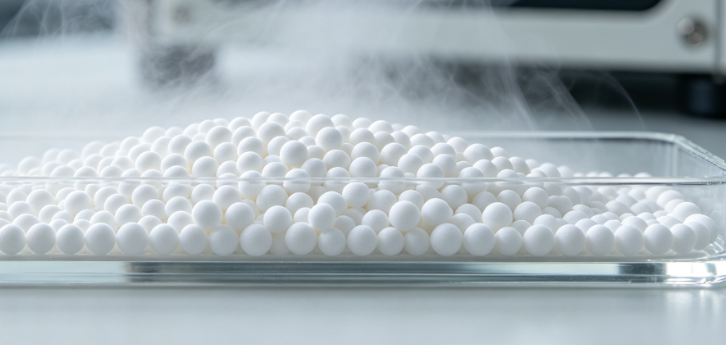
Silica (SiO2) colloidal spheres—with their precisely controllable diameters (from tens of nanometres to several micrometres), narrow size distribution, high specific surface area, and well‑defined surface silanol chemistry—have become indispensable as catalytic supports, model catalyst substrates, and even as active components in bifunctional systems. Their application spans heterogeneous catalysis (e.g., Pd/SiO2 for hydrogenation, Au/SiO2 for CO oxidation), photocatalysis (SiO2‑TiO2 core‑shell composites), and as template materials for hierarchical porous catalysts. However, the catalytic utility of SiO2 colloidal spheres is critically governed by a set of interdependent parameters: particle size uniformity, surface silanol group density and acidity, pore architecture (if mesoporous), metal loading and dispersion, and thermal/hydrothermal stability. If you are seeking testing services for SiO2 colloidal sphere catalysts, you are likely at a stage where multi‑parameter, high‑precision characterization is required to validate synthesis protocols, optimise surface functionalisation, quantify active metal dispersion, diagnose batch‑to‑batch variability, or assess structural integrity under reaction conditions. This article describes our comprehensive analytical platform, the technical sophistication we deliver, and the distinct advantages that make us a trusted partner for researchers and industrial developers working with silica‑based colloidal catalysts.
Why Comprehensive Testing of SiO2 Colloidal Spheres Is Essential for Catalytic Performance
SiO2 colloidal spheres are not inert carriers; their surface chemistry profoundly affects the nucleation, growth, and anchoring of catalytically active phases. The density and distribution of surface silanol (Si–OH) groups determine the binding affinity for metal precursors and the subsequent dispersion of nanoparticles. The presence of pore structures (e.g., Stöber spheres are typically non‑porous, while mesoporous SiO2 spheres offer high surface area) controls mass transport and accessibility of reactants to active sites. Furthermore, during catalyst preparation—e.g., impregnation, deposition‑precipitation, or grafting—the colloidal stability and aggregation behaviour directly influence the homogeneity of the final material. In operation, thermal sintering, hydrothermal ageing, and mechanical attrition can alter both the sphere morphology and the active phase. Thus, a systematic testing strategy that combines particle sizing, surface chemical analysis, textural assessment, metal quantification and dispersion measurement, and thermal stability evaluation is not an option but a necessity. Our service is designed to deliver this holistic insight, allowing you to build reliable structure‑performance correlations and to troubleshoot issues at every stage of catalyst development.
Our Comprehensive Analytical Capabilities for SiO2 Colloidal Sphere Catalysts
We apply a broad suite of complementary techniques, each optimised to address a specific aspect of SiO2 colloidal sphere catalysts—from the nanometre scale to the bulk catalyst powder.
1. Particle Size, Size Distribution, and Morphology: We use scanning electron microscopy (SEM) and transmission electron microscopy (TEM) with automated image analysis to determine the mean diameter, standard deviation, and shape factor of hundreds to thousands of individual spheres. For sub‑100 nm particles, we employ dynamic light scattering (DLS) in suspension to measure the hydrodynamic size and polydispersity index, with zeta potential measurements to assess colloidal stability. For high‑resolution surface topography, we provide atomic force microscopy (AFM) on deposited monolayers. We also use small‑angle X‑ray scattering (SAXS) for bulk, statistically representative size analysis over a wide size range (1 nm – 1 µm) without drying artefacts.
2. Specific Surface Area and Porosity: Nitrogen physisorption at 77 K is performed to obtain BET specific surface area, total pore volume, and pore‑size distribution (via DFT/BJH models). For mesoporous SiO2 spheres (e.g., MCM‑41‑type), we also measure argon physisorption at 87 K for higher resolution in the micropore/mesopore region. For hollow or yolk‑shell structures, we use mercury intrusion porosimetry to characterise intra‑particle macroporosity. We also determine the external surface area by the t‑plot method, which is critical for understanding the fraction of silanol groups accessible to metal precursors.
3. Surface Chemistry – Silanol Density and Acidity: The concentration of surface Si–OH groups is quantified by Thermogravimetric Analysis (TGA) coupled with mass spectrometry (TGA‑MS) to monitor water release from dehydroxylation, or by chemical titration (Grignard or lithium aluminium hydride methods). The acid‑base properties of the surface are evaluated by temperature‑programmed desorption of NH3 (NH3‑TPD) or pyridine‑adsorbed DRIFTS to distinguish Brønsted and Lewis acid sites, which are crucial for anchoring and dispersing metal species. We also use 29Si solid‑state MAS‑NMR to determine the relative abundance of Q2, Q3, and Q4 silicon species, providing a direct measure of silanol connectivity and framework condensation.
4. Metal Loading and Dispersion (for Supported Metal Catalysts): ICP‑OES or ICP‑MS after microwave digestion gives the total metal content (e.g., Pt, Pd, Au, Ni, Ru). Surface metal concentration and oxidation state are determined by X‑ray photoelectron spectroscopy (XPS). For dispersion and particle size of metallic nanoparticles, we use high‑angle annular dark‑field scanning TEM (HAADF‑STEM) combined with image analysis, and CO chemisorption (static or pulse) to measure the fraction of surface‑exposed metal atoms, from which the dispersion and average crystallite size are calculated. We also offer H2‑TPR to characterise the reducibility of metal oxides before and after reduction pretreatment.
5. Thermal and Hydrothermal Stability: We subject the SiO2 colloidal spheres to accelerated thermal aging at temperatures up to 1000 °C in air, inert, or reducing atmospheres, followed by re‑characterisation (BET, XRD, TEM) to detect sintering, phase transformation (e.g., amorphous to cristobalite), or collapse of mesoporous structure. Hydrothermal stability is assessed using high‑pressure autoclave tests with water vapour at 150–300 °C, and we monitor the loss of surface area and silanol groups. TGA‑DSC is used to detect dehydration, dehydroxylation, and any organic residue decomposition.
6. Structural Integrity and Crystallinity (if applicable): While SiO2 spheres are typically amorphous, we perform wide‑angle X‑ray diffraction (XRD) to confirm the absence of crystalline impurities and to detect any crystalline phases (e.g., cristobalite) that may form upon high‑temperature treatment. For composite spheres (e.g., SiO2@TiO2), we use XRD to identify the TiO2 polymorph (anatase, rutile, or brookite) and crystallite size.
7. Surface Zeta Potential and Colloidal Behaviour: Zeta potential measurements as a function of pH are performed to determine the isoelectric point (IEP) and surface charge evolution, which is vital for understanding dispersion stability and the electrostatic attraction/repulsion of metal precursors during impregnation. We also measure particle size in suspension (DLS) under varying pH and ionic strength to assess agglomeration tendencies.
8. Functional Group Derivatisation and Grafting Validation: For organically modified or functionalised SiO2 spheres (e.g., with amine, thiol, or alkyl groups), we use FTIR, XPS, and elemental analysis (CHNS) to confirm the presence and quantify the loading of grafted molecules. TGA‑MS identifies the decomposition products and measures the thermal stability of the organic functionality, which is critical for reaction conditions.
Advanced Diagnostics – Beyond Routine Characterisation
Our service goes beyond standard measurements by integrating experimental data with modelling and predictive analysis. We use image analysis algorithms to automatically extract size distributions from TEM micrographs, and we apply statistical process control (SPC) to monitor batch‑to‑batch variability. For metal dispersion, we combine CO chemisorption and HAADF‑STEM to correlate macroscopic dispersion with true nanoparticle size distribution, providing a more comprehensive picture than either technique alone. We also offer in‑situ TEM with a heating stage to observe real‑time sintering behaviour and morphological changes under controlled thermal or gas environments.
For clients requiring a deeper mechanistic understanding, we provide operando FTIR during catalytic reactions to monitor the evolution of surface species (e.g., adsorbed CO, formates, carbonates) and to identify the active site under working conditions. We also perform DFT calculations to model the interaction of metal clusters with silica surfaces, rationalising observed dispersion and activity differences.
Our Distinctive Advantages in SiO2 Colloidal Sphere Catalyst Testing
Our laboratory has a proven track record in colloidal and supported catalyst characterisation, and we offer several unique strengths:
Advantage 1 – Integrated One‑Stop Facility: We operate all essential instruments—SEM, TEM, DLS, BET, XPS, ICP, TGA‑MS, chemisorption, XRD, and FTIR—under one ISO‑accredited roof. This ensures consistent sample handling, eliminates outsourcing delays, and allows seamless correlation of structural, chemical, and performance data from the same sample batch.
Advantage 2 – Customised Protocols for Different Sphere Types: We recognise that SiO2 spheres vary widely—non‑porous Stöber, mesoporous MCM‑41, hollow structures, and core‑shell composites. We tailor activation, degassing, and analysis conditions (e.g., careful degassing to avoid pore collapse) to your specific material, ensuring that measurements reflect the intrinsic properties.
Advantage 3 – High Precision in Particle Sizing and Dispersion: Our multi‑method approach (DLS, SEM/TEM image analysis, SAXS) provides cross‑validated size data with excellent reproducibility. For metal dispersion, we combine CO chemisorption and HAADF‑STEM to deliver consistent and reliable values.
Advantage 4 – Expert Surface Chemistry Diagnostics: Our ability to quantify silanol density, acidity, and functional group coverage using integrated TGA‑MS, NMR, and chemical titration is rarely matched. This is crucial for understanding grafting efficiency and metal precursor anchoring.
Advantage 5 – Realistic Stability Testing: We perform thermal and hydrothermal treatments under controlled atmospheres with precise humidity control, mimicking actual reaction or regeneration conditions. This allows us to predict catalyst lifetime and guide regeneration strategies.
Advantage 6 – Rapid Turnaround and Dedicated Support: Most routine projects are completed within 10–14 working days, with expedited services for urgent requests. You are assigned a dedicated project scientist who provides regular updates, discusses interim results, and adjusts the plan as needed. We also offer a comprehensive, easy‑to‑interpret report with graphical summaries and expert commentary.
Advantage 7 – Global Logistics and Confidentiality: We accept samples worldwide through our receiving hubs. Our secure client portal ensures data privacy and easy access to final reports (PDF, Excel, raw data). We are pleased to sign non‑disclosure agreements.
Who Benefits from Our Services
Our testing solutions are tailored for a wide range of clients: academic researchers synthesising new SiO2‑based catalysts and needing detailed characterisation for publication; chemical and petrochemical companies developing supported metal catalysts for hydrogenation, dehydrogenation, or oxidation; nanomaterial manufacturers ensuring batch‑to‑batch consistency; environmental technology firms using SiO2 supports for catalytic pollutant abatement; and regulatory or certification bodies requiring independent verification of catalyst properties.
Performance Benchmarks and Technical Specifications
To illustrate the precision of our measurements, we highlight typical performance indicators:
- Particle size reproducibility (TEM analysis): ± 0.5% for mean diameter (n ≥ 500 particles).
- BET surface area precision: ± 0.3 m²/g for reference silica.
- Metal loading (ICP): accuracy within ± 1% relative.
- CO chemisorption dispersion: ± 2% absolute for well‑dispersed samples.
- XPS quantification: ± 1 at% for surface composition.
- Silanol density (TGA): ± 0.05 OH/nm².
- Thermal stability (TGA‑DSC): temperature accuracy ± 0.5 °C.
These capabilities ensure that even subtle differences—such as a 2 nm shift in sphere diameter or a 0.1 mmol/g change in functional group loading—are reliably detected and quantified.
How to Initiate a Testing Project
Engaging our service is simple and transparent. It begins with a complimentary consultation where we discuss your SiO2 colloidal sphere catalyst, its history, your specific objectives (synthesis validation, metal dispersion optimisation, stability assessment, or troubleshooting), and your intended application. We then propose a customised testing matrix with a clear cost estimate and timeline. After your approval, we provide sample submission guidelines (mass, form, packaging). Upon receipt, we perform a preliminary quality check and begin the analytical workflow. You receive regular progress updates and a final comprehensive report with expert interpretation, followed by an optional debriefing session.
Quality Assurance and Ethical Standards
Our laboratory operates under ISO 9001 and ISO 17025 accreditation. All data are recorded in electronic notebooks with full traceability. We follow strict safety protocols for handling silica powders and metal precursors. We are committed to unbiased, truthful reporting and to protecting your intellectual property.
Conclusion – Unlock the Full Catalytic Potential of Your SiO2 Colloidal Spheres
SiO2 colloidal spheres offer a unique combination of monodispersity, surface tailorability, and thermal stability, making them ideal catalyst platforms. However, their catalytic performance is only as good as the characterisation that underpins their development. Our comprehensive testing service provides the structural, textural, chemical, and stability data you need to optimise synthesis, verify quality, and understand deactivation mechanisms. We combine state‑of‑the‑art instrumentation with deep expertise in silica chemistry to deliver results that are both scientifically robust and practically relevant.
We invite you to contact our specialist team to discuss your SiO2 colloidal sphere catalyst characterisation needs. With our proven track record in particle and catalyst analysis, we are well‑equipped to support your R&D, quality control, and process improvement goals.
Request your free initial consultation today and discover how our integrated, expert‑led testing services can accelerate your catalyst development and ensure reliable performance.