Reasons for choosing our testing services
ZHONGXI Testing has obtained inspection qualification certifications from multiple countries and regions worldwide. We possess a senior testing team and advanced testing methods, providing independent, impartial, and professional third-party verification services for global carbon projects.

Internationally recognized authority
Certified by multiple international standards such as CNAS, VCS, and GS, with reports universally applicable worldwide.

Global service capability
Covering 140+ countries and regions, it supports on-site detection and remote verification in multiple languages.

Professional experimental methods
Adopt standard experimental methods to ensure accurate and reliable data.
Comprehensive Characterization and Quality Assessment of Magnesium Hexasilicate – Specialized Analytical Services
Magnesium hexasilicate (Mg2Si6O15 or more broadly magnesium silicate hydrates and crystalline layered silicates) is an important material in diverse fields, including ceramics, refractories, catalyst supports, adsorbents for heavy metals, and as a precursor for magnesium-based cements and geopolymers. Its structure, composition, and surface properties directly dictate its performance in these applications. If you are searching for magnesium hexasilicate testing, you are likely at a stage where precise, multi-technique characterization is essential to confirm the phase purity, stoichiometry, crystallinity, thermal stability, and surface chemistry of your synthesized material. This article describes our comprehensive analytical platform, the scientific depth we bring, and the distinct advantages that make us a preferred partner for researchers, manufacturers, and quality control laboratories working with magnesium silicates.
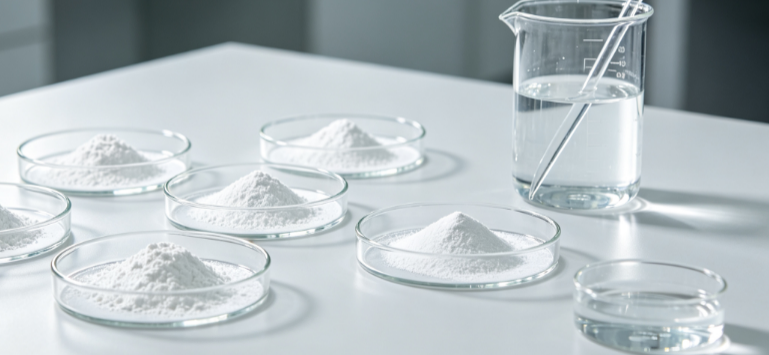
The Critical Need for Rigorous Magnesium Hexasilicate Analysis
Magnesium hexasilicate exists in various polymorphic forms and hydration states, and its properties are highly sensitive to synthesis conditions (e.g., sol‑gel, hydrothermal, precipitation), thermal history, and the presence of impurities such as unreacted MgO, SiO2, or other magnesium silicates (e.g., enstatite, forsterite). The Si/Mg ratio, the distribution of magnesium in octahedral or tetrahedral sites, the surface hydroxyl density, and the specific surface area are critical parameters that influence its reactivity, ion‑exchange capacity, and thermal transformation behavior. Moreover, in industrial applications, trace contaminants can significantly affect product performance. Therefore, a systematic testing strategy that integrates elemental analysis, crystallographic phase identification, textural characterization, thermal behavior, and surface chemical assessment is not optional—it is a fundamental requirement for ensuring material quality and optimizing synthesis protocols. Our service is designed to deliver this integrated insight, enabling you to validate your material against specifications, troubleshoot processing issues, and benchmark against reference standards.
Our Comprehensive Analytical Capabilities for Magnesium Hexasilicate
We deploy a broad suite of complementary techniques, each optimized to address a specific aspect of magnesium hexasilicate characterization—from bulk stoichiometry to nanostructural features.
1. Elemental Composition and Stoichiometry: We determine the bulk Mg and Si content by inductively coupled plasma optical emission spectroscopy (ICP‑OES) or ICP‑mass spectrometry (ICP‑MS) after complete acid digestion. For more rapid screening, we use X‑ray fluorescence (XRF) on pressed pellets. We also quantify water of hydration and organic residues by Thermogravimetric Analysis (TGA) coupled with mass spectrometry (TGA‑MS) to identify evolved gases. The combination of TGA and ICP provides an accurate empirical formula, which is essential for verifying stoichiometry.
2. Phase Identification and Crystallinity: High‑resolution powder X‑ray diffraction (HR‑XRD) is performed to identify the crystalline phase(s) present, using ICDD PDF databases. Rietveld refinement is applied to quantify phase fractions, lattice parameters, and to detect amorphous content. For samples with poor crystallinity or nanocrystalline domains, we offer synchrotron XRD with high flux and resolution, and pair distribution function (PDF) analysis to probe local atomic ordering. We also use Raman spectroscopy to distinguish between different magnesium silicate polymorphs and to detect subtle structural distortions.
3. Textural Properties – Surface Area and Porosity: Nitrogen physisorption at 77 K is employed to determine BET specific surface area, total pore volume, and pore‑size distribution (DFT/BJH models). For microporous or hierarchical materials, we supplement with argon physisorption at 87 K and CO2 adsorption at 273 K. Mercury intrusion porosimetry is used for macroporosity assessment in aggregated or pelletized samples. These parameters are crucial for predicting adsorption capacity and catalytic activity.
4. Surface Chemical States and Hydroxyl Groups: The surface chemistry of magnesium hexasilicate is dominated by silanol (Si–OH) and magnesium hydroxyl (Mg–OH) groups. We quantify these by X‑ray photoelectron spectroscopy (XPS) to determine the binding energies of Mg 2p, Si 2p, and O 1s, and to assess the oxidation states. The O 1s spectrum is deconvoluted to distinguish lattice oxygen, hydroxyl oxygen, and adsorbed water. Fourier‑transform infrared spectroscopy (FTIR) in diffuse reflectance (DRIFTS) or attenuated total reflectance (ATR) mode is used to identify stretching and bending modes of OH groups, siloxane bridges, and Mg–O vibrations. We also perform temperature‑programmed desorption (TPD) of water or NH3 to probe surface acidity/basicity, which is critical for catalysis applications.
5. Thermal Stability and Phase Transformations: We conduct simultaneous TGA‑DSC up to 1400 °C under air or inert atmosphere to monitor dehydration, dehydroxylation, and any phase transitions (e.g., formation of enstatite or cordierite). The evolved gases are analyzed by MS. To track structural changes in real time, we offer in‑situ high‑temperature XRD, which allows us to determine the onset temperatures of phase transformations and the sequence of crystalline intermediates.
6. Morphology and Microstructure: Scanning electron microscopy (SEM) with energy‑dispersive X‑ray spectroscopy (EDS) provides particle size, shape, and elemental distribution. For nanoscale details, we use transmission electron microscopy (TEM) and high‑angle annular dark‑field STEM (HAADF‑STEM) with EDS mapping to reveal internal structure, grain boundaries, and any secondary phases. These imaging techniques also help to assess the effectiveness of grinding or milling processes.
7. Ion‑Exchange and Adsorption Performance: For applications in heavy metal removal or catalysis, we evaluate the metal uptake capacity (e.g., for Pb2+, Cd2+, Cu2+) using batch equilibrium experiments followed by ICP analysis. We also measure cation exchange capacity (CEC) using standard ammonium acetate or methylene blue methods. These functional tests are linked to the surface chemistry and porosity data to establish structure‑performance relationships.
8. Purity and Trace Contaminant Analysis: We screen for metallic impurities (Na, K, Ca, Fe, Al, etc.) and non‑metals (Cl, S) using ICP‑MS and ion chromatography (IC) after digestion or leaching. This is essential for high‑purity applications such as ceramics and electronics.
Advanced Diagnostics – Beyond Routine Characterization
Our service goes beyond standard measurements by integrating experimental results with solid‑state 29Si and 25Mg MAS‑NMR to provide detailed information on the local coordination of Si and Mg atoms—discriminating between Q2, Q3, Q4 silicon environments and octahedral vs. tetrahedral magnesium. This is particularly powerful for differentiating synthetic phases from natural analogues and for quantifying the degree of condensation. We also apply Rietveld‑based structural refinement from powder XRD data to determine atomic positions and occupancy factors, revealing the extent of Mg–Si ordering.
For clients requiring deeper mechanistic insights, we offer operando FTIR during thermal treatments or gas adsorption to monitor surface species evolution. We also provide DFT calculations to model the energetics of Mg/Si substitution or water intercalation, aiding in the interpretation of experimental observations.
Moreover, we use chemometric tools (PCA, PLS) to correlate synthesis parameters with final properties, enabling rapid optimisation of synthesis conditions and predictive quality control.
Our Distinctive Advantages in Magnesium Hexasilicate Testing
Our laboratory has extensive experience in silicate and ceramic materials, and we offer several unique strengths that set us apart:
Advantage 1 – Integrated One‑Stop Multi‑Technique Facility: We house all essential instruments—XRF, ICP, XRD (lab and synchrotron access), XPS, BET, TGA‑MS, FTIR, Raman, SEM‑EDS, TEM, and NMR—under one ISO‑accredited roof. This eliminates outsourcing delays, reduces sample handling, and ensures consistent data correlation from a single sample batch.
Advantage 2 – Customized Protocols for Different Mg‑Silicate Forms: Magnesium hexasilicate can be crystalline, amorphous, hydrated, or thermally treated. We tailor measurement conditions (e.g., degassing temperature, XRD scan speed, TGA heating rate) to your specific material type to avoid artefactual changes, such as premature dehydroxylation or phase transformation during analysis.
Advantage 3 – Superior Phase Quantification and Crystallite Size Analysis: Our Rietveld analysis, combined with the use of internal standards, allows accurate quantification of crystalline phases down to <0.5 wt%, and we can determine crystallite size and microstrain with high precision—critical for monitoring the effect of milling or thermal exposure.
Advantage 4 – Expert Interpretation and Contextual Benchmarking: Our scientists are specialists in magnesium silicate chemistry. We provide a comprehensive report that not only presents raw data but also contextualizes your results against literature, commercial specifications, and your own historical data. We highlight discrepancies and offer actionable recommendations for synthesis improvement or quality control.
Advantage 5 – Rapid Turnaround with Dedicated Project Management: Most projects are completed within 10–14 working days, with express services for urgent troubleshooting. You are assigned a dedicated project scientist who provides weekly updates, shares preliminary findings, and adjusts the plan as needed. We also provide interim reports for long‑term stability studies.
Advantage 6 – Global Logistics and Strict Confidentiality: With sample intake hubs in North America, Europe, and Asia‑Pacific, we simplify international shipping. Our secure online portal ensures data protection and easy access to final reports (PDF, Excel, raw data). We are pleased to sign non‑disclosure agreements.
Who Benefits from Our Services
Our testing solutions are tailored for a broad range of clients: academic researchers studying synthesis and properties of magnesium silicates; ceramic and refractory manufacturers requiring incoming raw material quality control; catalyst and adsorbent producers validating new formulations; cement and construction material companies developing magnesium‑based binders; and regulatory and environmental agencies verifying material composition for safety or compliance purposes.
Performance Benchmarks and Technical Specifications
To illustrate the precision of our measurements, we highlight typical performance indicators:
- ICP‑OES accuracy: ± 1% relative for Mg and Si.
- XRD detection limit for impurities: < 0.3 wt% (synchrotron) and < 0.5 wt% (lab).
- BET surface area reproducibility: ± 0.3 m²/g for reference silicates.
- TGA mass loss precision: ± 0.02 mg for 10 mg sample.
- XPS energy resolution: ≤ 0.45 eV, enabling clear separation of Mg and Si peaks.
- NMR spectral resolution: < 0.5 ppm for 29Si and 25Mg.
- Particle size analysis (SEM image analysis): ± 2% for mean diameter.
- Ion exchange capacity reproducibility: ± 2% for repeated measurements.
These capabilities ensure that even subtle differences—such as a 0.5% change in Mg/Si ratio or a 2 m²/g variation in surface area—are reliably detected.
How to Initiate a Testing Project
Engaging our service is straightforward. It begins with a complimentary consultation where we discuss your magnesium hexasilicate material (synthesis route, history, intended application, and specific questions). We then propose a customised testing matrix with a clear cost estimate and timeline. After your approval, we provide detailed sample submission guidelines (quantity, packaging, storage). Upon receipt, we perform a preliminary check and commence analysis. You receive regular progress updates and a final comprehensive report with expert interpretation, followed by an optional debriefing session.
Quality Assurance and Ethical Standards
Our laboratory operates under ISO 9001 and ISO 17025 accreditation. All data are recorded in electronic notebooks with full traceability. We adhere to strict safety protocols for handling silicate powders and chemical digestions. We are committed to unbiased, truthful reporting and to protecting your intellectual property.
Conclusion – Ensure the Quality and Performance of Your Magnesium Hexasilicate
Magnesium hexasilicate is a versatile material whose properties are intimately linked to its composition, structure, and surface chemistry. Our comprehensive testing service provides the analytical depth, multi‑technique cross‑validation, and expert interpretation needed to fully characterize your material, optimize your synthesis, and ensure consistent quality. We combine state‑of‑the‑art instrumentation with deep materials science expertise to deliver results that are both scientifically robust and practically relevant.
We invite you to contact our specialist team to discuss your magnesium hexasilicate testing needs. With our proven experience in silicate and ceramic analysis, we are confident we can support your R&D, quality control, and process improvement objectives.
Request your free initial consultation today and discover how our integrated, expert‑led testing services can help you unlock the full potential of your magnesium hexasilicate materials.