Reasons for choosing our testing services
ZHONGXI Testing has obtained inspection qualification certifications from multiple countries and regions worldwide. We possess a senior testing team and advanced testing methods, providing independent, impartial, and professional third-party verification services for global carbon projects.

Internationally recognized authority
Certified by multiple international standards such as CNAS, VCS, and GS, with reports universally applicable worldwide.

Global service capability
Covering 140+ countries and regions, it supports on-site detection and remote verification in multiple languages.

Professional experimental methods
Adopt standard experimental methods to ensure accurate and reliable data.
Comprehensive Characterization and Performance Testing of Titanium Dioxide (TiO2) Defluoridation Agents – Specialized Analytical Services
Fluoride contamination in groundwater and surface water is a global environmental and public health concern, driving the demand for effective, sustainable defluoridation technologies. Among the various adsorbent materials, titanium dioxide (TiO2)—particularly in its nanoparticulate, mesoporous, or composite forms—has emerged as a highly promising agent due to its strong affinity for fluoride ions, chemical stability, non‑toxicity, and reusability. The defluoridation performance of TiO2‑based materials is governed by a complex interplay of physicochemical parameters: crystalline phase (anatase vs. rutile), specific surface area and porosity, surface hydroxyl density, point of zero charge (PZC), surface charge distribution, and the presence of doping elements or surface modifications. If you are searching for TiO2 defluoridation agent testing, you are likely at a stage where precise, multi‑parametric characterization and realistic adsorption performance evaluation are essential to validate a new synthesis route, optimise the material for field conditions, assess batch‑to‑batch reproducibility, or troubleshoot a decline in fluoride uptake. This article details our comprehensive analytical and performance testing platform, the scientific depth we deliver, and the distinct advantages that make us a preferred partner for water treatment technology developers, environmental engineering firms, and regulatory laboratories worldwide.
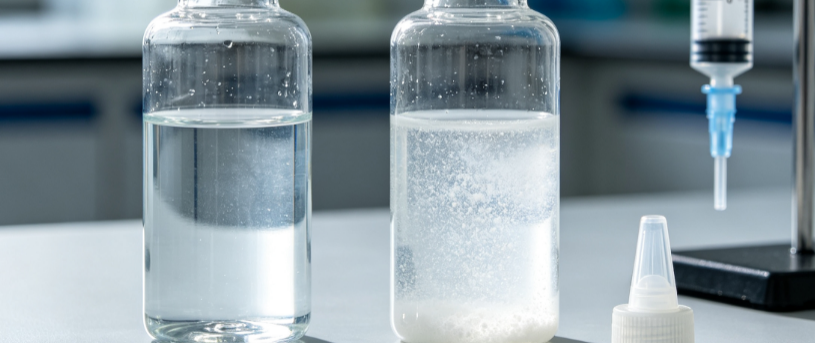
The Critical Need for Holistic Testing of TiO2 Defluoridation Agents
TiO2 removes fluoride primarily through ligand exchange between fluoride ions and surface hydroxyl groups, accompanied by electrostatic attraction. The adsorption capacity and kinetics are therefore highly sensitive to the density and accessibility of surface OH groups, which depend on the crystallite size, morphology, and the degree of hydration. Furthermore, in real water matrices, competing anions (e.g., sulfate, phosphate, bicarbonate) and the presence of natural organic matter can significantly reduce fluoride uptake. Therefore, a systematic testing strategy that integrates solid‑state characterisation, surface chemical analysis, equilibrium and kinetic adsorption studies, and competitive ion effects is indispensable. Our service is structured to deliver exactly this integrated insight, enabling you to predict field performance, optimise regeneration protocols, and ensure compliance with drinking water standards (e.g., WHO guideline of 1.5 mg/L).
Our Comprehensive Analytical and Performance Testing Capabilities for TiO2 Defluoridation Agents
We deploy a broad suite of complementary techniques, each optimised to address a specific aspect of TiO2 defluoridation materials—from the atomic structure to macroscopic adsorption behaviour.
1. Phase Composition and Crystallinity: High‑resolution powder X‑ray diffraction (HR‑XRD) is performed to identify the TiO2 polymorph (anatase, rutile, or brookite) and to quantify phase fractions via Rietveld refinement. We determine crystallite size and microstrain, which are directly related to the surface area and hydroxyl density. For poorly crystalline or amorphous materials, we offer synchrotron XRD and pair distribution function (PDF) analysis to reveal short‑range order. Raman spectroscopy is used as a complementary tool to detect phase mixtures and local structural disorder.
2. Textural Properties – Surface Area and Porosity: Nitrogen physisorption at 77 K provides BET specific surface area, total pore volume, and pore‑size distribution (DFT/BJH models). This is critical because higher surface area typically offers more active sites for fluoride adsorption. For mesoporous or hierarchical materials, we add argon physisorption at 87 K and mercury intrusion porosimetry to characterise the full pore range. We also measure skeletal density by helium pycnometry to calculate porosity.
3. Surface Chemical States and Hydroxyl Groups: The surface hydroxyl group density is the key parameter for ligand exchange. We quantify the total hydroxyl content by Thermogravimetric Analysis (TGA) with evolved gas analysis (MS) to distinguish physisorbed water from chemically bound OH. X‑ray photoelectron spectroscopy (XPS) provides the surface Ti/O ratio and the binding energies of O 1s, which are deconvoluted to distinguish lattice oxygen, hydroxyl oxygen, and adsorbed water. Fourier‑transform infrared spectroscopy (FTIR) in diffuse reflectance (DRIFTS) mode identifies the stretching and bending modes of surface OH groups (around 3400 and 1630 cm−1) and their changes upon fluoride adsorption.
4. Surface Charge and Point of Zero Charge (PZC): The electrostatic attraction between the positively charged TiO2 surface and fluoride anions is pH‑dependent. We measure the zeta potential as a function of pH to determine the isoelectric point (IEP) and the PZC using electrophoretic light scattering. We also perform potentiometric acid‑base titrations to quantify the surface charge density and to obtain the intrinsic acidity constants, which are essential for surface complexation modelling.
5. Elemental Composition and Impurity Analysis: ICP‑OES or ICP‑MS is used to determine the bulk elemental composition, including any dopants (e.g., Fe, Al, N) and potential impurities that may affect adsorption or leaching. We also analyse the fluoride content in the solid after adsorption using alkaline fusion followed by ion‑selective electrode or IC, to calculate the uptake capacity.
6. Adsorption Performance – Equilibrium, Kinetics, and Thermodynamics: We conduct batch adsorption experiments under controlled conditions (pH, temperature, ionic strength) using fluoride standard solutions. We determine the adsorption isotherms (Langmuir, Freundlich, Sips) to obtain the maximum adsorption capacity (Qmax) and affinity constants. Kinetic studies are performed to derive rate constants and to identify the rate‑limiting step (pseudo‑first‑order, pseudo‑second‑order, intraparticle diffusion). Thermodynamic parameters (ΔG°, ΔH°, ΔS°) are calculated from temperature‑dependent isotherms to evaluate the nature of the adsorption process (exothermic/endothermic, spontaneous).
7. Competitive Anion and Matrix Effects: We evaluate fluoride uptake in the presence of competing anions (Cl−, SO42−, HCO3−, PO43−, NO3−) at relevant concentration ratios to determine the selectivity and the impact of real water matrices. We also test the effect of dissolved organic matter (humic acid) and hardness ions (Ca2+, Mg2+).
8. Regeneration and Reusability: We perform multiple adsorption‑desorption cycles using alkaline solutions (e.g., NaOH) or alum to regenerate the adsorbent. After each cycle, we measure the residual adsorption capacity and characterise the material by XRD, BET, and FTIR to assess structural and chemical changes, providing a realistic estimate of the material’s operational lifetime.
9. Leaching and Stability Testing: We evaluate the dissolution of titanium and other elements under typical water treatment pH (5–9) by ICP‑MS analysis of the filtrate. This is crucial for assessing the environmental safety and durability of the material.
Advanced Diagnostics – Beyond Routine Adsorbent Testing
Our service transcends conventional characterisation by integrating experimental data with surface complexation modelling (SCM) using the diffuse‑layer or constant‑capacitance models to predict fluoride adsorption under various solution chemistries. We perform in‑situ ATR‑FTIR during fluoride adsorption to monitor the displacement of surface OH groups and the formation of inner‑sphere complexes, providing mechanistic evidence. We also offer X‑ray absorption spectroscopy (XAS) at the Ti K‑edge to probe local structural changes around titanium upon fluoride binding, revealing the coordination environment of the adsorbed fluoride. For doped or composite materials, we provide solid‑state 19F and 27Al NMR to identify the chemical environment of fluoride and the interaction with the matrix.
Furthermore, we use DFT calculations to model the binding energies of fluoride on different TiO2 surfaces and to rationalise the observed adsorption preferences. This combined experimental‑computational approach provides a fundamental understanding that supports rational material design.
Our Distinctive Advantages in TiO2 Defluoridation Agent Testing
Our laboratory has extensive experience in adsorbent characterisation and water treatment technologies, and we offer several unique strengths that set us apart:
Advantage 1 – Fully Integrated Multi‑Technique Platform: We house all essential instruments—XRD, XPS, BET, TGA‑MS, FTIR, zeta sizer, ICP‑MS, and batch adsorption facilities—under one ISO‑accredited roof. This ensures consistent sample handling, eliminates outsourcing delays, and allows seamless correlation of structural, chemical, and performance data from the same sample batch.
Advantage 2 – Customised Protocols for Different TiO2 Forms: We recognise that defluoridation agents can be nanopowders, mesoporous spheres, or composite granules. We tailor degassing, dispersion, and testing conditions to your specific material type, ensuring that measurements reflect the true intrinsic properties and that adsorption experiments mimic real‑world applications.
Advantage 3 – Unrivalled Depth in Surface Chemistry and Mechanistic Studies: Our combination of in‑situ spectroscopy, XAS, and SCM provides molecular‑level insight into the fluoride adsorption mechanism—a level of analysis rarely available in commercial labs. This is critical for understanding why certain materials outperform others and for guiding targeted modifications.
Advantage 4 – Comprehensive Performance Evaluation with Real‑World Matrices: We go beyond deionised water tests to include simulated groundwater and surface water compositions, with competitive anions and organic matter. This provides a realistic assessment of the material’s field performance and helps to identify potential interferences.
Advantage 5 – Expert Interpretation and Regulatory Benchmarking: Our team includes water chemistry specialists. We provide a detailed report that interprets your results against WHO, EPA, and local standards, and offers actionable recommendations for material improvement, pretreatment, or operational optimisation.
Advantage 6 – Rapid Turnaround with Dedicated Project Management: Most projects are completed within 10–14 working days, with expedited services for urgent needs. You are assigned a dedicated project scientist who provides regular updates, shares preliminary findings, and adjusts the plan as required.
Advantage 7 – Global Logistics with Strict Confidentiality: With intake hubs in North America, Europe, and Asia‑Pacific, we simplify international shipping. Our secure online portal ensures data protection and easy access to final reports (PDF, Excel, raw data). We are pleased to sign non‑disclosure agreements.
Who Benefits from Our Services
Our testing solutions are tailored for a broad spectrum of clients: academic researchers developing novel TiO2‑based adsorbents; water treatment companies evaluating candidate materials for commercial defluoridation systems; municipalities and environmental agencies seeking independent verification of adsorbent performance; manufacturers requiring quality control for production batches; and consulting engineers designing treatment plants who need reliable design data.
Performance Benchmarks and Technical Specifications
To illustrate the precision of our measurements, we highlight typical performance indicators:
- BET surface area reproducibility: ± 0.3 m²/g for reference TiO2.
- XRD phase quantification: ± 0.5% absolute for anatase/rutile ratio.
- XPS quantification: ± 1 at% for surface Ti and O.
- Zeta potential repeatability: ± 0.5 mV.
- Fluoride analysis (ion‑selective electrode): ± 2% relative.
- Adsorption isotherm fitting: R² ≥ 0.99 for Langmuir model.
- Kinetic rate constants: ± 3% relative for pseudo‑second‑order.
- Leaching detection limit: < 0.01 mg/L for Ti by ICP‑MS.
These capabilities ensure that even subtle variations—such as a 5% change in hydroxyl density or a 3% drop in capacity after regeneration—are reliably detected and statistically meaningful.
How to Initiate a Testing Project
Engaging our service is straightforward. It begins with a complimentary consultation where we discuss your TiO2 material, its synthesis, target application (groundwater, surface water, industrial wastewater), and your specific questions (e.g., capacity validation, selectivity assessment, stability screening). We then propose a tailored testing matrix with a clear cost estimate and timeline. After your approval, we provide detailed sample submission guidelines (mass, packaging, storage). Upon receipt, we perform a preliminary quality check and commence the analysis. You receive regular progress updates and a final comprehensive report with expert interpretation, followed by an optional debriefing session.
Quality Assurance and Ethical Standards
Our laboratory operates under ISO 9001 and ISO 17025 accreditation. All data are recorded in electronic notebooks with full audit trails. We follow strict safety protocols for handling nanopowders and chemicals. We are committed to unbiased, transparent reporting and to protecting your intellectual property.
Conclusion – Ensure Effective and Reliable Defluoridation with Expert Characterisation
TiO2‑based defluoridation agents offer a sustainable solution to the global fluoride crisis, but their success hinges on thorough, multi‑faceted characterisation. Our comprehensive testing service provides the structural, surface, and performance data needed to optimise your material, validate its efficacy, and ensure its safe and robust operation in real‑world conditions. We combine advanced analytics with deep water chemistry expertise to deliver results that are both scientifically rigorous and practically actionable.
We invite you to contact our specialist team to discuss your TiO2 defluoridation agent testing needs. With our proven track record in adsorbent evaluation, we are confident we can support your R&D, quality assurance, and field deployment goals.
Request your free initial consultation today and discover how our integrated, expert‑led testing services can help you achieve superior defluoridation performance and water quality compliance.