Reasons for choosing our testing services
ZHONGXI Testing has obtained inspection qualification certifications from multiple countries and regions worldwide. We possess a senior testing team and advanced testing methods, providing independent, impartial, and professional third-party verification services for global carbon projects.

Internationally recognized authority
Certified by multiple international standards such as CNAS, VCS, and GS, with reports universally applicable worldwide.

Global service capability
Covering 140+ countries and regions, it supports on-site detection and remote verification in multiple languages.

Professional experimental methods
Adopt standard experimental methods to ensure accurate and reliable data.
Comprehensive Characterization and Performance Evaluation of TiO2 Hollow Microspheres – Specialized Analytical Services
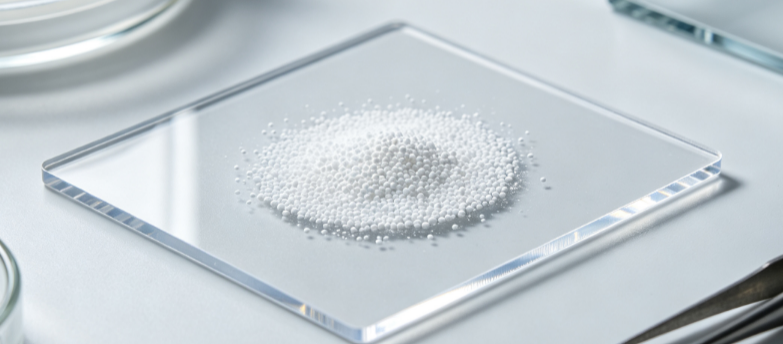
Hollow titanium dioxide (TiO2) microspheres represent a remarkable class of advanced materials that combine the unique photocatalytic and electronic properties of TiO2 with a low‑density, high‑surface‑area hollow morphology. These structures offer enhanced light scattering, improved mass transport, and increased accessibility to active sites, making them highly attractive for applications in photocatalytic degradation, water splitting, dye‑sensitized solar cells, lithium‑ion batteries, and as adsorbents for environmental remediation. However, the functional performance of TiO2 hollow microspheres is critically governed by a set of interrelated structural and chemical parameters: shell thickness and uniformity, internal cavity size, crystallographic phase (anatase, rutile, or mixed), degree of crystallinity, surface area and porosity, surface hydroxyl density, and the presence of dopants or defects. If you are seeking testing services for TiO2 hollow microspheres, you are likely at a stage where accurate, multi‑dimensional characterisation is essential to validate synthesis protocols, optimise shell architecture, assess batch‑to‑batch reproducibility, or troubleshoot performance issues in photocatalytic or electrochemical applications. This article details our comprehensive analytical platform, the scientific depth we bring, and the distinct advantages that make us a preferred partner for advanced materials researchers, catalyst developers, and industrial R&D teams worldwide.
The Scientific Necessity of Holistic Characterisation for TiO2 Hollow Microspheres
TiO2 hollow microspheres are complex hierarchical materials whose properties are determined by a synergy of factors. The hollow interior provides a reservoir for reactants and enhances light scattering, but its effectiveness depends on the shell integrity and the presence of pinholes or cracks. The crystalline phase—anatase, rutile, or a mixed phase—dictates the band gap, charge carrier mobility, and photocatalytic activity. The shell thickness and mesoporosity influence diffusion of reactants and products, while the surface hydroxyl groups are essential for photocatalytic reactions and for anchoring metal nanoparticles. Furthermore, the thermal stability and mechanical robustness of the hollow structure are critical for practical applications. A single technique—such as SEM or BET—cannot capture this complexity. Therefore, a systematic testing strategy that integrates morphological imaging, crystallographic analysis, textural characterisation, surface chemical assessment, and functional performance testing is indispensable. Our service is designed to provide this integrated insight, enabling you to correlate synthesis parameters with performance and to accelerate your material development.
Our Comprehensive Analytical Capabilities for TiO2 Hollow Microspheres
We deploy a broad suite of complementary techniques, each optimised to address a specific aspect of hollow microsphere characterisation—from the macroscopic sphere to the atomic‑scale structure.
1. Morphology, Size Distribution, and Shell Architecture: We use scanning electron microscopy (SEM) and transmission electron microscopy (TEM) to visualise the overall spherical morphology, diameter, and shell thickness. Automated image analysis provides statistical size distribution (average diameter, standard deviation) for hundreds of particles. High‑resolution TEM (HR‑TEM) reveals the crystallinity of the shell, the presence of lattice fringes, and the orientation of nanocrystals. For detailed cross‑sectional information, we prepare focused ion beam (FIB) lamellae and image them by TEM to measure shell thickness uniformity and to detect any internal voids or heterogeneities. We also offer SEM‑EDS and STEM‑EDS elemental mapping to verify the chemical homogeneity of the shell.
2. Phase Composition and Crystallinity: High‑resolution powder X‑ray diffraction (HR‑XRD) is performed to identify the TiO2 polymorph (anatase, rutile, or brookite) and to quantify phase fractions via Rietveld refinement. We determine the crystallite size from peak broadening using the Scherrer equation, and we assess microstrain. For samples with amorphous or poorly crystalline shells, we offer synchrotron XRD and pair distribution function (PDF) analysis to reveal short‑range order. Raman spectroscopy provides complementary fingerprint information, particularly for detecting minor anatase/rutile ratios and for assessing structural disorder.
3. Textural Properties – Surface Area, Porosity, and Pore Architecture: Nitrogen physisorption at 77 K is used to determine BET specific surface area, total pore volume, and pore‑size distribution (DFT/BJH models). For hollow microspheres, the porosity often includes intra‑shell mesopores and, in some cases, macroporosity from shell perforations. We add argon physisorption at 87 K for improved micropore resolution. Mercury intrusion porosimetry is used to measure the macroporosity and to detect the presence of open vs. closed pores. We also measure helium pycnometry to obtain the true skeletal density, enabling the calculation of the void fraction of the hollow structure.
4. Surface Chemical States and Hydroxyl Groups: The surface hydroxyl density is critical for photocatalytic activity and for ligand exchange in adsorption applications. We quantify the total hydroxyl content by Thermogravimetric Analysis (TGA) with evolved gas analysis (MS) to distinguish physisorbed water from chemically bound OH. X‑ray photoelectron spectroscopy (XPS) provides the surface Ti/O ratio and the binding energies of O 1s, which are deconvoluted to identify lattice oxygen, hydroxyl oxygen, and adsorbed water. High‑resolution Ti 2p spectra reveal the oxidation state (Ti4+) and any Ti3+ defects. We also use FTIR spectroscopy (DRIFTS) to detect the characteristic OH stretching bands and their shift upon adsorption of probe molecules.
5. Hollow Structure Integrity and Wall Thickness: We employ transmission electron microscopy (TEM) with measurement of the wall thickness at multiple points on individual spheres to obtain the average and the variation. Scanning transmission electron microscopy (STEM) in dark‑field mode provides high‑contrast images of the hollow interior and the shell uniformity. For rapid screening of many particles, we use ultra‑small‑angle X‑ray scattering (USAXS) or small‑angle neutron scattering (SANS) to obtain statistically averaged information on the sphere diameter, shell thickness, and internal structure.
6. Surface Charge and Wettability: The surface charge of the hollow microspheres, characterised by the zeta potential as a function of pH, influences colloidal stability and adsorption behaviour. We measure zeta potential by electrophoretic light scattering. The wettability is assessed by static contact angle measurements on compressed pellets or on films of the microspheres, providing insight into the hydrophilic/hydrophobic nature of the surface.
7. Optical and Electronic Properties: UV‑Vis diffuse reflectance spectroscopy (DRS) with an integrating sphere is used to measure the optical band gap of the hollow microspheres via the Tauc plot. The light scattering behaviour—which is enhanced by the hollow structure—can be assessed by comparing the reflectance spectra of hollow vs. solid particles. Photoluminescence (PL) spectroscopy at room temperature provides information on defect states and charge carrier recombination.
8. Functional Performance Testing – Photocatalytic and Adsorption Properties: For photocatalytic applications, we evaluate the degradation of model pollutants (e.g., methylene blue, rhodamine B, or phenol) under controlled UV or visible light irradiation, with concentration monitored by UV‑Vis spectrophotometry. We determine the apparent rate constant and the quantum efficiency. For adsorption applications, we measure the uptake capacity for target adsorbates (e.g., heavy metals, organic dyes) via batch equilibrium experiments, and we study the kinetics and isotherms. We also evaluate the photocatalytic hydrogen evolution in a custom‑built photoreactor with on‑line GC analysis.
9. Thermal Stability and Mechanical Robustness: We subject the hollow microspheres to thermal treatment at selected temperatures (up to 800 °C) and re‑characterise by XRD, BET, and SEM to monitor phase transitions, sintering, and shell collapse. For mechanical integrity, we perform sonication tests or compression tests on individual particles using a nanoindenter to assess the shell’s resistance to fracture.
Advanced Diagnostics – Beyond Routine Hollow Sphere Testing
Our service transcends conventional characterisation by integrating experimental data with computational modelling and advanced imaging. We perform focused ion beam‑scanning electron microscopy (FIB‑SEM) tomography to reconstruct the 3D structure of individual hollow spheres, revealing the internal cavity shape, shell porosity, and connectivity. We also use electron energy loss spectroscopy (EELS) in the TEM to map the oxidation state of titanium across the shell thickness, identifying any gradient in oxygen vacancies. For mechanistic studies, we offer in‑situ XRD during calcination to track the anatase‑to‑rutile transition and the associated structural changes. We also provide operando Raman during photocatalytic reactions to monitor the evolution of surface species and intermediates.
Furthermore, we apply machine learning algorithms to correlate synthesis parameters (e.g., template size, precursor concentration, calcination temperature) with final properties (shell thickness, phase composition, surface area), enabling rapid optimisation and predictive quality control.
Our Distinctive Advantages in TiO2 Hollow Microsphere Testing
Our laboratory has extensive experience in hierarchical and hollow materials, and we offer several unique strengths that set us apart:
Advantage 1 – Integrated One‑Stop Multi‑Technique Platform: We house all essential instruments—SEM, TEM, FIB, XRD (lab and synchrotron), XPS, BET, TGA‑MS, FTIR, Raman, zeta sizer, UV‑Vis, and photocatalytic reactors—under one ISO‑accredited roof. This ensures consistent sample handling, eliminates outsourcing delays, and enables seamless correlation of structural, chemical, and performance data from the same sample batch.
Advantage 2 – Customised Protocols for Hollow Architectures: Hollow microspheres require careful preparation (e.g., dispersion, cross‑sectioning) to avoid artefacts. We tailor our sample preparation and measurement conditions to preserve the hollow structure and to obtain accurate wall thickness and porosity measurements. Our protocols account for the fragility of thin shells.
Advantage 3 – Unmatched Depth in Structural and Phase Quantification: Our combination of HR‑TEM, synchrotron XRD, and Raman spectroscopy provides a comprehensive picture of crystallinity, phase composition, and defect structure. We can quantify minor rutile fractions (< 1%) and detect subtle changes in lattice parameters due to doping or strain.
Advantage 4 – Comprehensive Functional Performance Evaluation: We offer a full range of photocatalytic and adsorption tests under simulated environmental conditions, including controlled temperature, pH, and lighting. This allows us to provide a realistic assessment of the material’s efficacy and to identify the optimal operating parameters.
Advantage 5 – Expert Interpretation and Contextual Benchmarking: Our scientists have deep knowledge of TiO2 photocatalysis and hollow materials. We provide a detailed report that interprets your results in the context of the literature, compares your microspheres to reference materials, and offers actionable recommendations for synthesis optimisation or application tuning.
Advantage 6 – Rapid Turnaround with Dedicated Project Management: Most projects are completed within 10–14 working days, with expedited services for urgent needs. You are assigned a dedicated project scientist who provides regular updates, shares preliminary results, and adjusts the plan as needed.
Advantage 7 – Global Logistics with Strict Confidentiality: With intake hubs in North America, Europe, and Asia‑Pacific, we simplify international shipping. Our secure online portal ensures data protection and easy access to final reports (PDF, Excel, raw data). We are pleased to sign non‑disclosure agreements.
Who Benefits from Our Services
Our testing solutions are tailored for a wide range of clients: academic researchers developing novel TiO2 hollow structures for energy and environmental applications; photocatalyst manufacturers requiring quality control and performance validation; water treatment companies evaluating hollow TiO2 for pollutant degradation; battery and solar cell developers seeking to optimise electrode materials; and regulatory bodies needing independent verification of material properties.
Performance Benchmarks and Technical Specifications
To illustrate the precision of our measurements, we highlight typical performance indicators:
- SEM/TEM image analysis: ± 2% for mean diameter, ± 5% for wall thickness.
- XRD phase quantification: ± 0.5% absolute for anatase/rutile ratio.
- BET surface area reproducibility: ± 0.3 m²/g for reference TiO2.
- XPS quantification: ± 1 at% for surface elements.
- TGA mass loss precision: ± 0.02 mg.
- Photocatalytic degradation rate repeatability: ± 2% relative.
- UV‑Vis band gap determination: ± 0.02 eV.
- Zeta potential repeatability: ± 0.5 mV.
These capabilities ensure that even subtle variations—such as a 2 nm change in shell thickness or a 0.1 eV shift in band gap—are reliably detected and statistically meaningful.
How to Initiate a Testing Project
Engaging our service is straightforward. It begins with a complimentary consultation where we discuss your TiO2 hollow microspheres, their synthesis route, target application, and your specific objectives (e.g., synthesis validation, performance benchmarking, stability assessment). We then propose a customised testing matrix with a clear cost estimate and timeline. After your approval, we provide detailed sample submission guidelines (mass, packaging, handling). Upon receipt, we perform an initial quality check and commence the analysis. You receive regular progress updates and a final comprehensive report with expert interpretation, followed by an optional debriefing session.
Quality Assurance and Ethical Standards
Our laboratory operates under ISO 9001 and ISO 17025 accreditation. All data are recorded in electronic notebooks with full audit trails. We follow strict safety protocols for handling nanopowders and chemicals. We are committed to unbiased, transparent reporting and to protecting your intellectual property.
Conclusion – Unlock the Full Potential of Your TiO2 Hollow Microspheres
TiO2 hollow microspheres represent a breakthrough in materials design, but their complex architecture demands a characterisation partner with both breadth of instrumentation and depth of scientific insight. Our comprehensive testing service provides the morphological, structural, chemical, and functional data needed to validate your synthesis, optimise your performance, and ensure reproducible quality. We combine cutting‑edge analytics with expert interpretation to deliver not just data, but understanding—guiding you towards superior photocatalytic activity, enhanced stability, and successful commercialisation.
We invite you to contact our specialist team to discuss your TiO2 hollow microsphere testing needs. With our proven experience in advanced materials characterisation, we are confident we can support your R&D, quality assurance, and process optimisation goals.
Request your free initial consultation today and discover how our integrated, expert‑led testing services can help you achieve superior performance with your hollow TiO2 microspheres.