Reasons for choosing our testing services
ZHONGXI Testing has obtained inspection qualification certifications from multiple countries and regions worldwide. We possess a senior testing team and advanced testing methods, providing independent, impartial, and professional third-party verification services for global carbon projects.

Internationally recognized authority
Certified by multiple international standards such as CNAS, VCS, and GS, with reports universally applicable worldwide.

Global service capability
Covering 140+ countries and regions, it supports on-site detection and remote verification in multiple languages.

Professional experimental methods
Adopt standard experimental methods to ensure accurate and reliable data.
Comprehensive Characterization and Performance Evaluation of Eucalyptus‑Based Magnetic Activated Carbon – Specialized Analytical Services
Eucalyptus‑based magnetic activated carbon (EMAC) represents a new generation of sustainable, high‑performance adsorbent that combines the renewable biomass precursor (eucalyptus wood), high specific surface area and well‑developed porosity of activated carbon, and the superparamagnetic properties of incorporated iron oxide nanoparticles. This unique combination makes EMAC exceptionally attractive for water and wastewater treatment (adsorption of dyes, heavy metals, and pharmaceuticals), catalytic degradation, and magnetic separation, enabling rapid recovery and reuse of the adsorbent. However, the performance of EMAC is governed by a complex interplay of parameters: porosity and surface area, degree of graphitization, magnetic nanoparticle size and distribution, surface functional groups, magnetization saturation, and the stability of the magnetic phase under acidic or oxidative conditions. If you are seeking testing services for eucalyptus‑based magnetic activated carbon, you are likely at a stage where accurate, multi‑dimensional characterisation and realistic performance evaluation are essential to validate the synthesis route, optimise activation and magnetisation conditions, ensure batch‑to‑batch reproducibility, or diagnose performance decline in real‑world applications. This article details our comprehensive analytical and performance testing platform, the scientific depth we deliver, and the distinct advantages that make us a trusted partner for biomass‑derived material developers, environmental technology companies, and research institutions worldwide.
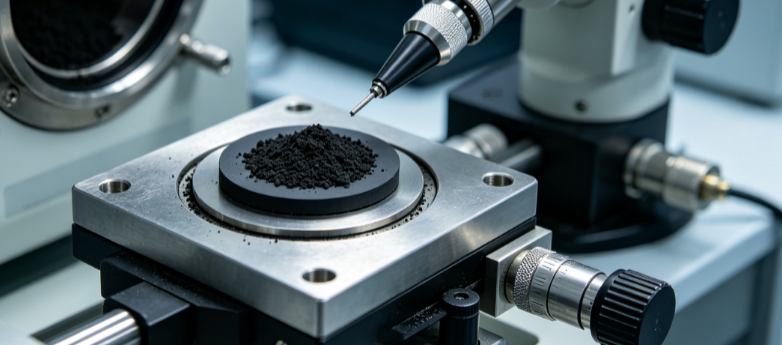
The Critical Need for Holistic Testing of Eucalyptus‑Based Magnetic Activated Carbon
EMAC is a hierarchical material whose adsorption and separation efficiency depend on the synergy between the carbon matrix and the embedded magnetic phase. The carbon matrix provides the high surface area and pore network for contaminant uptake, while the iron oxide particles (typically Fe3O4 or γ‑Fe2O3) endow magnetism for easy recovery. However, the preparation process—activation (physical or chemical) followed by co‑precipitation or impregnation of iron salts—can significantly affect the pore structure, surface chemistry, and magnetic properties. Moreover, the presence of iron species can catalyse carbon gasification or alter the surface charge, influencing adsorption selectivity. Therefore, a systematic testing strategy that integrates textural, structural, chemical, magnetic, and adsorption performance assessments is indispensable. Our service is designed to deliver this integrated insight, enabling you to correlate synthesis parameters with functionality and to troubleshoot issues such as low magnetism, poor adsorption capacity, or iron leaching.
Our Comprehensive Analytical and Performance Testing Capabilities for EMAC
We deploy a broad suite of complementary techniques, each optimised to address a specific aspect of eucalyptus‑based magnetic activated carbon characterisation—from the macroscopic carbon particle to the nanoscale magnetic crystallites.
1. Textural Properties – Surface Area and Porosity: Nitrogen physisorption at 77 K is performed to determine BET specific surface area, total pore volume, and pore‑size distribution (DFT/BJH models). This is the primary indicator of adsorption capacity. For activated carbons with micropores, we add CO2 adsorption at 273 K to characterise ultra‑micropores (< 0.7 nm). We also measure mercury intrusion porosimetry for macroporosity in pelletised or granular forms, and helium pycnometry for skeletal density.
2. Carbon Structure and Graphitisation Degree: Raman spectroscopy is used to obtain the D/G band intensity ratio (ID/IG), which reflects the degree of structural disorder and graphitisation. X‑ray diffraction (XRD) on the carbon phase reveals the presence of turbostratic or amorphous carbon, while also detecting the magnetic phase (Fe3O4, γ‑Fe2O3) via its characteristic peaks. We perform Rietveld refinement to quantify the carbon crystallite size and the iron oxide phase fractions.
3. Magnetic Properties – Saturation Magnetization and Coercivity: The core functionality of EMAC is its magnetic separability. We measure the room‑temperature magnetization curve using a vibrating sample magnetometer (VSM) or superconducting quantum interference device (SQUID), providing saturation magnetization (Ms), remanence (Mr), and coercivity (Hc). We also determine the superparamagnetic behaviour by temperature‑dependent measurements (zero‑field‑cooled / field‑cooled, ZFC/FC). These data allow you to predict the ease of magnetic separation and the maximum achievable particle loading.
4. Magnetic Nanoparticle Size, Distribution, and Location: We use transmission electron microscopy (TEM) with selected area electron diffraction (SAED) to image the iron oxide nanoparticles, measure their size distribution, and determine whether they are located on the external surface or inside the pores. High‑angle annular dark‑field STEM (HAADF‑STEM) with EDS mapping provides elemental distribution maps of Fe, C, and O, revealing the dispersion and potential aggregation of the magnetic phase. X‑ray photoelectron spectroscopy (XPS) gives the surface Fe/C ratio and the chemical state of iron (Fe2+/Fe3+), helping to confirm the stoichiometry of magnetite or maghemite.
5. Surface Chemical Functional Groups and Zeta Potential: Fourier‑transform infrared spectroscopy (FTIR) in ATR or DRIFTS mode identifies oxygen‑containing groups (carboxyl, hydroxyl, carbonyl) that contribute to the adsorption of polar contaminants. XPS provides the O/C ratio and the types of carbon‑oxygen bonds. Boehm titration is used to quantitatively determine the acidic and basic surface functional groups. Zeta potential as a function of pH determines the point of zero charge (PZC), which is critical for understanding electrostatic interactions with charged adsorbates.
6. Elemental Purity and Iron Content: Total iron content is determined by acid digestion followed by ICP‑OES or ICP‑MS. We also quantify other trace metals (Na, K, Ca, Mg, Al, etc.) to assess purity. The ash content is measured by TGA in air at 800 °C, and the inorganic residue is analysed by XRF to confirm the mineral composition.
7. Adsorption Performance – Equilibrium, Kinetics, and Selectivity: We evaluate the adsorption capacity of EMAC for a range of pollutants: heavy metals (Pb2+, Cd2+, Cu2+, etc.), dyes (methylene blue, rhodamine B, etc.), and organic micropollutants (phenol, pharmaceuticals). Batch experiments are conducted under controlled pH, temperature, and ionic strength to obtain adsorption isotherms (Langmuir, Freundlich, Sips), kinetic profiles (pseudo‑first‑order, pseudo‑second‑order, intraparticle diffusion), and thermodynamic parameters (ΔG°, ΔH°, ΔS°). We also measure competitive adsorption in multi‑component systems to evaluate selectivity.
8. Magnetic Separation Efficiency and Reusability: We test the magnetic recovery rate by applying an external magnet and quantifying the mass of recovered material. The adsorption‑desorption cycles (using appropriate eluents) are performed to evaluate reusability and to measure the loss of magnetic properties and adsorption capacity over multiple cycles. After each cycle, we characterise the material by VSM, BET, and XPS to detect changes in magnetic response, surface area, or surface chemistry.
9. Stability and Leaching Assessment: We subject EMAC to acidic, alkaline, and oxidative conditions to evaluate the release of iron (leaching) and the loss of structural integrity. Leachates are analysed by ICP‑MS for iron and other elements. We also perform TGA‑DSC to assess thermal stability and to determine the temperature at which the carbon matrix oxidises or the magnetic phase transforms.
Advanced Diagnostics – Beyond Routine EMAC Testing
Our service extends far beyond standard measurements by integrating experimental data with advanced characterisation and modelling. We offer in‑situ X‑ray diffraction (XRD) during heating to track the transformation of iron phases (e.g., magnetite to hematite) and the carbon combustion. X‑ray photoelectron spectroscopy (XPS) with argon cluster depth profiling provides information on the distribution of iron oxide within the carbon matrix, distinguishing surface‑bound particles from those embedded in pores. We also perform Mössbauer spectroscopy to determine the valence state and local magnetic environment of iron, providing unambiguous identification of magnetite vs. maghemite. For mechanism studies, we use in‑situ Raman or FTIR during adsorption to monitor surface interactions.
Furthermore, we apply multivariate statistical analysis (PCA, PLS) to correlate synthesis conditions (activation temperature, iron loading, impregnation method) with final material properties, enabling rapid optimisation. Our computational team can also perform DFT calculations to model the binding energies of pollutants on the carbon surface or on iron oxide clusters.
Our Distinctive Advantages in EMAC Testing
Our laboratory has extensive experience with biomass‑derived materials and magnetic composites, and we offer several unique strengths that set us apart:
Advantage 1 – Fully Integrated Multi‑Technique Platform: We house all essential instruments—BET, XRD (lab and synchrotron), XPS, VSM/SQUID, TEM, SEM, FTIR, TGA‑MS, ICP‑MS, and batch adsorption facilities—under one ISO‑accredited roof. This ensures consistent sample handling, eliminates outsourcing delays, and allows seamless correlation of textural, structural, magnetic, and performance data from the same sample.
Advantage 2 – Customised Protocols for Magnetic Carbons: We tailor degassing, magnetisation, and dispersion conditions to account for the magnetic nature of EMAC, avoiding aggregation artefacts. We also adjust adsorption experiments to account for the potential influence of the magnetic field or iron dissolution.
Advantage 3 – Unrivalled Depth in Magnetic Characterisation: Our combination of VSM (up to 2 T), SQUID (for low‑field and low‑temperature), and Mössbauer spectroscopy provides a comprehensive magnetic profile, including the distinction between superparamagnetic and ferromagnetic contributions, which is critical for predicting separation behaviour.
Advantage 4 – Comprehensive Stability and Leaching Studies: We simulate aggressive conditions that EMAC may encounter in real wastewater (e.g., low pH, high salinity, oxidants). Our ICP‑MS detection limits for iron are at sub‑ppb levels, ensuring early detection of any leaching that could compromise safety or effectiveness.
Advantage 5 – Expert Interpretation and Contextual Benchmarking: Our team includes specialists in biomass carbonisation and magnetic materials. We provide a detailed report that interprets your results against literature benchmarks, compares your EMAC to commercial magnetic activated carbons, and offers actionable recommendations for synthesis or operational optimisation.
Advantage 6 – Rapid Turnaround with Dedicated Project Management: Most projects are completed within 12–15 working days, with expedited services for urgent needs. You are assigned a dedicated project scientist who provides regular updates, shares preliminary results, and adjusts the plan as needed.
Advantage 7 – Global Logistics with Strict Confidentiality: With intake hubs in North America, Europe, and Asia‑Pacific, we simplify international shipping. Our secure online portal ensures data protection and easy access to final reports (PDF, Excel, raw data). We are pleased to sign non‑disclosure agreements.
Who Benefits from Our Services
Our testing solutions are tailored for a wide range of clients: academic researchers developing novel EMAC synthesis routes; water treatment technology companies evaluating EMAC for commercial applications; biomass processing industries exploring value‑added products; environmental consultancies performing performance verification; and regulatory bodies requiring independent material characterisation for certification.
Performance Benchmarks and Technical Specifications
To illustrate the precision of our measurements, we highlight typical performance indicators:
- BET surface area reproducibility: ± 0.3 m²/g for reference carbons.
- VSM magnetisation precision: ± 0.1 emu/g for saturation magnetisation.
- XRD phase quantification: ± 0.5 wt% for magnetite/carbon phases.
- XPS quantification: ± 1 at% for surface Fe and O.
- ICP‑MS detection limit for Fe: < 0.1 ppb.
- Adsorption isotherm fitting: R² ≥ 0.99 for Langmuir model.
- Cyclic adsorption test: ± 2% capacity variation across 5 cycles.
- Leaching detection: < 0.01 mg/L Fe in eluate.
These capabilities ensure that even subtle differences—such as a 2% change in surface area or a 1 emu/g shift in magnetisation—are reliably detected and statistically meaningful.
How to Initiate a Testing Project
Engaging our service is straightforward. It begins with a complimentary consultation where we discuss your EMAC material (precursor, activation method, iron loading), your specific objectives (e.g., performance validation, magnetism optimisation, stability screening), and your target application. We then propose a customised testing matrix with a clear cost estimate and timeline. After your approval, we provide detailed sample submission guidelines (mass, packaging, handling). Upon receipt, we perform a preliminary quality check and commence the analysis. You receive regular progress updates and a final comprehensive report with expert interpretation, followed by an optional debriefing session.
Quality Assurance and Ethical Standards
Our laboratory operates under ISO 9001 and ISO 17025 accreditation. All data are recorded in electronic notebooks with full audit trails. We follow strict safety protocols for handling activated carbons and magnetic nanoparticles. We are committed to unbiased, transparent reporting and to protecting your intellectual property.
Conclusion – Advance Your Eucalyptus‑Based Magnetic Activated Carbon with Expert Testing
Eucalyptus‑based magnetic activated carbon offers a sustainable and efficient solution for contaminant removal, but its performance hinges on a thorough understanding of its porous, chemical, and magnetic characteristics. Our comprehensive testing service provides the textural, structural, magnetic, and adsorption data needed to validate your material, optimise its synthesis, and ensure reliable performance in real‑world conditions. We combine state‑of‑the‑art instrumentation with deep expertise in biomass‑derived composites to deliver results that are both scientifically rigorous and practically actionable.
We invite you to contact our specialist team to discuss your EMAC testing needs. With our proven track record in magnetic adsorbent evaluation, we are confident we can support your R&D, quality assurance, and commercialisation goals.
Request your free initial consultation today and discover how our integrated, expert‑led testing services can help you achieve superior performance and sustainability with your eucalyptus‑based magnetic activated carbon.