Reasons for choosing our testing services
ZHONGXI Testing has obtained inspection qualification certifications from multiple countries and regions worldwide. We possess a senior testing team and advanced testing methods, providing independent, impartial, and professional third-party verification services for global carbon projects.

Internationally recognized authority
Certified by multiple international standards such as CNAS, VCS, and GS, with reports universally applicable worldwide.

Global service capability
Covering 140+ countries and regions, it supports on-site detection and remote verification in multiple languages.

Professional experimental methods
Adopt standard experimental methods to ensure accurate and reliable data.
Comprehensive Characterization and Performance Evaluation of Ammonia Purifying Agents – Specialized Testing Services
Ammonia (NH3) is a common and hazardous gaseous pollutant found in industrial exhausts, agricultural operations, wastewater treatment facilities, and indoor environments. Effective removal of ammonia is essential to meet stringent air quality regulations, protect human health, and prevent damage to equipment and ecosystems. Ammonia purifying agents—including acid‑impregnated activated carbons, metal‑oxide based sorbents, zeolites, metal‑organic frameworks (MOFs), and novel composite materials—are deployed in scrubbers, air purifiers, and protective masks to achieve high‑efficiency capture. The performance of these agents is dictated by a complex set of parameters: specific surface area and pore volume, surface acidity (Brønsted and Lewis acid sites), ammonia uptake capacity, kinetics of adsorption, resistance to humidity and competing gases, regenerability, and long‑term stability. If you are searching for testing services for ammonia purifying agents, you are likely at a critical stage where rigorous, multi‑dimensional evaluation is required to verify product efficacy, optimise formulation, ensure batch‑to‑batch consistency, or troubleshoot field performance issues. This article outlines our comprehensive analytical and performance testing platform, the technical sophistication we bring, and the distinct advantages that position us as a premier partner for air filtration manufacturers, environmental technology developers, and industrial hygiene laboratories worldwide.
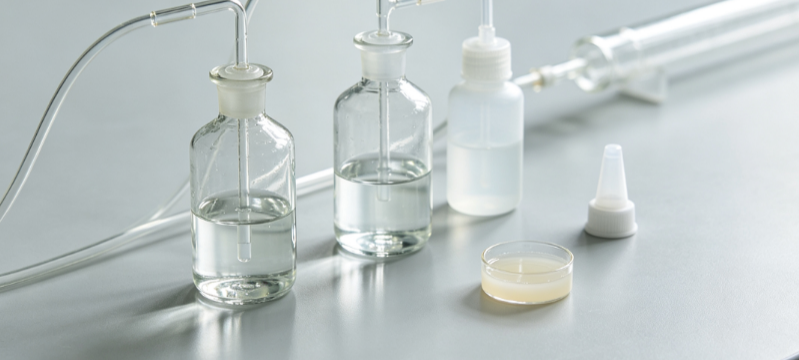
The Scientific Rationale for In‑Depth Ammonia Purifier Testing
Ammonia capture is a dynamic process that involves both physical adsorption (via van der Waals forces) and chemical adsorption (via acid‑base reactions, complexation, or proton transfer). The breakthrough capacity and selectivity are influenced not only by the intrinsic properties of the purifying agent but also by operating parameters—temperature, relative humidity, gas flow rate, and the presence of co‑pollutants such as CO2, H2S, or volatile organic compounds (VOCs). Furthermore, many high‑performance materials (e.g., impregnated carbons) can suffer from leaching of active species, pore blockage, or surface deactivation over time. Therefore, a systematic testing strategy that integrates material characterisation, static and dynamic adsorption measurements, regeneration studies, and environmental stability assessments is essential for ensuring reliable performance. Our service is engineered to deliver this integrated insight, enabling you to correlate material properties with removal efficiency and to predict behaviour under real‑world conditions.
Our Comprehensive Analytical and Performance Testing Capabilities for Ammonia Purifying Agents
We deploy a broad suite of complementary techniques, each optimised to address a specific aspect of ammonia purifier characterisation—from the atomic scale to full‑scale breakthrough testing.
1. Physicochemical Characterisation of the Purifying Agent: We begin with a thorough characterisation of your material. High‑resolution X‑ray diffraction (HR‑XRD) identifies crystalline phases and detects any impurities. Nitrogen physisorption (BET) provides specific surface area, total pore volume, and pore‑size distribution (DFT/BJH models). X‑ray photoelectron spectroscopy (XPS) reveals surface elemental composition, oxidation states of active metals, and the presence of functional groups (e.g., –COOH, –OH, –NH2). Fourier‑transform infrared spectroscopy (FTIR) in ATR or DRIFTS mode confirms the presence of acid groups or other reactive species. Scanning electron microscopy (SEM) and transmission electron microscopy (TEM) assess morphology, particle size, and the distribution of impregnated phases. These baseline data are essential for understanding the material’s intrinsic capacity and for tracking changes after use.
2. Quantification of Acid Site Density and Strength: For chemisorption‑based purifiers, the density and strength of acidic sites are key. We perform temperature‑programmed desorption of ammonia (NH3‑TPD) with mass spectrometry to determine the total acidity and the distribution of weak, moderate, and strong sites. Pyridine‑adsorbed DRIFTS is used to distinguish Brønsted (proton‑donating) from Lewis (electron‑pair accepting) acid sites, which directly correlate with ammonia binding affinity and selectivity.
3. Static Adsorption Equilibrium – Isotherms and Thermodynamics: We conduct volumetric or gravimetric adsorption measurements using pure ammonia at controlled temperatures (e.g., 25, 40, 60 °C) to obtain equilibrium adsorption isotherms. Data are fitted to Langmuir, Freundlich, Sips, and Toth models to determine the maximum uptake capacity (Qmax), affinity constants, and heterogeneity parameters. Temperature‑dependent isotherms allow calculation of the isosteric heat of adsorption (Qst), providing insight into the nature of the binding (physisorption vs. chemisorption).
4. Dynamic Breakthrough and Column Performance: Our custom‑built flow‑through reactor system simulates realistic operating conditions. We expose a packed bed of the purifying agent to a controlled stream of ammonia in air or nitrogen (with adjustable concentration, typically 10–1000 ppm), at defined flow rates, temperatures, and relative humidity (0–90% RH). On‑line FTIR or chemiluminescence analysers continuously monitor the effluent ammonia concentration. From the breakthrough curves, we determine the dynamic capacity at breakthrough (CB), the mass transfer zone, and the utilisation factor. We also test performance under challenging conditions—e.g., high humidity, presence of CO2 or VOCs—to evaluate selectivity and robustness.
5. Regeneration and Cyclic Stability: We perform multiple adsorption‑desorption cycles using thermal treatment (heating in inert gas), pressure swing, or purging with acidic gases or steam. We measure the capacity decay per cycle and characterise the material after cycling (XRD, BET, XPS) to identify the causes of deactivation—such as sintering, carbon deposition, or loss of active species. This is crucial for assessing the economic viability and operational lifetime of the purifier.
6. Humidity and Poisoning Resistance: Real‑world ammonia removal often involves water vapour and acid gases (e.g., SO2, HCl). We evaluate the effect of humidity on adsorption capacity and kinetics, and we test the stability of the purifier after exposure to common poisons. Accelerated aging tests under elevated temperature and humidity are performed to simulate long‑term storage and service conditions.
7. Chemical Stability and Leaching Assessment: For impregnated or composite materials, leaching of active components (e.g., acids, metal ions) can occur in moist environments. We conduct leaching tests by immersing the purifier in water or acidic solution and analysing the eluate by ICP‑MS (for metals) and ion chromatography (IC) (for anions), ensuring that the material is safe and durable for its intended use.
8. In‑situ and Operando Spectroscopic Analysis: To unravel the capture mechanism, we offer in‑situ FTIR and operando Raman spectroscopy during ammonia adsorption. These techniques reveal the formation of surface ammonium species, hydrogen bonding, and the interaction with functional groups. We also use in‑situ XRD to monitor structural changes (e.g., framework breathing in MOFs) under adsorbate exposure.
Advanced Diagnostics – Beyond Conventional Purifier Testing
Our service extends far beyond routine adsorption and breakthrough measurements. We integrate experimental data with computational modelling—including grand canonical Monte Carlo (GCMC) and density functional theory (DFT) calculations—to predict binding energies and to guide the rational design of new purifier formulations. We also offer multivariate statistical analysis to correlate synthesis parameters (e.g., impregnation concentration, activation temperature) with performance metrics, enabling rapid optimisation and quality control.
Furthermore, we provide high‑throughput screening of multiple candidate purifiers using a parallel breakthrough system, drastically reducing development time. For regulatory compliance, we can adapt our test methods to meet ISO, ASTM, or NIOSH standards, and we provide full validation reports.
Our Distinctive Advantages in Ammonia Purifying Agent Testing
Our laboratory has a proven track record in gas purification and sorbent evaluation, and we offer several unique strengths that set us apart:
Advantage 1 – Fully Integrated Multi‑Technique Platform: We house all essential instruments—BET, XRD, XPS, FTIR, Raman, TGA‑MS, SEM, TEM, flow‑through breakthrough rigs with multi‑gas capability, and high‑sensitivity ammonia analysers—under one ISO‑accredited roof. This ensures consistent sample handling, eliminates cross‑contamination risks, and allows direct correlation of structural, chemical, and performance data from the same batch.
Advantage 2 – Realistic Simulation of Field Conditions: Our breakthrough systems can precisely control temperature (ambient to 150 °C), relative humidity (0–95%), ammonia concentration (ppb to percent levels), and the presence of interfering gases (CO2, O2, SO2, VOCs). This allows us to mimic scrubber, indoor air, or industrial stack scenarios with high fidelity.
Advantage 3 – Unmatched Depth in Acid Site and Mechanism Analysis: Our combined NH3‑TPD and pyridine‑FTIR approach provides a complete profile of acidity, including both the quantity and the type of acid sites. This is directly linked to ammonia capture performance and is often the key differentiator between competing materials.
Advantage 4 – Comprehensive Durability and Regeneration Profiling: We don’t just measure initial performance; we evaluate long‑term stability through accelerated aging and multiple adsorption‑desorption cycles. Our post‑test characterisation pinpoints deactivation mechanisms, enabling you to select the most robust purifier or to improve regeneration protocols.
Advantage 5 – Expert Interpretation and Benchmarking: Our team includes specialists in air purification and environmental chemistry. We provide a detailed, contextualised report that compares your material against industry standards and commercial benchmarks, and we offer actionable recommendations for formulation or operational improvements.
Advantage 6 – Rapid Turnaround with Dedicated Project Management: Most projects are completed within 10–14 working days, with expedited services for urgent troubleshooting. You are assigned a dedicated project scientist who provides regular updates, shares preliminary results, and adjusts the testing plan as needed.
Advantage 7 – Global Logistics with Strict Confidentiality: With sample intake hubs in North America, Europe, and Asia‑Pacific, we simplify international shipping. Our secure online portal ensures data protection and easy access to final reports (PDF, Excel, raw data). We are pleased to sign non‑disclosure agreements.
Who Benefits from Our Services
Our testing solutions are tailored for a wide range of stakeholders: air filtration and purifier manufacturers seeking product validation; industrial hygienists evaluating workplace safety measures; research and development groups developing next‑generation sorbents; regulatory compliance agencies requiring independent testing; and end‑users assessing the performance of commercial purifiers before purchase.
Performance Benchmarks and Technical Specifications
To illustrate the precision of our measurements, we highlight typical performance indicators:
- Ammonia concentration range: 0.1 ppm – 10,000 ppm (FTIR and chemiluminescence).
- Breakthrough capacity reproducibility: ± 1.5% relative for identical samples.
- BET surface area precision: ± 0.3 m²/g.
- NH3‑TPD peak temperature reproducibility: ± 2 °C.
- XPS quantification accuracy: ± 1 at% for surface elements.
- Humidity control stability: ± 1% RH.
- Cyclic test automation: up to 150 cycles without operator intervention.
- Leaching detection limit: < 0.1 ppm for metals by ICP‑MS.
These capabilities ensure that even subtle differences—such as a 2% variation in uptake or a 0.1 eV shift in binding energy—are reliably captured and statistically significant.
How to Initiate a Testing Project
Engaging our service is simple and transparent. It begins with a complimentary consultation where we discuss your purifying agent (composition, form, intended use), your specific objectives (e.g., performance validation, competitive benchmarking, stability screening), and any regulatory requirements. We then propose a customised testing matrix with a clear cost estimate and timeline. After your approval, we provide detailed sample submission guidelines (mass, packaging, handling). Upon receipt, we perform a preliminary quality check and commence the analysis. You receive regular progress updates and a final comprehensive report with expert interpretation, followed by an optional debriefing session.
Quality Assurance and Ethical Standards
Our laboratory operates under ISO 9001 and ISO 17025 accreditation. All data are recorded in electronic notebooks with full audit trails. We follow strict safety protocols for handling ammonia and other gases. We are committed to unbiased, transparent reporting and to protecting your intellectual property.
Conclusion – Ensure Superior Ammonia Removal Performance with Expert Testing
Ammonia purifying agents are essential for clean air, but their performance depends on a deep understanding of their physical, chemical, and dynamic properties. Our comprehensive testing service provides the material characterisation, adsorption equilibrium, dynamic breakthrough, and durability insights needed to validate your product, optimise its formulation, and ensure reliable operation in the field. We combine state‑of‑the‑art instrumentation with deep expertise in gas‑phase adsorption to deliver results that are both scientifically rigorous and practically actionable.
We invite you to contact our specialist team to discuss your ammonia purifying agent testing needs. With our proven track record in sorbent evaluation, we are confident we can support your R&D, quality assurance, and commercial success.
Request your free initial consultation today and discover how our integrated, expert‑led testing services can help you achieve superior ammonia purification and environmental compliance.