Reasons for choosing our testing services
ZHONGXI Testing has obtained inspection qualification certifications from multiple countries and regions worldwide. We possess a senior testing team and advanced testing methods, providing independent, impartial, and professional third-party verification services for global carbon projects.

Internationally recognized authority
Certified by multiple international standards such as CNAS, VCS, and GS, with reports universally applicable worldwide.

Global service capability
Covering 140+ countries and regions, it supports on-site detection and remote verification in multiple languages.

Professional experimental methods
Adopt standard experimental methods to ensure accurate and reliable data.
Comprehensive Characterization and Performance Assessment of Palladium Ion Adsorbents – Specialized Analytical Services
Palladium (Pd) is a precious metal widely used in catalytic converters, electronic components, chemical synthesis, and dental alloys. The recovery of palladium from industrial waste streams, mining effluents, and spent catalysts is not only economically significant but also environmentally critical. Adsorbent materials—such as functionalized silicas, ion‑exchange resins, metal‑organic frameworks (MOFs), biochars, and magnetic composites—have been developed for the selective capture of Pd2+ ions from complex matrices. The performance of these adsorbents is governed by a complex set of parameters: specific surface area and pore architecture, surface functional groups (e.g., amine, thiol, carboxyl), ion exchange capacity, selectivity over competing metals, adsorption kinetics, and regenerability. If you are searching for testing services for palladium ion adsorbents, you are likely at a stage where rigorous, multi‑parametric evaluation is essential to validate new materials, optimise functionalisation protocols, ensure batch‑to‑batch consistency, or troubleshoot poor recovery in field applications. This article describes our comprehensive analytical and performance testing platform, the scientific depth we deliver, and the distinct advantages that make us a trusted partner for materials researchers, hydrometallurgical engineers, and environmental technology companies worldwide.
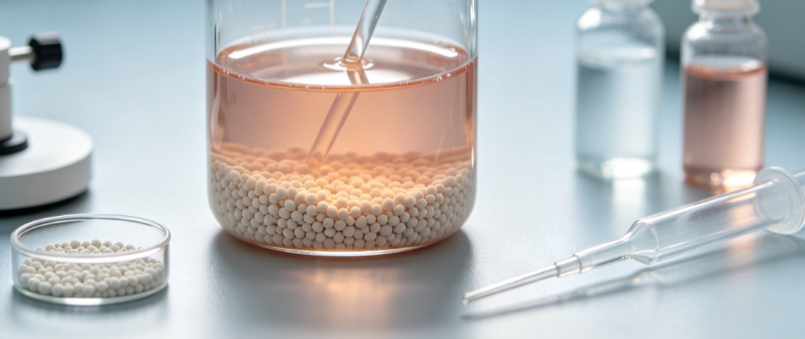
The Critical Need for Holistic Testing of Pd2+ Adsorbents
Palladium ion adsorption is a complex process involving electrostatic attraction, complexation with surface ligands, ion exchange, and sometimes reduction to metallic Pd. The selectivity for Pd2+ over co‑existing ions (such as Pt4+, Rh3+, Cu2+, Ni2+, Fe3+) is particularly challenging and depends on the hardness/softness of the ligand and the ionic radius. The adsorption capacity and kinetics are influenced by the accessibility of functional groups, which is governed by the pore structure and the degree of cross‑linking. Furthermore, the adsorbent must exhibit sufficient chemical and mechanical stability to withstand acidic, alkaline, or oxidative conditions often encountered in industrial leaching or regeneration steps. A single technique—such as batch uptake measurement—cannot capture this complexity. Therefore, a systematic testing strategy that integrates material characterisation, equilibrium and kinetic studies, competitive ion assessments, and stability/regeneration tests is indispensable. Our service is designed to provide this integrated insight, enabling you to correlate synthesis parameters with adsorption performance and to predict behaviour in real‑world leachates.
Our Comprehensive Analytical and Performance Testing Capabilities for Palladium Adsorbents
We deploy a broad suite of complementary techniques, each optimised to address a specific aspect of palladium adsorbent characterisation—from the chemical nature of the active sites to full‑scale column performance.
1. Physicochemical Characterisation of the Adsorbent: We begin with a thorough characterisation of your material. High‑resolution X‑ray diffraction (HR‑XRD) identifies crystalline phases (e.g., carbon structure, metal oxide, zeolite topology). Nitrogen physisorption (BET) provides specific surface area, total pore volume, and pore‑size distribution (DFT/BJH). X‑ray photoelectron spectroscopy (XPS) determines surface elemental composition, the chemical state of active groups (e.g., N in amine, S in thiol), and the presence of any metallic impurities. Fourier‑transform infrared spectroscopy (FTIR) and Raman spectroscopy confirm the presence of functional groups and any structural changes after functionalisation. Scanning electron microscopy (SEM) and transmission electron microscopy (TEM) reveal morphology, particle size, and the distribution of active phases.
2. Quantification of Active Functional Groups: The density of binding sites is critical. We quantify primary amine groups using colorimetric assays (e.g., ninhydrin), thiol groups via Ellman’s reagent, and carboxyl groups via acid‑base titration. Elemental analysis (CHNS) provides total nitrogen or sulfur content. XPS gives the surface concentration of these elements. Together, these methods distinguish between surface‑exposed (active) and buried (inaccessible) groups.
3. Equilibrium Adsorption – Isotherms and Thermodynamics: We conduct batch adsorption experiments using palladium chloride solutions at various concentrations (typically 1–500 mg/L) under controlled pH (1–6), temperature (20–60 °C), and background ionic strength. We measure the equilibrium uptake and fit the data to Langmuir, Freundlich, Sips, and Dubinin‑Radushkevich models to obtain the maximum adsorption capacity (Qmax), affinity constants, and heterogeneity parameters. From temperature‑dependent isotherms, we calculate thermodynamic parameters (ΔG°, ΔH°, ΔS°) to infer the nature of the adsorption (spontaneous, endothermic/exothermic).
4. Adsorption Kinetics and Mass Transfer: We measure the uptake rate of Pd2+ by sampling the liquid phase at intervals. We fit the kinetic data to pseudo‑first‑order, pseudo‑second‑order, Elovich, and intraparticle diffusion models to determine rate constants and to identify the rate‑limiting step (film diffusion vs. pore diffusion vs. chemical reaction). This is essential for designing contact time in continuous processes.
5. Selectivity and Competitive Ion Effects: Real leachates contain multiple metal ions. We evaluate the selectivity of your adsorbent for Pd2+ over common competitors (Pt4+, Rh3+, Cu2+, Ni2+, Fe3+, Zn2+, etc.) at various concentration ratios. We calculate distribution coefficients (Kd) and separation factors to quantify the preferential uptake. We also test the effect of anions (Cl−, NO3−, SO42−) that may compete for adsorption sites.
6. pH‑Dependent Adsorption and Surface Speciation: The speciation of Pd2+ (e.g., PdCl3−, PdCl42−) and the surface charge of the adsorbent vary with pH. We perform adsorption experiments across the pH range 1–7 to construct adsorption edges, revealing the optimal pH window. Zeta potential measurements and surface complexation modelling are used to elucidate the binding mechanism.
7. Column Breakthrough and Dynamic Performance: For practical use, we conduct fixed‑bed column tests with a known influent Pd concentration and flow rate. We monitor the effluent concentration over time and determine the breakthrough capacity, the exhaustion time, and the mass transfer zone. We also evaluate the effect of bed height, flow rate, and influent concentration on performance. These data are critical for scale‑up.
8. Regeneration and Reusability: We perform multiple adsorption‑desorption cycles using appropriate eluents (e.g., acidic thiourea, nitric acid, or EDTA solutions). After each cycle, we measure the remaining adsorption capacity and characterise the adsorbent (by BET, XPS, FTIR) to identify any degradation, pore blockage, or loss of functional groups. This provides a realistic assessment of the adsorbent’s economic lifetime.
9. Stability and Leaching Assessment: We subject the adsorbent to accelerated aging under harsh conditions (high acidity, temperature, or oxidising agents) and analyse the leachate by ICP‑MS for any leaching of the active species (e.g., metal ions from the support or functional groups). This ensures that the material does not introduce contamination into the process stream.
10. Advanced Spectroscopic and Microscopic Analysis for Mechanism Elucidation: For a deeper understanding of the binding mechanism, we offer in‑situ ATR‑FTIR or X‑ray absorption spectroscopy (XAS) at the Pd K‑edge to probe the coordination environment of adsorbed palladium, revealing the oxidation state and the number of coordinating ligands. X‑ray photoelectron spectroscopy (XPS) after adsorption can show the reduction of Pd2+ to Pd0 if applicable.
Advanced Diagnostics – Beyond Conventional Adsorbent Testing
Our service extends beyond standard isotherms and columns. We integrate experimental data with surface complexation modelling to predict adsorption under various chemical conditions. We also employ machine learning algorithms to correlate synthesis parameters (e.g., functionalisation temperature, reagent concentration) with adsorption capacity and selectivity, enabling rapid optimisation. For research clients, we provide DFT calculations to model the binding energies of Pd2+ with different functional groups, rationalising observed selectivity patterns.
Our Distinctive Advantages in Palladium Adsorbent Testing
Our laboratory has extensive experience in precious metal recovery and adsorbent evaluation, and we offer several unique strengths that set us apart:
Advantage 1 – Fully Integrated Multi‑Technique Platform: We house all essential instruments—BET, XRD, XPS, FTIR, Raman, SEM‑EDS, TEM, ICP‑MS, UV‑Vis, and fully equipped batch/column adsorption systems—under one ISO‑accredited roof. This ensures consistent sample handling, eliminates outsourcing delays, and allows seamless correlation of structural, chemical, and performance data from the same sample.
Advantage 2 – Customised Protocols for Diverse Adsorbent Types: Our adsorbents range from polymeric resins to functionalised silica and MOFs. We tailor degassing, digestion, and testing conditions (e.g., pH, temperature, competing ion matrix) to your specific material, ensuring accuracy and minimising artefacts.
Advantage 3 – Unrivalled Depth in Selectivity and Competition Studies: We offer comprehensive multi‑metal screening with a wide range of coexisting ions, providing you with a complete picture of the material’s practical feasibility. Our ICP‑MS capabilities allow trace analysis of precious metals at sub‑ppb levels.
Advantage 4 – Comprehensive Regeneration and Stability Profiling: We don’t just measure initial capacity; we evaluate long‑term stability through repeated cycles and accelerated aging, pinning down deactivation mechanisms. This is essential for assessing economic viability.
Advantage 5 – Expert Interpretation and Benchmarking: Our team includes hydrometallurgists and materials chemists. We provide a detailed report that interprets your results against industry standards and commercial benchmarks, and offers actionable recommendations for material or process improvement.
Advantage 6 – Rapid Turnaround with Dedicated Project Management: Most projects are completed within 10–14 working days, with expedited options for urgent needs. You are assigned a dedicated project scientist who provides regular updates and adjusts the plan as needed.
Advantage 7 – Global Logistics with Strict Confidentiality: With intake hubs in North America, Europe, and Asia‑Pacific, we simplify international shipping. Our secure online portal ensures data protection and easy access to final reports (PDF, Excel, raw data). We are pleased to sign non‑disclosure agreements.
Who Benefits from Our Services
Our testing solutions are tailored for a wide range of clients: mining and hydrometallurgical companies seeking to recover Pd from ores or tailings; electronics recyclers recovering precious metals from e‑waste; catalyst manufacturers evaluating adsorbents for spent catalyst processing; academic researchers developing new sorbent materials; and environmental agencies requiring independent verification of recovery efficiency for regulatory purposes.
Performance Benchmarks and Technical Specifications
To illustrate the precision of our measurements, we highlight typical performance indicators:
- Palladium analysis (ICP‑MS): LOD < 0.01 ppb, precision ± 1% RSD.
- BET surface area reproducibility: ± 0.3 m²/g.
- XPS quantification: ± 1 at% for surface elements.
- Adsorption isotherm fitting: R² ≥ 0.99 for Langmuir model.
- Column breakthrough reproducibility: ± 2% of breakthrough volume.
- Regeneration capacity retention: ± 2% per cycle up to 10 cycles.
- Leaching detection limit: < 0.1 ppb for Pd and other metals.
- FTIR spectral resolution: 2 cm−1.
These capabilities ensure that even subtle variations—such as a 3% change in Qmax or a 2% shift in selectivity—are reliably detected and statistically significant.
How to Initiate a Testing Project
Engaging our service is simple and transparent. It begins with a complimentary consultation where we discuss your adsorbent, the target matrix (e.g., chloride leach solution, acidic effluent), your specific objectives (e.g., capacity validation, selectivity assessment, regeneration optimisation), and any regulatory standards. We then propose a customised testing matrix with a clear cost estimate and timeline. After your approval, we provide detailed sample submission guidelines (mass, form, handling). Upon receipt, we perform a preliminary quality check and commence the analysis. You receive regular progress updates and a final comprehensive report with expert interpretation, followed by an optional debriefing session.
Quality Assurance and Ethical Standards
Our laboratory operates under ISO 9001 and ISO 17025 accreditation. All data are recorded in electronic notebooks with full audit trails. We follow strict safety protocols for handling precious metal compounds. We are committed to unbiased, transparent reporting and to protecting your intellectual property.
Conclusion – Advance Your Palladium Recovery with Expert Testing
Palladium ion adsorbents are critical for sustainable metal recovery, but their performance is shaped by complex chemical and physical interactions. Our comprehensive testing service provides the material characterisation, equilibrium and kinetic data, selectivity profiles, and stability insights needed to validate your adsorbent, optimise its formulation, and ensure reliable performance in the field. We combine state‑of‑the‑art instrumentation with deep expertise in precious metal hydrometallurgy to deliver results that are both scientifically rigorous and practically actionable.
We invite you to contact our specialist team to discuss your palladium adsorbent testing needs. With our proven track record in metal recovery materials evaluation, we are confident we can support your R&D, quality assurance, and commercialisation goals.
Request your free initial consultation today and discover how our integrated, expert‑led testing services can help you achieve superior palladium recovery and sustainable resource management.