Reasons for choosing our testing services
ZHONGXI Testing has obtained inspection qualification certifications from multiple countries and regions worldwide. We possess a senior testing team and advanced testing methods, providing independent, impartial, and professional third-party verification services for global carbon projects.

Internationally recognized authority
Certified by multiple international standards such as CNAS, VCS, and GS, with reports universally applicable worldwide.

Global service capability
Covering 140+ countries and regions, it supports on-site detection and remote verification in multiple languages.

Professional experimental methods
Adopt standard experimental methods to ensure accurate and reliable data.
Comprehensive Quality Assessment and Performance Testing of TLC Silica Gel Plates – Specialized Analytical Services
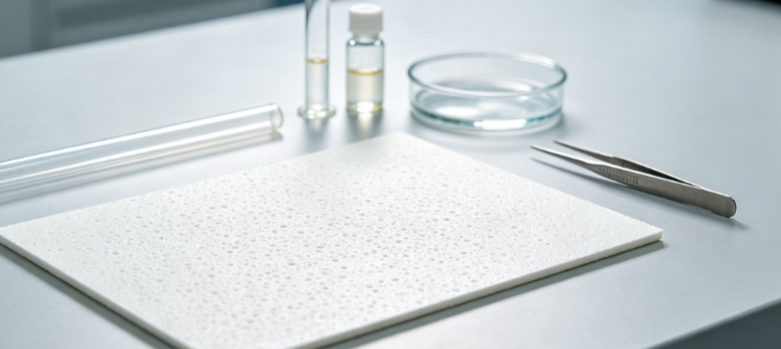
Thin‑layer chromatography (TLC) silica gel plates are the cornerstone of modern planar chromatography, widely employed in pharmaceutical, chemical, food, and environmental analysis for rapid separation, identification, and quantification of compounds. The performance and reliability of these plates depend critically on a set of stringent quality parameters: layer uniformity and thickness, particle size and pore structure, binding efficiency, surface activity, and batch‑to‑batch reproducibility. If you are searching for testing services for TLC silica gel plates, you are likely at a stage where objective, comprehensive quality verification is essential to validate incoming raw materials, ensure consistent chromatographic performance, troubleshoot separation anomalies, or qualify a new supplier. This article describes our specialised testing platform, the technical depth we offer, and the distinct advantages that make us a trusted partner for QC laboratories, pharmaceutical manufacturers, and analytical reagent suppliers worldwide.
Why Rigorous Testing of TLC Silica Gel Plates Is Essential
Silica gel, the most common stationary phase for TLC, is a porous, amorphous form of silicon dioxide with a high specific surface area and abundant silanol (Si–OH) groups. The chromatographic performance—reflected in parameters such as Rf value reproducibility, spot symmetry, separation efficiency (plate height), and detection sensitivity—is directly influenced by the physical and chemical characteristics of the silica layer. Variations in particle size distribution, pore volume, binder content, or surface acidity can lead to poor separation, tailing, or batch‑to‑batch irreproducibility. Moreover, the mechanical integrity and adhesion of the layer are critical for handling and automated application. Therefore, a systematic testing strategy that integrates physical characterisation, chemical surface analysis, and chromatographic performance assays is indispensable. Our service is designed to provide this integrated insight, enabling you to set specifications, monitor consistency, and resolve performance issues with confidence.
Our Comprehensive Testing Capabilities for TLC Silica Gel Plates
We deploy a broad suite of analytical techniques, each optimised to address a specific quality attribute of TLC silica gel plates—from the macroscopic layer to the molecular surface.
1. Layer Thickness and Uniformity: The thickness of the silica gel layer directly affects the sample capacity and resolution. We measure the layer thickness at multiple points across the plate using precision contact profilometry and non‑contact optical profilometry, providing a statistical assessment of uniformity (mean thickness, standard deviation, and maximum/minimum variation). This ensures compliance with specifications (typically 200–250 µm for analytical plates) and flags any coating defects.
2. Particle Size and Pore Structure: The particle size and pore architecture govern the separation efficiency and flow characteristics. We determine the particle size distribution by laser diffraction after careful removal of the layer. The specific surface area (BET) and pore‑size distribution are measured by nitrogen physisorption at 77 K, covering micropores (< 2 nm) and mesopores (2–50 nm). These data correlate directly with the chromatographic resolving power and the retention behaviour of different analyte classes.
3. Binder Content and Layer Adhesion: Most commercial TLC plates contain an organic or inorganic binder (e.g., polyvinyl alcohol, starch, calcium sulfate) to impart mechanical strength. We quantify the binder content by Thermogravimetric Analysis (TGA) under controlled conditions, distinguishing between organic matter, water, and silica. The adhesion strength of the layer to the glass or aluminium support is evaluated by a tape test (ASTM D3359) and by a scratch test using a defined load, ensuring that the layer does not flake during handling or developing.
4. Surface Chemistry – Silanol Activity and Acidity: The activity of silanol groups is a primary determinant of chromatographic retention and peak shape. We assess the relative surface acidity using DRIFT spectroscopy after pyridine adsorption, distinguishing between free silanols, hydrogen‑bonded silanols, and acidic sites. X‑ray photoelectron spectroscopy (XPS) is used to quantify the surface O/Si ratio and to detect any contamination (e.g., carbonaceous residues). These data allow us to predict the degree of peak tailing for basic compounds and to check the effectiveness of any deactivation treatment.
5. Fluorescence Background and UV Transparency: For quantitative densitometry, a low background and high UV transparency are essential. We measure the fluorescence emission intensity of the unspotted plate under the excitation wavelengths commonly used (e.g., 254 nm and 366 nm) using a spectrofluorometer. The UV‑Vis transmittance of the layer is also recorded, providing a baseline for detection sensitivity. These tests are particularly relevant for pharmaceutical analysis where low‑level impurities must be quantified.
6. Chromatographic Performance Testing – Test Mixtures: The ultimate proof of quality is the actual separation performance. We perform standardised chromatographic tests using well‑defined test mixtures according to pharmacopoeial or internal protocols. Typically, we evaluate the separation of a mixture of dyes (e.g., Sudan red, methylene blue, indophenol) or a pharmaceutical test mixture (e.g., steroids, amino acids) under standardised elution conditions. We measure Rf values, spot symmetry (tailing factor), and the number of theoretical plates (N) using densitometric scanning. The relative standard deviation (RSD) of Rf values across replicate runs and different plates provides a direct measure of batch‑to‑batch reproducibility.
7. Batch‑to‑Batch Consistency: To ensure production stability, we perform comparative testing on multiple batches using the same characterisation and performance protocols. Statistical analysis (ANOVA) is applied to identify any significant deviations in thickness, surface area, binder content, or chromatographic metrics. This service is particularly valuable for suppliers who need to certify their product consistency.
8. Solvent Resistance and Stability: The plate must withstand common organic solvents and acidic/basic developing agents without delamination or degradation. We perform immersion tests in typical solvents (e.g., ethyl acetate, hexane, methanol, dichloromethane) and monitor changes in layer integrity and thickness after drying. Accelerated aging tests under controlled humidity and temperature are also conducted to assess long‑term stability.
9. Trace Metal and Contaminant Analysis: For high‑purity applications (e.g., trace analysis in pharmaceuticals), the presence of metal ions (Fe, Cu, Zn, etc.) can interfere with certain detections. We quantify trace metals by ICP‑MS after acid digestion of the silica layer. We also screen for organic contaminants by GC‑MS after solvent extraction.
Advanced Diagnostics – Beyond Standard TLC Plate Testing
Our service goes beyond the typical QC parameters. We offer in‑depth surface analysis by time‑of‑flight secondary ion mass spectrometry (ToF‑SIMS) to map the distribution of binder and silanol groups at the micrometer scale. We also use solid‑state 29Si nuclear magnetic resonance (NMR) to probe the silicon coordination (Q2, Q3, Q4) and to detect any surface modification residues. For R&D applications, we can evaluate novel stationary phase modifications (e.g., C18‑bonded, amino‑modified) using a combination of elemental analysis, FTIR, and contact angle measurements. Our chemometric data analysis correlates multiple quality parameters to predict chromatographic performance, enabling rapid optimisation of production conditions.
Our Distinctive Advantages in TLC Silica Gel Plate Testing
Our laboratory has long‑standing expertise in stationary phase characterisation, and we offer several unique strengths that set us apart:
Advantage 1 – Fully Integrated One‑Stop Platform: We house all essential instruments—profilometers, gas adsorption analysers, TGA, XPS, FTIR, ICP‑MS, densitometers, and chromatographic development chambers—under one ISO‑accredited roof. This ensures consistent sample handling, eliminates sub‑contracting delays, and allows direct correlation of physical, chemical, and chromatographic results from the same plate batch.
Advantage 2 – Methodologies Aligned with International Standards: Our test protocols follow the relevant sections of the European Pharmacopoeia (Ph. Eur.), US Pharmacopeia (USP), and ISO standards for TLC plates. We can also adapt our methods to specific client‑defined acceptance criteria.
Advantage 3 – Unrivalled Depth in Surface Chemistry and Pore Characterisation: Our combination of nitrogen physisorption, XPS, and DRIFT spectroscopy provides a comprehensive picture of the silica surface, including silanol density, acidity, and possible contamination. This is critical for explaining differences in separation behaviour that are not captured by simple particle size or thickness measurements.
Advantage 4 – Realistic Performance Testing with In‑house Reference Mixtures: We maintain a comprehensive library of test mixtures covering a wide polarity range and representing common application areas (pharmaceuticals, lipids, dyes, natural products). Our densitometric evaluations are performed on a calibrated scanning densitometer, providing objective, quantitative data.
Advantage 5 – Expert Interpretation and Benchmarking: Our team includes separation scientists with decades of experience. We provide a detailed report that not only presents your results but also interprets them against historical data from leading TLC plate manufacturers, highlighting strengths and potential weaknesses, and offering practical recommendations.
Advantage 6 – Rapid Turnaround with Dedicated Project Management: Most projects are completed within 7–10 working days, with expedited services for emergency quality issues. You will be assigned a dedicated project scientist who maintains transparent communication and adjusts the test plan as your needs evolve.
Advantage 7 – Global Logistics and Strict Confidentiality: With sample intake hubs in North America, Europe, and Asia‑Pacific, we simplify international shipping. Our secure online portal ensures data protection and immediate access to final reports (PDF, Excel, raw data). We are pleased to sign non‑disclosure agreements.
Who Benefits from Our Services
Our testing solutions are designed for a wide range of clients: TLC plate manufacturers for product development and quality assurance; pharmaceutical QC laboratories verifying the suitability of plates for drug analysis; academic researchers evaluating new stationary phases; contract research organisations requiring certified plates for regulatory studies; and regulatory bodies auditing the quality of analytical supplies.
Performance Benchmarks and Technical Specifications
To illustrate the precision of our measurements, we highlight typical performance indicators:
- Layer thickness profilometry: repeatability ± 1 µm for nominal thickness 250 µm.
- BET surface area precision: ± 0.3 m²/g.
- Pore‑size distribution (DFT): peak maximum accuracy ± 0.05 nm.
- XPS quantification: ± 1 at% for O, Si, C.
- Densitometric Rf precision: RSD < 1% for replicate applications.
- ICP‑MS detection limits: < 0.1 ppb for most metals.
- TGA mass loss precision: ± 0.02 mg for binder decomposition.
- Automated image analysis for spot symmetry: repeatability ± 0.02 for tailing factor.
These capabilities ensure that even subtle deviations from specification—such as a 1 µm variation in thickness or a 0.1 unit shift in tailing factor—are reliably detected.
How to Initiate a Testing Project
Engaging our service is straightforward. It begins with a complimentary consultation where we discuss your TLC plate type (silica, modified, with/without fluorescence indicator), your intended applications, and your specific quality concerns—whether it’s supplier qualification, batch release, or failure investigation. We then propose a tailored testing matrix with a clear cost estimate and timeline. After your approval, we provide sample submission guidelines (typically 5–10 plates per batch). Upon receipt, we perform a visual and physical inspection and then commence the analytical workflow. You receive regular updates and a final comprehensive report with data, interpretation, and actionable recommendations, followed by an optional debriefing session.
Quality Assurance and Ethical Standards
Our laboratory operates under ISO 9001 and ISO 17025 accreditation. All data are recorded in electronic notebooks with full audit trails. We follow strict safety and quality protocols for handling chromatography media. We are committed to unbiased, transparent reporting and to protecting your intellectual property.
Conclusion – Ensure Reliable Chromatographic Performance with Expert Testing
TLC silica gel plates are fundamental to countless analytical workflows, and their quality must be verified with the same rigor as the methods they support. Our comprehensive testing service provides the physical, chemical, and chromatographic performance data needed to qualify your plates, monitor consistency, and resolve separation issues. We combine state‑of‑the‑art instrumentation with deep expertise in separation science to deliver results that are both scientifically rigorous and practically useful.
We invite you to contact our specialist team to discuss your TLC plate testing requirements. With our proven track record in stationary phase quality assessment, we are confident we can support your quality assurance, regulatory compliance, and process optimisation goals.
Request your free initial consultation today and discover how our integrated, expert‑led testing services can help you achieve consistent, high‑performance thin‑layer chromatography.