Reasons for choosing our testing services
ZHONGXI Testing has obtained inspection qualification certifications from multiple countries and regions worldwide. We possess a senior testing team and advanced testing methods, providing independent, impartial, and professional third-party verification services for global carbon projects.

Internationally recognized authority
Certified by multiple international standards such as CNAS, VCS, and GS, with reports universally applicable worldwide.

Global service capability
Covering 140+ countries and regions, it supports on-site detection and remote verification in multiple languages.

Professional experimental methods
Adopt standard experimental methods to ensure accurate and reliable data.
Comprehensive Characterization and Performance Assessment of Calixarene‑Crown Ether Bonded Silica – Specialized Analytical Services
Calixarene‑crown ether hybrid materials, particularly when covalently bonded to porous silica, represent a class of advanced stationary phases for high‑performance liquid chromatography (HPLC), solid‑phase extraction (SPE), and selective recognition of metal ions and organic molecules. Their unique three‑dimensional cavity structures combine the π‑electron richness of calixarenes with the cation‑binding affinity of crown ethers, enabling exceptional molecular recognition and selectivity. However, the performance and reliability of these bonded silica materials depend critically on a range of physicochemical parameters: bonding density and surface coverage, pore structure and specific surface area, thermal stability, chemical homogeneity, and the accessibility of the functional cavities. If you are searching for testing services for calixarene‑crown ether bonded silica, you are likely at a stage where rigorous, multi‑dimensional characterisation is essential to validate a new synthesis protocol, optimise the immobilisation process, ensure batch‑to‑batch consistency, or evaluate chromatographic performance against commercial phases. This article describes our comprehensive analytical platform, the scientific depth we provide, and the distinct advantages that make us a trusted partner for stationary phase developers, chromatographers, and advanced materials researchers worldwide.
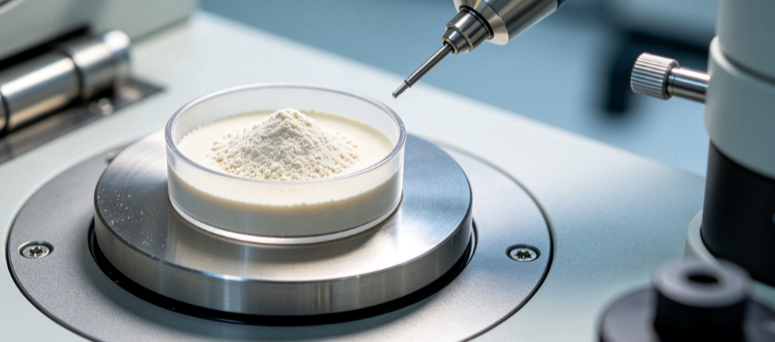
The Scientific Rationale for Holistic Characterisation of Calixarene‑Crown Ether Bonded Silica
The performance of calixarene‑crown ether bonded silica is governed by a synergy of structural, chemical, and morphological factors. The surface coverage of the bonded ligands determines the number of available recognition sites, while the spatial distribution and conformation of the macrocycles influence their accessibility and binding affinity. The porosity and pore architecture of the silica support affect the mass transfer kinetics and the retention behaviour of analytes. Moreover, the chemical stability of the siloxane bond linking the calixarene‑crown ether to the silica surface is crucial for long‑term operation in harsh mobile phases. A single technique—such as elemental analysis or nitrogen adsorption—cannot capture this complexity. Therefore, a systematic testing strategy that integrates surface chemical quantification, textural characterisation, thermal analysis, and chromatographic or binding performance assays is indispensable. Our service is designed to provide this integrated insight, enabling you to correlate synthesis parameters with functional performance and to troubleshoot separation or selectivity issues.
Our Comprehensive Analytical Capabilities for Calixarene‑Crown Ether Bonded Silica
We deploy a broad suite of complementary techniques, each optimised to address a specific aspect of calixarene‑crown ether bonded silica characterisation—from the atomic‑scale surface chemistry to the macroscopic chromatographic efficiency.
1. Quantification of Bonding Density and Surface Coverage: The amount of functional ligand grafted onto the silica surface is a primary quality indicator. We determine the carbon, nitrogen, and sulfur content (where applicable) using combustion elemental analysis (CHNS) with high precision. From the carbon loading and the known molecular structure, we calculate the surface coverage (µmol/m²) based on the specific surface area (BET) of the starting silica. This provides a direct measure of the grafting efficiency and the packing density of the macrocycles.
2. Textural Properties – Specific Surface Area, Pore Volume, and Pore Size: The porous structure of the silica support significantly affects the accessibility of the bonded ligands and the chromatographic efficiency. We measure specific surface area (BET) and pore‑size distribution by nitrogen physisorption at 77 K, using DFT and BJH models to resolve micropores and mesopores. Mercury intrusion porosimetry is applied for macroporosity assessment. By comparing the textural parameters of the native and bonded silica, we quantify the loss of surface area and pore volume due to grafting, which reflects the thickness and coverage of the organic layer.
3. Surface Chemical Speciation – Functional Groups and Bonding Mode: The chemical state of the bonded layer is crucial for chromatographic selectivity. We use diffuse reflectance infrared Fourier transform spectroscopy (DRIFTS) and attenuated total reflectance (ATR)‑FTIR to identify the characteristic bands of calixarene, crown ether, and siloxane linkages. The presence of key functional groups (e.g., O–H, C–O–C, aromatic C=C) is confirmed, and any residual silanol groups are monitored. X‑ray photoelectron spectroscopy (XPS) provides the surface elemental composition (Si, O, C, N if present) and the chemical states of silicon and carbon, enabling us to distinguish between different bonding modes (e.g., mono‑ vs. tridentate silane attachment).
4. Thermal Stability and Decomposition Behaviour: The thermal stability of the bonded phase is important for column regeneration and for high‑temperature applications. We perform Thermogravimetric Analysis (TGA) coupled with differential scanning calorimetry (DSC) under inert or oxidative atmospheres, monitoring weight loss and thermal events up to 800 °C. The onset temperature of decomposition of the organic layer and the amount of grafted material (by weight loss) are determined, providing insight into the ruggedness of the material.
5. Solid‑State Nuclear Magnetic Resonance (NMR) for Molecular Structure Confirmation: To probe the local environment of the carbon and silicon atoms in the bonded phase, we offer solid‑state 13C and 29Si MAS‑NMR spectroscopy. 29Si NMR distinguishes between the different siloxane environments (Q4, Q3, Q2 from the silica and T3, T2 from the silane coupling agent), confirming successful covalent attachment. 13C NMR verifies the integrity of the calixarene and crown ether structures after immobilisation, detecting any degradation or unexpected side reactions.
6. Chromatographic Performance Evaluation – Column Efficiency and Selectivity: The ultimate proof of quality is the chromatographic performance. We pack the bonded silica into standard HPLC columns and evaluate the column efficiency (number of theoretical plates, N), asymmetry factor, and retention factor using standard test mixtures (e.g., alkyl benzenes, aromatic compounds, or metal complexes). We assess the selectivity for specific analytes (e.g., alkali metal ions, organic cations) and compare with reference materials. The flow resistance and permeability are also measured to ensure practical applicability.
7. Metal Ion Binding Capacity and Selectivity: For applications in metal ion recognition, we evaluate the static and dynamic binding capacity of the material for target ions (e.g., Na+, K+, Ca2+, Pb2+) using batch equilibration and breakthrough experiments. The adsorption isotherms and distribution coefficients are determined, and the selectivity coefficients are calculated to quantify the preference for specific ions.
8. Hydrolytic and Solvent Stability: The durability of the siloxane bond under typical chromatographic conditions is assessed by exposing the material to aqueous buffers, organic solvents, and acidic/basic mobile phases, followed by re‑characterisation (elemental analysis, TGA, and chromatographic performance). This provides a realistic assessment of the material’s lifetime.
9. Morphological Uniformity and Particle Size: The particle size and shape of the silica support affect the packing and column efficiency. We use scanning electron microscopy (SEM) and laser diffraction particle sizing to determine the particle size distribution and to detect any aggregation or fines, which could impact chromatographic performance.
Advanced Diagnostics – Beyond Routine Characterisation
Our service goes beyond conventional testing by offering in‑depth surface analysis using time‑of‑flight secondary ion mass spectrometry (ToF‑SIMS) to map the spatial distribution of the bonded macrocycles on the silica surface, revealing any heterogeneity. We also provide multi‑angle light scattering (MALS) coupled with HPLC to evaluate the molecular weight and aggregation behaviour of the bonded layer after digestion. For research clients, we offer synchrotron‑based X‑ray absorption spectroscopy (XAS) to probe the coordination environment of bound metal ions at the molecular level. Our chemometric data fusion combines results from multiple techniques to establish structure‑activity relationships, enabling rapid prediction of chromatographic performance from synthesis parameters.
Our Distinctive Advantages in Calixarene‑Crown Ether Bonded Silica Testing
Our laboratory has long‑standing expertise in functionalised silica characterisation, and we offer several unique strengths that set us apart:
Advantage 1 – Fully Integrated One‑Stop Platform: We house all essential instruments—elemental analysers, BET/porosimeters, FTIR, XPS, TGA‑DSC, solid‑state NMR, SEM, HPLC systems, and metal ion adsorption facilities—under one ISO‑accredited roof. This ensures consistent sample handling, eliminates sub‑contracting delays, and allows seamless correlation of chemical, textural, and performance data from the same batch.
Advantage 2 – Methodologies Aligned with International Standards and Pharmacopoeias: Our test protocols follow USP, Ph. Eur., and ASTM guidelines for silica‑based stationary phases. We can also adapt our methods to meet specific client‑defined acceptance criteria for custom materials.
Advantage 3 – Unrivalled Depth in Surface Chemistry and Grafting Quantification: Our combination of elemental analysis, TGA, XPS, and solid‑state NMR provides a comprehensive picture of the bonding density, the nature of the siloxane attachment, and the integrity of the macrocycles. We can distinguish between physisorbed and covalently bound species.
Advantage 4 – Realistic Chromatographic Performance Evaluation: We are equipped to pack analytical‑scale columns and perform rigorous chromatographic testing using both isocratic and gradient elution, with UV, RI, or CAD detection. Our in‑house test mixtures are tailored to evaluate the specific selectivity of calixarene‑crown ether phases.
Advantage 5 – Expert Interpretation and Benchmarking: Our team includes separation scientists and materials chemists with decades of experience. We provide a detailed report that interprets your results against commercial reference phases and offers actionable recommendations for synthesis optimisation or application development.
Advantage 6 – Rapid Turnaround with Dedicated Project Management: Most projects are completed within 12–16 working days, with expedited services for urgent quality issues. You will be assigned a dedicated project scientist who maintains transparent communication and adapts the test plan as your needs evolve.
Advantage 7 – Global Logistics and Strict Confidentiality: With sample intake hubs in North America, Europe, and Asia‑Pacific, we simplify international shipping. Our secure online portal ensures data protection and immediate access to final reports (PDF, Excel, raw data). We are pleased to sign non‑disclosure agreements.
Who Benefits from Our Services
Our testing solutions are designed for a broad range of clients: manufacturers of chromatographic stationary phases seeking quality control and product development; pharmaceutical companies evaluating novel separation materials for chiral or ion‑exchange applications; academic research groups studying molecular recognition and host‑guest chemistry; specialty chemical suppliers needing certification of functionalised silicas; and regulatory authorities auditing the quality of reference materials.
Performance Benchmarks and Technical Specifications
To illustrate the precision of our measurements, we highlight typical performance indicators:
- Elemental analysis (CHN): accuracy ± 0.2 wt% for carbon, ± 0.1 wt% for nitrogen.
- BET surface area reproducibility: ± 0.3 m²/g for reference silicas.
- Pore size distribution (DFT): peak maximum accuracy ± 0.05 nm.
- TGA mass loss precision: ± 0.02 mg for organic decomposition.
- XPS quantification: ± 1 at% for surface elements.
- Solid‑state NMR sensitivity: sufficient to detect 1% functional groups.
- HPLC column efficiency repeatability: RSD < 1% for theoretical plates.
- Metal ion binding capacity reproducibility: ± 2% relative for batch equilibration.
These metrics ensure that even subtle variations—such as a 0.5 µmol/m² change in coverage or a 2% loss of surface area—are reliably detected.
How to Initiate a Testing Project
Engaging our service is straightforward. It begins with a complimentary consultation where we discuss your bonded silica material, its synthesis route, the target application (e.g., chiral separation, metal extraction, ion chromatography), and your specific objectives—whether it’s quality assurance, process optimisation, or competitive benchmarking. We then propose a customised testing matrix with a clear cost estimate and timeline. After your approval, we provide sample submission guidelines (typically 1–5 g of material). Upon receipt, we perform a visual and physical inspection and then commence the analytical workflow. You receive regular updates and a final comprehensive report with data, interpretation, and actionable recommendations, followed by an optional debriefing session.
Quality Assurance and Ethical Standards
Our laboratory operates under ISO 9001 and ISO 17025 accreditation. All data are recorded in electronic notebooks with full audit trails. We follow strict safety and quality protocols for handling functionalised silicas. We are committed to unbiased, transparent reporting and to protecting your intellectual property.
Conclusion – Ensure the Reliability and Performance of Your Calixarene‑Crown Ether Bonded Silica
Calixarene‑crown ether bonded silica materials represent a powerful platform for selective separation and recognition, but their full potential can only be realised through rigorous, multi‑faceted characterisation. Our comprehensive testing service provides the surface chemical, textural, thermal, and chromatographic insights needed to validate your synthesis, optimise your bonding process, and maintain consistent quality. We combine state‑of‑the‑art instrumentation with deep expertise in functionalised stationary phases to deliver results that are both scientifically rigorous and practically actionable.
We invite you to contact our specialist team to discuss your calixarene‑crown ether bonded silica testing requirements. With our proven track record in advanced materials characterisation, we are confident we can support your R&D, quality assurance, and regulatory compliance goals.
Request your free initial consultation today and discover how our integrated, expert‑led testing services can help you unlock the full potential of your calixarene‑crown ether bonded silica materials.