Reasons for choosing our testing services
ZHONGXI Testing has obtained inspection qualification certifications from multiple countries and regions worldwide. We possess a senior testing team and advanced testing methods, providing independent, impartial, and professional third-party verification services for global carbon projects.

Internationally recognized authority
Certified by multiple international standards such as CNAS, VCS, and GS, with reports universally applicable worldwide.

Global service capability
Covering 140+ countries and regions, it supports on-site detection and remote verification in multiple languages.

Professional experimental methods
Adopt standard experimental methods to ensure accurate and reliable data.
Comprehensive Characterization and Performance Evaluation of Catalysts for Aniline Production – Specialized Testing Services
Aniline is a fundamental building block in the chemical industry, serving as a precursor for polyurethanes, rubber accelerators, dyes, pharmaceuticals, and agrochemicals. The vast majority of aniline is produced via the catalytic hydrogenation of nitrobenzene, a process that demands highly active, selective, and stable catalysts—typically based on supported Ni, Cu, Pd, or Pt, often promoted with other metals or modifiers. The performance of these catalysts is governed by a complex interplay of factors: active metal dispersion and particle size, metal oxidation state, support acidity and texture, reduction behaviour, and resistance to deactivation by impurities or coke deposition. If you are searching for testing services for aniline production catalysts, you are likely at a stage where rigorous, multi‑dimensional characterisation and realistic performance evaluation are essential to validate new formulations, optimise activation protocols, troubleshoot industrial reactor performance, or ensure batch‑to‑batch reproducibility. This article describes our comprehensive analytical and catalytic testing platform, the technical depth we deliver, and the distinct advantages that make us a trusted partner for catalyst manufacturers, chemical producers, and research institutions worldwide.
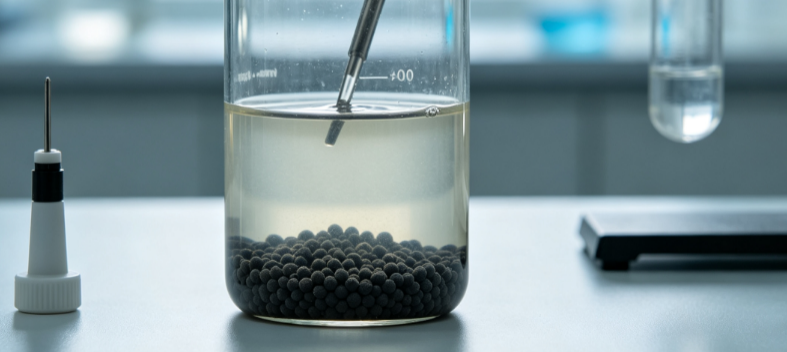
Why Holistic Testing of Aniline Catalysts Is Indispensable
The hydrogenation of nitrobenzene to aniline is a strongly exothermic reaction that involves multiple steps and is sensitive to catalyst properties. The active metal dispersion determines the number of active sites and thus the reaction rate. The metal–support interaction influences the reducibility and the electronic state of the metal, which in turn affects the selectivity towards aniline versus by‑products (e.g., cyclohexylamine, azobenzene). Furthermore, the surface acidity of the support can promote side reactions or coke formation, reducing catalyst lifetime. In industrial practice, catalysts are exposed to feed impurities (water, sulfur, chlorides) and high temperatures, leading to sintering, poisoning, or phase transformation. Therefore, a systematic testing strategy that integrates detailed catalyst characterisation, kinetic studies, and deactivation diagnostics is essential. Our service is designed to provide this integrated insight, enabling you to correlate synthesis and activation parameters with catalytic performance and to troubleshoot operational issues effectively.
Our Comprehensive Analytical and Catalytic Testing Capabilities for Aniline Catalysts
We deploy a broad suite of complementary techniques, each optimised to address a specific aspect of aniline catalyst characterisation—from the atomic scale to pilot‑scale reactor performance.
1. Bulk and Surface Chemical Composition: We determine the total metal loading and promoter concentrations by inductively coupled plasma optical emission spectrometry (ICP‑OES) or ICP‑mass spectrometry (ICP‑MS) after microwave digestion. The surface composition (metal, support elements, carbon) is quantified by X‑ray photoelectron spectroscopy (XPS), which also reveals the oxidation state of the active metal (e.g., Ni0, Ni2+, Cu0, Cu+) and the presence of any contaminant species. X‑ray fluorescence (XRF) provides rapid bulk elemental screening for quality control.
2. Crystallographic Phase and Crystallite Size: We perform high‑resolution X‑ray diffraction (HR‑XRD) with Rietveld refinement to identify the active metal phase, support phase (e.g., γ‑Al2O3, SiO2, TiO2), and any intermetallic or alloy phases. The crystallite size of the metal particles is estimated from peak broadening using the Scherrer equation, and is corroborated by transmission electron microscopy (TEM) with selected area electron diffraction (SAED) for direct imaging.
3. Metal Dispersion and Surface Area: Active metal dispersion—the fraction of metal atoms exposed at the surface—is a key performance indicator. We use pulse chemisorption of H2 or CO at controlled temperatures to measure the metal surface area and dispersion, with appropriate stoichiometry assumptions. For Ni and Cu catalysts, hydrogen chemisorption is standard; for noble metals, CO chemisorption is often employed. We also determine the total specific surface area of the catalyst (BET) by nitrogen physisorption, and the pore‑size distribution to assess accessibility.
4. Reducibility and Metal–Support Interactions: The reduction behaviour of the catalyst precursor is critical for activation. We use temperature‑programmed reduction with hydrogen (H2‑TPR) to identify the reduction temperature of the metal oxide species and to detect any strong metal–support interactions (SMSI) that may shift reduction peaks to higher temperatures. The hydrogen consumption is quantified, providing the degree of reduction. We also perform temperature‑programmed oxidation (TPO) to assess coke combustion behaviour.
5. Surface Acidity and Basicity: The support acidity can influence selectivity and deactivation. We characterise the acid site density and strength distribution by temperature‑programmed desorption of ammonia (NH3‑TPD) with mass spectrometry. The nature of acid sites (Brønsted vs. Lewis) is distinguished by pyridine‑adsorbed diffuse reflectance infrared Fourier transform spectroscopy (DRIFTS). These data help rationalize the formation of by‑products and the rate of coking.
6. Morphology and Microstructure: Scanning electron microscopy (SEM) with energy‑dispersive X‑ray spectroscopy (EDS) provides particle morphology, size distribution, and elemental mapping, revealing any inhomogeneities or segregation. High‑resolution transmission electron microscopy (HR‑TEM) is used to image individual metal particles, measure their size distribution, and observe lattice fringes and support interfaces.
7. Catalytic Performance – Activity, Selectivity, and Stability: We evaluate the catalyst’s hydrogenation performance in a continuous fixed‑bed or slurry reactor under realistic conditions (temperature 150–300 °C, pressure 10–50 bar, H2/nitrobenzene molar ratio 3–10). On‑line gas chromatography (GC) with FID and TCD analysis monitors the conversion of nitrobenzene, the yield of aniline, and the formation of by‑products (cyclohexylamine, azobenzene, N‑ethylaniline). We derive turnover frequency (TOF) based on active metal sites, and we conduct kinetic studies to determine reaction orders and apparent activation energy. Long‑term stability tests (up to 500 hours on‑stream) are performed to evaluate deactivation rates.
8. Deactivation and Poisoning Studies: We simulate industrial feed impurities by adding controlled amounts of sulfur (thiophene), chloride, or water to the feed, and monitor the decline in activity and selectivity. Post‑reaction analysis (XRD, XPS, TEM, TGA) identifies sintering, carbon deposition, or chemical poisoning. We also assess the effectiveness of regeneration protocols (e.g., oxidative burn‑off followed by reduction).
9. In‑situ and Operando Spectroscopy: For mechanistic insight, we offer operando DRIFTS and operando Raman spectroscopy during reaction to monitor surface adsorbed species, intermediates, and the evolution of metal oxidation state. This is particularly valuable for understanding the role of promoters and the dynamics of the active phase.
Advanced Diagnostics – Beyond Conventional Catalyst Testing
Our service extends far beyond standard characterisation and activity tests. We integrate experimental data with kinetic modelling to derive rate expressions that can be used for reactor design and scale‑up. We use density functional theory (DFT) calculations to model the adsorption and reaction energetics on different metal surfaces, rationalising observed selectivity trends. Our machine learning algorithms correlate synthesis parameters (metal loading, calcination temperature, reduction conditions) with performance metrics, enabling rapid optimisation of catalyst formulation. We also provide high‑throughput screening of multiple catalyst variants using a parallel reactor system, drastically reducing development time.
Our Distinctive Advantages in Aniline Catalyst Testing
Our laboratory has extensive experience in hydrogenation catalysts, and we offer several unique strengths that set us apart:
Advantage 1 – Fully Integrated Multi‑Technique Platform: We house all essential instruments—ICP, XPS, XRD, BET, chemisorption, TPR/TPD, SEM‑EDS, TEM, and multiple reactor systems—under one ISO‑accredited roof. This ensures consistent sample handling, eliminates outsourcing delays, and allows seamless correlation of structural, chemical, and performance data from the same batch.
Advantage 2 – Customised Protocols for Different Catalyst Systems: Aniline catalysts vary widely—Ni‑based, Cu‑based, noble metals, promoted or unpromoted. We tailor reduction conditions, chemisorption temperatures, and reactor parameters to your specific catalyst, ensuring that measurements reflect the true intrinsic properties.
Advantage 3 – Unrivalled Depth in Redox and Surface Characterization: Our combination of H2‑TPR, XPS, and in‑situ XRD provides a comprehensive picture of the reduction pathway and the metal–support interaction, which are critical for explaining differences in activity and stability.
Advantage 4 – Realistic Performance Testing under Industrial Conditions: Our reactor systems can operate at elevated pressures and with typical industrial feed compositions, including trace impurities. This allows us to predict commercial performance and to provide actionable recommendations for process optimisation.
Advantage 5 – Expert Interpretation and Benchmarking: Our team includes catalysis scientists with decades of experience in hydrogenation. We provide a detailed report that interprets your results against literature benchmarks and commercial catalysts, and offers science‑based recommendations for formulation improvement or process adjustment.
Advantage 6 – Rapid Turnaround with Dedicated Project Management: Most projects are completed within 10–14 working days, with expedited services for urgent troubleshooting. You are assigned a dedicated project scientist who provides regular updates, shares preliminary data, and adapts the plan as needed.
Advantage 7 – Global Logistics with Strict Confidentiality: With intake hubs in North America, Europe, and Asia‑Pacific, we simplify international shipping. Our secure online portal ensures data protection and easy access to final reports (PDF, Excel, raw data). We are pleased to sign non‑disclosure agreements.
Who Benefits from Our Services
Our testing solutions are tailored for a broad range of clients: catalyst manufacturers seeking quality control and product development; chemical producers operating aniline plants who need to diagnose catalyst deactivation and optimise reactor performance; engineering contractors designing new units; academic research groups exploring novel catalytic materials; and regulatory bodies requiring independent performance verification.
Performance Benchmarks and Technical Specifications
To illustrate the precision of our measurements, we highlight typical performance indicators:
- ICP‑OES accuracy: ± 1% relative for metal loading.
- Chemisorption dispersion precision: ± 2% absolute for well‑dispersed samples.
- XRD crystallite size reproducibility: ± 0.5 nm.
- H2‑TPR peak temperature: ± 2 °C.
- Catalytic activity repeatability: RSD ≤ 2% for conversion at fixed conditions.
- Selectivity reproducibility: ± 0.5% absolute for aniline selectivity.
- XPS quantification: ± 1 at% for surface elements.
- BET surface area precision: ± 0.3 m²/g.
These metrics ensure that even subtle differences—such as a 2% change in conversion or a 1 nm shift in metal particle size—are reliably captured.
How to Initiate a Testing Project
Engaging our service is straightforward. It begins with a complimentary consultation where we discuss your catalyst (composition, support, preparation method), your target application (nitrobenzene hydrogenation conditions), and your specific objectives (e.g., benchmarking, deactivation diagnosis, formulation optimisation). We then propose a customised testing matrix with a clear cost estimate and timeline. After your approval, we provide sample submission guidelines. Upon receipt, we perform a preliminary quality check and commence the analysis. You receive regular progress updates and a final comprehensive report with expert interpretation, followed by an optional debriefing session.
Quality Assurance and Ethical Standards
Our laboratory operates under ISO 9001 and ISO 17025 accreditation. All data are recorded in electronic notebooks with full audit trails. We follow strict safety protocols for handling catalysts and reactants. We are committed to unbiased, transparent reporting and to protecting your intellectual property.
Conclusion – Maximise the Performance and Longevity of Your Aniline Catalyst
The efficient production of aniline relies on a deep understanding of catalyst properties and their evolution under reaction conditions. Our comprehensive testing service provides the structural, chemical, and performance insights needed to select, optimise, and troubleshoot aniline catalysts with confidence. We combine state‑of‑the‑art instrumentation with deep catalytic expertise to deliver results that are both scientifically rigorous and practically actionable.
We invite you to contact our specialist team to discuss your aniline catalyst testing requirements. With our proven track record in industrial hydrogenation catalysis, we are confident we can support your R&D, quality assurance, and process optimisation goals.
Request your free initial consultation today and discover how our integrated, expert‑led testing services can help you achieve superior aniline production performance and operational reliability.