Reasons for choosing our testing services
ZHONGXI Testing has obtained inspection qualification certifications from multiple countries and regions worldwide. We possess a senior testing team and advanced testing methods, providing independent, impartial, and professional third-party verification services for global carbon projects.

Internationally recognized authority
Certified by multiple international standards such as CNAS, VCS, and GS, with reports universally applicable worldwide.

Global service capability
Covering 140+ countries and regions, it supports on-site detection and remote verification in multiple languages.

Professional experimental methods
Adopt standard experimental methods to ensure accurate and reliable data.
Advanced Surfactant Testing – From Raw Material Purity to Functional Performance Characterisation
When you search for surfactant testing, you are most likely seeking precise, actionable data to verify product quality, ensure regulatory compliance, troubleshoot a failing formulation, or validate a new synthesis route. Surfactants are among the most versatile and widely used chemicals, spanning detergents, personal care, agrochemicals, enhanced oil recovery, and pharmaceutical excipients. However, their performance is governed not by a single property, but by a delicate balance of molecular structure, surface activity, aggregation behaviour, and impurity profile. Routine titration or simple cloud-point measurements are insufficient to capture this complexity. Our comprehensive surfactant testing service delivers a deep, multi‑dimensional characterisation that covers chemical identity, active matter content, critical micelle concentration (CMC), interfacial rheology, and trace contaminant analysis – all under rigorously controlled conditions that mirror your real‑world application.
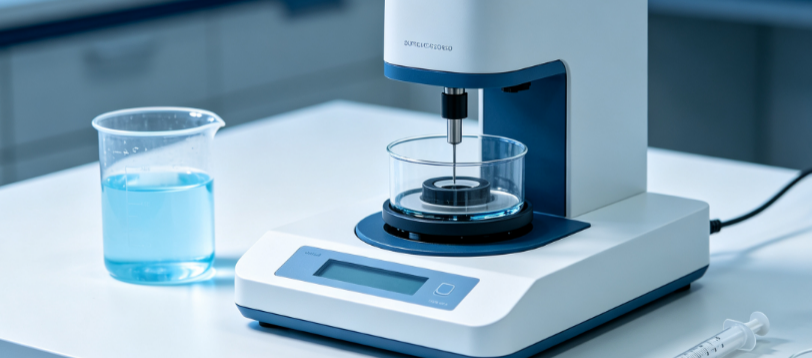
Why You Need a Holistic Surfactant Testing Approach
Customers who seek professional surfactant analysis typically face one or more critical challenges: batch‑to‑batch variability that affects foaming or emulsification, the presence of undeclared by‑products or residual solvents, uncertain performance in hard water or extreme pH, or the need to reverse‑engineer a competitor’s formulation. Our service addresses these by providing orthogonal, cross‑validated data that links molecular structure to functional outcomes. We do not simply report a number; we interpret the results in the context of your specific process – whether it is a detergent builder system, a cosmetic emulsion, or a fracturing fluid.
Our Multi‑Tier Analytical Framework for Surfactant Analysis
We adopt a modular, tiered approach that systematically probes every relevant aspect of your surfactant sample, from gross composition to nanoscale aggregate behaviour. All methods are aligned with ISO, ASTM, and pharmacopoeial standards where applicable, yet we retain the flexibility to develop custom protocols for novel or hybrid surfactant systems.
1. Chemical Identification and Active Matter Quantification
We use high‑performance liquid chromatography coupled with charged aerosol detection (HPLC‑CAD) and ultra‑high‑performance liquid chromatography‑tandem mass spectrometry (UHPLC‑MS/MS) to identify and quantify individual surfactant homologues – including anionic (alkyl sulphates, sulphonates), cationic (quaternary ammonium compounds), non‑ionic (ethoxylates, glucosides), and amphoteric (betaines, sultaines) species. For complex mixtures, we employ two‑dimensional liquid chromatography (LC×LC) to resolve co‑eluting peaks. Active matter content (wt%) is determined by mass balance combining gravimetric, titrimetric (e.g., two‑phase titration for anionics), and chromatographic data, providing a robust estimate that accounts for both organic and inorganic components.
2. Structural Elucidation and Oligomer Distribution
For non‑ionic ethoxylates and other polymeric surfactants, the distribution of ethylene oxide (EO) or propylene oxide (PO) units critically affects HLB and cloud point. We perform matrix‑assisted laser desorption/ionisation time‑of‑flight mass spectrometry (MALDI‑TOF MS) and electrospray ionisation‑ion mobility spectrometry‑mass spectrometry (ESI‑IMS‑MS) to map the full oligomer distribution, identify branching or cyclic impurities, and calculate average molecular weight (Mn, Mw) and polydispersity. Additionally, 1H and 13C nuclear magnetic resonance (NMR) spectroscopy is used to confirm hydrophobe structure (alkyl chain length, unsaturation) and the degree of substitution.
3. Critical Micelle Concentration (CMC) and Thermodynamic Parameters
The CMC is the defining property of surfactant self‑assembly, influencing detergency, solubilisation, and interfacial adsorption. We determine CMC using multi‑parallel techniques including: surface tension (Du Noüy ring or pendant drop), electrical conductivity (for ionic surfactants), fluorescence spectroscopy using pyrene as a probe (I₁/I₃ ratio), and isothermal titration calorimetry (ITC). The latter provides not only CMC but also the enthalpy (ΔH) and entropy (ΔS) of micellisation, offering deep thermodynamic insight that can guide formulation at different temperatures and ionic strengths.
4. Interfacial and Foaming Performance Evaluation
Ultimate performance depends on dynamic surface activity. We measure equilibrium and dynamic surface tension using a high‑speed bubble pressure tensiometer, covering time scales from milliseconds to hours, which is crucial for assessing wetting and spreading in fast‑moving industrial processes. For emulsification, we quantify interfacial shear rheology (dilatational elasticity and viscosity) to predict emulsion stability. Foaming properties are evaluated under controlled mixing using Ross‑Miles foam height tests and a custom‑built dynamic foam analyser that records foam volume, liquid drainage, and bubble size distribution over time.
5. Impurity Profiling and Toxicological Screening
Residual raw materials (e.g., unreacted fatty alcohols, ethylene oxide, or alkylating agents) and by‑products (e.g., 1,4‑dioxane, nitrosamines) pose significant quality and safety risks. We employ headspace‑GC‑MS for volatile organic compounds, LC‑MS/MS for polar impurities, and ICP‑MS for trace metals (e.g., Fe, Ni, Cu) that may catalyse oxidative degradation. For ethoxylated surfactants, we specifically quantify 1,4‑dioxane down to sub‑ppm levels per FDA and EP methods. We also screen for endocrine‑disrupting potential using a panel of in‑vitro bioassays upon request.
6. Stability and Compatibility Under Stress Conditions
Real‑world formulations undergo thermal, oxidative, and hydrolytic stress. We conduct accelerated stability studies (40–80 °C, varied pH 2–12, and UV exposure) with periodic re‑analysis of active content, CMC, and colour (Gardner/APHA). We also assess compatibility with common additives (salts, builders, thickeners) by measuring changes in turbidity, viscosity, and surface tension over time, identifying ranges where the surfactant remains fully soluble and effective.
7. Biodegradability and Environmental Fate
For “green” or regulatory‑driven applications, we perform OECD 301‑series ready biodegradability tests (e.g., OECD 301F manometric respirometry) and OECD 303 simulation tests to assess ultimate degradation under activated sludge conditions. We also measure the aquatic toxicity (EC50) using standardised daphnia or algae assays, aligning with REACH and EPA requirements.
Our Distinctive Advantages – Precision, Depth, and Scientific Rigour
Our laboratory is equipped with a unique combination of chromatography, mass spectrometry, and physical chemistry instrumentation that is rarely found in a single commercial facility. We operate a Q‑Exactive UHPLC‑HRMS for untargeted screening, a twin‑head automatic tensiometer for simultaneous dynamic and static surface tension, and a microcalorimeter for direct CMC and enthalpy measurements – enabling us to cross‑correlate results from orthogonal techniques for maximum confidence.
Our team comprises surface chemists, analytical methodologists, and formulation engineers who collectively possess decades of experience. We do not merely execute standardised tests; we develop custom sample preparation protocols for difficult matrices (e.g., surfactant‑in‑oil, shampoo bases, or drilling muds) and we provide statistical data interpretation (ANOVA, multivariate analysis) to distinguish meaningful trends from noise. We also offer method validation services (accuracy, precision, LOD/LOQ) following ICH Q2(R1) guidelines for regulated industries.
Furthermore, we understand that surfactant analysis often requires rapid turnaround. Our standard package is delivered within 5–7 working days, with express 48‑hour services available for emergency troubleshooting. All data are reported with full traceability and uncertainty budgets, and we provide a free follow‑up consultation to discuss the implications of your results.
Deliverables – A Comprehensive Surfactant Performance Report
Your final report will be structured to support both technical and management decisions:
Section 1 – Identity and composition: Surfactant type classification, homologue distribution, average molecular weight, and active content (wt%).
Section 2 – Micellisation parameters: CMC values from all methods, ΔG, ΔH, ΔS of micellisation, and aggregation number (if requested).
Section 3 – Interfacial metrics: Equilibrium surface tension, CMC surface tension, dynamic surface pressure (Π vs. time), and foam/emulsion indices.
Section 4 – Impurity and safety data: Quantified levels of 1,4‑dioxane, ethylene oxide, residual solvents, heavy metals, and specified impurities.
Section 5 – Stability summary: Changes in CMC, active content, and colour under accelerated conditions, with recommended storage and handling limits.
Section 6 – Environmental compliance: Biodegradation percentage (OECD 301F), EC50 values, and classification for regulatory submission.
All raw chromatograms, spectra, thermograms, and tensiometer traces are delivered as supplementary digital files.
Industries and Applications We Support
Our surfactant testing serves a diverse clientele: household and industrial cleaning manufacturers, personal care and cosmetics formulators, agrochemical and adjuvant producers, oilfield chemical suppliers, pharmaceutical companies, and environmental consultants assessing chemical safety. We also regularly assist regulatory departments in preparing dossiers for REACH, FDA, and EPA submissions.
How to Engage Our Testing Service
We follow a streamlined, client‑centred workflow:
1. Initial consultation: We discuss your surfactant type, intended application, critical questions (e.g., quality control, issue diagnosis, or competitor comparison), and any regulatory framework that applies.
2. Tailored proposal: We design a test matrix with clear pricing and timelines – typically 5–7 working days for the standard suite, with expedited options available.
3. Sample submission: We provide detailed instructions for sample quantity (typically 50–200 g), storage, and shipping conditions (ambient, refrigerated, or inert atmosphere).
4. Analysis and data review: Our scientists run the tests and conduct a preliminary review, checking for anomalies and, if needed, repeating runs to ensure robustness.
5. Final report and debrief: You receive the comprehensive report, and we schedule a 45‑minute virtual session to walk through the findings, answer technical questions, and offer recommendations for formulation or process adjustments.
Confidentiality is guaranteed under our standard non‑disclosure agreement, and we can customise testing frequency for routine QC monitoring programmes.
Conclusion – Elevate Your Surfactant Quality with Expert Analytical Insight
Surfactants are too complex to be trusted to single‑parameter tests. Our surface‑active agent testing service provides the analytical breadth, scientific depth, and interpretative expertise required to transform raw data into strategic advantage. Whether you are optimising a new foam control agent, verifying incoming raw materials, or demonstrating environmental compliance, we deliver the clarity and confidence you need.
Contact our surfactant analysis specialists today to discuss your project and receive a customised proposal. Let us help you achieve consistent, high‑performance surfactant formulations, every time.