Reasons for choosing our testing services
ZHONGXI Testing has obtained inspection qualification certifications from multiple countries and regions worldwide. We possess a senior testing team and advanced testing methods, providing independent, impartial, and professional third-party verification services for global carbon projects.

Internationally recognized authority
Certified by multiple international standards such as CNAS, VCS, and GS, with reports universally applicable worldwide.

Global service capability
Covering 140+ countries and regions, it supports on-site detection and remote verification in multiple languages.

Professional experimental methods
Adopt standard experimental methods to ensure accurate and reliable data.
Comprehensive Refrigerator Desiccant Testing – Advanced Performance, Safety, and Durability Evaluation for Moisture Control Systems
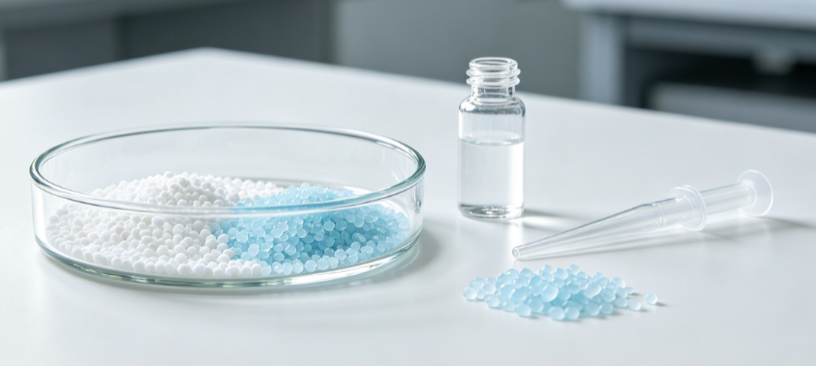
Refrigerator desiccants – typically silica gel, molecular sieves, activated alumina, or composite hygroscopic materials – are critical for preventing frost formation, eliminating odours, and maintaining low humidity inside fresh‑food and freezer compartments. However, their efficiency depends not only on equilibrium water capacity but also on kinetic sorption rate, regeneration behaviour, dusting tendency, and compatibility with food‑contact environments. Routine tests like static water‑uptake at high RH are insufficient to predict real‑world performance under dynamic temperature cycling, variable air flow, and the presence of volatile organic acids (e.g., acetic acid from ripening fruits). Our refrigerator desiccant testing service provides a comprehensive, multi‑faceted evaluation that combines advanced gravimetric, chromatographic, mechanical, and environmental simulation techniques. We deliver precise metrics on dynamic adsorption capacity, regenerative energy consumption, particle attrition, off‑gas emissions, and antimicrobial activity – all under conditions that mimic actual refrigerator operation. This enables you to select or qualify desiccants with confidence, ensuring optimal moisture control, energy efficiency, and food safety.
Who Needs Refrigerator Desiccant Testing and Why?
Customers seeking this testing include refrigerator manufacturers qualifying new desiccant suppliers, desiccant producers developing improved formulations (e.g., hybrid silica‑zeolite composites), aftermarket filter suppliers, and regulatory compliance teams needing to demonstrate safety under food‑contact regulations (FDA, EU 1935/2004). Common challenges include: excessive dust release that contaminates food or blocks air channels, reduced capacity after repeated regeneration cycles, emission of volatile compounds that affect taste/odour, and insufficient low‑temperature adsorption at freezer conditions (–18 to –10 °C). Our service addresses these by providing quantified adsorption kinetics, dust generation indices, thermal stability profiles, and leachate/volatile screening – all correlated with industry standards (e.g., JIS Z 0701, ASTM D3460, and food‑contact compliance).
Our Advanced Testing Framework – From Adsorption Thermodynamics to Real‑World Lifecycle Simulation
We adopt a modular, application‑oriented approach that systematically evaluates every critical aspect of refrigerator desiccants, from material characterisation to long‑term cyclic performance under simulated refrigeration conditions.
1. Equilibrium and Dynamic Water Vapour Sorption
Using a fully automated multi‑sample gravimetric vapour sorption analyser (DVS) with humidity control from 0 to 98% RH and temperature from –20 to 80 °C, we measure high‑resolution sorption isotherms for water vapour. Unlike standard static desiccator methods, we operate under controlled flow and temperature ramping to mimic the rapid humidity changes inside a refrigerator. We determine monolayer capacity (via BET), micropore filling volume, and sorption hysteresis, and we fit data to GAB, D‑R, and Hill models to extract thermodynamic parameters (isosteric heat of adsorption). For kinetic performance, we perform step‑change experiments (e.g., 10% RH → 90% RH) to derive diffusivity constants and half‑times of adsorption, critical for sizing desiccant cartridges and predicting response to door‑opening events.
2. Low‑Temperature Performance Assessment (Freezer Conditions)
Refrigerator desiccants must work effectively at sub‑zero temperatures where diffusion slows and ice formation can block pores. Our temperature‑controlled sorption test rig with in‑situ humidity probes operates from –20 °C to +10 °C, allowing us to measure ice‑point suppression and capacity at typical freezer RH (50–80% at –18 °C). We also evaluate frost accumulation on the desiccant surface via environmental SEM, and we quantify the effect of repeated freeze‑thaw cycles on mechanical integrity and capacity retention.
3. Regeneration Efficiency and Energy Consumption
In many refrigerator systems, desiccants are regenerated by heating or by passive drying during the defrost cycle. We conduct cyclic adsorption‑desorption tests using controlled thermal ramps (30–200 °C) and/or dry air purging, measuring residual water content and energy required per gram of water removed. We also evaluate kinetic of regeneration (time to reach target residual moisture) and capacity fade over 50–100 cycles, providing a realistic estimate of the desiccant’s useful lifetime in a household refrigerator.
4. Dust Generation and Particle Attrition
Dust and fines from desiccants can settle on food, impair evaporator heat transfer, or clog recirculation fans. We use a rotating drum attrition tester (ASTM D4058) coupled with a cascade impactor to measure the mass and size distribution of generated fines. Additionally, we perform air‑jet sieving and dust‑index tests under simulated air flow (0.5–2 m/s) to quantify the friability index and to recommend handling conditions that minimise dusting.
5. Volatile Organic Compound (VOC) and Odour Emission
Desiccants can adsorb and later release odorous compounds or emit residual solvents from manufacture. We place the desiccant in a sealed micro‑chamber at refrigerator operating temperature (4 °C) and analyse the headspace by thermal desorption‑GC‑MS (TD‑GC‑MS) for volatile and semi‑volatile organic compounds. We also conduct sensory panel assessments (upon request) to evaluate odour intensity. For off‑gassing under elevated temperature (simulating regeneration), we perform dynamic headspace (DHS)‑GC‑MS. All results are compared against food‑contact material thresholds (e.g., EU Regulation 10/2011) to ensure safety.
6. Leachables and Food‑Compatibility Testing
For desiccants that may come into indirect contact with food (e.g., inside perforated sachets), we carry out migration tests using food simulants (water, 10% ethanol, and 3% acetic acid) at 4 °C and 40 °C per FDA 21 CFR 175.300. The extracts are analysed by ICP‑MS for heavy metals (Pb, Cd, Hg, As) and by LC‑MS/TOF for organic migrants (e.g., binders, stabilisers). We also test pH change and total dissolved solids in the simulant to detect any acidity/alkalinity release that could affect food quality.
7. Mechanical Strength and Structural Integrity
Desiccant particles or beads undergo mechanical stress during packing, shipping, and air‑flow vibration. We measure single‑pellet crush strength (using a texture analyser) and bulk crush strength per ASTM D4179. We also perform vibration testing on a shaker table to simulate transportation, followed by particle size re‑analysis to quantify breakage. This is particularly important for desiccants used in mobile applications (e.g., in‑vehicle refrigerators).
8. Antimicrobial and Anti‑Fouling Properties
Moisture‑rich environments can promote microbial growth on desiccant surfaces. We perform ISO 22196 (antibacterial activity) and ASTM G21 (fungal resistance) tests on the desiccant material. For desiccants containing silver or copper additives, we measure the release rate of active ions in condensate water and correlate with inhibition zone assays. This ensures that the desiccant not only controls humidity but also prevents biofilm formation that could affect hygiene.
Our Distinctive Advantages – Why Choose Us for Refrigerator Desiccant Testing?
Our laboratory is uniquely equipped with a combined environmental chamber‑gravimetric system that allows simultaneous control of temperature (–30 to 100 °C), relative humidity (0–98%), and air flow (0–5 m/s). This enables us to replicate the exact thermal‑humidity cycles found in modern frost‑free refrigerators, including defrost spikes. We also have a dedicated micro‑GC‑MS with cryo‑focusing for trace‑level VOC analysis down to ppt levels, far surpassing typical industrial QA requirements.
Our team includes materials engineers, analytical chemists, and food‑contact specialists who understand the specific demands of the white‑goods industry. We do not merely deliver test data; we provide correlative analysis – for example, linking dust generation to pore structure, or relating regeneration energy to capacity retention. We also offer comparative benchmarking against commercial reference desiccants, giving you a competitive edge in supplier selection or product development.
All testing follows strict ISO/IEC 17025 principles, and we can tailor test conditions to your specific refrigerator model (e.g., side‑by‑side, French‑door, or compact mini‑fridge). Our reports include statistical error estimates and clear pass/fail criteria based on your internal specifications.
Deliverables – A Complete Desiccant Qualification Dossier
Your final report will be structured to support procurement, design, and regulatory decision‑making:
Section 1 – Sorption performance: Isotherm plots (at multiple temperatures), kinetic curves, capacity (g/g) at typical refrigerator RH, and fit parameters (GAB/BET).
Section 2 – Freezer‑specific data: Capacity at –18 °C and –10 °C, frost‑formation tendency, and freeze‑thaw cycle stability.
Section 3 – Regeneration metrics: Energy consumption per cycle, regeneration time, and capacity loss over 50 cycles.
Section 4 – Mechanical and dust: Attrition index, dust generation (mg/kg), and crush strength values with 95% confidence intervals.
Section 5 – Chemical and odour safety: VOC profile (TD‑GC‑MS), leaching of metals/organics, and food‑contact compliance declaration.
Section 6 – Antimicrobial and hygiene: Bacterial/fungal reduction percentages, ion release data, and recommended sanitisation methods.
Section 7 – Overall recommendation: Suitability rating for the intended refrigerator environment, with suggestions for optimisation (e.g., particle size, packaging, or pre‑conditioning).
All raw data (sorption curves, chromatograms, microscopy images, etc.) are provided in open digital formats.
Industries and Applications We Support
Our testing is essential for home appliance manufacturers (refrigerators, wine coolers, ice makers), desiccant raw material suppliers, automotive climate‑control system developers, and food storage and logistics companies using desiccants in transport containers. We also serve regulatory testing houses that require independent verification for market access.
How to Start Your Testing Project
Our engagement process is straightforward and tailored to your timeline:
1. Initial consultation: We discuss your desiccant type (silica gel, molecular sieve, etc.), application specifics (fresh‑food vs. freezer, defrost frequency), and any critical performance targets (e.g., minimum capacity, maximum dust emission).
2. Customised test plan: We propose a modular test matrix with a clear quote and schedule – typically 3–4 weeks for a full qualification suite, with faster options for urgent QC.
3. Sample submission: We provide instructions for sample quantity (typically 100–500 g) and packaging (desiccant should be sealed to prevent ambient moisture uptake).
4. Execution and interim updates: We run the tests and share preliminary results after the first week, allowing you to request extra conditions.
5. Final report and technical review: We deliver the comprehensive dossier and schedule a one‑hour virtual meeting to explain the findings, answer questions, and recommend actions.
We maintain full confidentiality and can sign NDAs tailored to your project. Our service is globally accessible, with clear guidance on international shipping of hygroscopic materials.
Conclusion – Ensure Reliable Moisture Management with Rigorous, Application‑Specific Testing
Refrigerator desiccants play a silent but essential role in preserving food quality and appliance efficiency. Our refrigerator desiccant testing service provides the scientific rigor, engineering depth, and practical insights needed to qualify materials with confidence. From low‑temperature sorption kinetics to dust emission and food‑safety compliance, we deliver the complete picture – enabling you to optimise performance, reduce energy costs, and meet regulatory standards.
Contact our desiccant testing specialists today to discuss your project and receive a tailored proposal. Let us help you achieve superior moisture control for your refrigeration systems.