Reasons for choosing our testing services
ZHONGXI Testing has obtained inspection qualification certifications from multiple countries and regions worldwide. We possess a senior testing team and advanced testing methods, providing independent, impartial, and professional third-party verification services for global carbon projects.

Internationally recognized authority
Certified by multiple international standards such as CNAS, VCS, and GS, with reports universally applicable worldwide.

Global service capability
Covering 140+ countries and regions, it supports on-site detection and remote verification in multiple languages.

Professional experimental methods
Adopt standard experimental methods to ensure accurate and reliable data.
Advanced Testing for Rapeseed Oil Adsorption Decolorizing Agents – Comprehensive Performance, Safety, and Process Optimisation
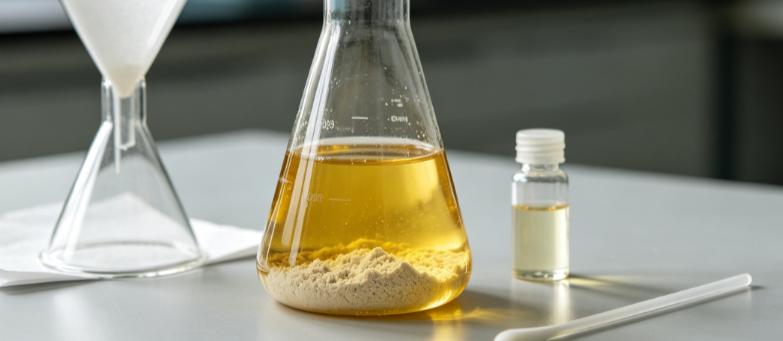
Rapeseed oil is one of the most widely consumed vegetable oils, prized for its balanced fatty acid profile and nutritional value. However, crude rapeseed oil contains undesirable pigments – including chlorophyll, carotenoids, and pheophytin – as well as traces of phospholipids, soaps, and oxidation products that impart dark colour and off‑flavours. Adsorption decolorisation using bleaching earths, activated carbons, silica gels, or composite adsorbents is the industry standard for achieving the light colour and clarity demanded by consumers and food processors. Yet the performance of these decolorising agents is not uniform; it depends on pore architecture, surface acidity, moisture content, and particle size distribution, all of which influence bleaching efficiency, oil retention, and filtration behaviour. Routine quality checks – such as colour reduction in a single batch test – are insufficient to predict performance under varying process conditions (temperature, contact time, vacuum levels) or to assess the impact on oil quality (free fatty acid increase, peroxide value rise, or trace metal contamination). Our rapeseed oil adsorption decolorizing agent testing service provides a comprehensive, multi‑parameter evaluation that combines static and dynamic bleaching assays, adsorbent characterisation, and oil‑quality monitoring, all under conditions that simulate industrial decolorisation. We deliver actionable insights to optimise adsorbent selection, dosage, and process parameters, while ensuring compliance with food‑grade safety standards.
Who Needs Decolorizing Agent Testing and What Are the Critical Challenges?
Our clients include edible oil refineries seeking to qualify new adsorbent suppliers or troubleshoot colour reversion issues, bleaching earth manufacturers validating product performance and batch consistency, feedstock suppliers testing adsorbents for specific rapeseed oil varieties, and research institutions developing novel eco‑friendly adsorbents. Common challenges include: insufficient colour removal for high‑chlorophyll oils, high oil retention leading to yield losses, premature filter clogging, elevated free fatty acids (FFA) due to acid‑catalysed hydrolysis, and inconsistent bleaching across different crude oil lots. Our service addresses these by providing quantified bleaching efficiency (%), oil loss (%), pressure‑filtration parameters, and detailed oil‑quality metrics before and after treatment, enabling you to make data‑driven decisions that balance cost, colour, and nutritional retention.
Our Comprehensive Testing Framework – From Adsorbent Characterisation to Real‑World Bleaching Performance
We adopt a systematic, modular approach that evaluates decolorising agents from their intrinsic physico‑chemical properties through to their performance in simulated industrial decolorisation cycles. All tests are conducted using standardised rapeseed oil reference material (or your specific crude oil) and are aligned with AOCS, ISO, and DIN methods where applicable.
1. Physico‑Chemical Characterisation of the Adsorbent
Before bleaching trials, we fully characterise the adsorbent to establish baseline properties that correlate with performance. Specific surface area (BET) and pore size distribution (BJH, NLDFT) are measured via nitrogen physisorption, revealing the capacity for pigment uptake. Surface acidity is determined by temperature‑programmed desorption (TPD) of ammonia and by potentiometric titration to quantify total acid sites – critical for assessing the risk of FFA formation. Moisture content (Karl Fischer or loss on drying) and volatile matter (TGA) are measured, as excessive moisture can lead to hydrolysis and off‑flavours. Particle size distribution (laser diffraction) and friability are assessed to predict filtration behaviour and dust generation. We also analyse heavy metals (Pb, As, Cd, Hg) and silica/alumina ratio (by XRF or ICP‑OES) to ensure food‑contact safety per EU and FDA regulations.
2. Static Bleaching Efficiency and Isotherm Studies
Using a temperature‑controlled vacuum bleacher that mimics industrial conditions (80–120 °C, reduced pressure to limit oxidation), we perform static adsorption tests with varying adsorbent dosages (0.5–5 wt%) and contact times (15–90 min). The decolorised oil is filtered and analysed for colour (Lovibond red/yellow, AOCS Cc 13e‑92) and chlorophyll content (AOCS Cc 13d‑55). We construct adsorption isotherms (using Freundlich or Langmuir models) to determine the maximum pigment uptake capacity and the effective dosage range for your specific oil. The bleaching efficiency is calculated as % reduction in colour units or chlorophyll, and we provide statistical confidence intervals based on triplicate runs.
3. Dynamic Filtration and Cake Resistance Testing
Filterability is as important as colour removal. We use a pressurised filtration cell (with controlled temperature and pressure) to measure specific cake resistance (α), flow rate decline, and total filtration time for a given adsorbent dose. This data allows us to estimate filter aid requirements and predict the performance of plate‑and‑frame or pressure leaf filters. We also evaluate oil retention in the spent cake (by solvent extraction and gravimetry) to quantify yield loss – a key economic parameter for refiners.
4. Impact on Rapeseed Oil Quality – FFA, Peroxide Value, and Oxidation Stability
Adsorbent acidity and moisture can promote hydrolysis and oxidation during the bleaching step. We measure free fatty acid (FFA) content (AOCS Ca 5a‑40) and peroxide value (PV) (AOCS Cd 8‑53) before and after bleaching, calculating the ΔFFA and ΔPV to quantify any undesirable side reactions. We also assess the impact on oxidative stability using the Rancimat method (AOCS Cd 12b‑92) at 110 °C, measuring the induction time to evaluate whether the adsorbent removes natural antioxidants (tocopherols) or introduces pro‑oxidant metals. Additionally, we analyse phospholipid and soap content to determine the adsorbent’s ability to degum simultaneously.
5. Trace Metal Leaching and Food‑Safety Compliance
Some adsorbents (especially acid‑activated clays) may leach aluminium, iron, or other metals into the oil. We perform leaching tests by contacting adsorbent with oil under standard bleaching conditions and analysing the filtrate for metals (Al, Fe, Cu, Zn) using ICP‑MS. We compare results with regulatory limits (e.g., EU maximum residues for edible oils) and provide a safety certificate if your adsorbent meets the criteria. We also screen for polycyclic aromatic hydrocarbons (PAHs) or dioxins in the adsorbent extract, if required.
6. Regeneration and Reuse Potential Assessment
For sustainability and cost savings, we evaluate the regenerability of spent adsorbents using solvent washing (hexane, ethanol) or thermal treatment (inert or oxidative atmosphere). We measure the recovered bleaching efficiency after successive cycles and monitor changes in surface area and pore structure via post‑regeneration BET. We provide economic analysis comparing single‑use vs. regeneration scenarios.
7. Comparative Benchmarking Against Commercial Standards
We maintain a library of reference adsorbents (e.g., standard bleaching earths, activated carbons) and can directly benchmark your material against them under identical conditions. This provides an objective assessment of your product’s competitive positioning and helps you identify areas for improvement.
Our Distinctive Advantages – Why Choose Us for Decolorizing Agent Testing?
Our laboratory is uniquely equipped with integrated bleaching and filtration pilot units that allow seamless simulation of the entire refinery process – from pre‑treatment to bleaching, filtration, and post‑bleaching quality control – using as little as 500 mL of oil per test. This minimises sample consumption while providing realistic results. We also operate a fully automated colour measurement system with automated colour matching, eliminating operator bias.
Our team comprises oil chemists, surface scientists, and process engineers with extensive experience in edible oil refining. We do not merely generate numbers; we provide process optimisation recommendations – for example, advising on the optimal contact time to balance colour reduction and FFA increase, or suggesting a dual‑adsorbent approach for specific pigment profiles. We also offer custom method development for non‑standard oils or novel adsorbent materials (e.g., engineered clays, bio‑chars).
All testing is performed under ISO 17025 quality principles, with full traceability and participation in international proficiency tests. Our reports include measurement uncertainty budgets and clear pass/fail criteria tailored to your internal specifications or regulatory requirements. We also provide rapid turnaround – typically 5–7 working days for a complete characterisation and bleaching suite.
Deliverables – A Complete Decolorising Agent Evaluation Report
Your final report will be a comprehensive document, structured as follows:
Section 1 – Adsorbent physico‑chemical properties: BET surface area, pore volume, acidity, moisture, particle size, and metal content – with interpretation of their expected impact on performance.
Section 2 – Static bleaching performance: Colour and chlorophyll reduction at multiple dosages and times, isotherm plots, and optimal dosage recommendations.
Section 3 – Dynamic filtration data: Cake resistance, flow rate profiles, and oil retention percentage, with predicted filter area requirements.
Section 4 – Oil quality change: Pre‑ and post‑bleaching FFA, PV, oxidative stability, and phospholipid/soap removal, with a “quality index” score.
Section 5 – Leaching and safety: Metal concentrations in the decolorised oil, PAH/dioxin screening (if requested), and compliance summary.
Section 6 – Regeneration and benchmarking: Reuse potential, capacity retention, and comparison with reference materials.
Section 7 – Executive summary and recommendations: Clear guidance on optimal usage, expected economic benefits, and any process adjustments needed to maximise performance.
All raw data – chromatograms, titration curves, spectra, and filtration logs – are provided in digital format for your own analysis.
Industries and Applications We Support
Our service is essential for edible oil refiners (rapeseed, sunflower, soybean, palm), bleaching earth and activated carbon producers, vegetable oil traders requiring third‑party verification, and research organisations developing sustainable decolorisation technologies. It also benefits animal feed manufacturers who use spent adsorbents as carriers, and waste management companies evaluating adsorbent recyclability.
How to Engage Our Testing Service
We follow a straightforward, client‑centric workflow:
1. Consultation: We discuss your adsorbent type, crude oil source, target colour specifications, and any specific concerns (e.g., FFA limits, filtration constraints).
2. Customised proposal: We design a test matrix with clear pricing and a timeline – typically 5–7 working days for the standard suite, with expedited options available.
3. Sample submission: We provide instructions for adsorbent (200–500 g) and oil (at least 1 L) sampling and shipping, ensuring samples remain stable.
4. Analysis and interim updates: We conduct the testing and share initial results at key milestones, allowing you to request additional conditions.
5. Final report and debrief: You receive the complete dossier, and we schedule a 45‑minute virtual meeting to review findings, answer questions, and discuss optimisation strategies.
We handle all materials with strict safety and hygiene protocols, and we guarantee confidentiality under a standard NDA. Our service is available globally, with support for multilingual reporting if required.
Conclusion – Elevate Your Rapeseed Oil Refining with Expert Decolorizing Agent Evaluation
The choice and use of adsorption decolorising agents directly impacts the colour, stability, and nutritional quality of refined rapeseed oil, as well as processing costs and environmental footprint. Our rapeseed oil adsorption decolorizing agent testing service provides the scientific depth, practical relevance, and independent validation needed to make informed decisions – whether you are selecting a new supplier, optimising your process, or developing a novel adsorbent. With state‑of‑the‑art facilities, experienced professionals, and a commitment to actionable insights, we empower you to achieve consistent, high‑quality oil production while maximising efficiency and safety.
Contact our refining technology specialists today to discuss your project and receive a tailored proposal. Let us help you unlock the full potential of your decolorisation process.