Reasons for choosing our testing services
ZHONGXI Testing has obtained inspection qualification certifications from multiple countries and regions worldwide. We possess a senior testing team and advanced testing methods, providing independent, impartial, and professional third-party verification services for global carbon projects.

Internationally recognized authority
Certified by multiple international standards such as CNAS, VCS, and GS, with reports universally applicable worldwide.

Global service capability
Covering 140+ countries and regions, it supports on-site detection and remote verification in multiple languages.

Professional experimental methods
Adopt standard experimental methods to ensure accurate and reliable data.
Comprehensive Diesel Desulfurization Adsorbent Testing – Advanced Performance, Selectivity, and Regeneration Evaluation
Ultra‑low sulfur diesel (ULSD) specifications, now mandated at 10–15 ppm S in most regions, demand highly efficient desulfurization processes. Adsorptive desulfurization, using tailored adsorbents such as transition‑metal‑exchanged zeolites, activated carbons, or metal‑organic frameworks, offers a non‑hydrogenative route to remove refractory sulfur compounds (e.g., dibenzothiophene and 4,6‑dimethyldibenzothiophene) without consuming valuable hydrogen. However, the performance of diesel desulfurization adsorbents is critically dependent on active site density, pore accessibility, resistance to aromatic competition, and hydrothermal stability – parameters that are poorly reflected by simple batch capacity tests. Our diesel desulfurization adsorbent testing service delivers a comprehensive, multi‑dimensional evaluation that combines detailed physico‑chemical characterisation, static and dynamic adsorption studies, competitive selectivity profiling, and accelerated ageing tests under realistic fuel matrices. We provide the quantitative data needed to select, optimise, and qualify adsorbents for robust deep desulfurization.
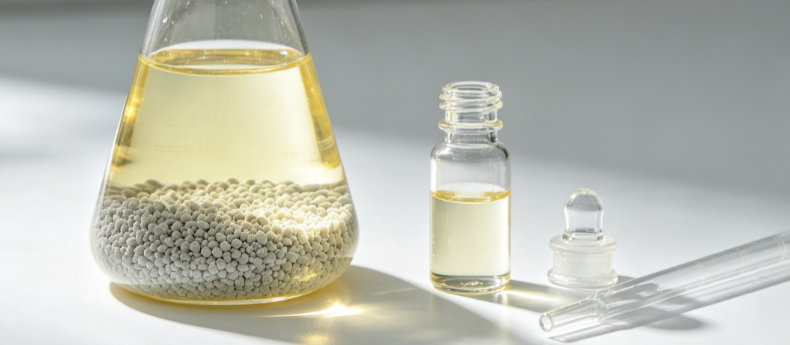
Who Needs Diesel Desulfurization Adsorbent Testing and What Are the Critical Challenges?
Customers seeking desulfurization adsorbent testing include refinery process engineers designing adsorptive polishing units, adsorbent manufacturers developing new formulations, fuel cell and hydrogen production groups requiring sulfur‑free feed, and regulatory compliance laboratories verifying performance. Key challenges often encountered are: insufficient capacity for bulky sulfur compounds, rapid deactivation due to coke or sulfur deposition, poor selectivity in the presence of competing aromatics (toluene, naphthalene), and excessive pressure drop from particle attrition. Our service addresses these by providing quantified dynamic breakthrough capacities, selectivity coefficients, regeneration efficiency profiles, and detailed structural forensics to guide adsorbent improvement.
Our Multi‑Tier Testing Framework – From Surface Chemistry to Real‑Fuel Performance
We adopt a systematic, modular approach that evaluates desulfurization adsorbents from fundamental material properties to full‑scale simulated operation. All tests use standardised diesel surrogates or actual ULSD feedstocks, with methods aligned to ASTM and ISO standards.
1. Adsorbent Physico‑Chemical Characterisation
We begin with a thorough characterisation of the as‑received adsorbent using nitrogen physisorption (BET/BJH) to determine surface area, pore volume, and micro‑/mesopore distribution – critical for assessing the accessibility of bulky sulfur compounds. X‑ray diffraction (XRD) identifies crystalline phases (e.g., zeolite type, metal oxide), while X‑ray photoelectron spectroscopy (XPS) quantifies surface metal oxidation states and ligand environments. Temperature‑programmed reduction (TPR) and ammonia/CO₂ temperature‑programmed desorption (TPD) reveal reducibility and acid‑base properties, which correlate with sulfur adsorption affinity. We also perform scanning electron microscopy (SEM‑EDS) for morphology and elemental mapping, and Thermogravimetric Analysis (TGA) to assess thermal stability and moisture content.
2. Equilibrium Adsorption Isotherms and Thermodynamics
Using a temperature‑controlled batch equilibration system with inert atmosphere, we measure adsorption isotherms for representative sulfur compounds (thiophene, benzothiophene, dibenzothiophene, 4,6‑DMDBT) dissolved in a diesel surrogate (n‑hexadecane with variable aromatics). Tests are performed at multiple temperatures (20–100 °C) and sulfur concentrations (5–500 ppm) to derive maximum capacity (qmax), Langmuir/Freundlich constants, and thermodynamic parameters (ΔH, ΔS, ΔG). We also evaluate total sulfur removal using ASTM D5453 (UV‑fluorescence) before and after treatment.
3. Dynamic Breakthrough and Column Performance
Static data does not predict packed‑bed behaviour. Our programmable fixed‑bed rig allows breakthrough experiments at realistic flow rates (LHSV 0.5–5 h⁻¹) and temperatures (20–150 °C). The feed diesel (spiked with sulfur compounds) is pumped through the adsorbent bed, with on‑line sulfur‑specific detection (GC‑SCD or XRF) for real‑time breakthrough monitoring. We quantify breakthrough capacity (C10%), exhaustion capacity (C90%), and the mass‑transfer zone (MTZ) length. Crucially, we perform competitive breakthrough with added aromatics (toluene, naphthalene) and nitrogen compounds to determine selectivity factors for sulfur over interferents – a key metric for real‑world ULSD treatment.
4. Regeneration and Reusability Assessment
For economic viability, adsorbents must be regenerable. We perform thermal regeneration (inert and oxidising atmospheres, 250–500 °C) and solvent regeneration (toluene, ethanol, or caustic washes) on spent adsorbents. We then re‑measure BET, surface chemistry, and adsorption capacity over multiple cycles (up to 50), monitoring capacity retention, mass loss, and structural changes by XRD and XPS. We also evaluate the energy consumption and regeneration time to provide a cost‑benefit analysis.
5. Selectivity and Poisoning Resistance
We systematically probe the adsorbent’s tolerance to common fuel impurities: nitrogen compounds (quinoline, carbazole), oxygenates (phenols), and olefins that can polymerise. We perform parallel breakthrough experiments with these co‑solutes and calculate selectivity coefficients (α) for sulfur over each interferent. We also test hydrothermal stability by exposing the adsorbent to steam‑containing nitrogen at elevated temperatures, mimicking regeneration or process upsets.
6. Mechanical Integrity and Attrition
Fines generation leads to pressure drop and loss of active material. We measure particle crushing strength (single‑pellet and bulk) and attrition index (ASTM D4058) under dry and wet conditions. We also perform vibration and flow‑shear tests to simulate transportation and bed compaction.
7. Advanced Speciation of Adsorbed Sulfur
To understand the adsorption mechanism, we extract adsorbed sulfur species from spent adsorbent using pressurised solvent extraction and analyse by GC‑xGC‑MS (comprehensive two‑dimensional gas chromatography) to identify which sulfur compounds are selectively removed and whether any conversion (e.g., oxidation to sulfones) occurs. This guides the optimisation of adsorbent surface chemistry (e.g., acidic vs. metal‑based sites).
8. Fuel Quality Impact Assessment
We evaluate whether the adsorbent affects other diesel quality parameters: oxidation stability (Rancimat), colour, metal content (ICP‑MS for leached metals), and additive retention (e.g., antioxidant depletion). This ensures that desulfurisation does not compromise fuel performance.
Our Distinctive Advantages – Why Choose Us for Desulfurization Adsorbent Testing?
Our laboratory is equipped with a unique integrated platform that combines advanced material characterisation (XPS, TPD, high‑resolution porosimetry) with dynamic fuel‑testing rigs operating under fully inert, oxygen‑free conditions to prevent fuel degradation. We have developed proprietary protocols for quantifying trace sulfur species in complex hydrocarbon matrices, achieving detection limits below 0.1 ppm, which is essential for ULSD validation.
Our team comprises surface chemists and fuel technologists with extensive experience in adsorptive desulfurisation, including direct involvement in commercial adsorbent development. We do not simply supply numeric results; we provide mechanistic interpretation – for instance, differentiating between π‑complexation and direct sulfur‑metal interactions, or correlating pore structure with the accessibility of bulky 4,6‑DMDBT. We also offer benchmarking against leading commercial adsorbents (e.g., Ni/ZnO‑based, Ag‑exchanged zeolites) under identical conditions, giving you a clear competitive edge.
All testing adheres to ISO 17025 quality management and follows relevant ASTM and CEN standards. Our reports include full measurement uncertainty and statistical significance, suitable for both internal R&D and regulatory submissions. We also provide rapid turnaround – typically 10–15 working days for a comprehensive profile.
Deliverables – A Complete Desulfurization Adsorbent Performance Report
Your final report will be structured as follows:
Section 1 – Material characterisation: BET surface area, pore size distribution, XRD phase, XPS surface composition, TPD acid‑base properties, SEM images, and TGA profile.
Section 2 – Equilibrium data: Isotherm plots for each sulfur compound, model parameters, thermodynamic constants, and predicted capacities at feed concentrations.
Section 3 – Column dynamics: Breakthrough curves (pure and competitive), capacity values (breakthrough/exhaustion), MTZ length, and selectivity factors against aromatics and nitrogen compounds.
Section 4 – Regeneration performance: Capacity retention after multiple cycles, recommended regeneration conditions (temperature, gas composition, time), and structural changes (XRD, BET).
Section 5 – Mechanical integrity: Crush strength, attrition index, and fines generation data.
Section 6 – Fuel compatibility: Impact on oxidation stability, colour, metal leaching, and additive retention.
Section 7 – Speciation of adsorbed sulfur: GC‑xGC‑MS analysis identifying removed species and any conversion products.
Section 8 – Executive summary and recommendations: Overall performance rating, optimal operating window, and guidance for scale‑up or process integration.
All raw data – chromatograms, spectra, breakthrough logs, and micrographs – are provided in standard digital formats.
Industries and Applications We Support
Our service serves oil refineries for ULSD production, adsorbent manufacturers for product development and QC, fuel cell and hydrogen generation companies requiring sulfur‑free feed, automotive catalyst suppliers protecting downstream components, and environmental research organisations exploring novel desulfurisation routes.
How to Initiate Your Diesel Desulfurization Adsorbent Testing Project
Engaging our service is straightforward:
1. Consultation: We discuss your adsorbent type, target sulfur compounds, feed composition, and specific performance targets (capacity, selectivity, or lifetime).
2. Customised proposal: We design a test matrix with modular options and provide a fixed price and timeline – typically 3–4 weeks for a full suite.
3. Sample submission: We provide detailed instructions for shipping adsorbent (sealed, inert) and representative fuel samples (amber glass, nitrogen‑blanketed).
4. Testing and interim reporting: We conduct the tests, sharing preliminary data at key milestones for your feedback.
5. Final report and debrief: You receive the comprehensive dossier, followed by a 45‑minute virtual meeting to discuss findings, answer questions, and plan next steps.
Confidentiality is assured under a standard NDA, and we can tailor reporting for your internal quality systems or regulatory submissions.
Conclusion – Achieve Deep Diesel Desulfurization with Confident, Data‑Driven Adsorbent Evaluation
Meeting ultra‑low sulfur specifications demands an adsorbent that is not only high in capacity but also selective, robust, and regenerable. Our diesel desulfurization adsorbent testing service provides the scientific rigor, engineering relevance, and expert interpretation needed to make informed decisions – from material development to full‑scale deployment. With state‑of‑the‑art instrumentation, fuel‑specific test protocols, and a dedicated team of specialists, we empower you to optimise your adsorbent performance and ensure regulatory compliance.
Contact our desulfurization testing experts today to discuss your project and receive a tailored proposal. Let us help you achieve cleaner fuel with proven adsorbent solutions.