Reasons for choosing our testing services
ZHONGXI Testing has obtained inspection qualification certifications from multiple countries and regions worldwide. We possess a senior testing team and advanced testing methods, providing independent, impartial, and professional third-party verification services for global carbon projects.

Internationally recognized authority
Certified by multiple international standards such as CNAS, VCS, and GS, with reports universally applicable worldwide.

Global service capability
Covering 140+ countries and regions, it supports on-site detection and remote verification in multiple languages.

Professional experimental methods
Adopt standard experimental methods to ensure accurate and reliable data.
Comprehensive Red Mud Ceramsite Testing – Advanced Physico‑Mechanical, Chemical, and Environmental Performance Evaluation for Sustainable Construction and Water Treatment
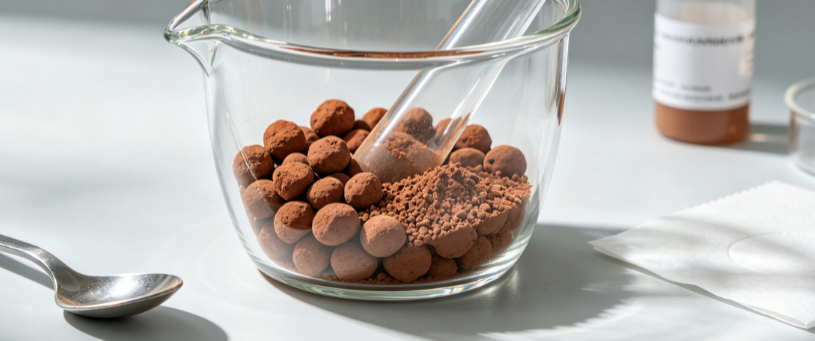
Red mud – a highly alkaline bauxite residue generated during alumina production – has long posed a significant environmental challenge due to its large volume and caustic nature. However, when processed into ceramsite (lightweight expanded clay aggregate) through controlled sintering or granulation, red mud becomes a valuable raw material for construction materials (lightweight concrete, road subbase), water treatment filtration media, and soil amendment carriers. The performance of red mud ceramsite is critically dependent on its mineralogical composition, sintering temperature profile, pore structure, mechanical strength, and leaching behaviour – all of which vary with bauxite source and processing parameters. Routine quality checks, such as bulk density and water absorption, are insufficient to predict durability, pollutant immobilisation, or long‑term performance in real applications. Our red mud ceramsite testing service provides a comprehensive, multi‑parameter evaluation that combines advanced mineralogical characterisation, mechanical testing, chemical durability assessment, and environmental safety verification – under conditions that simulate actual service environments. We deliver the quantitative data needed to optimise production, certify product quality, and demonstrate regulatory compliance for sustainable use.
Who Needs Red Mud Ceramsite Testing and What Are the Critical Challenges?
Our clients include alumina refiners valorising red mud residue, construction material manufacturers developing eco‑friendly aggregates, water treatment companies using ceramsite as biofilm carriers or filtration media, and environmental regulators requiring leaching and safety data. Common challenges are: insufficient mechanical strength for structural applications, excessive water absorption leading to freeze‑thaw damage, release of heavy metals (e.g., As, Cr, V) under acidic or alkaline conditions, and variability in properties due to inconsistent sintering. Our service addresses these by providing quantified mechanical strength parameters, detailed phase composition and pore architecture, and comprehensive leaching profiles under simulated field conditions, along with recommendations for process optimisation.
Our Multi‑Tier Testing Framework – From Raw Material to Finished Product Performance
We adopt a systematic, application‑oriented approach that evaluates red mud ceramsite across four critical domains: raw material characterisation, physical and mechanical properties, chemical durability and leachability, and functional performance in specific applications.
1. Raw Material and Sintered Product Mineralogical Characterisation
We begin with a thorough analysis of both the raw red mud and the final ceramsite. X‑ray fluorescence (XRF) determines the bulk chemical composition (major and minor elements), while X‑ray diffraction (XRD) with Rietveld refinement quantifies crystalline phases (e.g., hematite, cancrinite, sodalite, quartz, and newly formed silicates). Thermogravimetric Analysis (TGA) and differential scanning calorimetry (DSC) identify dehydration, dehydroxylation, and phase transition temperatures, which correlate with the optimal sintering regime. Scanning electron microscopy (SEM‑EDS) reveals grain morphology, pore texture, and elemental distribution, while transmission electron microscopy (TEM) can be used for nano‑scale phase identification.
2. Physical and Mechanical Properties
We measure the key physical parameters that define ceramsite quality: bulk density (g/cm³), particle density, water absorption (24 h) (ASTM C127), apparent porosity, and specific surface area (BET). Mechanical integrity is assessed by single‑pellet crush strength (using a universal testing machine with compression platens) and abrasion resistance (Los Angeles abrasion test or micro‑Deval). Freeze‑thaw resistance is evaluated by subjecting the ceramsite to repeated cycles (–20 °C to +20 °C in water) and monitoring weight loss and strength degradation. We also measure thermal conductivity (for insulation applications) and sound absorption coefficient (for acoustic applications) if required.
3. Pore Structure and Permeability Analysis
The pore network governs both mechanical and hydraulic performance. We use mercury intrusion porosimetry (MIP) to characterise pore size distribution (macro‑, meso‑, and micropores) and nitrogen physisorption (BET/BJH) for finer pores. X‑ray micro‑computed tomography (µ‑CT) provides 3D visualisation of pore connectivity and tortuosity, which is critical for filtration and biofilm carrier applications. Water permeability (Darcy coefficient) is measured under constant or falling head, depending on the particle size.
4. Chemical Stability and Leaching Behaviour
Environmental safety is paramount for red mud‑based products. We perform leaching tests according to standard protocols: TCLP (EPA Method 1311), EN 12457 (batch leaching), and column leaching (simulating long‑term percolation). Leachates are analysed for metals (Al, Fe, As, Cr, V, Pb, Cd, etc.) by ICP‑MS and for anions (fluoride, sulfate) by ion chromatography. We also assess the pH and electrical conductivity of leachates over time. Additionally, we evaluate the carbonation resistance (exposure to CO₂) and alkali‑silica reaction (ASR) potential to ensure compatibility with cementitious systems.
5. Functional Performance Testing for Specific Applications
For water treatment applications, we assess the specific surface area and porosity relevant to biofilm attachment, and we perform biological compatibility tests (e.g., bacterial adhesion and COD removal efficiency) using simulated wastewater. For construction, we test the compatibility with cement paste (interfacial bond strength) and mortar/workability when mixed with concrete. For lightweight aggregates, we measure impact resistance and drying shrinkage.
6. Durability Under Aggressive Environments
We simulate real‑world exposure conditions: acid and alkali resistance (immersion in H₂SO₄ and NaOH solutions with periodic mass/strength monitoring), salt crystallisation resistance (NaCl or Na₂SO₄), and sulphate attack. We also conduct accelerated weathering (UV and moisture cycling) to assess colour stability and surface degradation.
7. Radioactivity Screening (NORM)
Red mud may contain naturally occurring radioactive materials (NORM) such as ²³⁸U and ²³²Th. We perform gamma spectrometry to measure activity concentrations of Ra‑226, Th‑232, and K‑40, and we calculate the radium equivalent activity (Raeq) and external hazard index (Hex) to ensure compliance with building material regulations (e.g., EU 2013/59, IAEA Safety Standards).
Our Distinctive Advantages – Why Choose Us for Red Mud Ceramsite Testing?
Our laboratory is uniquely equipped with an integrated analytical platform that combines XRF, XRD, TGA‑DSC, SEM‑EDS, MIP, µ‑CT, and ICP‑MS, all under one roof – enabling seamless correlation between processing, structure, and properties. We have developed proprietary leaching simulation protocols that mimic various disposal or utilisation scenarios (e.g., acidic rainfall, marine exposure, or alkaline cementitious environment).
Our team comprises materials scientists, geochemists, and environmental engineers with extensive experience in bauxite residue valorisation and sustainable construction materials. We do not simply report data; we provide interpretative insight – for example, linking high water absorption to the presence of interconnected pores from gas‑forming reactions during sintering, or correlating arsenic leaching with the breakdown of iron‑arsenate phases. We also offer optimisation recommendations regarding sintering temperature, dwell time, or the addition of fluxing agents (e.g., CaO, MgO) to enhance mechanical strength and immobilise heavy metals.
All testing adheres to ISO/IEC 17025 quality standards and relevant ASTM, EN, and EPA methods. Our reports include full measurement uncertainty and statistical analysis, and we provide rapid turnaround – typically 3–5 weeks for a complete characterisation and performance programme.
Deliverables – A Complete Red Mud Ceramsite Characterisation Report
Your final report will include:
Section 1 – Raw material and sintered phase composition: XRF, XRD, TGA/DSC curves, and phase identification with semiquantitative values.
Section 2 – Physical and mechanical properties: Bulk and particle density, water absorption, porosity, crush strength, abrasion resistance, and freeze‑thaw data.
Section 3 – Pore structure: MIP pore size distribution, BET surface area, µ‑CT 3D images, and permeability coefficients.
Section 4 – Leaching and chemical stability: TCLP, EN 12457, and column leachate data (metals, anions, pH, EC) with comparison to regulatory limits.
Section 5 – Durability: Acid/alkali/salt resistance, weathering, and ASR potential.
Section 6 – Radioactivity: Gamma spectrometry results and hazard indices.
Section 7 – Application‑specific performance: Biofilm compatibility, concrete mix compatibility, or other tailored tests.
Section 8 – Executive summary and recommendations: Overall quality rating, optimisation suggestions, and suitability for intended end‑use.
All raw data – diffractograms, spectra, porosimetry curves, and leaching profiles – are provided in digital formats.
Industries and Applications We Support
Our service serves alumina refineries seeking sustainable disposal or valorisation routes, construction material suppliers developing green lightweight aggregates, water and wastewater treatment companies, and environmental agencies requiring independent verification. We also support R&D institutions working on novel red mud processing technologies.
How to Initiate Your Red Mud Ceramsite Testing Project
Engaging our service is straightforward:
1. Consultation: We discuss your ceramsite source, production conditions, target application, and specific performance goals (e.g., minimum crush strength, maximum leaching threshold).
2. Customised proposal: We design a test matrix with modular options and provide a fixed price and timeline – typically 4–6 weeks for a comprehensive programme.
3. Sample submission: We provide detailed instructions for sampling (representative batches) and shipping (dry, sealed containers).
4. Testing and interim reporting: We conduct the tests and share preliminary results at key milestones.
5. Final report and technical review: You receive the complete dossier, followed by a 60‑minute virtual meeting to discuss findings and recommend next steps (e.g., process modification, market certification).
Confidentiality is guaranteed under a standard NDA, and we can adapt our reporting to meet regulatory submission requirements.
Conclusion – Unlock the Full Potential of Red Mud Ceramsite with Rigorous, Multi‑Dimensional Testing
Transforming red mud into high‑performance ceramsite requires a deep understanding of its chemistry, sinterability, and durability – far beyond routine quality control. Our red mud ceramsite testing service provides the scientific rigour, application‑specific insight, and regulatory assurance needed to confidently commercialise this sustainable material. With state‑of‑the‑art instrumentation, multidisciplinary expertise, and a commitment to actionable recommendations, we empower you to turn an environmental liability into a valuable resource.
Contact our red mud ceramsite testing specialists today to discuss your project and receive a tailored proposal. Let us help you achieve safe, durable, and high‑performing products from industrial residues.