Reasons for choosing our testing services
ZHONGXI Testing has obtained inspection qualification certifications from multiple countries and regions worldwide. We possess a senior testing team and advanced testing methods, providing independent, impartial, and professional third-party verification services for global carbon projects.

Internationally recognized authority
Certified by multiple international standards such as CNAS, VCS, and GS, with reports universally applicable worldwide.

Global service capability
Covering 140+ countries and regions, it supports on-site detection and remote verification in multiple languages.

Professional experimental methods
Adopt standard experimental methods to ensure accurate and reliable data.
Advanced Deodorising Carbon‑Based Adsorbent Testing – Comprehensive Performance, Selectivity, and Regeneration Evaluation for Odour Control Applications
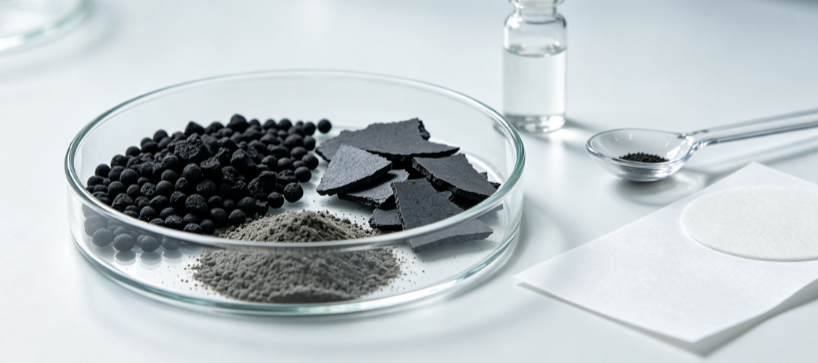
Carbon‑based adsorbents, including activated carbons, biochars, and modified porous carbons, are widely employed for odour abatement in wastewater treatment plants, composting facilities, food processing, and indoor air purification. These materials remove malodorous compounds – such as hydrogen sulfide (H₂S), ammonia (NH₃), volatile organic compounds (VOCs), and mercaptans – through a combination of physical adsorption, chemisorption, and catalytic oxidation. However, the effectiveness of a deodorising carbon adsorbent is determined by far more than its BET surface area or iodine number. Critical parameters include surface chemistry (acidic/basic functional groups), pore size distribution tailored to specific target molecules, resistance to water vapour competition, and regenerability after saturation. Routine quality checks often fail to predict performance under fluctuating humidity, temperature, and multi‑component odour mixtures. Our deodorising carbon‑based adsorbent testing service delivers a comprehensive, multi‑scale evaluation that combines detailed physico‑chemical characterisation, static and dynamic adsorption studies, competitive selectivity profiling, and accelerated ageing under realistic odour‑challenge conditions. We provide the quantitative data needed to select, optimise, and certify adsorbents for reliable and cost‑effective odour control.
Who Needs Deodorising Carbon Adsorbent Testing and What Are the Critical Challenges?
Our clients include municipal and industrial wastewater treatment operators, composting and waste‑to‑energy facilities, food and beverage manufacturers, HVAC and indoor air quality system designers, and activated carbon producers developing new formulations. Common challenges are: insufficient H₂S breakthrough capacity due to poor basic site density, rapid deactivation by high humidity, inability to remove both acidic and basic odourants simultaneously, and uncertain regeneration performance leading to high replacement costs. Our service addresses these by providing quantified dynamic capacities at realistic humidity levels, selectivity coefficients for key malodorous species, and detailed surface chemistry forensics to guide adsorbent improvement.
Our Multi‑Tier Testing Framework – From Material Characterisation to Real‑Odour Simulation
We adopt a systematic, application‑oriented approach that evaluates carbon‑based deodorising adsorbents across four core domains: intrinsic material properties, equilibrium uptake, dynamic column performance, and long‑term durability under simulated odour streams.
1. In‑Depth Adsorbent Physico‑Chemical Characterisation
We begin with a comprehensive characterisation of the adsorbent as‑received. Nitrogen physisorption (BET and BJH/NLDFT) determines specific surface area, total pore volume, and micro‑/mesopore size distribution – essential for assessing accessibility to target odourants. Scanning electron microscopy (SEM‑EDS) reveals particle morphology and elemental composition. X‑ray photoelectron spectroscopy (XPS) and Fourier‑transform infrared spectroscopy (FTIR) quantify surface functional groups (e.g., carboxylic, phenolic, lactonic, and basic nitrogen‑containing groups). Boehm titration differentiates acidic and basic surface sites. Temperature‑programmed desorption (TPD) coupled with mass spectrometry identifies the nature and thermal stability of surface oxygen complexes. Additionally, we measure moisture content and ash content (TGA), and point of zero charge (pHPZC) to predict electrostatic interactions with charged odour molecules.
2. Equilibrium Adsorption Isotherms and Thermodynamic Studies
Using a temperature‑controlled static adsorption system with on‑line gas chromatography or FTIR, we measure adsorption isotherms for key odourants – H₂S, NH₃, methyl mercaptan, and toluene (as a VOC surrogate) – both individually and in binary mixtures. Tests are performed at multiple temperatures (20–60 °C) and relative humidities (0–90% RH) to derive maximum adsorption capacity (qmax), Langmuir/Freundlich parameters, and isosteric heats of adsorption. We also evaluate the effect of CO₂ and water vapour co‑adsorption, which are critical for real‑world applications.
3. Dynamic Breakthrough and Column Performance Under Simulated Odour Mixtures
Static isotherms alone do not predict fixed‑bed performance. Our programmable multi‑gas breakthrough rig allows testing at realistic gas hourly space velocities (GHSV 500–10,000 h⁻¹) and temperatures. The feed stream, containing target odourants, humidity, and optional interferents (e.g., CO₂, CH₄), passes through the adsorbent bed, with effluent monitored by continuous H₂S chemiluminescence, NH₃ photometry, and VOC‑specific PID or GC‑MS. We quantify breakthrough capacity (C10%), exhaustion capacity (C90%), and the mass‑transfer zone (MTZ) length. Crucially, we perform competitive breakthrough experiments with mixed odourants to determine selectivity coefficients and assess the impact of humidity on overall performance.
4. Adsorption Kinetics and Diffusion Analysis
We conduct kinetic uptake experiments in a batch recirculation system to determine intraparticle diffusion coefficients (Dp) and external film mass‑transfer coefficients (kf) using pseudo‑first‑order, pseudo‑second‑order, and Weber‑Morris models. This data is essential for optimising particle size and bed design.
5. Regeneration and Reusability Assessment
We perform thermal regeneration (inert and oxidising atmospheres, 150–400 °C) and pressure‑swing or vacuum regeneration on spent adsorbents. We measure capacity recovery, mass loss, and structural changes (by BET, XPS, FTIR) over multiple cycles (up to 20). We also evaluate the energy consumption and time required for effective regeneration, providing a cost‑benefit analysis.
6. Chemical Stability and Poisoning Resistance
Odour streams may contain trace contaminants (e.g., siloxanes, terpenes) that can poison active sites. We perform accelerated poisoning tests by co‑feeding these species and monitoring the decline in capacity. Using SEM‑EDS and FTIR on the spent adsorbent, we identify the deposited species and their distribution, enabling you to select adsorbents with better resilience.
7. Leaching and Safety Assessment
We evaluate whether the carbon adsorbent leaches any toxic metals or organic compounds during operation (e.g., under acidic condensate conditions). We perform leaching tests (TCLP, EN 12457) and analyse leachates by ICP‑MS and LC‑MS/MS to ensure environmental compliance, especially when the spent adsorbent is disposed of or incinerated.
8. Advanced Speciation and Mechanism Elucidation
To understand the binding mechanisms – e.g., whether H₂S is oxidised to elemental sulfur or sulfate, or if NH₃ is protonated on acidic groups – we analyse the spent adsorbent using XPS, XRD (for crystalline sulfur), and temperature‑programmed oxidation (TPO). This insight guides the design of adsorbents with specific surface chemistry for targeted odourants.
Our Distinctive Advantages – Why Choose Us for Deodorising Carbon Adsorbent Testing?
Our laboratory is equipped with a unique combination of advanced material characterisation instruments and odour‑testing rigs capable of safely handling corrosive and malodorous gases. We operate a fully automated multi‑column breakthrough system with humidity control, allowing simultaneous testing of up to six adsorbent samples under identical feed conditions. Our on‑line analytical suite includes FTIR, GC‑MS, and chemiluminescence detectors, providing real‑time, high‑resolution data for reliable breakthrough curve determination.
Our team comprises surface chemists, environmental engineers, and odour control specialists with extensive experience in carbon adsorption and air purification. We do not simply deliver numbers; we provide diagnostic interpretation – for example, distinguishing between physisorption and chemisorption contributions, correlating loss of capacity with the depletion of specific functional groups, and recommending tailored activation or impregnation strategies to enhance performance. We also offer benchmarking against commercial reference adsorbents (e.g., sulphur‑impregnated carbons, caustic‑washed carbons) under identical conditions, giving you a clear competitive edge.
All testing follows ISO 17025 quality principles and relevant ASTM and EPA methods. Our reports include full measurement uncertainty and statistical analysis, supporting both internal R&D and regulatory submissions. We provide rapid turnaround – typically 2–3 weeks for a comprehensive programme.
Deliverables – A Complete Deodorising Carbon Adsorbent Performance Report
Your final report will include:
Section 1 – Material characterisation: BET, pore size distribution, XPS and FTIR spectra, Boehm titration data, pHPZC, TGA, and SEM images.
Section 2 – Equilibrium data: Isotherm plots for each odourant, model parameters, thermodynamic constants, and predicted capacities at target concentrations and humidity.
Section 3 – Dynamic breakthrough: Breakthrough curves (single and mixed), capacity values (breakthrough/exhaustion), MTZ length, and selectivity coefficients.
Section 4 – Kinetic analysis: Rate constants, diffusion coefficients, and mass‑transfer parameters.
Section 5 – Regeneration performance: Capacity retention after multiple cycles, optimal regeneration conditions, and energy cost estimates.
Section 6 – Poisoning and leaching: Deactivation rates in the presence of interfering species, and leachate analysis (metals, organics).
Section 7 – Mechanistic insights: Speciation of adsorbed species (e.g., sulfur, sulfate, ammonium), binding mode, and recommendations for surface modification.
Section 8 – Executive summary and recommendations: Overall performance rating, optimal operating window, and guidance for adsorbent selection or process integration.
All raw data – chromatograms, spectra, breakthrough logs, and micrographs – are provided in digital formats for your own analysis.
Industries and Applications We Support
Our service serves wastewater treatment plants (odour control covers), composting and anaerobic digestion facilities, food processing plants (e.g., fish meal, coffee roasting), pulp and paper mills, chemical and petrochemical sites, and indoor air quality product developers. We also support activated carbon manufacturers in product validation and regulatory agencies requiring independent performance verification.
How to Initiate Your Deodorising Carbon Adsorbent Testing Project
Engaging our service is straightforward:
1. Consultation: We discuss your adsorbent type, target odourants, process conditions (temperature, humidity, flow rate), and any specific performance targets (capacity, selectivity, lifetime).
2. Customised proposal: We design a test matrix with modular options and provide a fixed price and timeline – typically 3–4 weeks for a full programme.
3. Sample submission: We provide detailed instructions for shipping adsorbent (sealed, dry) and, if available, a sample of the actual odour stream composition.
4. Testing and interim reporting: We conduct the tests and share preliminary results at key milestones for your feedback.
5. Final report and technical review: You receive the complete dossier, followed by a 60‑minute virtual meeting to discuss findings, answer questions, and plan next steps (e.g., adsorbent optimisation, system scale‑up).
Confidentiality is guaranteed under a standard NDA, and we can adapt reporting to meet your internal quality or regulatory requirements.
Conclusion – Achieve Reliable and Cost‑Effective Odour Control with Expert Carbon Adsorbent Evaluation
Carbon‑based adsorbents are essential for modern odour management, but their performance is highly sensitive to surface chemistry, pore structure, and operating conditions. Our deodorising carbon‑based adsorbent testing service provides the scientific rigour, application‑relevant protocols, and interpretative expertise needed to select, qualify, and optimise adsorbents with confidence. With state‑of‑the‑art instrumentation, multidisciplinary expertise, and a commitment to actionable insights, we empower you to deliver cleaner air, comply with environmental limits, and reduce operational costs.
Contact our odour adsorbent testing specialists today to discuss your project and receive a tailored proposal. Let us help you achieve superior odour removal performance.