Reasons for choosing our testing services
ZHONGXI Testing has obtained inspection qualification certifications from multiple countries and regions worldwide. We possess a senior testing team and advanced testing methods, providing independent, impartial, and professional third-party verification services for global carbon projects.

Internationally recognized authority
Certified by multiple international standards such as CNAS, VCS, and GS, with reports universally applicable worldwide.

Global service capability
Covering 140+ countries and regions, it supports on-site detection and remote verification in multiple languages.

Professional experimental methods
Adopt standard experimental methods to ensure accurate and reliable data.
Comprehensive Mercury Adsorbent Testing – Advanced Performance, Selectivity, and Durability Evaluation for Mercury Removal
Mercury, in its elemental (Hg⁰), inorganic (Hg²⁺), and organic (methylmercury) forms, poses severe neurotoxic risks and environmental persistence, driving stringent discharge limits (e.g., US EPA MCL of 2 ppb for Hg²⁺) and the widespread deployment of engineered adsorbents – including sulfur‑impregnated activated carbons, metal‑sulfide composites, functionalised silicas, and novel MOFs. The efficacy of these materials hinges on a delicate balance of surface chemistry (affinity for Hg), pore architecture, resistance to interfering ions (Ca²⁺, Mg²⁺, Cl⁻), and long‑term stability under variable pH and redox conditions. Routine batch tests at a single concentration and matrix fail to capture real‑world performance where mercury speciation, dissolved organic matter, and flow dynamics critically affect breakthrough behaviour. Our mercury adsorbent testing service provides a comprehensive, multi‑scale evaluation that combines detailed physico‑chemical characterisation, static and dynamic adsorption studies, competitive ion selectivity profiling, and accelerated ageing under realistic water and flue‑gas matrices. We deliver the quantitative data needed to select, design, and optimise adsorbents for reliable, cost‑effective mercury removal to sub‑ppb levels.
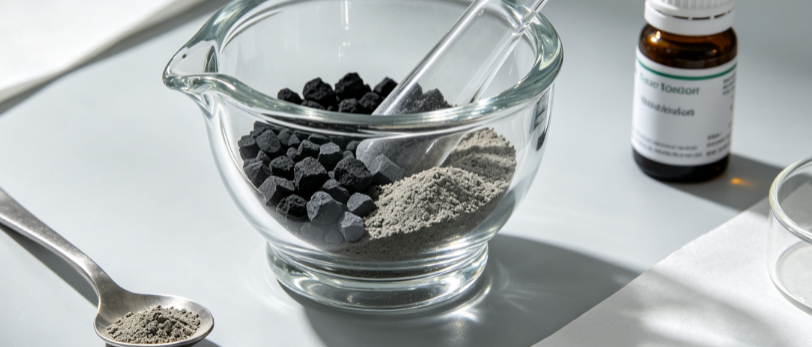
Who Needs Mercury Adsorbent Testing and What Are the Critical Challenges?
Our clients include industrial wastewater treatment operators (chlor‑alkali, gold mining, coal‑fired power plants, cement kilns), adsorbent manufacturers developing novel materials, point‑of‑use filter producers, and regulatory bodies verifying performance. Key challenges include: insufficient capacity for Hg⁰ in flue‑gas due to poor oxidation, rapid deactivation by chloride complexation, low selectivity against competing heavy metals (Cu, Pb, Zn), and uncertain regeneration or safe disposal of spent adsorbent. Our service addresses these by providing quantified dynamic capacities under simulated process conditions, selectivity coefficients over major interferents, and detailed post‑test forensics to identify deactivation mechanisms and guide material improvement.
Our Comprehensive Testing Framework – From Fundamental Characterisation to Real‑World Simulation
We adopt a systematic, application‑oriented approach that evaluates mercury adsorbents across four interconnected domains: intrinsic material properties, equilibrium and kinetic uptake, dynamic column performance, and long‑term durability under realistic water and gas matrices.
1. In‑Depth Adsorbent Physico‑Chemical Characterisation
We begin with a rigorous characterisation of the adsorbent as‑received. Nitrogen physisorption (BET and BJH/NLDFT) determines specific surface area, total pore volume, and micro‑/mesopore size distribution – critical for assessing accessibility to mercury species. X‑ray photoelectron spectroscopy (XPS) and Fourier‑transform infrared spectroscopy (FTIR) quantify surface functional groups (e.g., thiol, amine, sulfide) responsible for mercury chemisorption. X‑ray diffraction (XRD) identifies crystalline phases (e.g., ZnS, FeS, Ag nanoparticles). Scanning electron microscopy (SEM‑EDS) reveals particle morphology and elemental distribution, while Thermogravimetric Analysis (TGA) assesses thermal stability and moisture content. For impregnated carbons, we measure the active phase loading (e.g., sulfur content by CHNS analysis). Additionally, we determine the point of zero charge (pHPZC) and surface acidity/basicity via potentiometric titration to predict electrostatic interactions.
2. Equilibrium Adsorption Isotherms and Thermodynamic Studies
Using a temperature‑controlled batch equilibration system with strict mercury‑safe handling protocols, we measure adsorption isotherms for Hg²⁺ and methylmercury in both deionised water and synthetic groundwater/wastewater matrices. Tests are performed at multiple temperatures (10–60 °C) and mercury concentrations (1 ppb to 50 ppm) to derive maximum adsorption capacity (qmax), Langmuir/Freundlich/Sips parameters, and thermodynamic constants (ΔG, ΔH, ΔS). We systematically evaluate the effect of pH (3–10), competing cations (Ca²⁺, Mg²⁺, Cu²⁺, Pb²⁺), and anions (Cl⁻, SO₄²⁻), as well as natural organic matter (humic acid). For flue‑gas applications, we conduct isotherm measurements for elemental mercury (Hg⁰) at controlled temperatures (100–200 °C) using a dynamic vapour generation system and on‑line cold vapour atomic fluorescence (CVAF) detection.
3. Dynamic Breakthrough and Column Performance Under Realistic Matrices
Static isotherms alone do not predict packed‑bed performance. Our programmable fixed‑bed rig allows breakthrough experiments at realistic hydraulic residence times (HRT 2–60 min) and flow rates (1–20 BV/h). The feed water or simulated flue‑gas, containing mercury species and representative interferents, is pumped through the adsorbent bed, with on‑line CVAF or ICP‑MS for real‑time mercury monitoring. We quantify breakthrough capacity (C5%), exhaustion capacity (C95%), and the mass‑transfer zone (MTZ) length. Crucially, we perform competitive breakthrough experiments with multiple co‑contaminants to determine selectivity coefficients for mercury over interferents – a key metric for real‑world performance.
4. Adsorption Kinetics and Mass‑Transfer Analysis
We conduct kinetic uptake experiments in a batch recirculation system with continuous monitoring to determine intraparticle diffusion coefficients (Dp) and external film mass‑transfer coefficients (kf) using pseudo‑first‑order, pseudo‑second‑order, and Weber‑Morris models. For gas‑phase applications, we derive the adsorption rate constant (kads) from breakthrough curve analysis, enabling prediction of bed performance under varying flow conditions.
5. Regeneration and Reusability Assessment
Economic viability depends on adsorbent regenerability. We perform thermal regeneration (inert and oxidising atmospheres, 150–400 °C), solvent extraction (e.g., with thiourea or HCl), and supercritical CO₂ treatments on spent adsorbents. We measure capacity recovery, mass loss, and structural changes (by BET, XPS, XRD) over multiple cycles (up to 10). We also evaluate the quality of the regenerant solution for mercury recovery or safe disposal. For non‑regenerable adsorbents, we provide leachability data (TCLP) to support disposal certification.
6. Fouling and Chemical Stability Resistance
Real water and flue‑gas streams contain compounds that can foul the adsorbent – e.g., iron precipitates, calcium carbonate, fly ash, or hydrogen sulfide. We perform accelerated fouling tests using synthetic or real matrices, monitoring the decline in mercury removal capacity. We use SEM‑EDS and FTIR on the fouled adsorbent to identify deposit composition and correlate with specific process parameters (pH, alkalinity, dust loading).
7. Leaching and Environmental Safety
We evaluate whether the adsorbent leaches any toxic components (e.g., sulfur, heavy metal dopants) into treated water or into the environment upon disposal. We perform leaching tests (TCLP, EN 12457) and analyse leachates by ICP‑MS and IC to ensure compliance with drinking water and hazardous waste regulations.
8. Advanced Speciation and Mechanism Elucidation
To understand the binding mechanism – whether via surface complexation with thiols, ion exchange, precipitation as HgS, or reduction to Hg⁰ – we analyse the spent adsorbent using XPS (to identify Hg binding state), XRD (for crystalline HgS), and extended X‑ray absorption fine structure (EXAFS) (where available) to provide detailed coordination environment. This insight guides the rational design of adsorbents with enhanced selectivity and capacity.
Our Distinctive Advantages – Why Choose Us for Mercury Adsorbent Testing?
Our laboratory is uniquely equipped with a mercury‑dedicated analytical suite including cold vapour atomic fluorescence (CVAF) and inductively coupled plasma mass spectrometry (ICP‑MS) with ultra‑low detection limits (sub‑ppt), ensuring accurate quantification even at regulatory levels. We operate temperature‑controlled breakthrough rigs for both liquid and gas‑phase testing, and we have developed proprietary protocols for handling volatile and toxic mercury species safely. Our integrated platform – combining advanced material characterisation (XPS, XRD, BET, SEM, FTIR) with dynamic performance testing – enables seamless correlation between structure and function.
Our team comprises environmental chemists, materials scientists, and chemical engineers with extensive expertise in mercury biogeochemistry and remediation. We do not simply generate data; we provide diagnostic interpretation – for example, distinguishing between chemisorption and physisorption, correlating loss of capacity with the oxidation of thiol groups, and recommending optimal pH or pretreatment to enhance selectivity. We also offer benchmarking against commercial reference adsorbents (e.g., sulfur‑impregnated carbon, FGD gypsum‑based materials) under identical conditions, giving you a clear competitive positioning.
All testing adheres to ISO/IEC 17025 quality principles and follows established US EPA, ISO, and ASTM methods. Our reports include full measurement uncertainty budgets and statistical analyses, supporting both internal R&D and regulatory submissions. We provide rapid turnaround – typically 3–5 weeks for a comprehensive characterisation and performance programme, with expedited options for urgent projects.
Deliverables – A Complete Mercury Adsorbent Performance Dossier
Your final report will be structured as a comprehensive technical document, including:
Section 1 – Material characterisation: BET, pore size distribution, XPS and FTIR functional group quantification, XRD phase analysis, active phase loading (e.g., S%), pHPZC, TGA, and SEM images.
Section 2 – Equilibrium data: Isotherm plots for Hg²⁺, Hg⁰, and methylmercury, model parameters, thermodynamic constants, and predicted capacities at target concentrations and water/gas chemistry.
Section 3 – Dynamic breakthrough: Breakthrough curves (single and competitive), capacity values (breakthrough/exhaustion), MTZ length, and selectivity coefficients against major interferents.
Section 4 – Kinetic analysis: Rate constants, diffusion coefficients, and mass‑transfer parameters.
Section 5 – Regeneration performance: Capacity retention after multiple cycles, optimal regeneration conditions, and structural integrity changes.
Section 6 – Fouling and leaching: Fouling index, deposit composition, and leachate analysis (metals, anions).
Section 7 – Mechanistic insights: Speciation of adsorbed mercury (XPS, XRD), binding mode, and recommendations for surface modification.
Section 8 – Executive summary and recommendations: Overall performance rating, optimal operating window, and guidance for adsorbent selection, dosing, or process integration.
All raw data – spectra, breakthrough logs, micrographs, and leachate results – are provided in digital formats for your own analysis.
Industries and Applications We Support
Our testing serves industrial wastewater treatment (chlor‑alkali, gold mining, refineries, battery manufacturing), flue‑gas desulfurisation (FGD) in coal‑fired power plants and cement kilns, produced water treatment in oil & gas, drinking water treatment (point‑of‑entry systems), and soil and sediment remediation. We also support adsorbent manufacturers in product validation and research institutions developing novel mercury sorbent technologies.
How to Initiate Your Mercury Adsorbent Testing Project
Engaging our service is straightforward:
1. Consultation: We discuss your adsorbent type, target mercury species, matrix (water or gas), operating conditions (pH, temperature, flow), and performance targets.
2. Customised proposal: We design a test matrix with modular options and provide a fixed price and timeline – typically 4–6 weeks for a full programme.
3. Sample submission: We provide detailed instructions for shipping adsorbents (sealed, dry, and under inert atmosphere if required) and any representative water/gas samples.
4. Testing and interim reporting: We conduct the tests and share preliminary results at key milestones for your feedback.
5. Final report and technical review: You receive the complete dossier, followed by a 60‑minute virtual meeting to discuss findings, answer questions, and plan next steps.
Confidentiality is guaranteed under a standard NDA, and we can adapt reporting to meet regulatory or internal quality requirements.
Conclusion – Achieve Reliable, Sub‑ppb Mercury Removal with Expert Adsorbent Evaluation
Mercury removal demands adsorbents that are not only high in capacity but also selective, stable, and cost‑effective under real‑world conditions. Our mercury adsorbent testing service provides the scientific depth, application‑specific protocols, and interpretative expertise needed to select, qualify, and optimise adsorbents with confidence. With state‑of‑the‑art instrumentation, specialised mercury handling, and a dedicated team of environmental chemists and engineers, we empower you to meet the most stringent discharge limits while minimising operating costs.
Contact our mercury adsorbent testing specialists today to discuss your project and receive a tailored proposal. Let us help you achieve superior mercury removal performance.