Reasons for choosing our testing services
ZHONGXI Testing has obtained inspection qualification certifications from multiple countries and regions worldwide. We possess a senior testing team and advanced testing methods, providing independent, impartial, and professional third-party verification services for global carbon projects.

Internationally recognized authority
Certified by multiple international standards such as CNAS, VCS, and GS, with reports universally applicable worldwide.

Global service capability
Covering 140+ countries and regions, it supports on-site detection and remote verification in multiple languages.

Professional experimental methods
Adopt standard experimental methods to ensure accurate and reliable data.
Advanced Analytical Characterization of Chalcogenide–Pnictide Compounds: Precision, Depth, and Expert Insight
Chalcogenide–pnictide compounds—encompassing ternary and quaternary systems such as transition-metal phosphides, arsenides, sulfides, selenides, and tellurides—represent a materials family of extraordinary scientific and technological relevance. Their applications span thermoelectric energy conversion, topological insulators, nonlinear optics, superconducting phases, and next-generation battery anodes. However, their compositional and structural complexity, often involving multiple non-stoichiometric defects, mixed valence states, and nanoscale domain formations, demands an analytical approach that transcends routine elemental assays. Our laboratory has developed a fully integrated, multi-modal testing platform specifically architected for chalcogenide–pnictide systems, delivering not only bulk composition but also local electronic structure, oxidation-state mapping, phase purity, and thermal stability with unprecedented resolution and reliability.
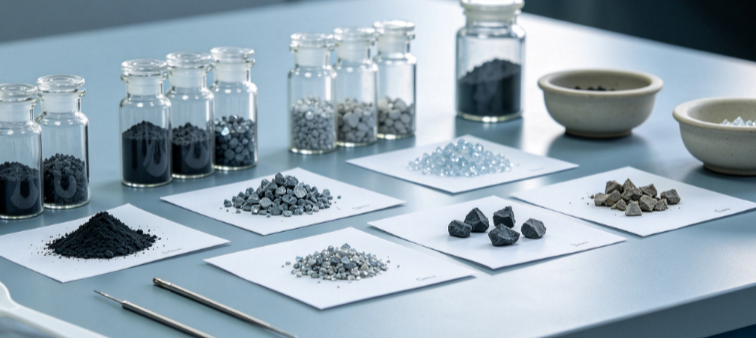
Understanding the Client’s Need: Why Targeted Analysis of Chalcogenide–Pnictides Is Non-Negotiable
Clients seeking chalcogenide–pnictide testing typically face one or more critical challenges: unexpected deviation from target stoichiometry, trace secondary phases that degrade functional properties, or surface oxidation that compromises device performance. In thermoelectric materials, for example, a 0.5 at% excess of sulfur or phosphorus can drastically alter the Seebeck coefficient and electrical conductivity. In superconducting pnictides, even ppm-level oxygen or carbon contamination can suppress the critical temperature. Our service is designed to detect, quantify, and interpret these subtle variations, providing the actionable intelligence needed for process optimization, quality release, and failure investigation.
We recognize that many of these compounds are air-sensitive, moisture-reactive, or prone to thermal decomposition during conventional sample preparation. Therefore, our entire analytical workflow—from sample receipt to final reporting—is conducted under inert atmosphere (argon or nitrogen) glovebox environments, with transfer vessels and holders engineered for air-free X-ray diffraction, spectroscopy, and microscopy. This ensures that the data we generate reflects the true material state, not artifacts induced by ambient exposure.
Unparalleled Analytical Depth: Techniques and Capabilities
Our core analytical suite for chalcogenide–pnictide compounds integrates several complementary techniques, each selected to address specific information layers:
Quantitative elemental analysis is performed using high-resolution inductively coupled plasma mass spectrometry (HR-ICP-MS) after microwave-assisted acid digestion under sealed-vessel conditions, optimized for refractory chalcogenides. We achieve detection limits below 0.1 ppm for most trace impurities (including transition metals, alkali, and alkaline-earth elements) with accuracy validated against NIST SRM 1413 and custom matrix-matched standards. For major elements, wavelength-dispersive X-ray fluorescence (WD-XRF) on fused beads or pressed pellets provides rapid, non-destructive bulk composition with relative standard deviations under 1 % for sulfur, phosphorus, arsenic, selenium, and tellurium.
Phase identification and quantification rely on powder X-ray diffraction (PXRD) with a high-brilliance rotating anode (Cu Kα₁, λ = 1.5406 Å) and a position-sensitive detector, enabling data collection over 2θ ranges up to 140° with step sizes of 0.005°. We apply Rietveld refinement using TOPAS and FullProf to resolve multiphase mixtures, quantify amorphous content via internal standard addition, and refine lattice parameters, atomic occupancies, and anisotropic displacement factors. For thin-film or epitaxial samples, we offer grazing-incidence XRD (GIXRD) and high-resolution X-ray diffraction (HRXRD) with reciprocal space mapping to assess strain, tilt, and compositional grading.
To probe chemical speciation and bonding, we deploy X-ray photoelectron spectroscopy (XPS) with monochromatic Al Kα radiation, combined with ion etching for depth profiling. Our XPS analysis resolves overlapping peaks from chalcogen and pnictogen core levels (e.g., S 2p, P 2p, Se 3d, As 3d, Te 3d) using sophisticated peak-fitting routines based on physical line shapes (asymmetric Doniach–Šunjić for metals, Gaussian–Lorentzian for insulators). We routinely determine oxidation states, coordination environments, and the presence of surface oxide or oxy-salt species with a depth resolution of ~1 nm.
Furthermore, we employ Raman micro-spectroscopy with multiple excitation wavelengths (514, 633, and 785 nm) to capture vibrational fingerprints of both crystalline and amorphous phases, including local structural distortions, anion–cation vibrational modes, and disorder-induced broadening. This is particularly valuable for distinguishing polymorphs of phosphides and arsenides, where X-ray diffraction alone may be insufficient due to similar scattering factors.
Beyond Routine: High-End Physical Property Correlations
Recognizing that the ultimate value of chalcogenide–pnictide materials lies in their functional performance, we go beyond compositional and structural characterization to offer direct physical property measurements on the same specimens. Our custom-built Seebeck coefficient and electrical resistivity measurement system operates from 80 K to 800 K under inert gas, using a four-probe configuration and steady-state temperature gradient technique, with measurement uncertainties below ±5 % for Seebeck and ±3 % for resistivity. For thermal conductivity, we employ the laser flash diffusivity method on disk-shaped samples, providing κ values from 0.2 to 200 W·m⁻¹·K⁻¹ with reproducibility within 2 %.
For magnetic and superconducting pnictides, our SQUID magnetometer (MPMS-3) measures magnetization versus temperature (2–400 K) and field (up to 7 T), enabling precise determination of critical temperature (Tc), critical field (Hc), and magnetic susceptibility. We also offer Hall effect measurements to extract carrier concentration and mobility, essential for evaluating thermoelectric or electronic transport mechanisms. These property measurements are performed on the exact same batches that undergo compositional and structural analyses, ensuring a fully correlated, holistic materials fingerprint—a capability rarely offered by standard testing laboratories.
Methodological Rigor and Compliance Framework
All test methods are developed and validated according to ICH Q2(R1) and ASTM E2857/E2971 guidelines, with ISO/IEC 17025:2017 accreditation covering key instrumental techniques. We maintain routine inter-laboratory comparisons with reference institutions, and our custom reference materials—including certified stoichiometric and impurity-doped chalcogenide–pnictide standards—ensure long-term data consistency. For each project, we provide a comprehensive validation package that includes linearity, limit of detection (LOD), limit of quantification (LOQ), precision (repeatability and intermediate precision), accuracy (via spike recovery or CRM analysis), and robustness against sample preparation variables.
We also implement stringent data integrity protocols in compliance with 21 CFR Part 11 for electronic records, with audit trails, user access controls, and automated backup. This makes our reports suitable for regulatory submissions to the US FDA, EMA, and other global agencies, as well as for patent support and peer-reviewed publications.
Our Distinctive Advantages: Why Choose Us for Chalcogenide–Pnictide Testing
First, our interdisciplinary team—comprising solid-state chemists, condensed matter physicists, and materials engineers—does not merely generate data; we provide contextual interpretation. We understand that a subtle peak shift in XRD or a broadened Raman band may indicate incipient vacancy ordering or a phase transition that correlates with enhanced thermoelectric figure of merit. Our reports include annotated spectra, crystallographic parameters, and property trends, presented in a clear, visually accessible format with executive summaries and technical appendices.
Second, our sample flexibility accommodates powders, bulk ingots, polycrystalline disks, thin films, and even single crystals with minimal mass requirements (down to 10 mg for most techniques). We have developed custom sample holders for air-sensitive materials, including Kapton-sealed cells for XRD and hermetically sealed capsules for DSC/TGA, ensuring that the analysis environment matches the material’s stability constraints.
Third, our turnaround time is among the fastest in the industry—typically 7–10 business days for a full characterization package (elemental, phase, XPS, Raman, and thermal analysis). For urgent R&D or production troubleshooting, we offer an expedited 48–72 hour service with preliminary results communicated within 24 hours, without compromising data quality.
Fourth, our long-term partnership model includes trending and drift analysis for recurring clients. By maintaining a proprietary database of your material’s historical data, we can detect systematic shifts in stoichiometry, impurity levels, or phase fractions over multiple production lots, enabling early warning of raw material variations or process deviations. This proactive approach has saved clients substantial costs by preventing off-spec batches from reaching downstream processes.
End-to-End Service Workflow
Our engagement begins with a free technical consultation to define the testing scope, select the optimal technique combination, and plan sample handling logistics. After sample submission, we conduct a receipt inspection under inert atmosphere, documenting visual appearance, mass, and any anomalies. Analytical runs are scheduled in parallel where possible to minimize total time, and each instrument’s performance is verified with daily calibration checks using certified standards.
Data processing is performed using dedicated software with rigorous background subtraction, peak fitting, and statistical outlier elimination. Results are reviewed by a second senior scientist before final compilation. The final report includes raw data files (e.g., .xrdml, .xps, .csv) and processed data tables, accompanied by a detailed discussion of the results in relation to your material’s target application. We also provide recommendations for further investigation or corrective actions when unexpected results are found.
Post-report, we offer a complimentary 30-day support period for any interpretive questions, and we are always available for follow-on method refinement or additional analyses as your project evolves.
Partner with Us for Excellence in Chalcogenide–Pnictide Analysis
The chalcogenide–pnictide family is vast and rapidly expanding, with new compositions and heterostructures emerging almost monthly. Staying ahead requires an analytical partner who not only possesses state-of-the-art instrumentation but also the scientific discernment to ask the right questions about your data. Our track record includes collaborations with leading academic groups, national laboratories, and Fortune 500 materials companies, consistently delivering insights that have accelerated research, improved product yields, and resolved complex failure modes.
We invite you to contact our team to discuss your specific testing needs, whether they involve quality control of established thermoelectric alloys, characterization of novel topological pnictide thin films, or failure analysis of sulfide-based solid electrolytes. Our flexible pricing models—including single-project fees, annual retainer contracts, and multi-sample discount structures—are tailored to fit your budget and operational rhythm.
Request a detailed project proposal or schedule a technical deep-dive call today. With our comprehensive analytical arsenal, rigorous quality systems, and unwavering commitment to scientific accuracy, we are the partner you can trust to unravel the complexity of your chalcogenide–pnictide materials and empower your next breakthrough.