Reasons for choosing our testing services
ZHONGXI Testing has obtained inspection qualification certifications from multiple countries and regions worldwide. We possess a senior testing team and advanced testing methods, providing independent, impartial, and professional third-party verification services for global carbon projects.

Internationally recognized authority
Certified by multiple international standards such as CNAS, VCS, and GS, with reports universally applicable worldwide.

Global service capability
Covering 140+ countries and regions, it supports on-site detection and remote verification in multiple languages.

Professional experimental methods
Adopt standard experimental methods to ensure accurate and reliable data.
Advanced Performance Evaluation of Waterproof, Moisture‑Proof, and Thermal Insulation Sand: Comprehensive Testing Solutions
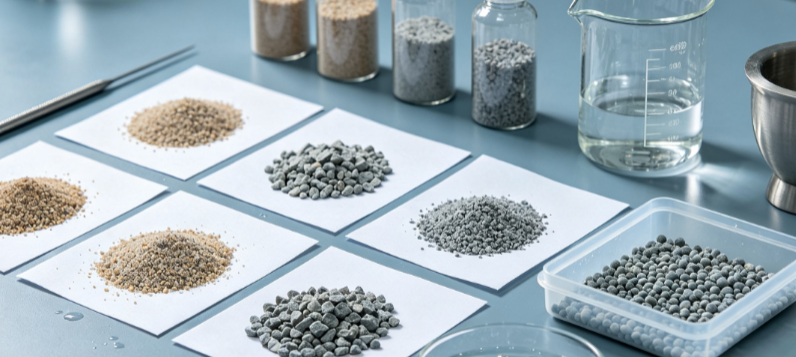
Waterproof, moisture‑proof, and thermal insulation sand—typically composed of expanded perlite, vermiculite, hydrophobic silica, or coated lightweight aggregates—is a specialised construction and industrial material designed to provide thermal barrier, water repellency, and vapour resistance in demanding environments, including roof screeds, cavity wall fills, underground piping backfills, and cryogenic insulation systems. The functional performance of these granular materials hinges on a delicate balance of hydrophobicity, thermal conductivity, particle integrity, and long‑term durability under variable temperature, humidity, and mechanical loading. However, inconsistent coating quality, particle breakage, or ageing can lead to loss of water repellence, increased thermal transmittance, or compaction‑induced settlement, compromising the entire insulation system. Our laboratory offers a fully integrated, multi‑parameter testing platform specifically designed for waterproof, moisture‑proof, and thermal insulation sands. We combine physical, thermal, mechanical, and chemical characterisation with accelerated ageing and environmental simulation to deliver a quantitative, predictive, and interpretable assessment of material performance. Our services align with ASTM C740, EN 13162, ISO 8301, and relevant building codes, supporting product development, quality assurance, supplier verification, and forensic failure analysis.
Why Specialised Testing of Insulation Sand Is Critical for Building and Industrial Applications
Clients seeking testing of this material typically face practical concerns: unexpected moisture ingress leading to mould growth or corrosion, reduced thermal resistance after installation, or particle degradation during pneumatic conveying. These issues often originate from non‑uniform hydrophobic coating, excessive fines content that blocks interstitial voids, or poor resistance to freeze‑thaw cycling. Moreover, many projects require third‑party certification to meet green building standards (e.g., LEED, BREEAM) or to satisfy insurance and warranty requirements. Our service provides a systematic characterisation that not only verifies compliance with declared specifications but also identifies vulnerability windows—for instance, the critical moisture content above which thermal performance drops sharply. By quantifying these thresholds, we enable clients to optimise application thickness, select appropriate installation methods, and predict service life under realistic climatic conditions.
Our Analytical Capabilities: From Basic Properties to Advanced Performance Modelling
Our testing regime is organised into five interconnected modules, each addressing a critical facet of material behaviour:
Physical and granulometric characterisation—We determine particle size distribution by sieve analysis (dry and wet) and laser diffraction, covering fines to coarse aggregates. Bulk density (loose and tapped), void fraction, and specific gravity are measured per ASTM C29 and C128. Angle of repose and flowability index are assessed using a powder rheometer, providing essential data for hopper design and pneumatic transport. We also measure fines content (passing 75 µm) and dust generation potential, which directly affect handling safety and air quality.
Water repellency and moisture behaviour—We quantify hydrophobicity via the water droplet contact angle (sessile drop method) and the floating time on water surface (ASTM C739). Water absorption under immersion and capillary rise (wicking) are measured gravimetrically. For moisture vapour resistance, we use the wet‑cup/dry‑cup method (ASTM E96) to determine water vapour transmission rate (WVTR) and permeance. We also perform pressurised water penetration tests (up to 0.5 MPa) to simulate rainwater driven by wind pressure. Importantly, we conduct moisture retention curves (pressure plate extractor) to link water content with suction pressure—critical for understanding long‑term moisture redistribution in building envelopes.
Thermal performance—We measure thermal conductivity (λ‑value) using both guarded hot plate (steady‑state, ASTM C177) and heat flow meter (ASTM C518) over a temperature range of ‑20 °C to +80 °C, with variable moisture content to simulate in‑service conditions. For high‑temperature applications, we employ laser flash diffusivity up to 500 °C. Specific heat capacity is determined by differential scanning calorimetry (DSC). We also provide thermal resistance (R‑value) calculations for specific layer thicknesses, accounting for contact resistance and ageing effects.
Mechanical integrity and durability—We assess particle crush strength by single‑particle compression and bulk crush resistance (ISO 8398) to quantify fragility under storage and installation loads. Abrasion resistance is measured by rotating drum (ASTM D4058). For long‑term stability, we subject samples to accelerated ageing protocols: freeze‑thaw cycling (up to 300 cycles per ASTM C666), heat‑rain cycles (combined thermal and water spray), and UV/condensation weathering (QUV). Post‑ageing, we re‑measure thermal conductivity and water absorption to quantify performance degradation.
Chemical and mineralogical analysis—We identify and quantify the coating chemistry (e.g., silicone, silane, stearate) using Fourier‑transform infrared spectroscopy (FTIR) in ATR mode and X‑ray photoelectron spectroscopy (XPS) for surface elemental mapping. Thermogravimetric Analysis (TGA) reveals organic content and decomposition temperatures. X‑ray diffraction (XRD) identifies mineral phases of the base aggregate (e.g., perlite, vermiculite, quartz). We also test leachable chlorides and sulphates to ensure compatibility with metal substrates and concrete.
High‑Level Performance Simulation and Predictive Modelling
We go beyond standard testing by offering finite‑element heat and moisture transfer simulations that use our measured material properties as inputs. This enables us to predict steady‑state and transient thermal bridging, condensation risk, and drying‑out behaviour for your specific wall or roof assembly. We also perform probabilistic life‑cycle analysis to estimate the probability of thermal performance loss over 10–50 years, based on historical climate data and material ageing models—a capability that directly supports warranty planning and maintenance scheduling.
Regulatory Compliance and Quality Assurance
All test methods are conducted in accordance with ASTM, EN, ISO, and national building code standards. Our laboratory holds ISO/IEC 17025:2017 accreditation for thermal and moisture measurements, and we participate in round‑robin proficiency tests to ensure inter‑laboratory comparability. We provide comprehensive test reports that include full test conditions, uncertainty analysis, and unambiguous conformity statements. For innovative materials without existing standards, we assist in developing customised test protocols tailored to your specific application and risk profile.
Our Distinctive Advantages in Waterproof, Moisture‑Proof, and Thermal Insulation Sand Testing
Integrated multi‑physics approach: Most labs focus on either thermal or moisture properties in isolation. We uniquely combine both domains and evaluate their coupling—for instance, how water uptake alters thermal conductivity and how temperature variations affect hydrophobic coating stability. This holistic perspective is essential for real‑world performance prediction.
State‑of‑the‑art environmental simulation: We own and operate climate chambers capable of precisely controlling temperature (‑40 to +100 °C), relative humidity (10–98 %), and rain/irradiation cycles. This allows us to perform realistic service‑life simulations that standard steady‑state tests cannot capture, giving you confidence in your material’s long‑term behaviour.
Expert interpretation and actionable recommendations: Our reports are authored by building physicists and material scientists with deep understanding of hygrothermal dynamics. We do not merely present numbers; we explain their physical significance, potential failure modes, and optimisation levers—for example, suggesting optimal coating thickness or recommending a change in particle size distribution to reduce capillary uptake.
Fast turnaround and flexible capacity: We understand that construction schedules are tight. Our standard full characterisation package is delivered within 7–10 working days, with emergency 48‑hour service for critical parameters such as thermal conductivity and water absorption. We also offer on‑site sample collection and preparation assistance if required.
End‑to‑End Service Workflow
We initiate each project with a technical consultation to define your performance criteria, expected service conditions, and any specific regional regulations. We then design a tailored test plan, specifying sampling and packaging requirements to avoid damage during transit. Upon arrival, samples are inspected, conditioned (if needed), and allocated to appropriate test stations. All tests are run with internal quality controls (reference materials, blanks, duplicate runs). Data is reviewed by a senior scientist and cross‑checked for consistency. The final report—provided as a secure PDF—includes detailed results, statistical summaries, photographic evidence, and a clear executive summary. We also offer a follow‑up consultation to discuss interpretations and next steps.
Partner with Us for Reliable Insulation System Performance
The effectiveness of waterproof, moisture‑proof, and thermal insulation sand hinges on thorough, science‑based testing. Our service is designed to give you technical certainty, risk mitigation, and competitive advantage in the construction and insulation market. We have supported architects, contractors, material manufacturers, and government agencies in ensuring that their insulation systems perform as intended over decades of service.
We invite you to contact our technical experts to discuss your specific testing requirements—whether for product certification, quality control, or failure investigation. With our comprehensive analytical toolkit, accredited procedures, and industry‑leading expertise, we provide the insights you need to build better, safer, and more energy‑efficient structures. Request a detailed proposal or schedule a consultation today and take the first step towards assured insulation performance and peace of mind.