Reasons for choosing our testing services
ZHONGXI Testing has obtained inspection qualification certifications from multiple countries and regions worldwide. We possess a senior testing team and advanced testing methods, providing independent, impartial, and professional third-party verification services for global carbon projects.

Internationally recognized authority
Certified by multiple international standards such as CNAS, VCS, and GS, with reports universally applicable worldwide.

Global service capability
Covering 140+ countries and regions, it supports on-site detection and remote verification in multiple languages.

Professional experimental methods
Adopt standard experimental methods to ensure accurate and reliable data.
Advanced Performance Testing of Arsenic‑Removal Modified Activated Carbon: Comprehensive Analytical Solutions
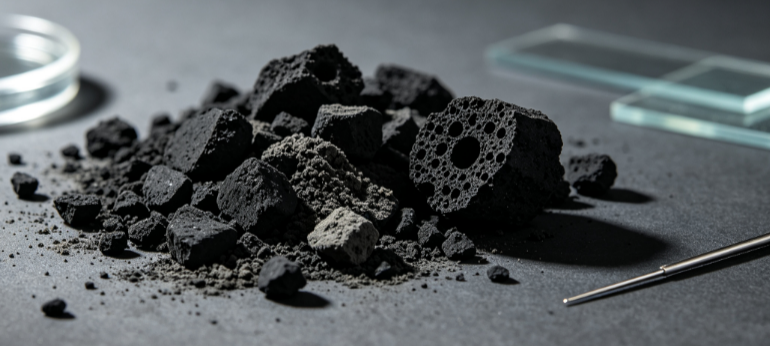
Arsenic‑removal modified activated carbon—typically impregnated or surface‑functionalised with metal oxides (Fe, Mn, Al, Ti), zero‑valent iron, or quaternary ammonium compounds—is a specialised adsorbent designed to efficiently remove arsenite [As(III)] and arsenate [As(V)] from drinking water, groundwater, and industrial effluents. The effectiveness of such materials depends on a synergistic combination of porosity, surface chemistry, impregnation homogeneity, and regeneration stability. However, subtle variations in activation conditions, doping concentration, or ageing can drastically reduce arsenic uptake capacity, alter selectivity, or lead to unwanted leaching of modifier metals. Our laboratory offers a fully integrated, multi‑technique testing platform specifically engineered for modified activated carbons used in arsenic remediation. We combine adsorption isotherm studies, kinetic modelling, surface characterisation, and durability assessments under realistic water chemistries (varying pH, competing ions, and natural organic matter). Our services align with ASTM D5910, ISO 10927, and US EPA Method 7060/7061, supporting product development, quality control, vendor verification, and field‑scale performance prediction for water treatment plants and filter manufacturers.
Why Specialised Testing of Arsenic‑Removal Carbons Is Essential for Safe Water Treatment
Clients seeking testing of these materials typically face critical challenges: inconsistent arsenic breakthrough in field filters, shorter‐than‐expected bed life, or elevated iron/manganese leaching into treated water. These issues often arise from non‑uniform impregnation, pore blockage by modifiers, or chemical instability of the active phase under oxidative or high‑pH conditions. Moreover, regulatory limits for arsenic in drinking water (e.g., WHO guideline of 10 µg/L, US EPA MCL of 10 µg/L) demand stringent validation of adsorbent performance over extended operating periods. Our service provides a systematic characterisation that quantifies equilibrium capacity, mass transfer rates, competitive adsorption from co‑existing ions (sulphate, phosphate, silicate), and the impact of temperature and hydraulic residence time. By identifying performance boundaries, we help clients optimise filter design, schedule regeneration cycles, and comply with international drinking water standards.
Our Analytical Capabilities: From Fundamental Adsorption Parameters to Mechanistic Insights
Our testing programme is structured into four interconnected modules, each delivering critical data for comprehensive performance evaluation:
Physicochemical characterisation of the modified carbon—We begin with BET surface area and pore size distribution via nitrogen adsorption (77 K) using Micromeritics ASAP 2460, covering micropores (0.4–2 nm) and mesopores (2–50 nm) with DFT and BJH models. Bulk density, particle size distribution (laser diffraction), and pH of slurry are determined per ASTM standards. Impurity profile (e.g., leachable metals, chlorides) is measured by ICP‑MS after acid digestion. Surface chemistry is probed by Boehm titration for acidic/basic functional groups, X‑ray photoelectron spectroscopy (XPS) for oxidation states of modifiers (e.g., Fe²⁺/Fe³⁺, As species), and Fourier‑transform infrared spectroscopy (FTIR‑ATR) for organic functional groups and bonding.
Arsenic adsorption performance—We conduct batch equilibrium isotherms (Langmuir, Freundlich, Redlich‑Peterson) at controlled pH (5.0–8.5) and temperature (5–40 °C) using both As(III) and As(V) standards. Kinetic studies (pseudo‑first‑order, pseudo‑second‑order, intraparticle diffusion) are performed over contact times from minutes to days, with automated sampling and ICP‑MS analysis. We determine maximum adsorption capacity (Q₀) and affinity constant under simulated natural water matrices, including competitive anions (phosphate, sulphate, bicarbonate, silicate) at realistic concentrations. For dynamic performance, we run packed‑bed column tests with variable flow rates and bed depths, generating breakthrough curves, exhaustion capacities, and mass transfer zone (MTZ) lengths—allowing scale‑up predictions.
Regeneration and reusability assessment—We simulate multiple adsorption‑regeneration cycles using common regenerants (NaOH, NaCl, or mild acid) and evaluate the loss of capacity, structural integrity, and modifier leaching after each cycle. XRD and SEM‑EDS are used post‑regeneration to check for crystallinity changes and chemical migration.
Durability and safety testing—We assess mechanical attrition resistance (rotating drum, ASTM D4058) and dust generation to ensure handling safety. Leachability of impregnated metals (Fe, Mn, Al) under static and dynamic conditions is quantified by ICP‑MS and compared against drinking water health limits. We also perform accelerated ageing (thermal at 40–80 °C, humidity cycling) to mimic long‑term storage effects on adsorption performance.
High‑Level Mechanistic and Predictive Modelling
We go beyond empirical testing by integrating our data with surface complexation modelling (e.g., CD‑MUSIC) to describe pH‑dependent arsenate binding on metal oxide sites. Using fixed‑bed adsorption simulations based on the Homogeneous Surface Diffusion Model (HSDM), we predict breakthrough profiles for your specific filter geometry and operating conditions—accounting for external film resistance, pore diffusion, and surface reaction kinetics. This enables pre‑design optimisation without expensive pilot‑scale trials. We also provide probabilistic risk assessments (Monte Carlo) for arsenic breakthrough under variable influent quality, supporting robust water safety plans.
Regulatory Compliance and Quality Assurance
All test methods are aligned with ASTM D5910 (Standard Test Method for Granular Activated Carbon), NSF/ANSI 61 (drinking water system components), and US EPA SW‑846 for arsenic analysis. Our laboratory is ISO/IEC 17025:2017 accredited for a wide scope of environmental and materials tests. We provide certified test reports that include full measurement uncertainties, method blanks, and spike recoveries. For regulatory submissions, we prepare certificate of analysis (CoA) packages with all required traceability data.
Our Distinctive Advantages in Arsenic‑Removal Carbon Testing
Unparalleled water matrix simulation: Unlike standard labs that use deionised water, we prepare synthetic groundwater with controlled ionic strength and natural organic matter (NOM) to mimic real‑world conditions. This ensures that our capacity data is directly transferable to your field application—a critical differentiator.
Integrated surface‑to‑performance correlation: We routinely correlate XPS‑derived surface Fe/O ratios with Langmuir adsorption constants to identify the optimum impregnation level. This allows us to provide diagnostic feedback for process improvement—for example, adjusting activation temperature to increase surface hydroxyl density.
Advanced speciation capability: Using HPLC‑ICP‑MS, we differentiate between As(III) and As(V) in both influent and effluent, enabling evaluation of oxidation capacity (if the carbon has oxidative properties). This is essential for assessing pre‑oxidation steps in treatment trains.
Fast turnaround with flexibility: Our standard package (isotherms + kinetics + basic characterisation) is delivered within 10–12 working days. For urgent evaluations, we offer expedited 5‑day service for column breakthrough and key capacity parameters. We also accommodate customised test matrices—e.g., variable temperatures, multi‑element competition—without excessive surcharges.
End‑to‑End Service Workflow
We begin with a free technical consultation to define your target water quality, expected arsenic range, and operational constraints (flow rate, bed volume, contact time). We then design a tailored test plan, advising on sample quantity and handling. Upon sample receipt, we perform receipt inspection and conditioning. All tests are executed with internal quality controls—including blank, duplicate, and spiked samples. Data is compiled and reviewed by our lead environmental chemist, then integrated into a comprehensive report with isotherm plots, breakthrough curves, and statistical summaries. We also provide a post‑report interpretation session to explain results and recommend optimisation steps.
Partner with Us for Safe and Efficient Arsenic Removal
Arsenic contamination is a global health challenge, and the performance of modified activated carbon filters is central to delivering safe water. Our testing service provides the scientific rigour, practical realism, and actionable insights needed to ensure your product meets the highest standards. We have supported municipalities, filter manufacturers, and research institutes in verifying and enhancing arsenic removal efficiency.
We invite you to contact our technical team to discuss your specific testing needs—whether for product certification, process troubleshooting, or competitive benchmarking. With our advanced analytical capabilities, accredited quality system, and domain expertise, we provide the confidence you need to protect public health and achieve regulatory compliance. Request a detailed proposal or schedule a technical consultation today and take the next step towards reliable, high‑performance arsenic removal solutions.