Reasons for choosing our testing services
ZHONGXI Testing has obtained inspection qualification certifications from multiple countries and regions worldwide. We possess a senior testing team and advanced testing methods, providing independent, impartial, and professional third-party verification services for global carbon projects.

Internationally recognized authority
Certified by multiple international standards such as CNAS, VCS, and GS, with reports universally applicable worldwide.

Global service capability
Covering 140+ countries and regions, it supports on-site detection and remote verification in multiple languages.

Professional experimental methods
Adopt standard experimental methods to ensure accurate and reliable data.
Comprehensive Performance Testing of Arsenic Removal Filter Media: Advanced Analytical and Engineering Solutions
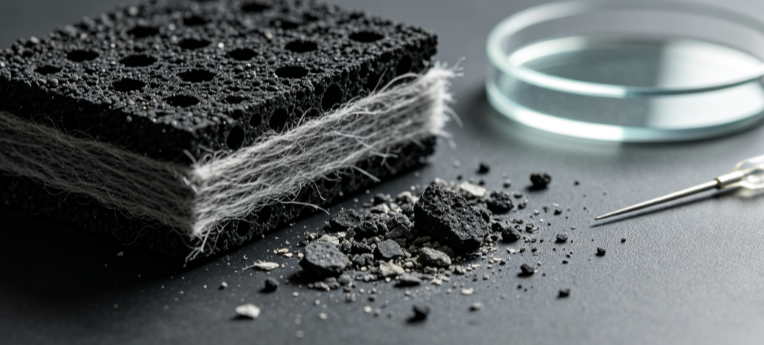
Arsenic removal filter media encompass a broad category of engineered adsorbents, including granular ferric hydroxide (GFH), titanium dioxide‑based materials, activated alumina, modified zeolites, iron‑coated sand, and hybrid polymeric sorbents. These media are deployed in point‑of‑use (POU) filters, point‑of‑entry (POE) systems, and community‑scale water treatment plants to reduce inorganic arsenic [As(III) and As(V)] to meet stringent regulatory limits (e.g., WHO 10 µg/L, US EPA 10 µg/L). The performance of such media hinges on a complex interplay of adsorption kinetics, equilibrium capacity, hydraulic conductivity, mechanical strength, and chemical stability under variable feed water quality (pH, competing anions, natural organic matter, and redox conditions). However, subtle differences in manufacturing, ageing, or water chemistry can lead to premature breakthrough, excessive headloss, or media degradation—undermining treatment reliability. Our laboratory offers a fully integrated, multi‑scale testing platform specifically tailored for arsenic removal filter media, combining bench‑scale characterisation, pilot‑column performance, and advanced surface/interfacial analysis. We deliver quantitative, predictive, and diagnostic insights that support media selection, process design, quality assurance, and failure investigation for drinking water and industrial applications.
Why Rigorous Testing of Arsenic Filter Media Is Indispensable for Water Safety
Clients seeking testing of these media typically face pressing operational issues: unexpectedly short bed life, variable effluent arsenic concentrations, excessive pressure drop, or iron/aluminium leakage. These symptoms often trace back to inadequate pre‑conditioning, pore clogging by particulates, competitive adsorption from silicate or phosphate, or the transformation of ferric hydroxides under reducing conditions. Moreover, many water utilities and filter manufacturers require third‑party verification to meet regulatory compliance, NSF/ANSI certification, or performance warranties. Our service provides a systematic evaluation that quantifies maximum adsorption capacity, mass transfer zone length, sensitivity to pH and temperature, and long‑term stability under realistic hydrodynamic conditions. By identifying performance limitations, we enable clients to optimise media replacement cycles, adjust pre‑treatment (oxidation, pH adjustment), and select the most cost‑effective media for their specific water matrix.
Our Analytical Capabilities: From Microscopic Characterisation to Pilot‑Scale Validation
Our testing programme is designed to cover all critical aspects of arsenic filter media performance across three complementary tiers:
Material characterisation and quality assurance—We begin with physical properties: particle size distribution (sieve and laser diffraction), bulk and skeletal density, porosity (mercury intrusion and helium pycnometry), and attrition resistance (rotating drum). Surface area and pore structure are determined by N₂ physisorption (BET and DFT). Mineralogy and crystallinity are assessed by X‑ray diffraction (XRD), while surface chemistry is probed by X‑ray photoelectron spectroscopy (XPS) and Fourier‑transform infrared spectroscopy (FTIR‑ATR) to identify active sites (e.g., Fe‑OH, Al‑OH, Ti‑OH). Acid/base buffering capacity is measured via potentiometric titration. We also quantify leachable impurities (Fe, Al, Ti, heavy metals) by ICP‑MS under static and dynamic elution.
Adsorption equilibrium and kinetics—We perform isotherm studies at multiple temperatures (5–40 °C) and pH (5.5–8.5) using both As(III) and As(V) with careful speciation control (HPLC‑ICP‑MS). Models including Langmuir, Freundlich, Sips, and Dubinin–Radushkevich are fitted to determine maximum capacity (Qₘ) and binding energy. Competitive ion effects (phosphate, sulphate, silicate, bicarbonate) are systematically evaluated at concentrations typical of groundwater. Kinetic profiles are obtained via batch reactors with frequent sampling, and fitted to pseudo‑first‑order, pseudo‑second‑order, and intraparticle diffusion models to identify rate‑limiting steps.
Dynamic column performance and scale‑up—Using computer‑controlled pilot columns (diameters 1–10 cm, bed heights up to 2 m), we simulate continuous flow operation at variable empty bed contact times (EBCTs) and linear velocities. We measure breakthrough curves under step and pulse inputs, from which we derive exhaustion capacity (mg/g), bed utilisation, and mass transfer zone (MTZ) parameters. We also perform cyclic loading‑regeneration (using NaOH, NaCl, or acid) to evaluate reusability and capacity decay. Hydraulic behaviour is continuously monitored via pressure transducers to detect headloss development, and particle size analysis post‑run reveals physical breakdown or fines migration.
Advanced Mechanistic and Predictive Modelling
We integrate experimental data with surface complexation modelling (SCM) using PHREEQC and CD‑MUSIC to describe pH‑dependent arsenate/arsenite binding on metal (hydr)oxide surfaces. For column simulations, we apply the HYDRUS‑2D/3D package with chemical non‑equilibrium transport to predict breakthrough under transient influent conditions. We also conduct sensitivity analysis (e.g., Monte Carlo) to quantify the influence of input variability on effluent arsenic—enabling risk‑based design and robust operational envelopes. This modelling layer transforms raw data into engineering design tools, helping you size beds, select media, and plan maintenance with confidence.
Regulatory Compliance and Quality Assurance
All test methods follow ASTM D5910, ASTM D7085, ISO 10927, and US EPA methods 7060/7061 for arsenic analysis. Our laboratory holds ISO/IEC 17025:2017 accreditation for a wide scope of adsorbent testing. We provide certified reports with complete traceability, measurement uncertainty, and quality control data (blanks, duplicates, spikes). For certification submissions (e.g., NSF/ANSI 61, NSF/ANSI 372), we prepare comprehensive data packages that meet all documentation requirements.
Our Distinctive Advantages in Arsenic Filter Media Testing
Realistic water matrix simulation: We prepare custom synthetic groundwater with controlled ionic composition and natural organic matter (NOM) to precisely match your target source—ensuring that our performance data is directly translatable to your site.
Integrated characterisation‑performance correlation: We link XPS‑derived surface hydroxyl density and pore connectivity (from mercury intrusion) with column breakthrough times to provide root‑cause diagnostics, e.g., capacity loss due to pore blockage vs. surface poisoning.
Multi‑component speciation: Using HPLC‑ICP‑MS, we routinely analyse As(III)/As(V) interconversion during filtration—critical if your media has oxidising properties or if pre‑oxidation is used. We also track arsenic‑complexed organic matter via size‑exclusion chromatography.
Fast turnaround and flexible capacity: Our standard full test package (characterisation + isotherms + column study) is delivered in 10–15 working days. For urgent needs, we provide expedited 5‑day screening for key parameters (capacity, headloss, leaching). We accommodate multiple media types and parallel column runs to accelerate media screening.
Expert interpretation and engineering guidance: Our team includes environmental engineers and water chemists with decades of experience in adsorptive arsenic removal. We provide clear recommendations—e.g., optimal EBCT, pre‑oxidation strategy, and backwashing frequency—based on your specific operational goals.
End‑to‑End Service Workflow
We start with a complimentary technical consultation to understand your water quality (source, pH, arsenic species, competitor levels), flow rate, and target effluent. We then propose a customised test matrix and advise on sample quantity and handling. Upon sample receipt, we perform initial inspection and conditioning. Tests are executed with strict QA/QC and parallel blanks. Data is reviewed by our lead scientist and compiled into a comprehensive report containing: isotherm plots, breakthrough curves, hydraulic profiles, and modelling outcomes, along with a clear executive summary and actionable recommendations. A post‑report meeting is offered to discuss results and next steps.
Partner with Us for Reliable, High‑Performance Arsenic Removal
Ensuring safe drinking water requires accurate, realistic, and predictive testing of arsenic filter media. Our service is built on scientific excellence, practical realism, and a commitment to public health. We have assisted municipalities, engineering consultancies, and media manufacturers worldwide in selecting, verifying, and optimising arsenic removal systems.
We invite you to contact our technical specialists to discuss your specific testing needs—whether for product validation, process design, or failure analysis. With our advanced analytical arsenal, accredited quality systems, and deep domain expertise, we provide the insights you need to achieve consistent arsenic compliance and operational peace of mind. Request a detailed proposal or schedule a technical consultation today and take the decisive step toward safer water treatment.