Reasons for choosing our testing services
ZHONGXI Testing has obtained inspection qualification certifications from multiple countries and regions worldwide. We possess a senior testing team and advanced testing methods, providing independent, impartial, and professional third-party verification services for global carbon projects.

Internationally recognized authority
Certified by multiple international standards such as CNAS, VCS, and GS, with reports universally applicable worldwide.

Global service capability
Covering 140+ countries and regions, it supports on-site detection and remote verification in multiple languages.

Professional experimental methods
Adopt standard experimental methods to ensure accurate and reliable data.
Advanced Efficacy and Safety Testing of Algicidal Water Treatment Agents: Comprehensive Analytical Solutions
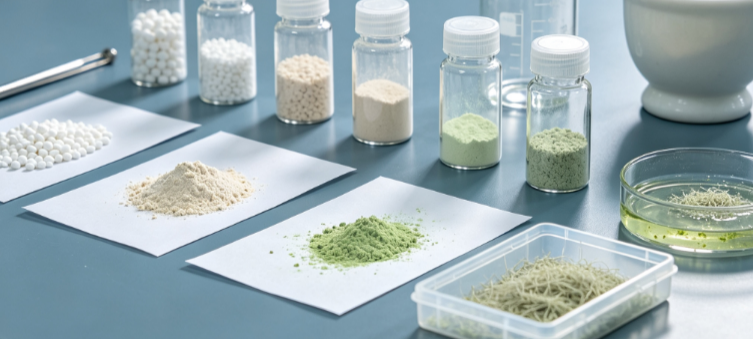
Algicidal water treatment agents—including copper‑based algaecides, quaternary ammonium compounds, hydrogen peroxide‑based formulations, and natural plant‑derived extracts—are essential for controlling nuisance and toxigenic algal blooms in drinking water reservoirs, recreational lakes, aquaculture ponds, and industrial cooling systems. The effectiveness of these agents depends on a delicate balance of active ingredient concentration, dissolution rate, algal species specificity, and residual toxicity. However, variations in formulation, water chemistry (pH, hardness, dissolved organic matter), and temperature can lead to suboptimal algal control, unintended phytotoxicity to non‑target species, or the formation of harmful disinfection by‑products (DBPs). Our laboratory offers a fully integrated, multi‑parameter testing platform specifically designed for algicidal water treatment agents, combining active ingredient quantification, algal bioassays, residual analysis, and environmental fate studies under realistic water conditions. We deliver quantitative, reproducible, and regulatory‑compliant data that supports product development, quality control, registration (EPA, EU BPR), and field application optimisation for manufacturers and water managers.
Why Comprehensive Testing of Algicidal Agents Is Critical for Effective and Safe Algae Management
Clients seeking testing of these products typically face challenges such as inconsistent algae reduction in the field, unexpected fish or plant toxicity, or difficulty in meeting regulatory residue limits. These issues often stem from poor solubility, photo‑degradation, adsorption to sediments, or antagonistic interactions with other water treatment chemicals. Moreover, many jurisdictions require registration data on environmental fate, ecotoxicology, and disinfection by‑product formation before a product can be marketed. Our service provides a systematic evaluation that quantifies minimum effective concentration (MEC), time‑kill kinetics, and selectivity index, as well as identifying degradation pathways and toxic transformation products. By characterising product performance under your specific water matrix, we empower clients to optimise dosing regimens, mitigate off‑target effects, and satisfy regulatory requirements with confidence.
Our Analytical Capabilities: From Active Ingredient Assay to Environmental Impact Assessment
Our testing programme is structured into five interconnected modules, each addressing a critical aspect of product performance and safety:
Chemical characterisation and stability—We quantify active ingredients (e.g., copper ions, quaternary ammonium compounds, hydrogen peroxide, or plant secondary metabolites) using validated HPLC‑UV, HPLC‑MS/MS, ICP‑OES, or titration methods, depending on the chemistry. Impurity profiling (heavy metals, organic by‑products) is performed by GC‑MS or LC‑HRMS. We assess shelf‑life stability under accelerated conditions (40 °C, 75 % RH) and photostability (ICH Q1B) to predict long‑term potency. Dissolution kinetics in different water types (deionised, natural surface water, synthetic hard water) are monitored to ensure rapid and homogeneous dispersion.
Algal bioassay performance—We conduct dose‑response experiments using representative algal strains, including cyanobacteria (e.g., Microcystis aeruginosa, Anabaena flos‑aquae), green algae (e.g., Chlorella vulgaris, Scenedesmus subspicatus), and diatoms, following OECD 201 (Algal Growth Inhibition Test) and US EPA OPPTS 850.4500 guidelines. We determine EC₅₀ and EC₉₀ values, minimum inhibitory concentration (MIC), and time‑kill profiles (0‑72 h) under controlled light, temperature, and nutrient conditions. We also evaluate algicidal vs. algistatic activity by regrowth tests. For product optimisation, we perform combination toxicity studies with potential adjuvants or synergists.
Water matrix and interfering factors—We systematically evaluate the influence of pH (6‑9), alkalinity, dissolved organic carbon (DOC), turbidity, and competing ions on algicidal efficacy using a full factorial design. This identifies conditions under which product performance may be compromised, enabling you to adjust application protocols accordingly. We also simulate multiple dosing cycles to determine the sustainability of control.
Residual analysis and degradation kinetics—We monitor active ingredient depletion over time in test water, measuring dissipation half‑lives (DT₅₀) under dark and light conditions. Degradation products are identified by high‑resolution mass spectrometry (HRMS) and, where known, quantified by reference standards. We assess adsorption to suspended solids and sediments to predict environmental partitioning. For copper‑based agents, we measure free vs. complexed copper using ion‑selective electrode and size‑exclusion ICP‑MS.
Ecotoxicity and disinfection by‑product (DBP) formation—We evaluate acute toxicity to non‑target organisms (Daphnia magna immobilisation, zebrafish embryo toxicity, and Pseudokirchneriella subcapitata) according to OECD guidelines. For products used in drinking water sources, we perform DBP formation potential tests by reacting the agent or its residues with chlorine/chloramine and quantifying trihalomethanes (THMs), haloacetic acids (HAAs), and halogenated nitromethanes by US EPA Method 551.1 and 552.3. This ensures that algicide application does not compromise downstream water quality.
High‑Level Diagnostic and Predictive Modelling
We go beyond standard bioassays by applying mechanistic toxicokinetic‑toxicodynamic (TK‑TD) models to link concentration‑time profiles with algal inhibition, enabling prediction of field efficacy under variable exposure regimes. We also develop species sensitivity distributions (SSDs) for risk assessment, and use hydrodynamic dispersion models to scale up laboratory data to lake or reservoir applications. For product developers, we offer QSAR (quantitative structure‑activity relationship) analysis to guide analogue optimisation.
Regulatory Compliance and Quality Assurance
All test methods are aligned with OECD, US EPA OPPTS, EU Biocidal Products Regulation (BPR), and ISO 11348 standards. Our laboratory holds ISO/IEC 17025:2017 accreditation for a wide scope of aquatic toxicity and chemical analysis. We provide certified test reports that include full raw data, statistical analysis, and measurement uncertainty. For regulatory submissions, we compile GLP‑compliant (Good Laboratory Practice) study packages (where applicable) with complete audit trails.
Our Distinctive Advantages in Algicidal Water Treatment Agent Testing
Broad algal panel and custom strain availability: We maintain a diverse culture collection of toxic and non‑toxic algae strains, including field isolates from various geographical regions. This enables us to evaluate product efficacy against the specific species causing problems at your site.
Realistic water matrix simulation: We utilise both synthetic and natural water samples (with DOC, alkalinity, and hardness controlled) to generate data that directly translates to your operating environment—unlike standard lab water tests, which often overestimate performance.
Integrated analytical and bioanalytical approach: We correlate chemical concentration measurements with biological responses to establish robust dose‑response relationships and identify potential toxicity enhancers or inhibitors present in the formulation.
Advanced degradation product identification: Our HRMS‑based untargeted screening can detect unexpected transformation products, enabling early identification of potentially harmful metabolites. This is particularly valuable for novel active substances with limited environmental data.
Fast turnaround and collaborative interpretation: Our standard full assessment (chemical + bioassay + fate) is delivered within 10‑15 working days. For urgent registration or incident response, we offer expedited 5‑day screening. Our senior aquatic toxicologists provide clear, actionable recommendations on dosing, timing, and environmental risk mitigation.
End‑to‑End Service Workflow
We begin with a free technical consultation to define your product chemistry, target algae, water matrix, and regulatory framework. Based on this, we design a tailored test plan, covering sampling and stability requirements. Upon sample receipt, we perform initial chemical verification and prepare stock solutions. Bioassays and analytical tests are run in parallel, with internal quality controls (positive controls, blanks, reference toxicants). Data are reviewed by a second specialist and compiled into a comprehensive report with isobolograms, dose‑response curves, degradation plots, and clear conclusions. We also provide a post‑report discussion to interpret results and suggest formulation or application improvements.
Partner with Us for Effective and Environmentally Responsible Algae Control
Choosing the right algicidal agent and applying it correctly is essential for protecting water resources, fish stocks, and human health. Our testing service is built on scientific excellence, regulatory awareness, and a commitment to sustainable water management. We have supported biocide manufacturers, water utilities, aquaculture operations, and environmental consultants in verifying product performance and safety.
We invite you to contact our technical team to discuss your specific algicide testing needs—whether for product registration, quality assurance, or field troubleshooting. With our advanced analytical toolkit, expert ecotoxicologists, and regulatory expertise, we provide the insights you need to confidently and responsibly control algal blooms. Request a detailed proposal or schedule a technical consultation today and take the next step towards effective, science‑based water treatment.