Reasons for choosing our testing services
ZHONGXI Testing has obtained inspection qualification certifications from multiple countries and regions worldwide. We possess a senior testing team and advanced testing methods, providing independent, impartial, and professional third-party verification services for global carbon projects.

Internationally recognized authority
Certified by multiple international standards such as CNAS, VCS, and GS, with reports universally applicable worldwide.

Global service capability
Covering 140+ countries and regions, it supports on-site detection and remote verification in multiple languages.

Professional experimental methods
Adopt standard experimental methods to ensure accurate and reliable data.
Advanced Analytical Testing of Magnetically Modified Layered Double Hydroxides: Comprehensive Characterisation and Performance Evaluation
Magnetically modified layered double hydroxides (LDHs)—often functionalised with iron oxide nanoparticles (Fe₃O₄, γ‑Fe₂O₃), ferrite spinels, or magnetic metal–organic frameworks—represent a cutting‑edge class of multifunctional nanocomposites that combine the high anion‑exchange capacity, tunable interlayer chemistry, and large surface area of LDHs with superparamagnetic responsiveness for facile separation, targeted delivery, and recyclable catalysis. These materials have found expanding applications in wastewater remediation, drug delivery, magnetic resonance imaging (MRI) contrast enhancement, and heterogeneous catalysis. However, their performance critically depends on a delicate balance of structural integrity, magnetic saturation, phase purity, colloidal stability, and surface reactivity. Subtle variations in synthesis parameters (e.g., coprecipitation pH, hydrothermal ageing, magnetic core‑shell assembly) can lead to phase segregation, incomplete coating, reduced magnetic response, or compromised adsorption capacity. Our laboratory offers a fully integrated, multi‑scale testing platform specifically designed for magnetically modified LDHs, combining high‑resolution structural analysis, sensitive magnetic characterisation, surface chemistry probing, and application‑oriented performance testing. We deliver quantitative, diagnostic, and interpretative data that supports material development, quality assurance, scale‑up optimisation, and regulatory compliance for academic, industrial, and biomedical clients.
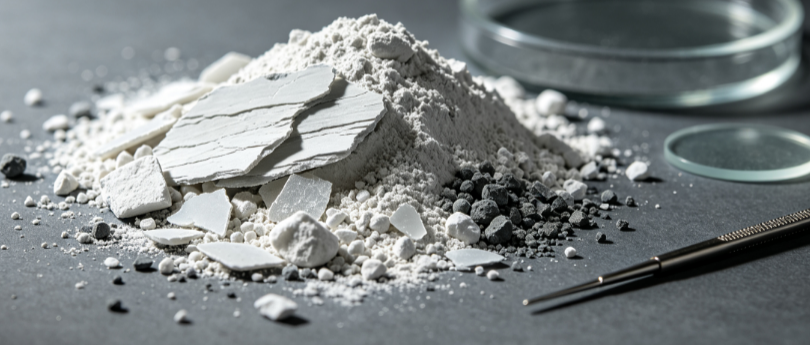
Why Specialised Testing of Magnetic LDHs Is Essential for Reliable Application Performance
Clients seeking testing of these hybrid materials often encounter challenges such as reduced adsorption capacity after magnetic functionalisation, unexpected aggregation in biological media, or irreversible magnetic agglomeration. These issues often originate from non‑uniform iron oxide deposition, disruption of the LDH layered structure during synthesis, or insufficient stabilisation of the magnetic core. Furthermore, the potential release of toxic metal ions (e.g., Ni²⁺, Co²⁺, or Fe³⁺) from the composite necessitates rigorous biocompatibility and leaching testing for biomedical or environmental applications. Our service provides a systematic evaluation that quantifies magnetic saturation (Mₛ), coercivity (H꜀), specific surface area, anion exchange capacity, and colloidal stability, while also identifying surface coating efficiency and phase purity. By detecting sub‑surface defects and chemical heterogeneity, we enable clients to optimise synthesis protocols, select appropriate magnetic doping levels, and validate product performance for their target applications.
Our Analytical Capabilities: From Crystal Structure to Magnetic Behaviour and Chemical Reactivity
Our testing programme is structured into five interconnected modules, each addressing a critical dimension of the material’s composition, structure, and function:
Structural and crystallographic characterisation—We employ powder X‑ray diffraction (PXRD) with Rietveld refinement to identify the LDH stacking sequence, interlayer spacing, and any secondary phases (e.g., Fe₃O₄, hematite, or metal hydroxides). High‑resolution transmission electron microscopy (HR‑TEM) with selected‑area electron diffraction (SAED) and scanning TEM‑EDS mapping visualises the spatial distribution of magnetic nanoparticles and the LDH layer morphology. Pair distribution function (PDF) analysis of total scattering data reveals local atomic disorder and defect chemistry.
Magnetic property measurement—Using a superconducting quantum interference device (SQUID) magnetometer and a vibrating sample magnetometer (VSM), we measure magnetisation hysteresis loops (M vs. H) at room temperature and low temperature (5–300 K), extracting saturation magnetisation (Mₛ), remnant magnetisation (Mᵣ), coercivity (H꜀), and magnetic susceptibility (χ). Zero‑field‑cooled (ZFC) and field‑cooled (FC) curves are recorded to determine blocking temperature and particle size distribution of magnetic domains. For anisotropic samples, we perform angular‑dependent measurements to assess orientational effects.
Surface chemistry and interface analysis—We characterise the surface functional groups by Fourier‑transform infrared spectroscopy (FTIR‑ATR) and Raman microscopy, and quantify the surface hydroxyl density via potentiometric titration. X‑ray photoelectron spectroscopy (XPS) with depth profiling (Ar⁺ sputtering) provides the oxidation states of metals (Fe²⁺/Fe³⁺, Mg²⁺, Al³⁺, etc.) and the coating homogeneity. Zeta potential and dynamic light scattering (DLS) in aqueous media assess colloidal stability and surface charge under varying pH and ionic strength—critical for predicting dispersion behaviour.
Textural and compositional analysis—We measure specific surface area (BET) and pore size distribution (DFT/BJH) by N₂ physisorption. Elemental composition (Mg, Al, Fe, transition metals) is determined by ICP‑OES and ICP‑MS after acid digestion. Thermogravimetric Analysis (TGA) coupled with evolved gas analysis (EGA‑MS) quantifies interlayer water, carbonate content, and thermal stability up to 1000 °C.
Functional performance testing—We evaluate anion exchange capacity (AEC) for typical pollutants (phosphate, arsenate, chromate) via batch equilibrium experiments, and adsorption kinetics under magnetic stirring or shaking. Magnetic separability is quantified by measuring the recovery efficiency using a permanent magnet over defined times. For catalytic applications, we assess degradation of model organic dyes (e.g., methyl orange, rhodamine B) under UV‑Vis irradiation, correlating activity with structural and magnetic parameters. Leachability of metal ions is monitored by ICP‑MS under simulated environmental or physiological conditions (USP <661>, ISO 10993).
High‑Level Correlative and Predictive Modelling
We go beyond isolated measurements by building structure‑property correlations—for example, linking the magnetic domain size (from HR‑TEM) with coercivity and blocking temperature, and relating surface Fe content (XPS) to catalytic turnover frequency. Using principal component analysis (PCA) and partial least squares (PLS) regression, we can identify synthesis parameters that most strongly influence desired performance metrics. For industrial scale‑up, we apply population balance models to predict batch‑to‑batch variability and guide robust process design.
Regulatory Compliance and Quality Assurance
All test methods are aligned with ISO 17025, ASTM D7380, and relevant pharmacopoeial standards where applicable. Our laboratory holds ISO/IEC 17025:2017 accreditation for a broad scope of advanced materials characterisation. We issue certified test reports with full traceability, uncertainty budgets, and detailed method descriptions. For biomedical applications, we support ISO 10993 biocompatibility testing through our in‑house toxicology unit.
Our Distinctive Advantages in Magnetic LDH Testing
Unrivalled magnetic characterisation depth: Our SQUID‑VSM system offers sensitivity down to 10⁻⁸ emu, enabling precise detection of trace magnetic impurities and accurate determination of saturation magnetisation even for weakly magnetic composites—critical for distinguishing superparamagnetic from ferrimagnetic contributions.
Integrated structure‑property workflow: We routinely combine HR‑TEM, PXRD, and magnetic data on the same batch, eliminating sample heterogeneity artifacts and providing a coherent picture of synthesis‑performance relationships—a capability seldom offered by specialised magnetometry labs.
Multi‑environment stability testing: We simulate biorelevant media (PBS, DMEM), acidic mine drainage, and high‑salinity brines to assess the robustness of the magnetic coating and ion release, giving you confidence in real‑world deployment.
Expert interpretation and tailored recommendations: Our scientists have published extensively on LDH chemistry and magnetic nanomaterials. We provide clear, actionable feedback—for instance, advising on optimal iron loading to maximise magnetic response without compromising surface area, or suggesting surface coating strategies (silica, polymers) to improve colloidal stability.
Fast turnaround and flexible sample volumes: Our standard full characterisation package is delivered within 10–14 working days. For rapid screening, we offer 72‑hour express service for key parameters (phase identification, Mₛ, and BET). We handle powder, suspension, and pellet samples with minimal mass requirements.
End‑to‑End Service Workflow
We initiate each project with a complimentary technical consultation to define your synthesis route, target application, and critical quality attributes. We then customise the test matrix, advising on sample preparation and shipping (including inert atmosphere for air‑sensitive materials). Upon receipt, we perform visual and gravimetric inspection, then distribute samples across our instrument suite. All analyses are run with internal quality controls (reference materials, blanks, duplicates). Data are integrated by our lead scientist, and the final report—delivered as a secure PDF—includes raw data, processed plots, statistical summaries, and a clear executive summary with optimisation pointers. A post‑report video conference is offered to discuss findings and next steps.
Partner with Us for Reliable, High‑Performance Magnetic LDH Solutions
Magnetically modified LDHs offer transformative potential, but their complexity demands rigorous, multi‑faceted characterisation. Our testing service is built on scientific excellence, technical versatility, and a deep understanding of functional nanomaterials. We have supported leading research groups, material suppliers, and environmental technology companies in fine‑tuning their products for superior performance and safety.
We invite you to contact our technical specialists to discuss your specific magnetic LDH testing requirements—whether for research validation, process quality control, or regulatory filing. With our advanced analytical arsenal, accredited methodologies, and domain expertise, we provide the clarity and confidence you need to advance your magnetic nanocomposite innovations. Request a detailed proposal or schedule a technical consultation today and take the next step towards mastering the full potential of your magnetically modified materials.