Reasons for choosing our testing services
ZHONGXI Testing has obtained inspection qualification certifications from multiple countries and regions worldwide. We possess a senior testing team and advanced testing methods, providing independent, impartial, and professional third-party verification services for global carbon projects.

Internationally recognized authority
Certified by multiple international standards such as CNAS, VCS, and GS, with reports universally applicable worldwide.

Global service capability
Covering 140+ countries and regions, it supports on-site detection and remote verification in multiple languages.

Professional experimental methods
Adopt standard experimental methods to ensure accurate and reliable data.
Advanced Performance Testing of Fluoride Adsorbents: Comprehensive Analytical and Engineering Solutions
Fluoride adsorbents—including activated alumina, bone char, synthetic hydroxyapatite, metal‑organic frameworks (MOFs), layered double hydroxides, and various functionalised polymeric or carbon‑based materials—are critical for defluoridation of drinking water, industrial wastewater, and groundwater in regions facing endemic fluorosis. The efficiency and longevity of these materials depend on a complex interplay of adsorption capacity, kinetics, selectivity, mechanical integrity, and regenerability under variable water chemistries (pH, ionic strength, competing anions). However, subtle variations in synthesis, activation, or ageing can lead to reduced fluoride uptake, premature breakthrough, or dissolution of toxic metals (e.g., Al, Fe), compromising both performance and safety. Our laboratory offers a fully integrated, multi‑parameter testing platform specifically designed for fluoride adsorbents, combining physicochemical characterisation, batch and column adsorption studies, competitive ion evaluation, and long‑term stability assessment. We deliver quantitative, diagnostic, and predictive data that supports material selection, process design, quality assurance, and regulatory compliance for water treatment, environmental consulting, and manufacturing clients worldwide.
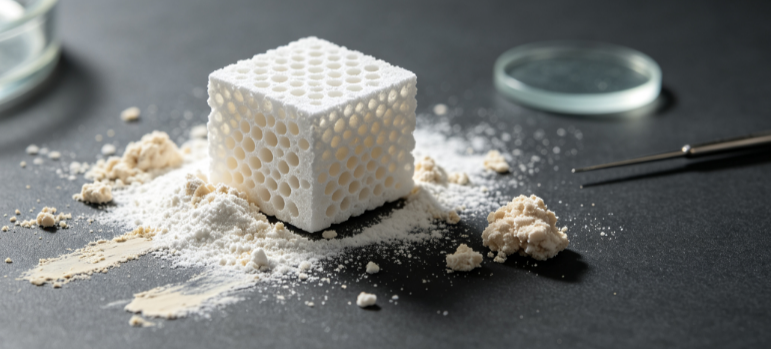
Why Rigorous Testing of Fluoride Adsorbents Is Indispensable for Safe and Reliable Defluoridation
Clients seeking fluoride adsorbent testing typically face challenges such as inconsistent fluoride removal in field trials, rapid capacity fade, or unacceptable aluminium/iron leaching. These issues often stem from non‑optimal activation, surface poisoning by silicates or phosphates, or inadequate mechanical strength causing fines generation. Furthermore, regulatory limits for fluoride (e.g., WHO guideline of 1.5 mg/L, US EPA secondary standard of 2 mg/L) demand validated performance under realistic operating conditions. Our service provides a systematic characterisation that quantifies maximum adsorption capacity (Q₀), Langmuir affinity, hydraulic residence time requirements, and sensitivity to common coexisting ions (sulphate, bicarbonate, chloride, phosphate). By identifying performance boundaries and degradation mechanisms, we enable clients to select the most cost‑effective adsorbent, optimise bed geometry, and establish robust operational protocols for consistent fluoride compliance.
Our Analytical Capabilities: From Material Fingerprinting to Dynamic Column Performance
Our testing programme is structured into five interconnected modules, each addressing a critical facet of adsorbent behaviour:
Physicochemical and textural characterisation—We determine specific surface area (BET), pore size distribution (DFT/BJH), and total pore volume via N₂ physisorption at 77 K. X‑ray diffraction (XRD) identifies the crystalline phases (e.g., gibbsite, boehmite, hydroxyapatite) and detects impurities. Scanning electron microscopy (SEM‑EDS) examines particle morphology and elemental homogeneity. X‑ray photoelectron spectroscopy (XPS) probes surface chemical states, while Fourier‑transform infrared spectroscopy (FTIR‑ATR) characterises surface functional groups (e.g., Al‑OH, Ca‑OH, carboxylates). Bulk density, particle size distribution (laser diffraction), and attrition resistance (rotating drum) are measured to assess handling and hydraulic behaviour.
Batch adsorption equilibrium and kinetics—We conduct isotherm experiments at multiple temperatures (15–45 °C) and controlled pH (5.0–9.0), using both synthetic fluoride solutions and real groundwater matrices with typical background ions. Models including Langmuir, Freundlich, Sips, and Redlich‑Peterson are fitted to determine maximum capacity (Qₘ) and affinity constants. Kinetic profiles are obtained via rapid small‑scale batch tests and fitted to pseudo‑first‑order, pseudo‑second‑order, and intraparticle diffusion models to identify rate‑limiting steps. We also evaluate pH edge experiments to map the optimal operational pH window.
Competitive ion and matrix effect evaluation—We systematically study the influence of major competing anions (SO₄²⁻, HCO₃⁻, Cl⁻, PO₄³⁻, SiO₃²⁻) at concentrations typical of natural waters, quantifying the selectivity coefficient and reduction in fluoride uptake. For highly contaminated waters, we test combined removal of fluoride with co‑existing heavy metals (e.g., As, Pb) to assess multi‑pollutant applicability.
Dynamic column performance and scale‑up—Using computer‑controlled fixed‑bed columns with variable bed heights (5–50 cm), flow rates (1–20 BV/h), and influent fluoride concentrations (2–20 mg/L), we generate breakthrough curves and extract exhaustion capacity, mass transfer zone (MTZ) length, and bed utilisation fraction. We evaluate the effect of intermittent operation (start‑stop cycles) to simulate field usage. Pressure drop and particle migration are continuously monitored to detect hydraulic issues.
Regeneration, reusability, and stability testing—We perform multiple adsorption‑desorption cycles using typical regenerants (e.g., NaOH, Al₂(SO₄)₃, or acid solutions), measuring capacity recovery, residual fluoride after regeneration, and any structural degradation by post‑cycle XRD, BET, and SEM. Leaching of adsorbent components (Al, Ca, Fe) is quantified by ICP‑OES/ICP‑MS during both adsorption and regeneration phases to ensure compliance with drinking water standards.
High‑Level Predictive Modelling and Diagnostic Interpretation
We integrate batch and column data with surface complexation models (SCM) to predict pH‑dependent fluoride uptake, and with advection‑dispersion‑reaction (ADR) models to simulate full‑scale column behaviour under variable influent quality. Using Monte Carlo sensitivity analysis, we quantify the impact of input variability (pH, fluoride concentration, flow rate) on effluent quality, enabling risk‑based design. For diagnostic investigations, we combine post‑use characterisation (XRD, XPS, SEM) with performance history to differentiate between surface site blocking, pore clogging, and mineral phase transformation as causes of capacity loss.
Regulatory Compliance and Quality Assurance
All test methods are aligned with ASTM D5757 (adsorbent performance), D6473 (attrition), ISO 10573 (fluoride in water), and US EPA Method 300.1. Our laboratory holds ISO/IEC 17025:2017 accreditation for a wide scope of environmental and materials testing. We provide certified test reports with complete traceability, measurement uncertainty, and quality control data (blanks, duplicate runs, certified reference materials). For product certification (e.g., NSF/ANSI 61), we prepare comprehensive data packages.
Our Distinctive Advantages in Fluoride Adsorbent Testing
Comprehensive adsorbent diversity: We have extensive experience with virtually all classes of fluoride adsorbents—from conventional activated alumina to novel MOFs and nanocomposites—and tailor test protocols to each material’s specific chemistry and morphology.
Realistic water matrix simulation: Our batch and column tests use natural and synthetic groundwater with controlled background ions, organic matter, and turbidity, ensuring that our performance data directly translates to field applications—unlike tests conducted in simple deionised water.
Advanced speciation and post‑use analysis: We combine high‑resolution ICP‑MS for trace metal leachates with XPS and ToF‑SIMS for surface analysis, enabling detailed root‑cause diagnosis of performance decline, including identification of surface poisoning by silicate or phosphate species.
Scalable testing and rapid iteration: Our parallel column rigs allow simultaneous testing of multiple adsorbents or operating conditions, significantly accelerating media selection and process optimisation. We offer expedited screening for key parameters (capacity and leachability) within 48 hours.
Expert interpretation and actionable engineering guidance: Our team includes environmental engineers and chemists with decades of experience in defluoridation. We provide clear, practical recommendations on bed design, hydraulic loading, regeneration frequency, and even pre‑treatment options to mitigate competitive interference.
End‑to‑End Service Workflow
We start with a complimentary technical consultation to understand your water quality, target fluoride level, flow rate, and operational constraints. We design a customised test plan, specify sample requirements, and advise on handling. Upon sample receipt, we conduct inspection and preconditioning. All tests are executed with strict QA/QC, and data are reviewed by a senior environmental scientist. The final comprehensive report includes isotherms, breakthrough curves, kinetic plots, leachate profiles, and a clear executive summary with optimisation recommendations. A post‑report meeting is available to discuss implementation strategies.
Partner with Us for Reliable and Sustainable Defluoridation Solutions
Fluoride contamination poses a significant public health challenge, and the performance of adsorbents is central to safe, cost‑effective treatment. Our testing service provides the scientific rigour, real‑world realism, and engineering insight needed to select, qualify, and operate fluoride adsorbents with confidence. We have assisted municipalities, engineering consultancies, and media manufacturers worldwide in achieving reliable fluoride compliance.
We invite you to contact our technical experts to discuss your specific testing needs—whether for media screening, process design, or troubleshooting. With our advanced analytical capabilities, accredited protocols, and deep domain expertise, we provide the clarity and confidence you need to deliver safe drinking water and meet regulatory requirements. Request a detailed proposal or schedule a technical consultation today and take the next step towards robust, science‑based defluoridation.