Reasons for choosing our testing services
ZHONGXI Testing has obtained inspection qualification certifications from multiple countries and regions worldwide. We possess a senior testing team and advanced testing methods, providing independent, impartial, and professional third-party verification services for global carbon projects.

Internationally recognized authority
Certified by multiple international standards such as CNAS, VCS, and GS, with reports universally applicable worldwide.

Global service capability
Covering 140+ countries and regions, it supports on-site detection and remote verification in multiple languages.

Professional experimental methods
Adopt standard experimental methods to ensure accurate and reliable data.
Advanced Analytical Testing of Magnetic Nanocapsules: Comprehensive Characterisation for Biomedical, Catalytic, and Environmental Applications
Magnetic nanocapsules—generally consisting of a liquid or solid core (containing therapeutic agents, catalysts, or contrast agents) enclosed within a polymeric, lipid, silica, or carbon shell, and further functionalised with superparamagnetic iron oxide nanoparticles (SPIONs)—are at the forefront of targeted drug delivery, magnetic resonance imaging (MRI), hyperthermia, magnetically responsive catalysis, and environmental pollutant capture. Their performance relies on a delicate balance of capsule size and uniformity, shell integrity, magnetic responsiveness, drug loading/release kinetics, colloidal stability, and biocompatibility. Subtle variations in fabrication—such as incomplete shell formation, non‑uniform magnetic decoration, or core‑shell delamination—can lead to reduced therapeutic efficacy, rapid clearance, uncontrolled release, or toxic metal leaching. Our laboratory provides a fully integrated, multi‑scale testing platform specifically designed for magnetic nanocapsules, combining physicochemical, magnetic, structural, surface chemical, and biological assessments. We deliver quantitative, diagnostic, and predictive data that supports product development, quality assurance, regulatory filing (FDA, EMA), and customised application tailoring for the pharmaceutical, biotechnology, and advanced materials sectors.
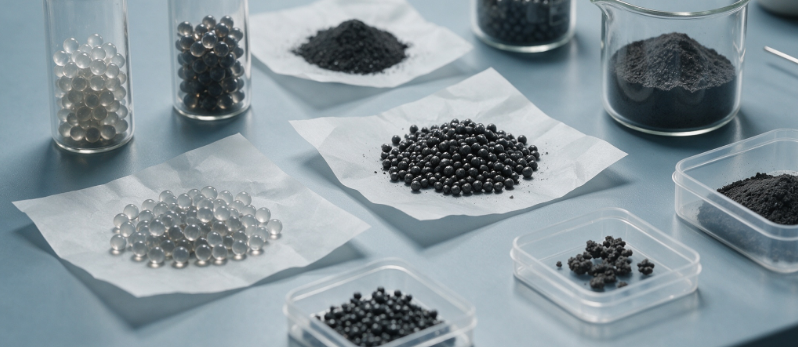
Why Rigorous Testing of Magnetic Nanocapsules Is Indispensable for Safe and Effective Performance
Clients seeking testing of magnetic nanocapsules often encounter challenges such as unexpected aggregation in biological media, poor magnetic responsiveness leading to insufficient targeting, or premature leakage of payload. These issues frequently arise from non‑uniform shell thickness, inadequate surface functionalisation, or degradation of the magnetic core. Furthermore, in biomedical applications, Cytotoxicity, immunogenicity, and metal leaching must be stringently controlled. Our service provides a systematic characterisation that quantifies particle size distribution, shell integrity, saturation magnetisation (Mₛ), encapsulation efficiency, release kinetics, and cellular compatibility. By identifying the root causes of sub‑optimal performance—such as incomplete polymer cross‑linking, surface charge heterogeneity, or magnetic oxidation—we enable clients to optimise fabrication parameters, select appropriate coating materials, and validate batch‑to‑batch consistency for their specific applications.
Our Analytical Capabilities: From Core‑Shell Architecture to Biological Response
Our testing programme is structured into six interconnected modules, each addressing a critical dimension of magnetic nanocapsule behaviour:
Structural and morphological characterisation—We employ transmission electron microscopy (TEM) and cryo‑TEM to visualise core‑shell structure, measure shell thickness, and assess monodispersity. Scanning electron microscopy (SEM) provides surface topography. Dynamic light scattering (DLS) and nanoparticle tracking analysis (NTA) determine hydrodynamic size and polydispersity. X‑ray diffraction (XRD) confirms the magnetic phase (Fe₃O₄, γ‑Fe₂O₃) and any crystalline impurities. Small‑angle X‑ray scattering (SAXS) offers ensemble‑averaged size and internal structure.
Magnetic property measurement—We use vibrating sample magnetometry (VSM) and SQUID magnetometry (5–400 K) to obtain magnetisation hysteresis loops (M‑H), extracting saturation magnetisation (Mₛ), coercivity (H꜀), remanence, and blocking temperature. We also measure magnetic relaxation (AC susceptibility) to evaluate superparamagnetic behaviour. Magnetic separation efficiency is quantified under a standardised magnetic field (0.2‑1 T) to determine the time to 95 % recovery.
Surface chemistry and functionalisation analysis—We characterise surface functional groups (e.g., ‑COOH, ‑NH₂, PEG, targeting ligands) by FTIR‑ATR, Raman spectroscopy, and X‑ray photoelectron spectroscopy (XPS) with depth profiling. Elemental analysis (CHNS) and colorimetric/conductometric titration quantify ligand density. Zeta potential as a function of pH (2–12) and ionic strength determines surface charge and colloidal stability. Protein adsorption (fouling) is assessed by incubating with serum proteins and quantifying adsorbed mass via BCA assay or SDS‑PAGE.
Encapsulation and release profiling—We measure encapsulation efficiency (EE%) and drug loading capacity (DL%) for therapeutic agents (small molecules, peptides, nucleic acids) using HPLC‑UV/FL, LC‑MS/MS, or UV‑Vis spectroscopy after destructive extraction. In‑vitro release kinetics are monitored under physiological conditions (PBS, pH 5.5 and 7.4, 37 °C) with and without magnetic hyperthermia, and fitted to zero‑order, first‑order, Higuchi, and Korsmeyer‑Peppas models to elucidate release mechanisms. For catalyst‑loaded capsules, we assess catalytic activity (e.g., degradation of model dyes or reduction of nitrophenols) and reusability.
Colloidal stability and degradation studies—We monitor hydrodynamic size and polydispersity over time (1–30 days) in relevant media (PBS, cell culture medium, serum) at 4 °C, 25 °C, and 37 °C. Aggregation kinetics are studied under mechanical stress (vortex, sonication) and freeze‑thaw cycles. Degradation of the shell material (e.g., polymer hydrolysis) is assessed by monitoring molecular weight changes (GPC) and loss of structural integrity (TEM) over time. Leaching of iron and other metals is quantified by ICP‑MS and ICP‑OES under acidic and physiological conditions.
Biological safety and functional assays—We perform Cytotoxicity (MTT, LDH) and cell uptake studies (confocal microscopy, flow cytometry) using relevant cell lines (e.g., HeLa, MCF‑7, macrophages). Hemocompatibility is assessed by hemolysis rate and platelet activation. For targeted systems, we verify specific binding to target cells using fluorescence‑ or radio‑labelled capsules. Endosomal escape and intracellular distribution are evaluated by TEM and confocal imaging. In‑vivo compatibility is supported through additional studies on request.
High‑Level Diagnostic and Predictive Modelling
We integrate experimental data with compartmental pharmacokinetic models and mass transport simulations to predict biodistribution and release profiles. Using multivariate analysis (PCA, PLS), we correlate synthesis parameters (shell thickness, magnetic loading, ligand density) with biological performance (cellular uptake, toxicity) to enable quality‑by‑design (QbD) optimisation. For root‑cause analysis, we combine post‑use characterisation (TEM, XPS, DLS) with performance data to distinguish between surface fouling, shell rupture, or magnetic core dissolution.
Regulatory Compliance and Quality Assurance
All test methods are aligned with ISO 10993 (biocompatibility), USP <661> (leachables), ASTM E2490 (nanoparticle characterisation), and ICH Q2(R1) guidelines. Our laboratory holds ISO/IEC 17025:2017 accreditation for a broad scope of physicochemical and biological testing. We issue certified test reports with full measurement uncertainty, raw data archives, and statistical summaries—supporting regulatory submissions (IND, NDA, 510(k)) and quality agreements.
Our Distinctive Advantages in Magnetic Nanocapsule Testing
Integrated multi‑technique workflow: We combine structural (TEM, DLS), magnetic (VSM), chemical (XPS, FTIR), and biological (Cytotoxicity, uptake) analyses on identical batches, enabling direct correlation between physicochemical properties and biological outcomes—a holistic approach essential for translational research.
Realistic biological matrix simulation: All biological assays are performed in serum‑containing media, whole blood, or relevant buffers to simulate in‑vivo conditions, ensuring that our data is directly predictive of clinical performance.
Advanced leachables and degradation product identification: With LC‑HRMS and ICP‑MS/MS, we detect trace leachables (monomers, crosslinkers, metal ions) and identify degradation products, providing critical safety data for regulatory submission.
Expert guidance for formulation optimisation: Our team includes pharmaceutical scientists, materials engineers, and biologists who provide specific, actionable recommendations—for example, adjusting shell crosslinking density to modulate release kinetics, or modifying surface PEG density to enhance circulation time.
Fast turnaround and flexible sample requirements: Our standard full characterisation package is delivered within 12‑16 working days, with expedited 72‑hour service for key parameters (size, Mₛ, EE%, and Cytotoxicity). We handle both dry powder and liquid suspensions, with sample masses as low as 5 mg.
End‑to‑End Service Workflow
We begin with a complimentary technical consultation to define your capsule composition, core/shell materials, intended application (e.g., drug delivery, MRI, catalysis), and critical quality attributes. We design a tailored test plan, advising on sample handling and shipping (including inert atmosphere or cold chain if needed). Upon sample receipt, we perform inspection and preconditioning. All tests are executed with strict QA/QC—reference standards, blanks, and replicates. Data are integrated and reviewed by our lead scientist, then compiled into a comprehensive report containing TEM images, magnetic hysteresis loops, release kinetics, cellular uptake data, and a clear executive summary with optimisation recommendations. A post‑report meeting is offered to discuss findings and plan further development or scale‑up.
Partner with Us for Reliable, High‑Performance Magnetic Nanocapsule Solutions
Magnetic nanocapsules represent a transformative platform for targeted therapies and smart materials, but their success hinges on rigorous, multi‑faceted characterisation. Our testing service provides the scientific depth, practical relevance, and regulatory support necessary to ensure your nanocapsules perform safely, effectively, and consistently. We have supported biotech companies, pharmaceutical developers, and academic research groups in advancing their magnetic nanocapsule technologies from bench to bedside.
We invite you to contact our technical experts to discuss your specific magnetic nanocapsule testing requirements—whether for product development, batch release, or regulatory filing. With our advanced analytical capabilities, accredited protocols, and specialised expertise, we provide the insights you need to perfect your nanocapsule technology and achieve your therapeutic or catalytic goals with confidence. Request a detailed proposal or schedule a technical consultation today and take the next step towards superior, data‑driven magnetic nanocapsule solutions.