Reasons for choosing our testing services
ZHONGXI Testing has obtained inspection qualification certifications from multiple countries and regions worldwide. We possess a senior testing team and advanced testing methods, providing independent, impartial, and professional third-party verification services for global carbon projects.

Internationally recognized authority
Certified by multiple international standards such as CNAS, VCS, and GS, with reports universally applicable worldwide.

Global service capability
Covering 140+ countries and regions, it supports on-site detection and remote verification in multiple languages.

Professional experimental methods
Adopt standard experimental methods to ensure accurate and reliable data.
Advanced Analytical Testing of Iron(II,III) Oxide (Magnetite, Fe₃O₄): Comprehensive Characterisation for Quality and Performance Assurance
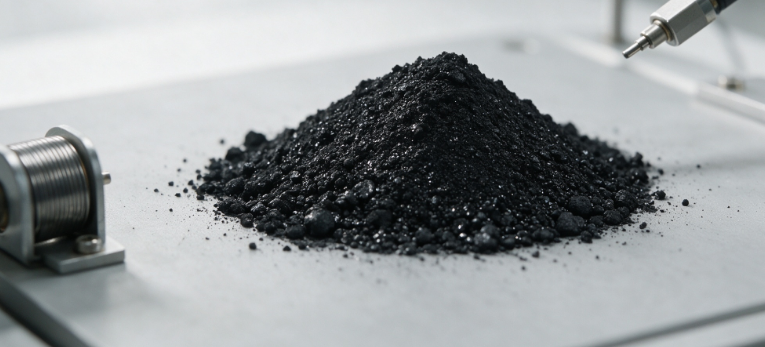
Iron(II,III) oxide (Fe₃O₄, magnetite) is a pivotal functional material with broad applications across magnetic storage media, biomedical diagnostics and therapy (hyperthermia and drug delivery), heterogeneous catalysis, environmental remediation, and construction materials. Its performance in these diverse fields is intrinsically governed by a set of critical physicochemical parameters, including phase purity, crystallite size and morphology, magnetic saturation and coercivity, surface chemistry, and elemental stoichiometry. Even minor deviations in synthesis conditions or post‑treatment can drastically alter the functional behaviour, leading to compromised product efficacy, regulatory non‑compliance, or unexpected in‑service failure. Our laboratory provides a fully integrated, multi‑technique analytical platform specifically designed for the rigorous characterisation of magnetite samples—from bulk powders and nanoparticles to thin films and composite materials. We deliver quantitative, diagnostic, and predictive data that supports material development, quality control, process optimisation, and regulatory submissions for industries ranging from pharmaceuticals and electronics to environmental engineering.
Why Comprehensive Testing of Fe₃O₄ Is Essential for Material Reliability
Clients seeking magnetite analysis often encounter challenges such as inconsistent magnetic response, unexpected batch‑to‑batch variability, poor dispersion stability, or elevated levels of impurity phases. These issues frequently originate from non‑stoichiometric oxygen content, incomplete reduction/oxidation during synthesis, contamination with α‑Fe₂O₃ (hematite) or γ‑Fe₂O₃ (maghemite), or sub‑optimal particle size distribution. Furthermore, in biomedical and pharmaceutical applications, stringent purity requirements (e.g., USP, ICH Q3D) mandate the quantification of trace toxic metals and Endotoxins. Our service offers a systematic and thorough evaluation that quantifies not only the primary phase content but also the degree of crystallinity, magnetic domain structure, surface functional groups, and colloidal stability. By identifying the root causes of sub‑standard performance—such as oxidation, sintering, or residual precursor contamination—we empower clients to optimise synthesis protocols, refine purification steps, and establish robust quality assurance programmes.
Our Analytical Capabilities: From Bulk Composition to Atomic‑Scale Structure
Our testing framework is organised into five complementary modules, each addressing a distinct layer of material characterisation:
Phase identification and crystallographic analysis—We utilise high‑resolution powder X‑ray diffraction (PXRD) with Rietveld refinement to unequivocally identify the inverse spinel structure of magnetite and to quantify the relative fractions of coexisting phases (e.g., FeO, Fe₂O₃, or metallic Fe). Synchrotron XRD (available upon request) provides enhanced sensitivity for subtle lattice distortions. Raman spectroscopy at multiple excitation wavelengths (e.g., 532 nm, 785 nm) probes local vibrational modes and identifies surface oxidation layers. Mössbauer spectroscopy (⁵⁷Fe) at room temperature and low temperature (4.2 K) delivers unparalleled information on iron valence states (Fe²⁺/Fe³⁺ ratios), site occupancy (tetrahedral and octahedral sites), and magnetic hyperfine fields, enabling precise stoichiometry assessment and detection of superparamagnetic relaxation.
Elemental and isotopic analysis—We determine total iron content and Fe²⁺/Fe³⁺ ratio by validated redox titrimetric methods and inductively coupled plasma optical emission spectrometry (ICP‑OES) after acid digestion, achieving accuracy better than ±0.5 % relative. Trace element impurities (Al, Cr, Mn, Co, Ni, Cu, Zn, Cd, Pb, Hg, As) are quantified using ICP‑mass spectrometry (ICP‑MS) with collision/reaction cell technology, reaching detection limits in the sub‑ppb range. Carbon, sulfur, and nitrogen are measured by combustion‑gas chromatography. For isotopic purity or provenance studies, we offer thermal ionisation mass spectrometry (TIMS) and multi‑collector ICP‑MS.
Magnetic property measurement—We employ vibrating sample magnetometry (VSM) and superconducting quantum interference device (SQUID) magnetometry (1.8–400 K, up to 7 T) to obtain magnetisation hysteresis loops (M‑H), from which we extract saturation magnetisation (Mₛ), remanent magnetisation (Mᵣ), coercivity (H꜀), and squareness ratio. Zero‑field‑cooled (ZFC) and field‑cooled (FC) temperature‑dependent susceptibility curves characterise the Verwey transition (~120 K) and the blocking temperature for superparamagnetic nanoparticles. AC susceptibility measurements provide frequency‑dependent relaxation dynamics, critical for assessing hyperthermia or magnetic resonance imaging (MRI) contrast performance.
Surface and microstructural characterisation—We use field‑emission scanning electron microscopy (FE‑SEM) with energy‑dispersive X‑ray spectroscopy (EDS) and electron backscatter diffraction (EBSD) to visualise particle morphology, size distribution, and crystallographic orientation. High‑resolution transmission electron microscopy (HR‑TEM) with selected‑area electron diffraction (SAED) and scanning TEM‑EDS mapping reveals core‑shell structures, lattice fringes, and the presence of secondary phases at the nanoscale. Brunauer‑Emmett‑Teller (BET) surface area and Barrett‑Joyner‑Halenda (BJH) pore size distribution are determined by N₂ physisorption at 77 K. X‑ray photoelectron spectroscopy (XPS) with depth profiling provides the chemical states of Fe, O, and any surface contaminants, distinguishing between Fe²⁺, Fe³⁺, and oxygen species (lattice O, surface hydroxyl, adsorbed water).
Chemical stability and functional testing—We evaluate acid/alkaline resistance by monitoring Fe release in acidic (pH 2) and alkaline (pH 12) media via ICP‑OES. Oxidation resistance is assessed by Thermogravimetric Analysis (TGA) in air, quantifying the weight gain corresponding to oxidation to Fe₂O₃. Dispersion stability in aqueous and organic media is characterised by ζ‑potential and dynamic light scattering (DLS) as a function of pH and ionic strength. For biomedical applications, we perform Endotoxin (LAL) testing, protein adsorption assays, and Cytotoxicity screenings (MTT, LDH) according to ISO 10993 standards.
High‑Level Diagnostics and Predictive Modelling
We integrate experimental data with computational thermodynamics (CALPHAD) and density functional theory (DFT) calculations to predict phase equilibria and defect chemistry under various synthesis and service conditions. Finite‑element magnetic field simulations can be generated for custom particle assemblies, enabling the design of optimal magnetic response for specific applications. Our multivariate statistical analysis (principal component analysis, partial least squares) identifies critical quality attributes (CQAs) that govern functional performance, facilitating quality‑by‑design (QbD) strategies for scaled‑up production.
Regulatory Compliance and Quality Assurance
All test methods are fully aligned with ASTM, ISO, USP, EP, and ICH guidelines, as applicable. Our laboratory is ISO/IEC 17025:2017 accredited for a broad scope of mechanical, chemical, and magnetic testing. We provide certified test reports that include full measurement uncertainty budgets, calibration traceability to NIST standards, and comprehensive quality control data (reference materials, blank and duplicate analyses). For pharmaceutical and food‑contact applications, we can generate audit‑ready documentation to support regulatory submissions (e.g., Drug Master Files, 510(k) premarket notifications).
Our Distinctive Advantages in Fe₃O₄ Testing
Unmatched analytical depth and correlation: We combine Mössbauer spectroscopy, HR‑TEM, SQUID magnetometry, and XPS on the same sample batch, enabling direct cross‑correlation between valence states, nanoscale structure, magnetic behaviour, and surface chemistry. This holistic approach, rarely offered by commercial laboratories, provides a comprehensive material fingerprint and eliminates cross‑batch variability.
Expertise in complex oxide systems: Our team comprises solid‑state physicists, inorganic chemists, and materials engineers with decades of experience in iron oxide phase equilibria and magnetism. We do not merely report numbers; we interpret them in the context of your specific application—whether that be superparamagnetic contrast agents, high‑density recording media, or heterogeneous Fenton catalysts.
Realistic environmental and operational simulation: We customise test conditions to mimic your actual use environment—e.g., physiological temperature for biomedical particles, high‑humidity storage, or acidic/oxidising industrial streams. This ensures that our data is directly actionable for your process.
Fast turnaround with rigorous quality: Our standard full characterisation package is delivered within 10–15 working days, with expedited 72‑hour service for key parameters (phase purity, Mₛ, and particle size). We handle sample sizes from 10 mg to several kilograms, and offer flexible pricing models for single‑time projects or long‑term monitoring agreements.
End‑to‑End Service Workflow
We initiate each project with a complimentary technical consultation to define your material specifications, intended application, and critical quality attributes. Based on this, we design a tailored test plan, including sampling, handling, and shipping recommendations. Upon sample receipt, we perform a receipt inspection and document all initial observations. Analyses are carried out using our validated protocols, with internal quality checks at every step. Data are compiled into a comprehensive, easy‑to‑interpret report featuring annotated spectra, micrographs, graphs, and a clear executive summary with actionable recommendations. A post‑report meeting is available to discuss the findings and guide your next development or quality assurance steps.
Partner with Us for Uncompromised Quality and Performance
Iron(II,III) oxide is a versatile but demanding material; its success in advanced applications depends critically on thorough, science‑based characterisation. Our testing service offers the technical depth, operational flexibility, and regulatory readiness to ensure that your Fe₃O₄ products consistently meet the highest standards. We have supported leading manufacturers, research institutes, and regulatory bodies in verifying material integrity, resolving processing issues, and accelerating product development.
We invite you to contact our technical experts to discuss your specific magnetite testing needs—whether for raw material release, in‑process control, or failure analysis. With our state‑of‑the‑art instrumentation, accredited quality systems, and proven track record, we provide the clarity and confidence you need to excel in your field. Request a detailed proposal or schedule a consultation today and experience the advantage of specialised, high‑end Fe₃O₄ characterisation.