Reasons for choosing our testing services
ZHONGXI Testing has obtained inspection qualification certifications from multiple countries and regions worldwide. We possess a senior testing team and advanced testing methods, providing independent, impartial, and professional third-party verification services for global carbon projects.

Internationally recognized authority
Certified by multiple international standards such as CNAS, VCS, and GS, with reports universally applicable worldwide.

Global service capability
Covering 140+ countries and regions, it supports on-site detection and remote verification in multiple languages.

Professional experimental methods
Adopt standard experimental methods to ensure accurate and reliable data.
Advanced Analytical Testing of Magnetic Titanium‑Silicalite Molecular Sieves: Comprehensive Characterisation for Catalytic and Separation Performance
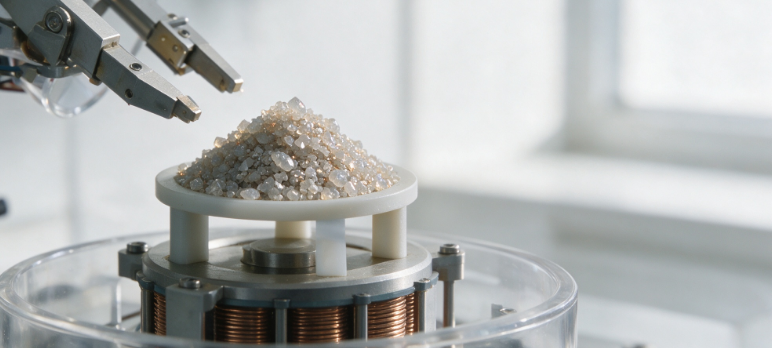
Magnetic titanium‑silicalite molecular sieves—typically based on the MFI (e.g., TS‑1) or MEL framework, incorporating superparamagnetic iron oxide nanoparticles (Fe₃O₄ or γ‑Fe₂O₃) either within the zeolite channels or as a core‑shell composite—represent an emerging class of multifunctional, magnetically recoverable catalysts for selective oxidation reactions (e.g., phenol hydroxylation, propylene epoxidation) and adsorptive separations. The combination of isolated tetrahedral Ti(IV) active sites, shape‑selective micropores, high surface area of titanosilicates with the rapid magnetic separability of iron oxides enables facile catalyst recovery, reduced metal leaching, and enhanced process sustainability. However, the functional performance of these materials critically depends on titanium incorporation into the framework (vs. extra‑framework TiO₂), iron oxide loading and distribution, preservation of microporosity, magnetic saturation, and hydrothermal stability. Subtle variations in synthesis—such as pH, gel composition, or post‑synthesis magnetic decoration—can lead to reduced catalytic activity, altered selectivity, poor magnetic recovery, or iron‑induced pore blockage. Our laboratory provides a fully integrated, multi‑scale testing platform specifically designed for magnetic titanium‑silicalite molecular sieves, combining crystallographic, spectroscopic, magnetic, textural, and catalytic activity assessments. We deliver quantitative, diagnostic, and predictive data that supports material development, quality assurance, process optimisation, and regulatory compliance for the chemical, petrochemical, and environmental sectors.
Why Rigorous Testing of Magnetic Titanium‑Silicalites Is Critical for Catalytic Efficiency and Reusability
Clients seeking testing of these materials often encounter challenges such as unexpected drops in oxidation activity, poor magnetic recovery leading to catalyst loss, or inconsistent product selectivity. These issues frequently stem from non‑framework titanium species (anatase TiO₂) that reduce active site accessibility, inhomogeneous iron deposition that blocks micropores, or magnetic phase oxidation that diminishes saturation magnetisation. Furthermore, the hydrothermal stability of the zeolite framework and the resistance to iron leaching under reaction conditions must be rigorously assessed to ensure catalyst longevity and product purity. Our service provides a systematic characterisation that quantifies framework Ti content (via UV‑Vis and FTIR), relative crystallinity, BET surface area and micropore volume, saturation magnetisation (Mₛ), and catalytic performance for model reactions (e.g., phenol hydroxylation with H₂O₂). By identifying the root causes of performance deviations—such as Ti migration, iron agglomeration, or dealumination (if present)—we enable clients to optimise synthesis parameters (Si/Ti ratio, Fe loading, calcination temperature) and validate batch‑to‑batch consistency for their target applications.
Our Analytical Capabilities: From Framework Integrity to Magnetic Behaviour and Catalytic Function
Our testing programme is structured into five interconnected modules, each addressing a critical aspect of the composite’s composition, structure, and functional performance:
Structural and crystallographic characterisation—We employ powder X‑ray diffraction (PXRD) with Rietveld refinement to confirm the MFI/MEL framework type, detect any amorphous impurities, and quantify the relative crystallinity. Raman spectroscopy and Fourier‑transform infrared spectroscopy (FTIR‑ATR) in the framework‑sensitive region (400‑1300 cm⁻¹) probe the vibration modes of Ti‑O‑Si bonds and identify extra‑framework TiO₂ (Raman bands at ~144, 396, 515, 639 cm⁻¹). Diffuse reflectance UV‑Vis spectroscopy (DRUV‑Vis) with Kubelka‑Munk transformation differentiates framework Ti (absorption edge ~210‑240 nm) from extra‑framework anatase (>330 nm). Solid‑state ²⁹Si and ²⁹Si MAS‑NMR (with ¹H‑²⁹Si CP) determines the Si distribution (Q³/Q⁴ ratios) and the extent of Ti substitution. High‑resolution transmission electron microscopy (HR‑TEM) with EDS mapping and selected‑area electron diffraction (SAED) visualises the distribution of magnetic nanoparticles and the integrity of the zeolite crystallites.
Magnetic property measurement—We use vibrating sample magnetometry (VSM) and SQUID magnetometry (2–400 K, up to 7 T) to obtain magnetisation hysteresis loops (M‑H), extracting saturation magnetisation (Mₛ), coercivity (H꜀), remanence, and blocking temperature. Zero‑field‑cooled (ZFC) and field‑cooled (FC) measurements assess superparamagnetic behaviour and the presence of larger ferrimagnetic clusters. Magnetic separation kinetics under a defined magnetic field (0.2‑1 T) provide the time to 95 % recovery, a critical parameter for design of magnetically assisted reactors.
Textural and surface analysis—We determine specific surface area (BET), micropore volume (t‑plot), and external surface area via N₂ physisorption at 77 K. Pore size distribution (DFT/BJH) is reported for micropores and mesopores. Helium pycnometry gives skeletal density. X‑ray photoelectron spectroscopy (XPS) with depth profiling provides surface Fe/Si and Ti/Si ratios, oxidation states of Fe (Fe²⁺/Fe³⁺), and the chemical environment of Ti (Ti 2p). Ammonia temperature‑programmed desorption (NH₃‑TPD) and pyridine‑adsorbed FTIR quantify the acidity and the nature (Lewis/Brønsted) of acid sites, which are crucial for catalytic selectivity.
Catalytic performance assessment—We conduct liquid‑phase batch or semi‑batch reactions using the probe reaction phenol hydroxylation with H₂O₂ (or other target reactions such as propylene epoxidation, cyclohexane oxidation) under controlled temperature (50‑80 °C), solvent, and catalyst loading. We monitor conversion, selectivity to catechol/hydroquinone, and H₂O₂ utilisation efficiency using HPLC‑UV and iodometric titration. Turnover frequency (TOF) is calculated based on framework Ti content. Reusability is tested over multiple catalytic cycles (typically 5‑10 runs) with intermediate magnetic recovery, and post‑run characterisation (XRD, BET, UV‑Vis) identifies deactivation mechanisms (e.g., Ti leaching, pore blocking, iron loss).
Stability, leachability, and durability testing—We assess hydrothermal stability by treating the material in water at 80‑100 °C for 24‑72 h, followed by re‑measurement of crystallinity (XRD), surface area (BET), and catalytic activity. Leaching of Fe and Ti into the reaction solution is quantified by ICP‑MS and ICP‑OES after each catalytic run. Thermal stability is evaluated by Thermogravimetric Analysis (TGA) in air and inert atmospheres (up to 800 °C), monitoring weight loss due to template removal, dehydroxylation, and phase transitions. Oxidation resistance of the magnetic phase is assessed by TGA in air and by re‑measuring Mₛ after exposure to H₂O₂ or oxidative atmospheres.
High‑Level Diagnostic and Predictive Modelling
We integrate catalytic kinetics with Langmuir‑Hinshelwood or Eley‑Rideal models to derive intrinsic rate constants and adsorption equilibrium constants. For mass transport effects, we apply Weisz‑Prater and Thiele modulus analysis to determine the effectiveness factor of the zeolite crystals. Using multivariate analysis (PCA, PLS), we correlate synthesis parameters (Si/Ti, Fe loading, calcination temperature) with catalytic performance (activity, selectivity, magnetic recovery), enabling quality‑by‑design (QbD) optimisation. For failure diagnosis, we combine post‑use characterisation (XRD, DRUV‑Vis, XPS, N₂ physisorption) with activity decline profiles to distinguish between framework Ti destruction, pore blockage by carbonaceous deposits, iron oxidation, or Ti extra‑framework migration.
Regulatory Compliance and Quality Assurance
All test methods align with ASTM, ISO, and IUPAC recommendations for zeolite and catalyst characterisation. Our laboratory is ISO/IEC 17025:2017 accredited for a wide scope of physicochemical and catalytic testing. We provide certified test reports with full measurement uncertainty, traceability to reference materials, and quality control data (blanks, duplicates, certified reference zeolites). For intellectual property and patent filings, we supply comprehensive data packages with detailed experimental protocols and raw data archives.
Our Distinctive Advantages in Magnetic Titanium‑Silicalite Testing
Comprehensive framework and active site analysis: We combine DRUV‑Vis, Raman, FTIR, and solid‑state NMR on the same batch to unequivocally distinguish framework Ti from extra‑framework TiO₂ and iron oxides—a critical differentiation often overlooked by routine testing labs.
Integrated magnetic‑catalytic correlation: We perform all analyses (magnetic, structural, catalytic) on identical sample aliquots, enabling direct correlation between Mₛ, pore architecture, and catalytic turnover. This holistic approach ensures that performance issues are traced to specific material properties.
Realistic reaction simulation: Our catalytic tests use relevant substrate concentrations, solvents, and H₂O₂ feed rates to mimic industrial conditions, providing data that is directly translatable to process scale‑up.
Advanced iron speciation and leaching profiling: With XPS and Mössbauer spectroscopy (available upon request), we precisely determine iron oxidation states and their evolution during catalysis, correlating with leaching risks and magnetic stability.
Fast turnaround and flexible sample requirements: Our standard full characterisation package is delivered within 12‑16 working days, with expedited 72‑hour service for key parameters (framework Ti, BET, Mₛ, and initial activity). We handle powders, extrudates, and spent catalysts with sample masses as low as 100 mg.
End‑to‑End Service Workflow
We begin with a complimentary technical consultation to define your synthesis route, target reaction, and critical quality attributes. We design a tailored test plan, advising on sample handling and shipping (including inert atmosphere if required). Upon sample receipt, we perform inspection and preconditioning (calcination or drying). All tests are executed with strict QA/QC—reference standards, blanks, and replicates. Data are integrated and reviewed by our lead materials scientist, then compiled into a comprehensive report containing XRD patterns, DRUV‑Vis spectra, BET isotherms, magnetic hysteresis loops, catalytic activity curves, and a clear executive summary with optimisation recommendations. A post‑report meeting is offered to discuss findings and plan further development or scale‑up.
Partner with Us for Reliable, High‑Performance Magnetic Titanium‑Silicalite Solutions
Magnetic titanium‑silicalite molecular sieves represent a powerful platform for sustainable oxidation catalysis, but their success hinges on thorough, multi‑faceted characterisation. Our testing service provides the scientific depth, practical relevance, and regulatory support necessary to ensure your material performs efficiently and reliably. We have supported catalyst manufacturers, fine chemical producers, and academic research groups in optimising their magnetic titanosilicate technologies.
We invite you to contact our technical experts to discuss your specific testing needs—whether for new catalyst development, quality control, or troubleshooting. With our advanced analytical instruments, accredited protocols, and specialised expertise, we provide the insights you need to perfect your magnetic titanium‑silicalite catalysts and achieve your performance goals with confidence. Request a detailed proposal or schedule a technical consultation today and take the next step towards superior, data‑driven catalytic solutions.